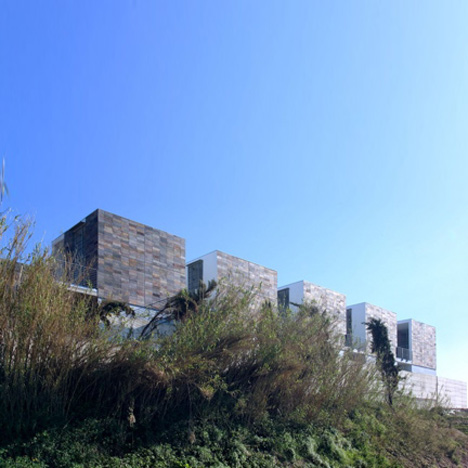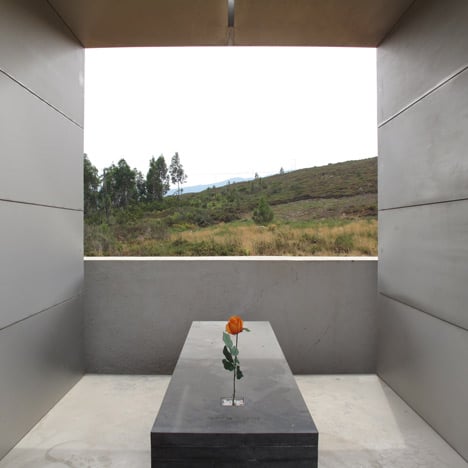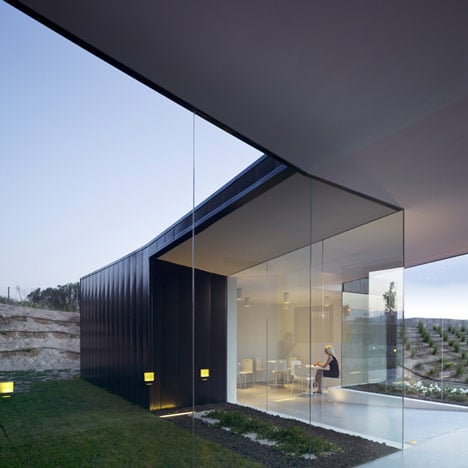
This funeral home in Alicante, Spain, is by Spanish studio Cor.
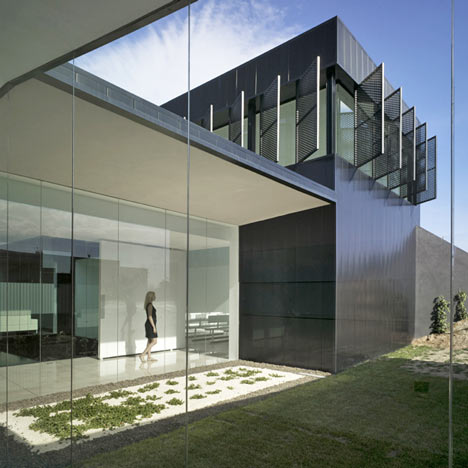
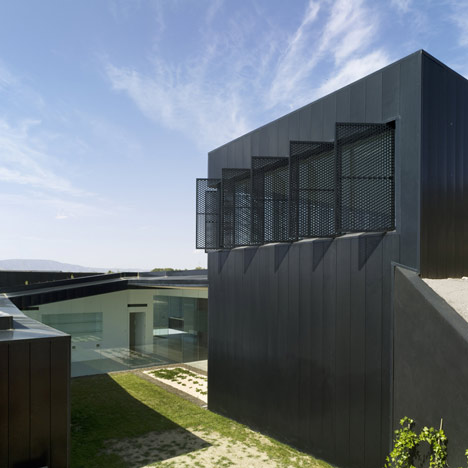
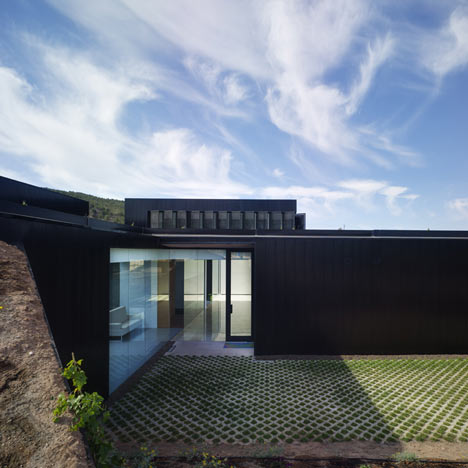
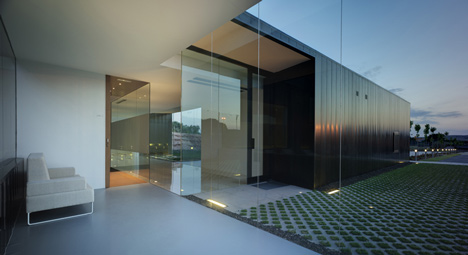
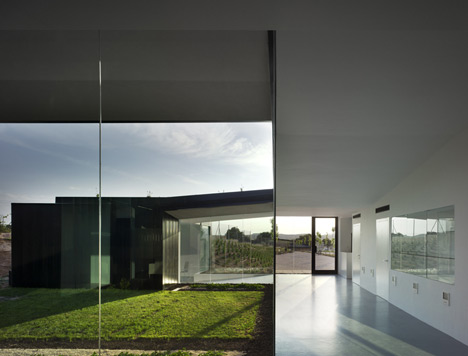
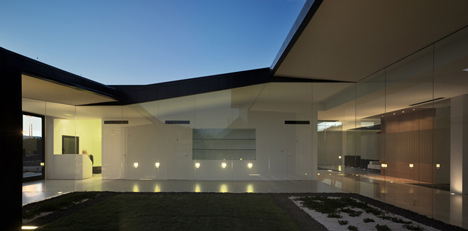
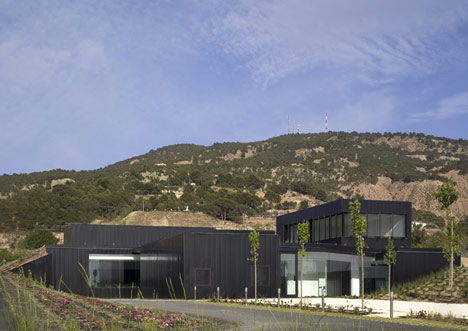
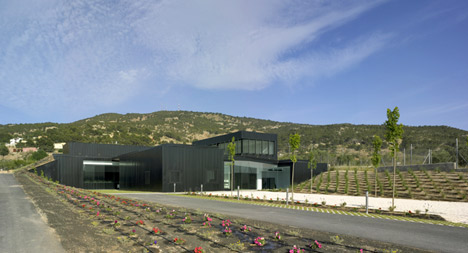
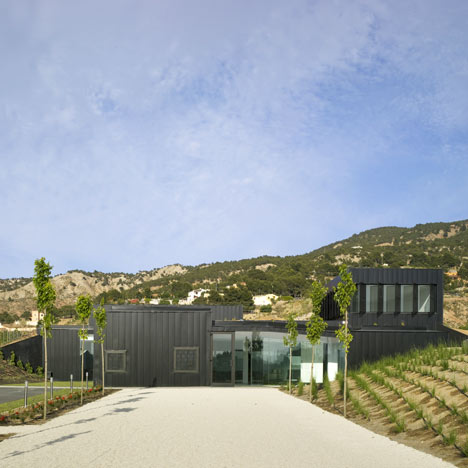
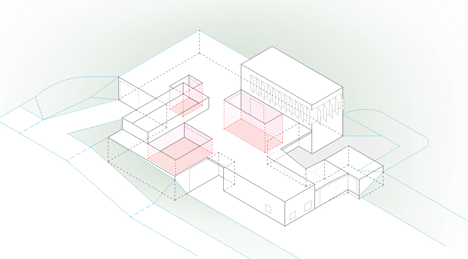
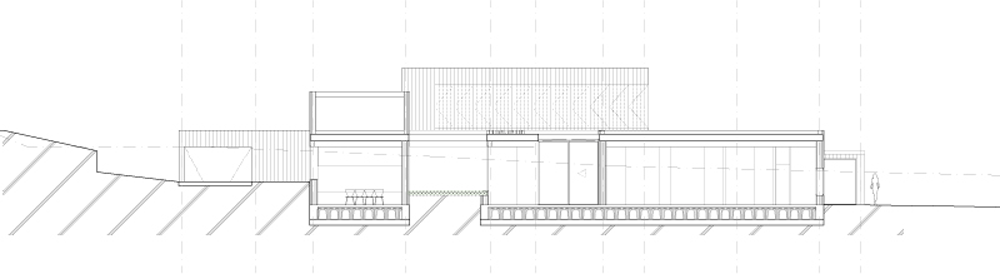
Called Funeral Home and Garden in Pinoso, the building has been arranged around four courtyard areas and sits in a landscaped garden featuring 29 Japanese maples.
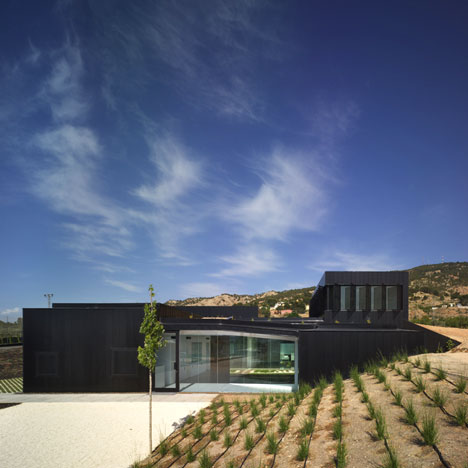
The garden rises up to meet the building's roof at one end.
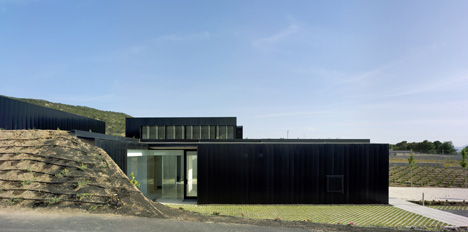
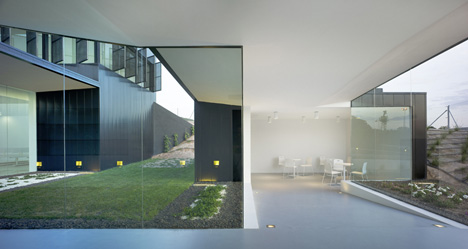
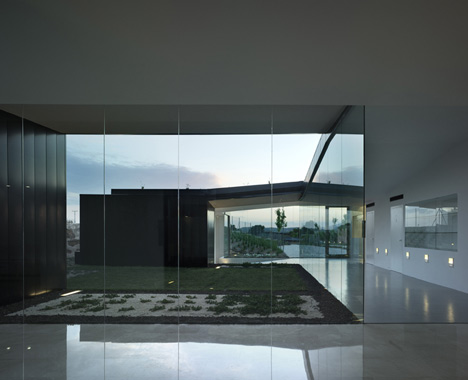
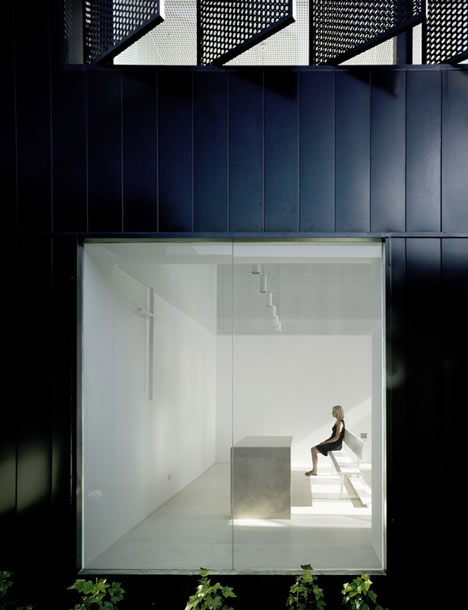
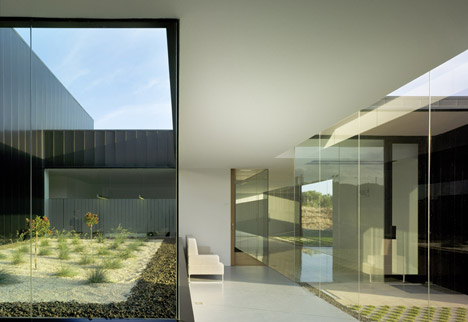
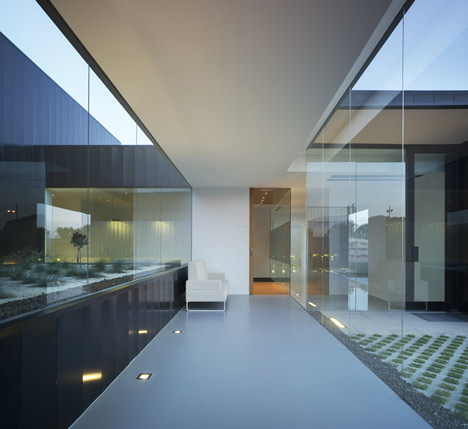
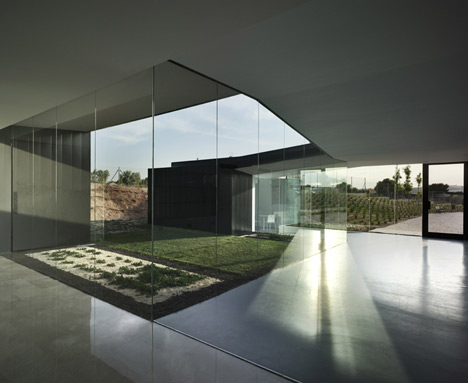
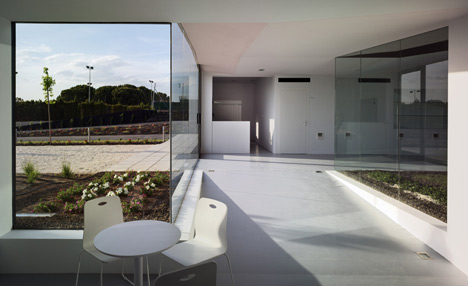
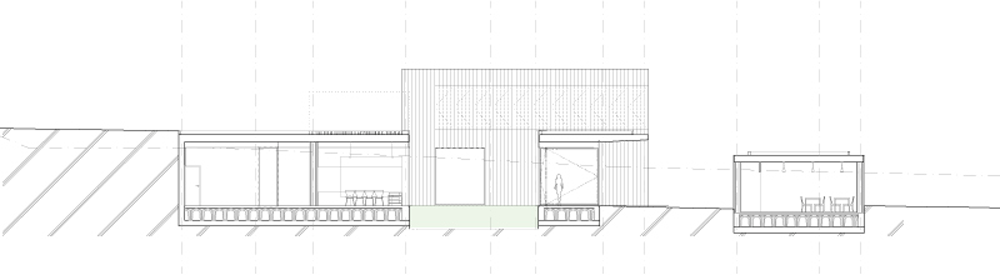
Full-height glazing wrapping the courtyards permit sight lines between different areas of the building.
Photographs are by David Frutos.
More Spanish architecture on Dezeen »
Here's some more information from the architects:
Funeral home and garden in Pinoso (Alicante, Spain)
A public building in a crisis country. The fear of death is considered wise, without being, since it is believed to know about what you do not know.
“Death is perhaps the greatest blessing of human beings, no one knows, and yet everyone is fears as if he knew with absolute certainty that the worst of evils” (Socrates, 470 BC, 399 BC)
Historically we find different definitions of death that we demonstrate how this concept has moved from positions closer to the darkness, pain and fear, into positions related to the concept of sadness, change and light.
Designing a building where you'll find, perhaps, the least known stage of human existence necessarily involves the assumption of uncertainty as a concept to include in the process of ideation.
We understand this building as a place that will resist being forgotten, left in the retinas of their users, and therefore a place where the sensitive has to be controlled.
Parameters such as sound, temperature, light, humidity, lighting, privacy, relationship with nature take great importance.
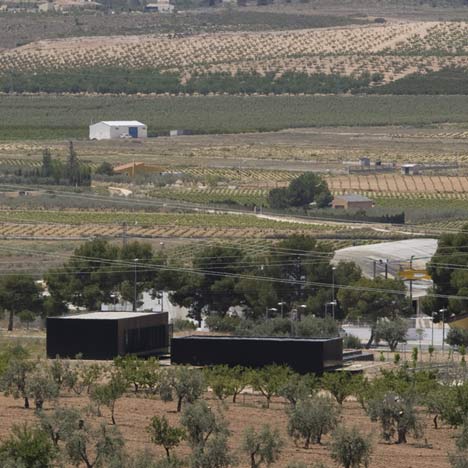
The plot is situated on the outskirts of town, at the end of a cul-de-sac, close to the municipal sports centre and behind a cultural centre, both of great activity.
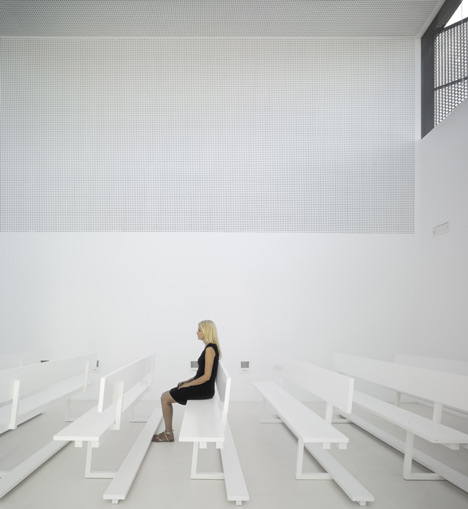
This creates some urban tension, since the building is in the middle of various activities incompatible.
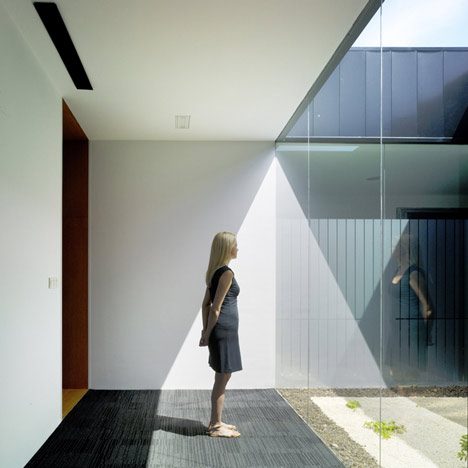
In this situation it is proposed to order the mattress assembly plant generating sufficient identity to establish itself as 'centre' of all these public buildings and activities.
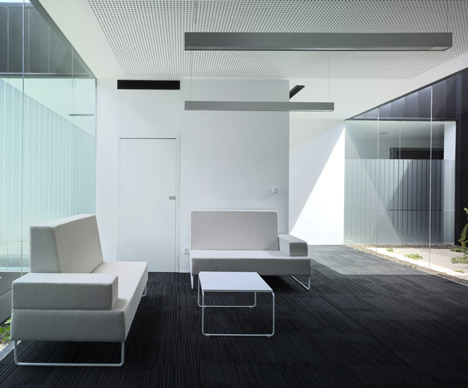
We have created a forest of 29 Japanese maples, able to articulate, differentiate and limit the variety of uses.
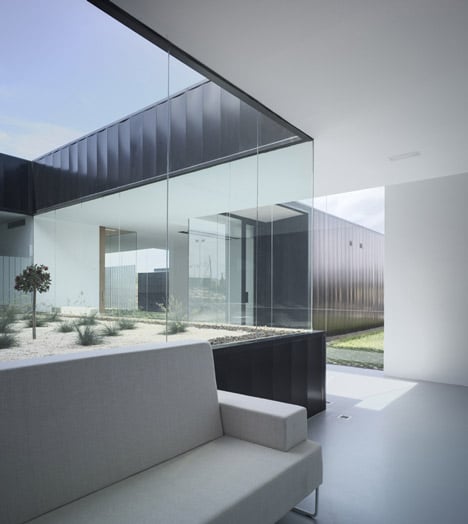
Additionally, the building is buried in the back, and as if it was a cave, its main facade eaves the field forward, what prevents glances between buildings and various activities.
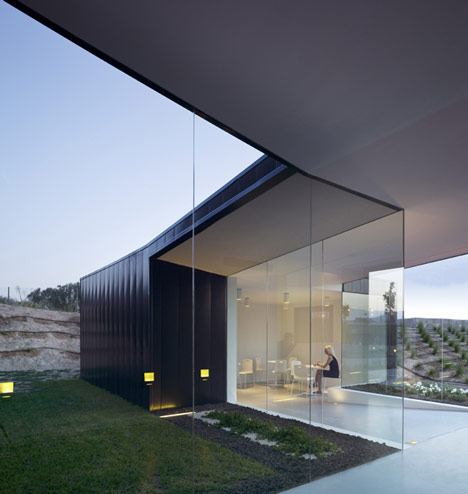
It is for this reason that the building is set around five holes in the form of courtyard or 'bitten space', which allow the relationship with the outside world is controlled and there is no interaction.
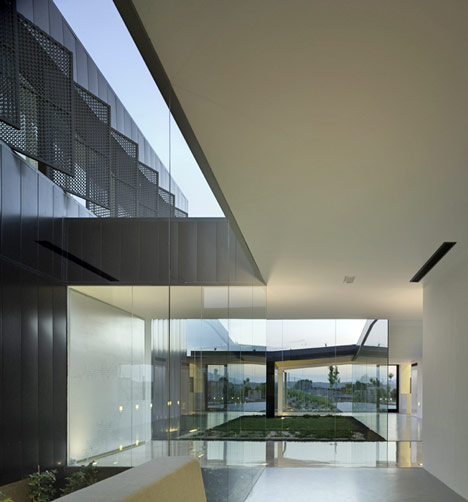
From the interior you only can see the sky and the inside.
The interior-exterior permeability becomes very important in this new town site.
A public building in a crisis country.
We must not forget the effort that contains behind this building.
The project has a 495 square meters and a budget of 431,583€, which involves a considerable effort to finding solutions building techniques, systems maintenance to cost reduction, and maximum degree of ecological adaptation and sustainability at the landscape level.
This is an intervention that gives more for less.
Credit Information
Architecture : COR Consulting of Creative Resources
Project Outline
Client - Town Council of Pinoso, Alicante
Location: Alicante, Spain
Principal Use : Public Building, Funeral home
Click for larger image
Floor Area: 495 square meters
Click for larger image
Budget - 431.583 €
Click for larger image
See also:
.
![]() |
![]() |
![]() |
| Rennes Métropole Crematorium by Plan01 | Ortona Cemetery by Giovani Vaccarini |
Family Tomb by Pedro Dias |


it's to die for.
I do not know what to say … is very subtle, weak, unstable. I think it's one of those projects that you find sometimes and remember for a long time. I like it.
Good project, I like so much.
Pinoso's inhabitants must be delighted with that project!
Contragulations to the architects and technical team!!
This building has a difficult program, I think that has been treated in an exemplary manner. To understand the concept of death, its features, its concept is very important for a building like this. I think the project has a very contemporary idea of death. It is clear that architecture is not just money, structure, walls, roofs, glass … and this project is seen as the architecture has to do with a concept of a larger scale.
I like this a lot. It goes to show that funeral homes don't have to be stuffy, claustrophobic environments.
"The project has a 495 square meters and a budget of 431,583€"
???????
"A public building in a crisis country. We shouldn't forget the effort that this building means for its citizens: the project has 495 square meters and a budget of 431,583€, this situation forced us to finding material solutions and building techniques, systems of maintenance that reduce that effort. Not forgetting, maximum degree of ecological adaptation and sustainability at the landscape level. This is an intervention that gives more for less."
I think, now is a time where we have the duty to give exceptional results with low budgets.
We projected and builded the funeral home during 1 year: we did 120 visits to control and to define all the details. The town councill did not have more money for the project, beacuse this builgind is inside a big economic stimulation plan from de Central Goverment of Spain (http://www.economiasostenible.gob.es)
i think one of the most important thing that this project get is to do transformation in the society, in the town… because, i think it is capable to propose the fist step of the change. And in Spain, we need this change.
Not the right way to meet the questions of death. I remember swedish Gunnar Asplunds comment on why he spent such a long while drawing a pattern in the floor of a chapel in the Forest Cemetery outside stockholm. "When people is sitting in the benches bent down and mourning I want them to meet a humanity in the floor. A trace that soeone is with them in their time of loss." This is the opposite.
true, just a design exercise. If it would have been a fancy shop or a modern loft-alike dwelling i would´t be surprised. Architects nowadays look too much to magazines and to few to the world around them
Good job COR!
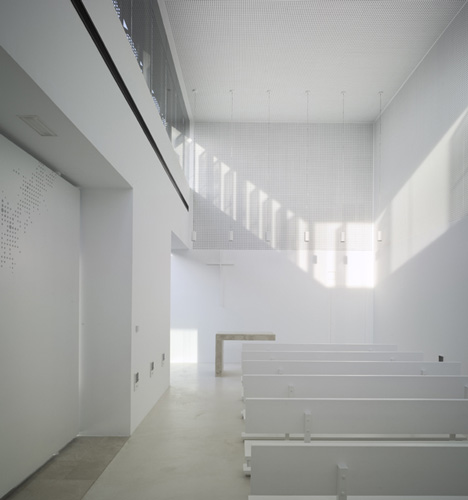
I've been there. It is a magical place. From outside it seems to be tought, but as you enter, you feel relieved. No noise, no dark and no fear. There are several courtyards which allow you to gaze at nature and relax. Once you enter the chapel of rest, the first thing you can see is nature once again. You are almost close to nature. As the entry it is perpendicular to the coffin you can choose if you want to see your lost or if you just prefer to stare at the magical sights. Finally, the chapel, is the most magical place i've ever been in, zenith light, heigh, pendant lights and those tiny holes up in the walls make you rise as if you were in heaven.
Once all the Maple trees grow in it will be lovely. Light filtering through the crimson foliage. The neutrality of the interior will enhance the effect. It's far from dehumanising. I'd be a little concerned about solar gain and energy loads though.
Congratulations, beautiful project. Love the visual connections, the inner spaces and flow of light. Nice material composition too ;)
I´m reminded of those futuristic sci-fi films where a crazy mastermind tries to bring the dead back to life,or clone them or whatever.