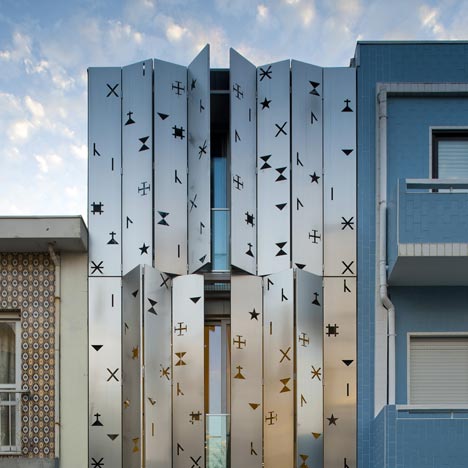
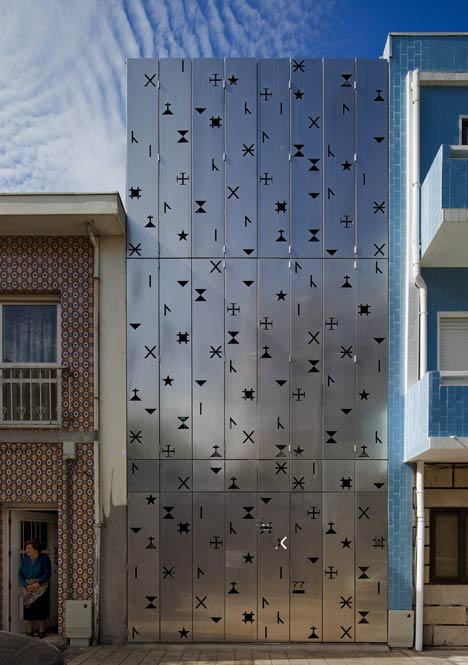
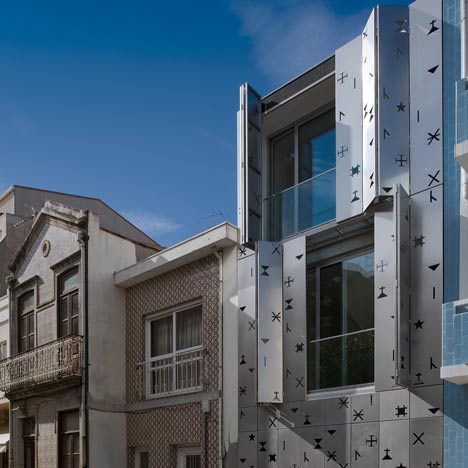
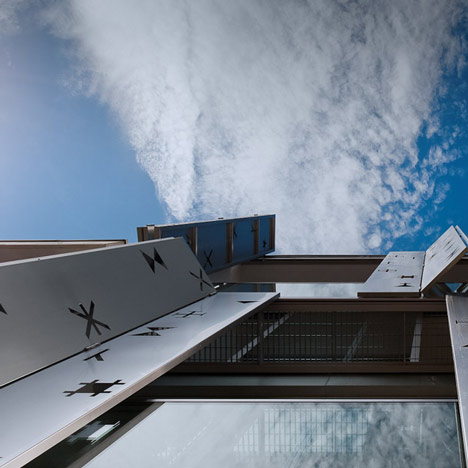
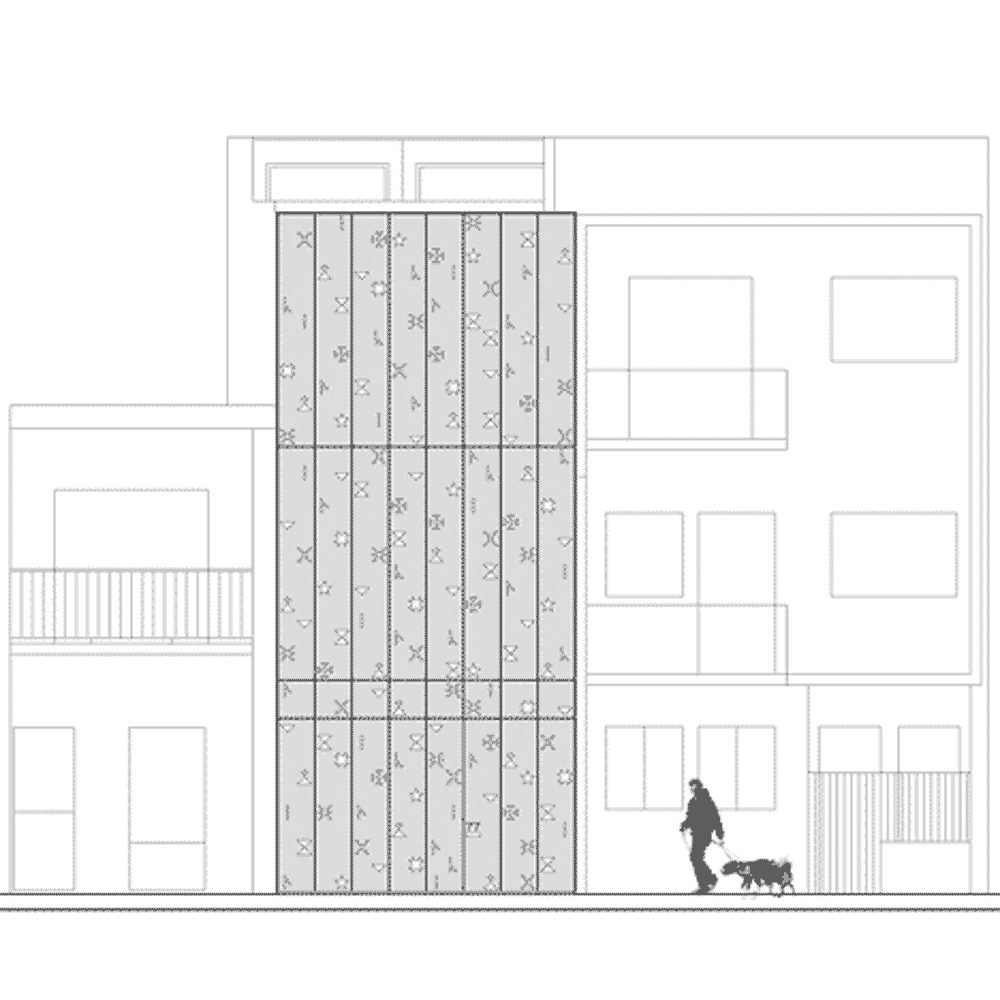
Portuguese studio dIONISO LAB have completed a house in Póvoa de Varzim, Portugal, with a façade comprising aluminium shutters perforated with symbols.
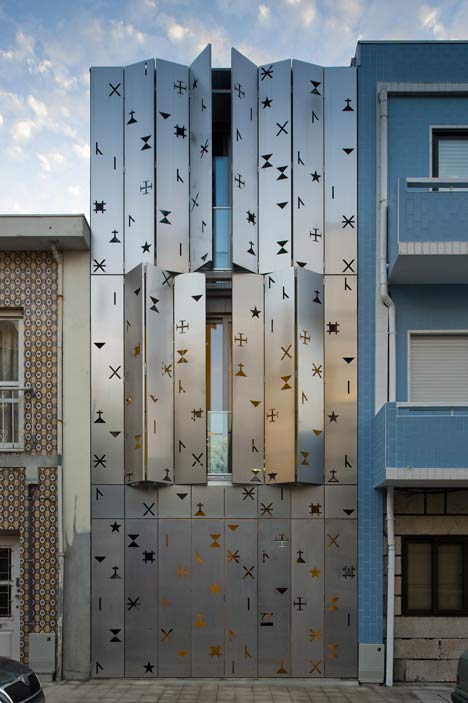
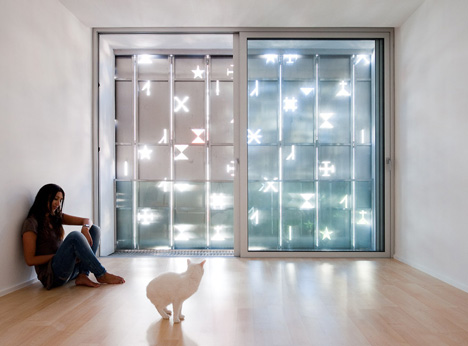
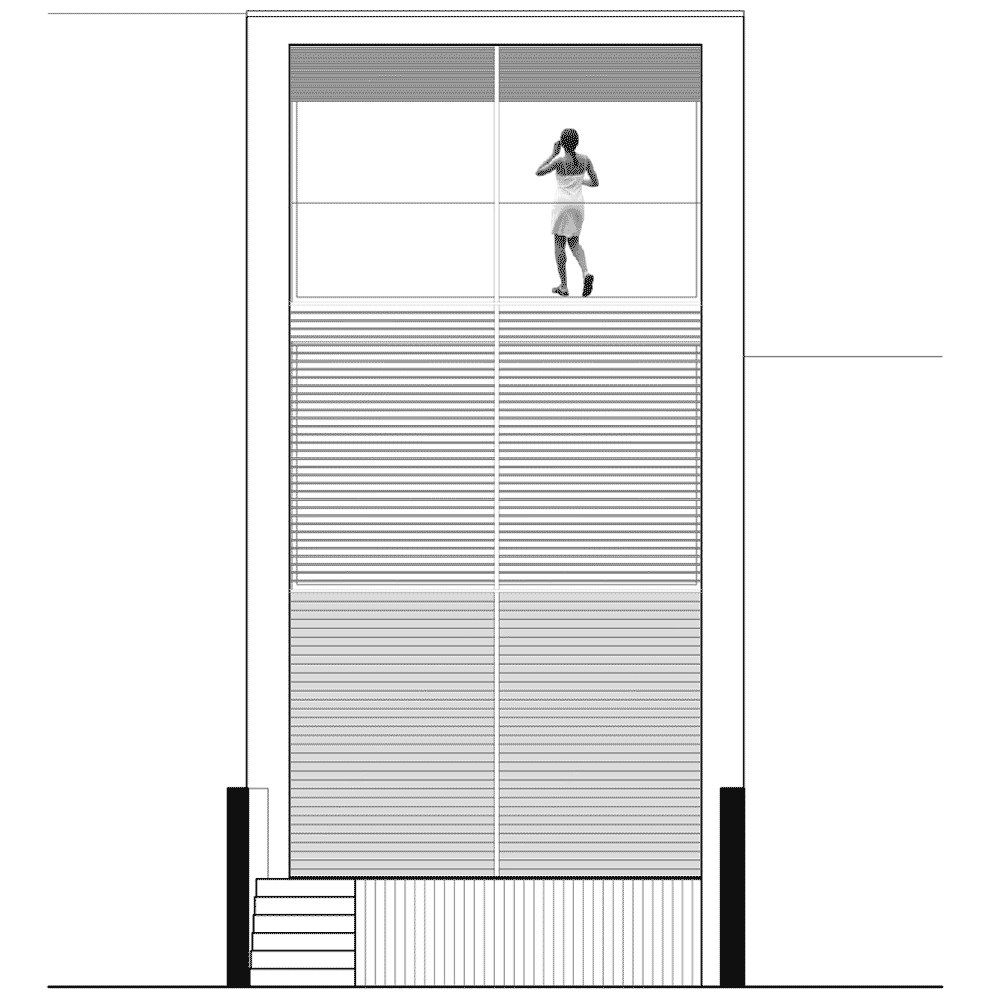
The concertinaed metal shutters sit in front of full-height windows, creating a balcony area between the two façades and providing privacy when required.
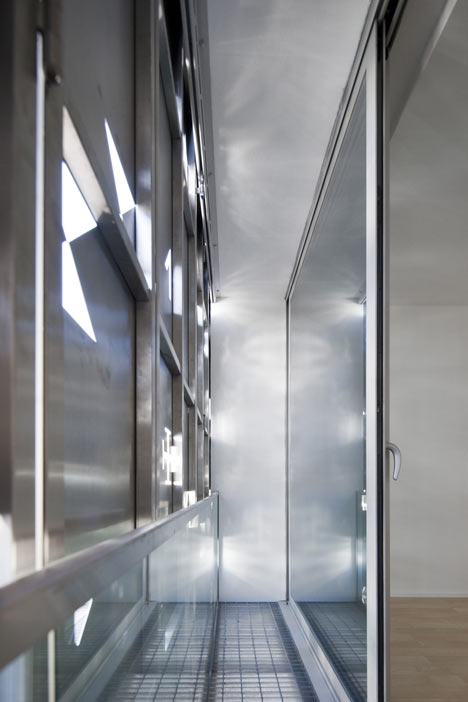
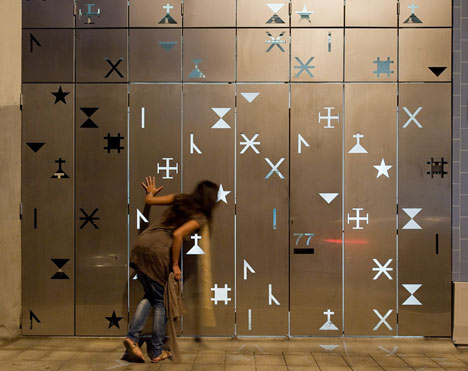
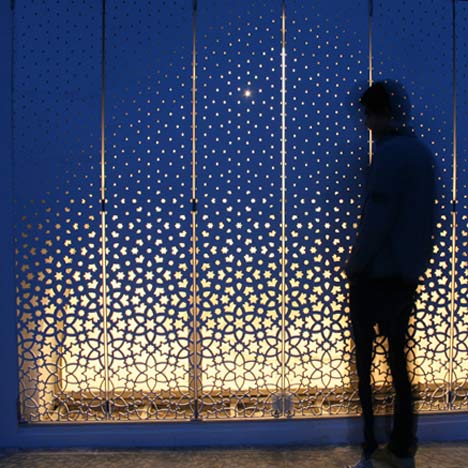
Symbols relevant to the local area, a fishing town, puncture the metal screens.
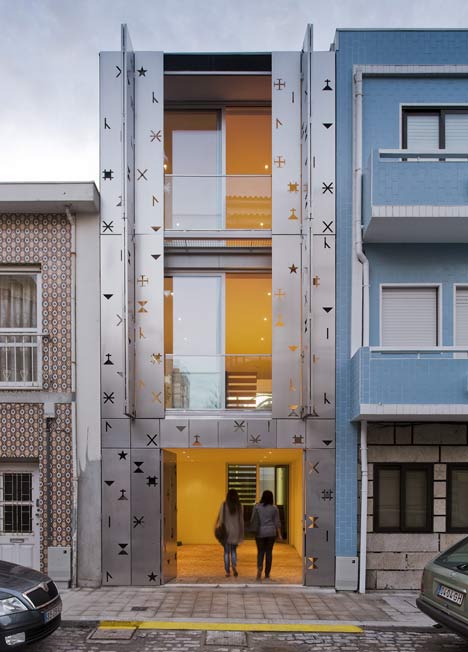
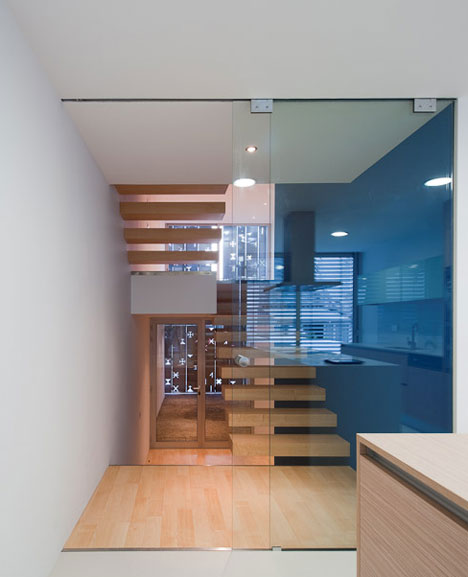
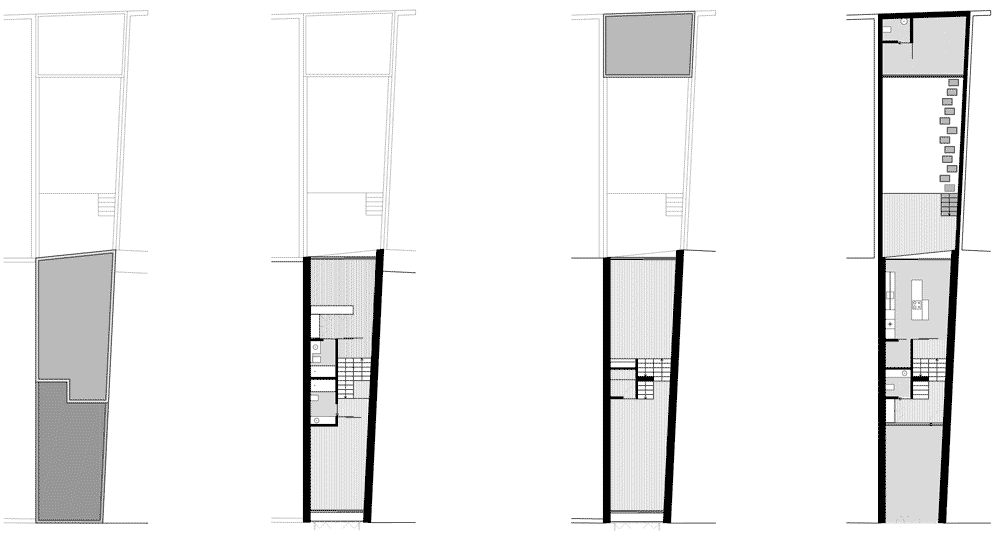
The interior is divided into split levels and opens onto a little garden at the rear.
Photographs are by Fernando Guerra.
More photography by Fernando Guerra »
More residential architecture on Dezeen »
More Portuguese architecture on Dezeen »
Here's some more information from the architects:
HOUSE 77
Póvoa de Varzim is a city profoundly related to the sea and fishing.
Its great cultural richness became an interesting stimulus to the project.
In fact, the house was an opportunity to revitalize some of the city's memories and to participate in the panoply of colours and materials that characterise the street.
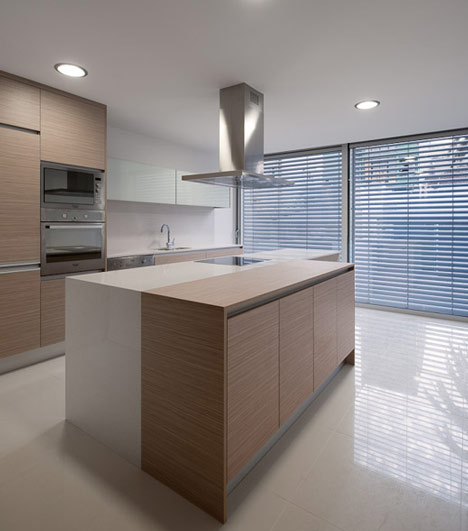
The house is simple... it is organized in a vertical and hierarchical way.
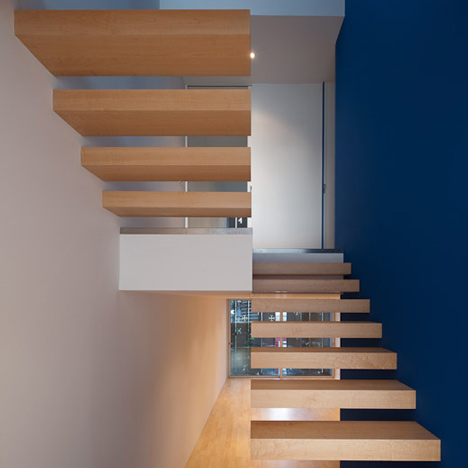
The social areas are on the inferior floors and the private areas on the superior levels.
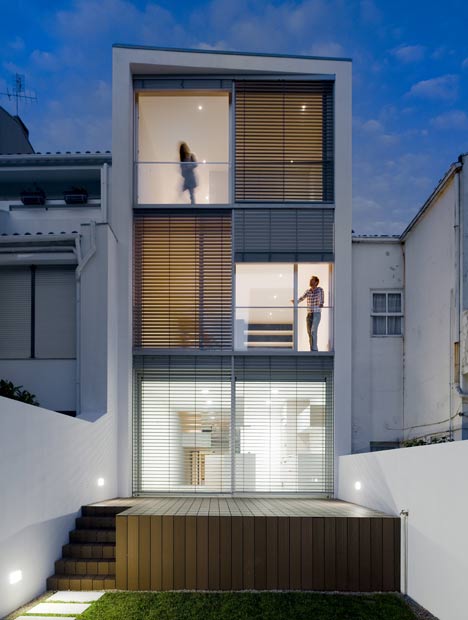
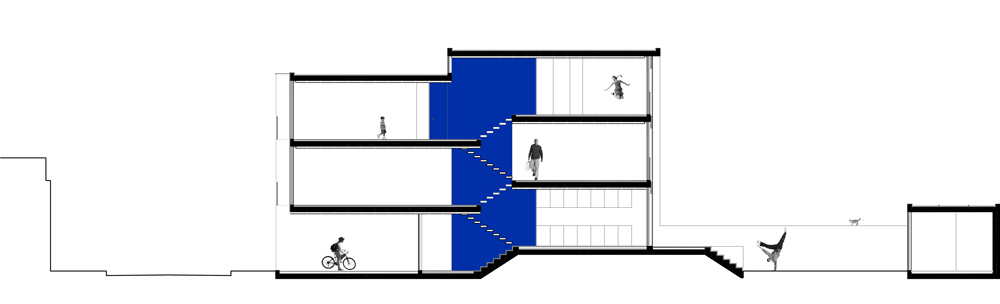
To achieve great visual amplitudes and dynamic interconnections between spaces, the interior was structured in half floors.
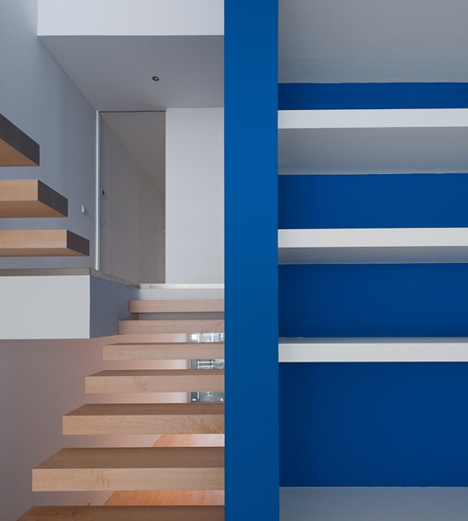
The width of the plot decided the stair. In fact, it became the heart of the house.
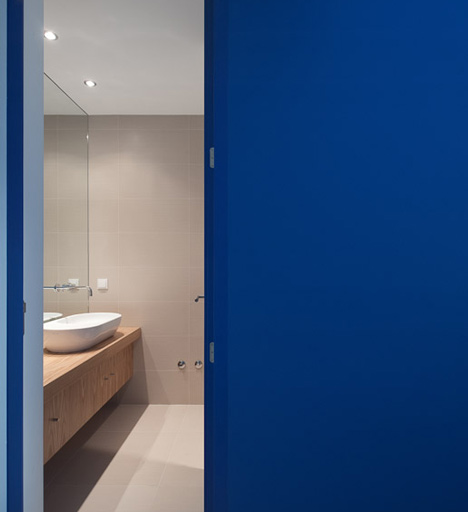
A wall painted with Blue Klein emphasizes its importance and continuity through the spaces.
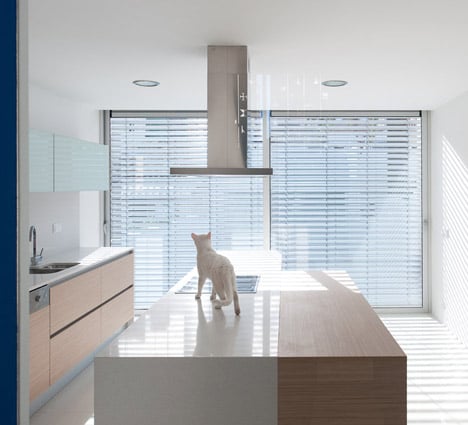
The west facade is covered by aluminum venetian blinds that not only defend the interior from the insulation but also open the house to a small garden.
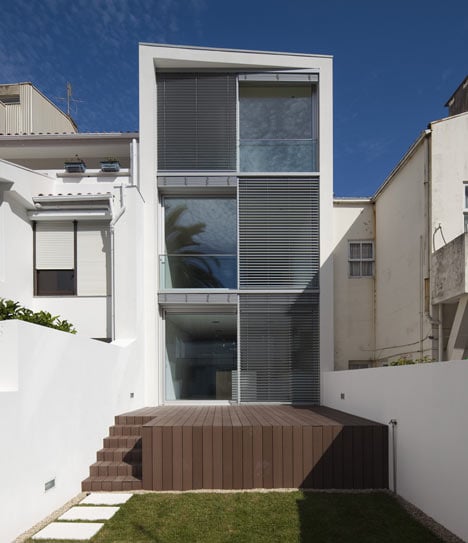
At east, the house gets its identity.
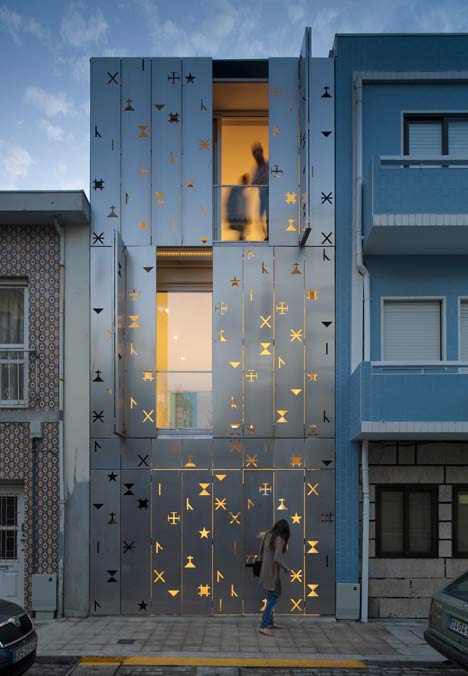
The intimacy is guaranteed by stainless steel panels, perforated with the "siglas poveiras".
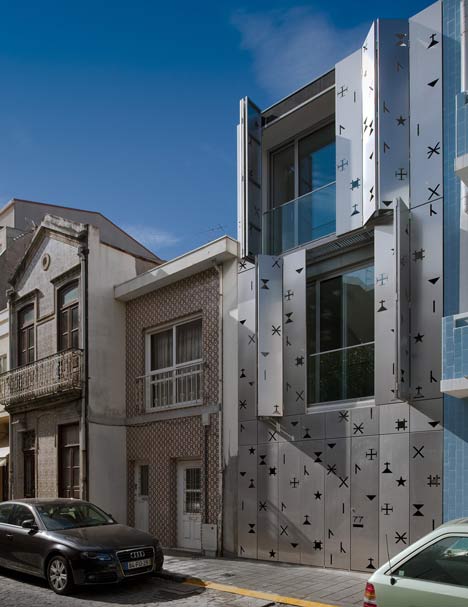
These symbols are a proto-writing system once used as a way of communication and to mark personal and fishing belongings.
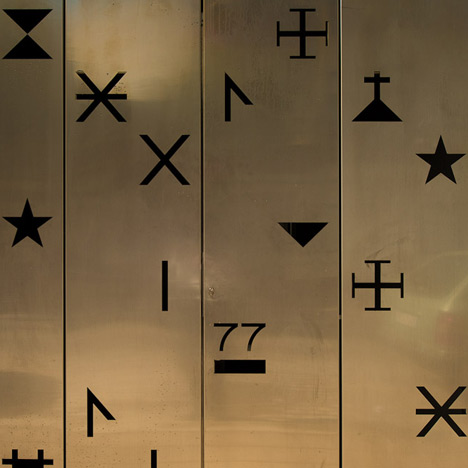
Also, they were hereditary and constituted an important family legacy that was transmitted by inheritance through generations, evolving with new combinations.
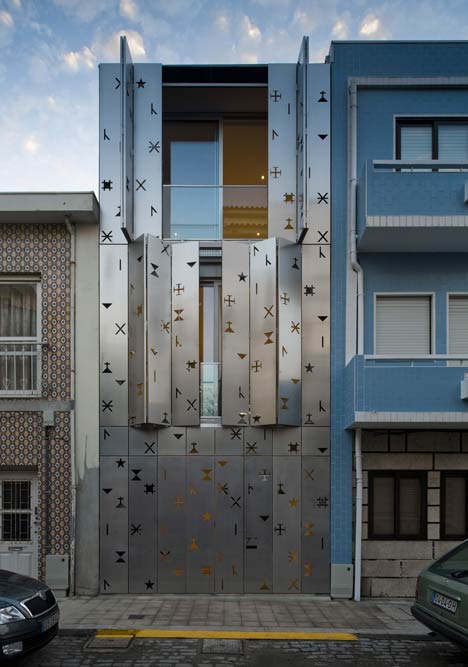
In this way, the house, in the very centre of "Bairro Norte", shares some of the city's memories and references with the population and revitalizes a legacy that has been progressively forgotten and abandoned.
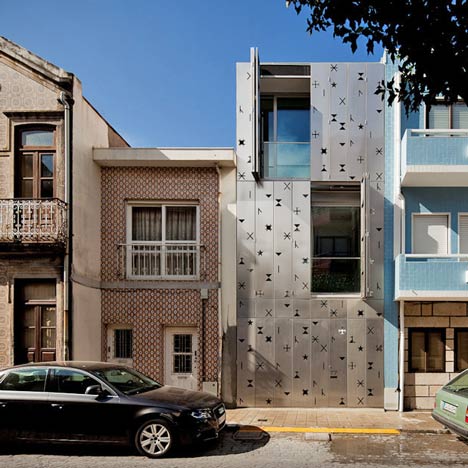
Quietly, the house confesses its pride in the city...
Click for larger image
Architect: José Cadilhe
Project Team: José Cadilhe, Emanuel Fontoura (Final Design)
Click for larger image
Location: Póvoa de Varzim, Portugal
Click for larger image
Project Year: 2008/ 2009
Construction Period: 2009/ 2010
Click for larger image
Contractor: Consarte Lda. (www.consarte.pt)
Constructed Area: 232 m2
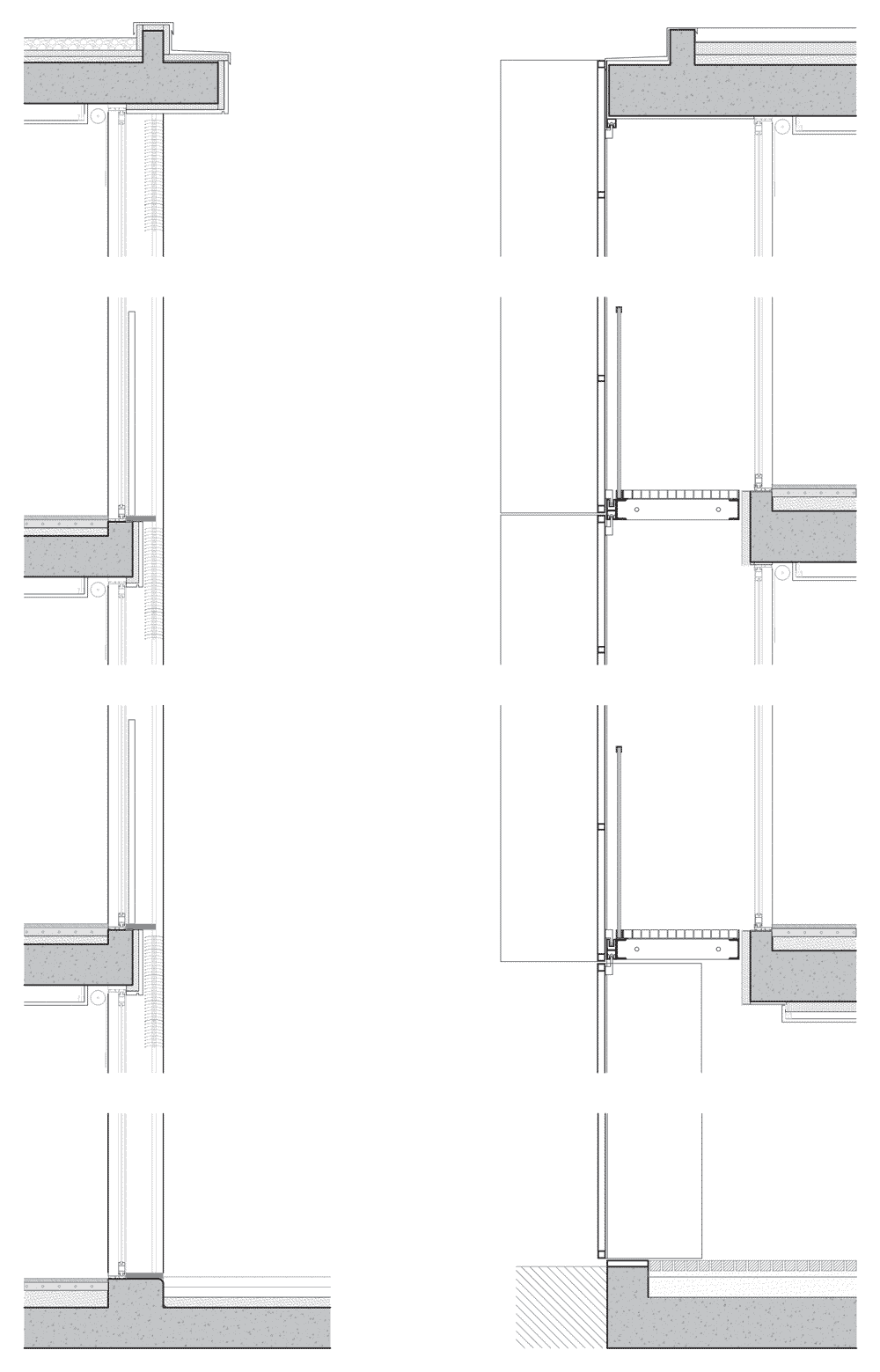
Click for larger image
See also:
.
![]() |
![]() |
![]() |
| Casa Puglia by Peter Pichler |
Ladderstile House by ThreefoldArchitects | Restello by Piercy Conner Architects |


The photo of the stairway with the implied vertical line down the center is really nice..
I like where the symbols are coming from conceptually, but I'm not too keen with the outcome. What I don't like at all is how with the shutters closed its like someone built a wall facing onto the street.
It had to happen once : here's the Louis Vuitton architecture. Ridiculous and pretentious.
it's just a similar pattern, what's pretentious about it?
It is pretentious because inserting that type of bling-bling "architecture" into a typical humble portuguese street is not an organical evolution in a small city. What's wrong about the normal (in the sense of normated by generations) proportions in a common street ? This is shopping mall architecture. The worse about it is that it probably stimulate others and I'm not sure that's a good idea. Just come over here and have a look at most portuguese villages and cities and you you will understand what I mean.
Whoa…! Who says it has to be an 'organic evolution'? And why?
Hercule…i'm sorry but you are beeing ridiculous and pretentious. To make a statement about something, you need to understand it. I'm from Póvoa de Varzim, Portugal and I understand this project perfectly. Póvoa de Varzim is a place of great tradition of fishermen. And this house, in this street, has it all about their tradition and symbolism that you will never understand.
This is Architecture…
Caro Carlos, não faz mal … everybody has the right to have is opinion. I love your beautiful country since 18 years now. Actually I live near Aveiro since more than 2 years now. Don't think people from abroad cannot understand the deeper meaning and feeling of local traditions. Some people do inform theirselves and p.e. learn the language. But : this use of symbols without any reason is nothing more than cosmetic. By the way I live in Praia de Mira, where the fishermen's traditions are also very strong. When I showed this to some of my (fishermen) friends they didn't seem to understand more than I do. But maybe you have to be from Póvoa de Varzim to deal in this great secret ? Até a proxima.
Poirot … it is a local iconography. These symbols are used in the bow of boats. This is a fishing village
exactly..certainly not a good idea! and the out of context use of those marks does nothing to refresh the memory of their traditional reference: here they do not mark anything for recognition.. just a simplistic expedient for resolving the facade in a manner of a commercial package
i do like thin half-landing houses like this, but some of the rooms are so big, what are they going to use all that space for? the house is almost twice as big as it needs to be. some articulation of the space to give more functions is necessary
Love the house, but I loved even more house on the left, where old lady just was leaving the house:))))So I want both of them beautiful: one with character another one too modern and cold!
I love the house. Its playful and grabs the eye. Architecture is at its best when its fun and accessible.
I agree with you. All the negative comments don't reflect the character of the house, it is imaginative and fun, why be a conformist bore? Cheers to dIONISO LAB for this House 77.
wont those aluminium shutters get overheated during the hot Portuguese mornings ?
I think that central stairs makes most sense in dividing a very narrow house. In order to achieve this though, there needs to be a side entrance, which is unlikely due to the lot narrowness, or a front entrance that renders the front room even narrower or too naked for my likes.
This project solves this problem with the ground floor “room” which can serve as either a garage or semi-public space that makes for neighborliness…as do the first and second floor balconies.
I understand how the perforations relate to local history, but they’re not my taste, and certainly if this were emulated in other locales (I think there are architects in Santa Monica who do folding screens as well) another manner of peroration would be entirely acceptable…something geometric or arabesque.
It might go without saying, but the stairs are artful, and most days I wish my living room were only furnished with my cat.
Je connais très bien cette région du nord du Portugal. Ce village balnéaire contient si pas les plus belles plages du nord du Portugal. Pays très chaud en été, je comprends bien les stores de façades. Les espaces un peu trop grand peuvent être du au faite que c'est peut être une maison de vacances privée, et souvent les portugais se déplacent en famille.
Très belle maison pour un pays qui lui commence à se moderniser architecturalement.
tu parle
j'ai vu des horrible pastiches en portugal, mais parfois des exemples d'architecture d'une formidable qualite
At what point do the Masons move in?
haha.. it might be too little space for all those Masons
Just need some more black and white amosaic on the floor. And Masons always get in at three points.
I think the back integrates with its surroundings much more successfully than the front.
this has some viking runes in it.does it have to do with the local fishermen?