Shelf Hotel by 3Gatti Architecture Studio
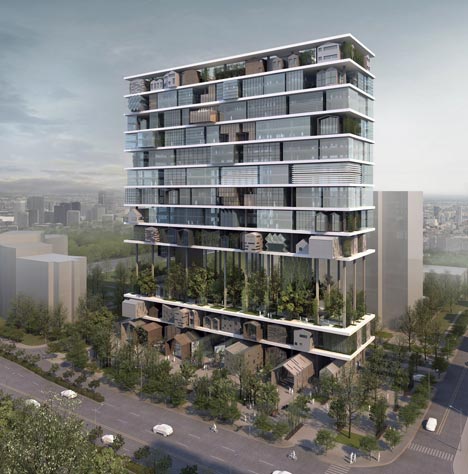
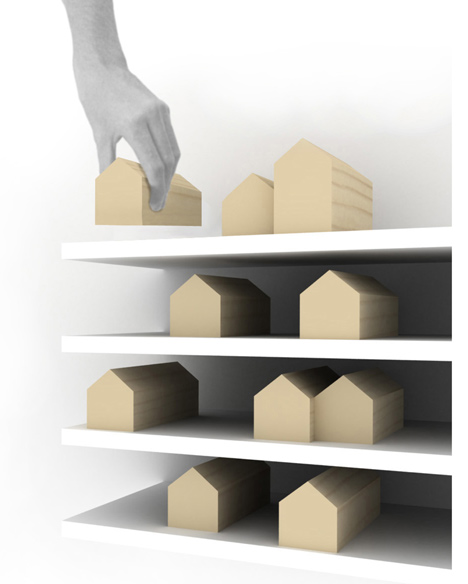
Rather than design a run-of-the-mill skyscraper for a new hotel in Xi'an, China, architects 3Gatti decided to put lots of smaller buildings on a gigantic set of shelves.

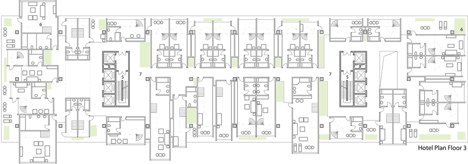
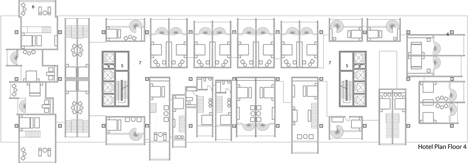
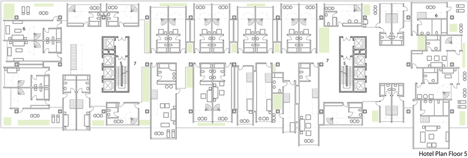
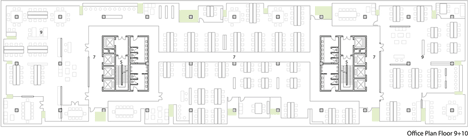
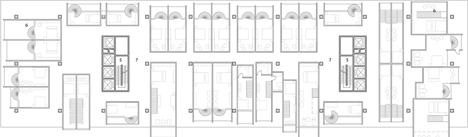
Houses and apartment blocks on the lower levels of the Shelf Hotel will contain hotel suites.
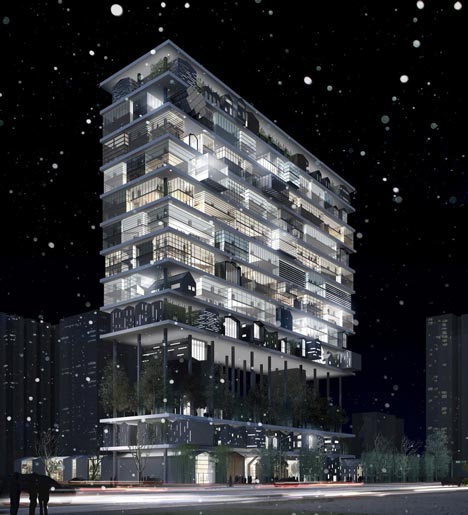
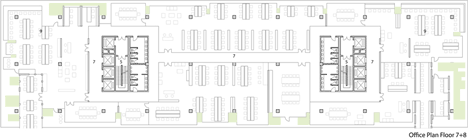
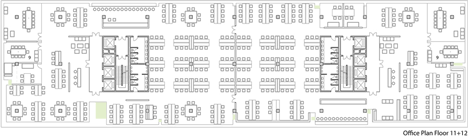
Office blocks will be placed nearer the top.
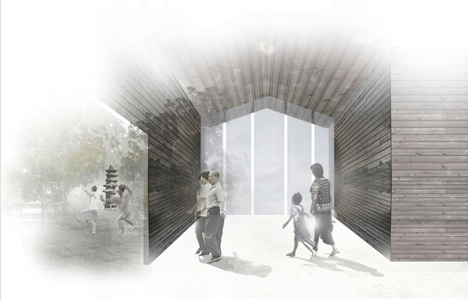
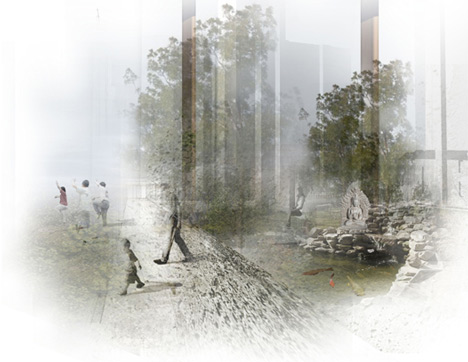
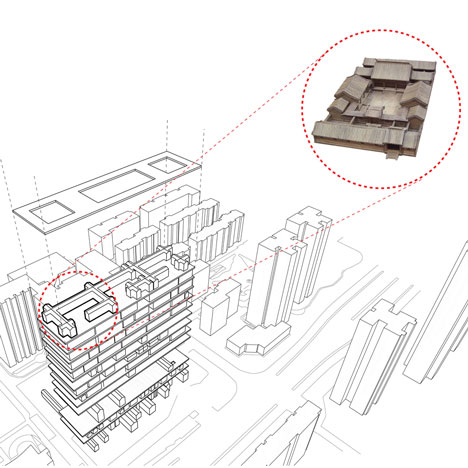
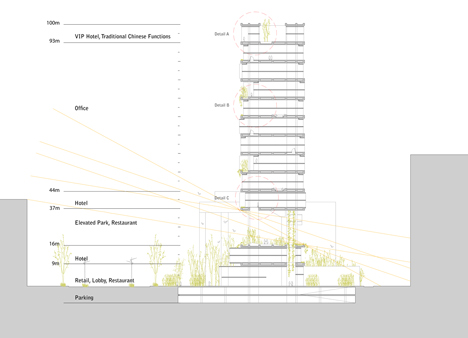
Two shelves will be omitted from the lower part of the tower, creating an elevated garden including a courtyard surrounded by restaurants.
The project is currently awaiting approval from the local authority.
Check out a hotel in the Netherlands that looks like a pile of houses here.
We've featured a few projects by Rome and Shanghai firm 3Gatti Architecture Studio - see them here.
Here's some more explanation from 3Gatti Architecture Studio:
Shelf Hotel
This project is intended to be the the first contemporary building in the contemporary Xi'an; want to be an architecture in open dialogue with the rest of the world in a multicultural international architectural language and at the same time strongly attached to the Xi'an and Chinese traditions.
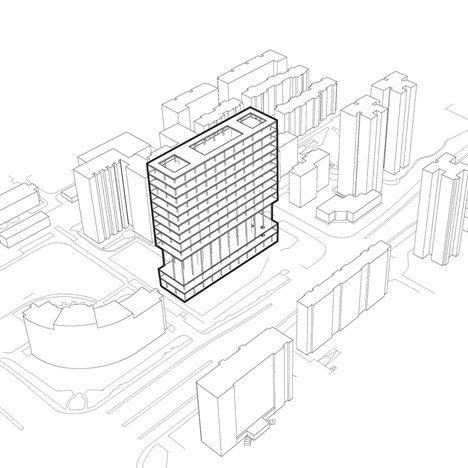
One main purpose of this design is to follow the needs of different inhabitant without loosing the power of a strong landmark building in the cityscape.
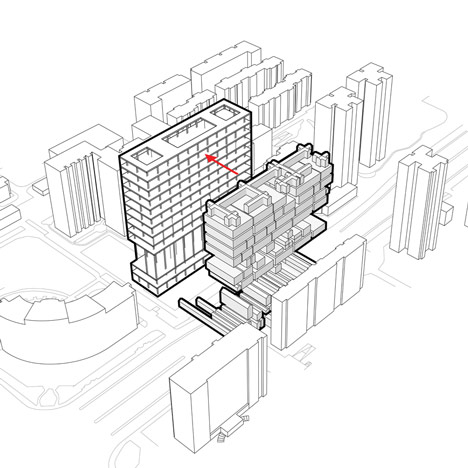
In the common buildings the design is a dam imposed by the architect to the mutating needs of the people and of the developing history of the city. This building wants to be an open matrix to be filled during time with the mutating expectations from a growing culture and society.This matrix will be the more expensive part of the building that of course is the structure, the only element very difficult to mutate during time.
The objects that will fill the matrix will be built following the different owners identities, functions and real estate needs in a more free and low cost construction methods.
Working 7 years as an architect in China I learned that the construction here follow very strictly and spontaneously the flow of economy without many constrains from regulations, planners and building managements.
Usually architects built objects where the integrity and personality is made by the beauty of the exterior shape and material, shapes and material that have to stay clean and unchanged till the end of the building life. That’s maybe possible in a country where the managements and regulations are very strict and conservative and where probably the economy is very slow creating no development acceleration.
Is not the case of China. Here all architects get frustrated because they can make pictures to their beautiful creations only in the first month life of the building, after that inhabitants start to put unwanted attachments to the building: advertising signs, volume extensions, additional decorations and other additions following their own living or business needs and personalities.
Our design want to make of this dynamic attitude of Chinese culture the real power of the building facade; so that every change during time will give not less but more beauty to the building look and overall concept.
Till the sixties it always have been a dream for architects to create an highrise building where to show the identities and personalities of each inhabitant instead of building an anonymous facade to represent the hundreds of people and business going on inside the building. This can be the right opportunity to realize this dream emphasizing the beauty of the collage aesthetics. If this was intended to be a design for our parents probably was better to empathize the deep meaning of a unique culture making and object with an unambiguous hidden spirit to be discovered by research and abnegation.
But this actually is a design oriented to the future and to the next generation like all works of responsible architects should be. Observing young people you will notice that they are looking for a life with a simultaneity of stimuli, they are used to live in an interactive environment with many short experiences instead of a unique deep unequivocal one. They are moving in masses naively, led by a revolutionary instinct towards the collective creation and without regards for personal creativity, I'm sure they are the true prophets, those who will guide us towards an amazing future.
This is a design for them, its a way to attract them speaking their own language. The design will show them a variety of different spaces, different facades, different cultural identities, different experiences. But instead of attracting them in the chaos of the city with its inhuman spaces, we will bring them in a natural and peaceful variety of environments where to learn about themselves, their own culture and the culture from their peers around the world. This building wants to represent their spirit of collective creation and the facade will literally represent this continuous and interactive flow of creations. This building wants to represent their spirit of collective creation and the facade will literally represent this continuous and interactive flow of creations.
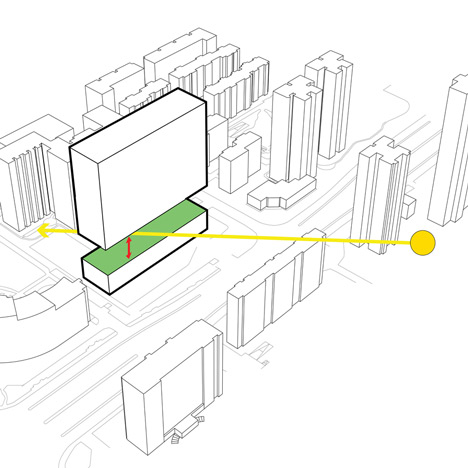
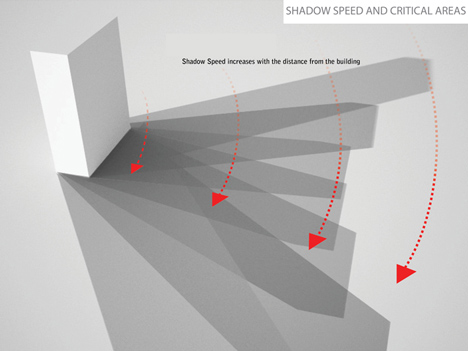
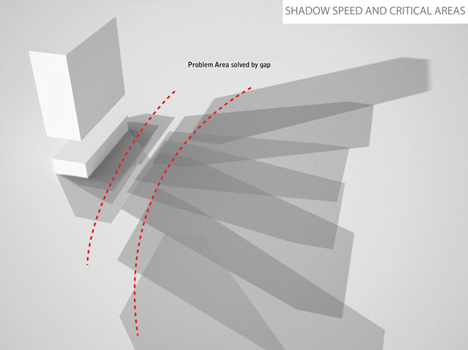
One of the biggest problems to solve in this design was how to get rid of the building shadow on the neighbor residence buildings. Chinese regulation is very strict on this and don’t allow more than certain amount of shadow time cover every day. Our building is 100 meters tall and quite large. Thanks to software analysis we discover the critical point to be not too far from the building base where the shadow actually is not moving but is almost permanent all day long. We spontaneously solved this problem by rising the upper part of the volume so that the sun can reach exactly the critical area in need for more light. In this way we opened an opportunity for a large garden to be placed inside this forced gap. This garden will be the heart of the hotel together with the top roof garden where we placed a Chinese courtyard residence traditional typology (siheyuan).
Those green opportunities will be the location for special function related with the exhibition and research about Chinese traditional cultural activities such as calligraphy, tea and taiji together with Buddhist meditation and learning areas. Will be also the place where to grow vegetable and other special food in green houses and water pools.
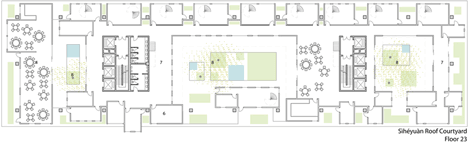
Restaurants and lounge spaces will be also placed in those green areas and will be visible from the skylights and transparent floors of the below and upper hotel rooms. The green will be located in small amount in each double floor of the highrise, especially in the gaps between the object/houses that fills the slabs matrix structure.
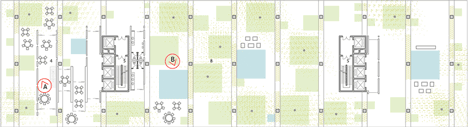
The structure will be composed of pillars and inverted slabs every two floors. In this way is possible to take use of the space between the beams for different purpose like for storage spaces, soil for trees and green areas, pools, mechanical equipment and other functions adaptable to the space under the floor surface.
Most of the houses actually will not be completely autonomous volumes but will be aggregate together and divided only by apparent front gaps so not to waste habitable square meters.
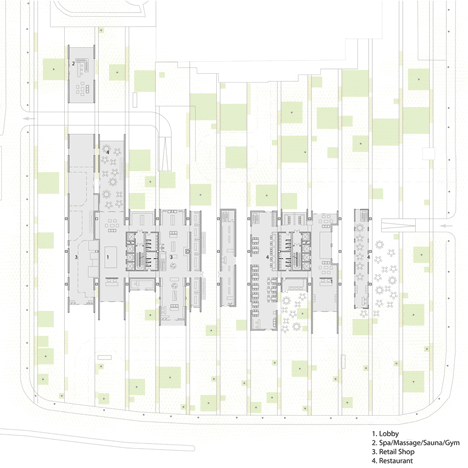
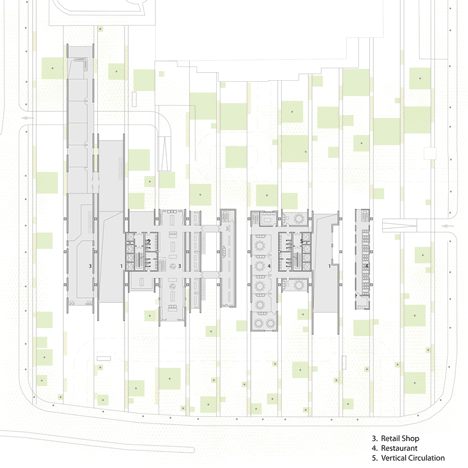
In the ground floor the houses volumes will extend to the front area creating small plazas together with green walls of bamboo. Those will be small spaces in human scale so to be able to make people enjoy open air restaurant areas or outdoor activities.
We believe in this way to create a sustainable project that can last during the years developing its spirit from the ancient Chinese traditions to the future inevitable global culture.
Architecture firm: 3GATTI
Chief architect: Francesco Gatti
Project manager: Borja Gómez
Collaborators: Tyler Johnson, Karen Tang, John Jiang, Lisa Liu
Structural engineer: Jun Gang Sun
Client: Renhe Estate (Shaanxi Weizhi Group)
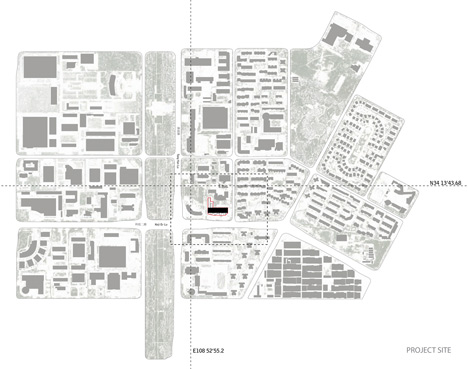
Location: Keji Road, Gaoxin district, Xi'an, China
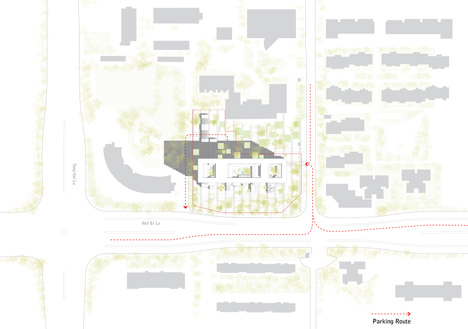
Programme: Five star Hotel, Retail, Restaurants, Spa, Gym, Office, Parking, Green Park
Total area: 50,000 m²
Design period: December 2011
Materials: steel and reinforced concrete structure, bamboo, wood, recycled local stones, recycled gray bricks, recycled terracotta bricks, corrugated steel, glass