House in Ovar by Paula Santos
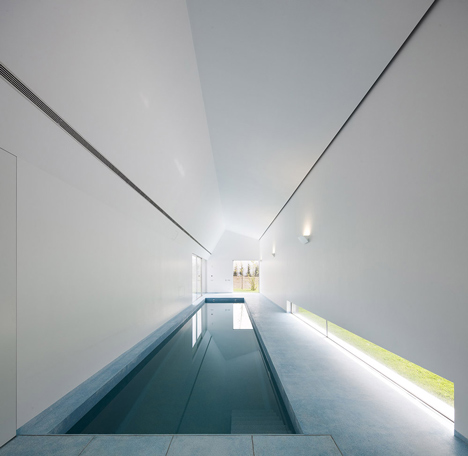
This concrete house in Portugal by architect Paula Santos features an indoor swimming pool and a painter's studio (+ slideshow).
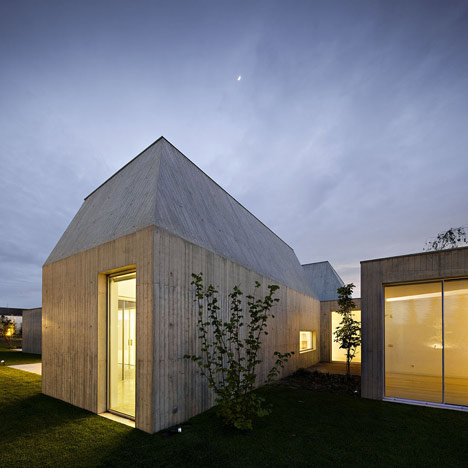
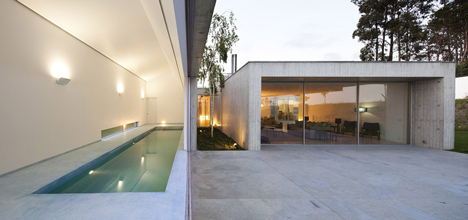
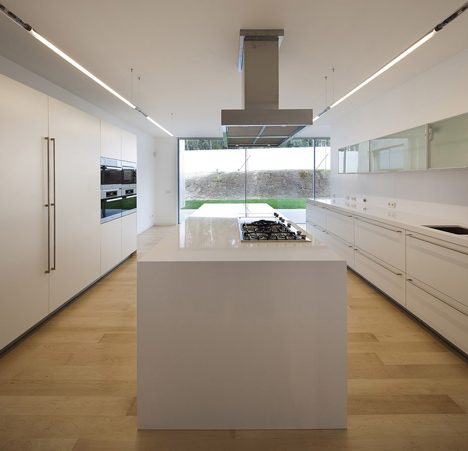
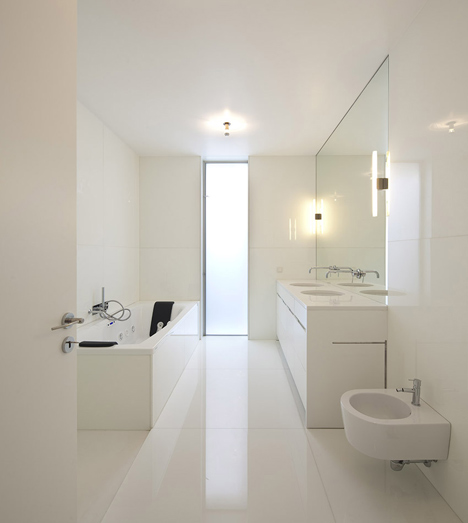
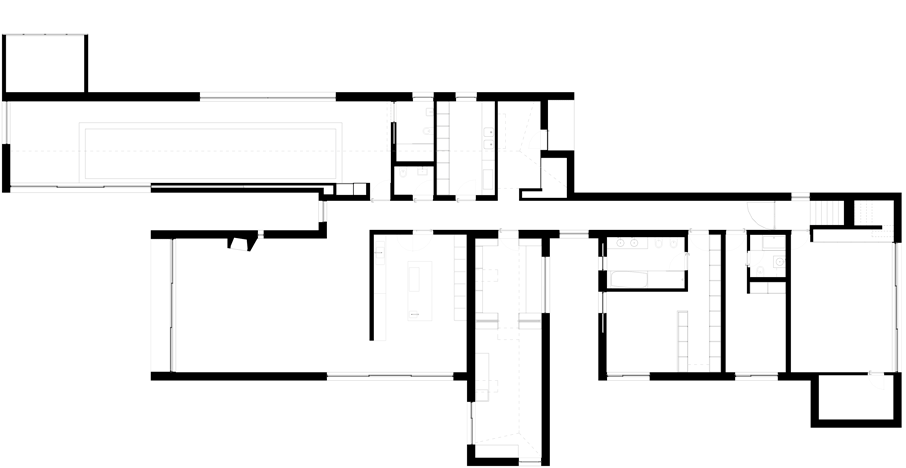
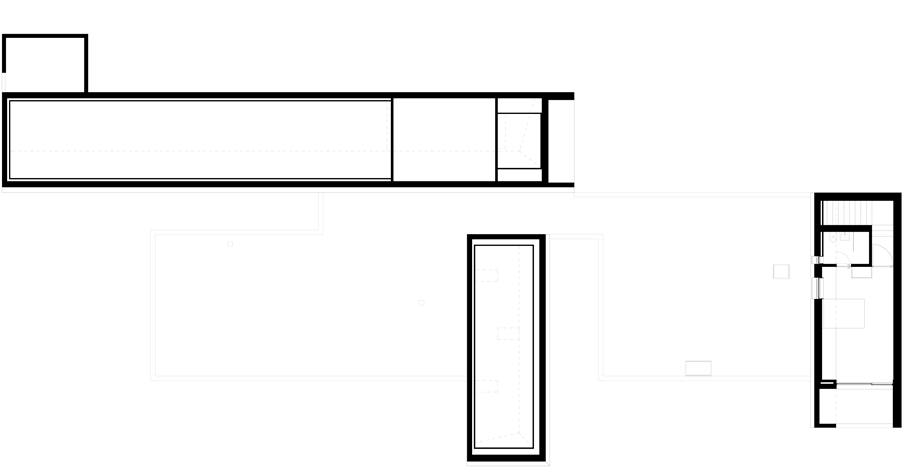
Most rooms in the house are at ground floor level on either side of a long corridor and only an ensuite bedroom is located upstairs.
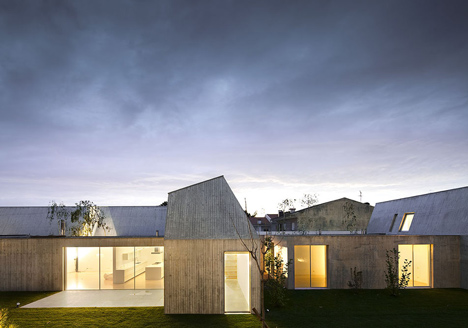
The roof pitches upwards in three places to accommodate this first floor and to give high ceilings to the studio and pool room.
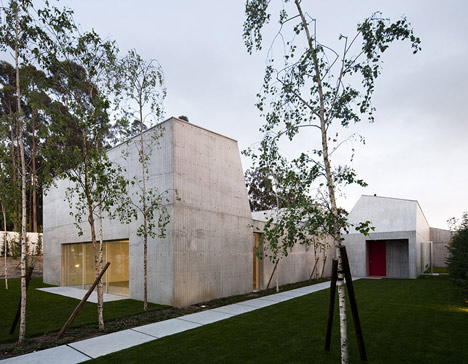
Paved terraces and a grass lawn surround the house and a concrete canopy provides an outdoor shelter with circular skylights.
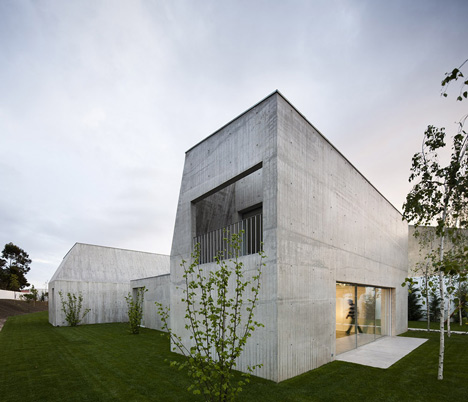
More concrete houses in Portugal worth a look include one with a large hole in its wall and one with a concrete upper storey and glass walls below.
See more projects in Portugal »
Photography is by Nelson Garrido.
Here's some extra text sent by the photographer:
House in Ovar
The house at Ovar, Portugal, is an exercise where we stretched to the limit a number of ideas and concepts for a long time already contained in other projects, which had never been put in place. It is also – and above all – a project, which allows for thinking with other people about their own way of inhabiting a dwelling.
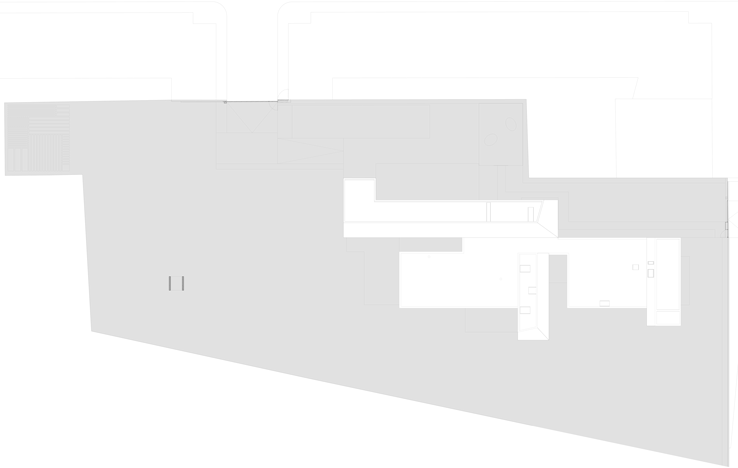
The large-scale project, covering 680m2, to be located on not very stable sandy soil allowed us to ponder the house as an object which develops in a continuum.
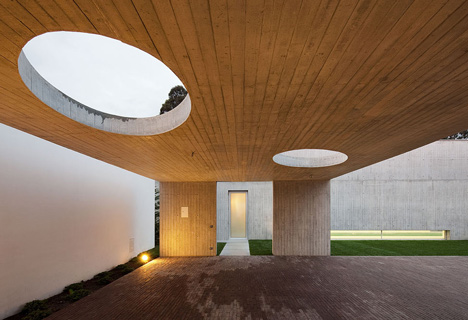
The need to design the main programme of the house as a ground floor meant that the difference between spaces was implemented by means of variable heights in geometric forms: in respect of their importance and meaning, the most expressive areas such as the swimming pool and the painter’s studio or the body of the entrance from the street acquire more expressive and more elevated forms.
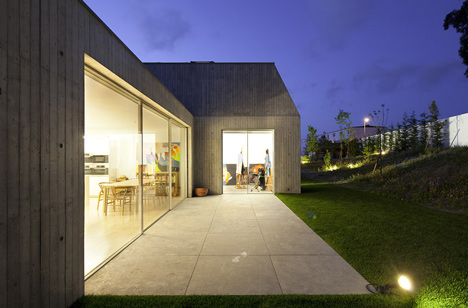
The idea for the object in concrete, a traditionally sculptable material, appears implicit in this concept, designing the elevations with level and sloping surfaces up to the coverage.
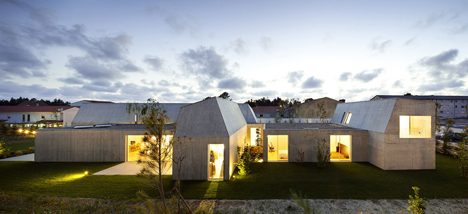
The length of the corridor is used to distribute the desired functions and large areas, further creating clipping plan, which allow for a relation with landscape, with the various wooded areas to be constructed suggesting outdoor leisure.
Client: Laura Malaquias, Carlos Mendonça
Architecture: Paula Santos
Collaboration Joana Machado, Nuno Silva, Vasco Novais, Ana Renata Pinho
Foundations and structures: AFA Consult, Carlos Quinaz
Electrical installations, safety, communications: AFA Consult, Raul Serafim
Mechanical equipment, heating, gas: AFA Consult, Carlos Almeida
Hydraulic AFA Consult: Susana Miranda

Landscape architecture: Victor Beiramar Diniz
Construction: Construtora do Loureiro, Lda