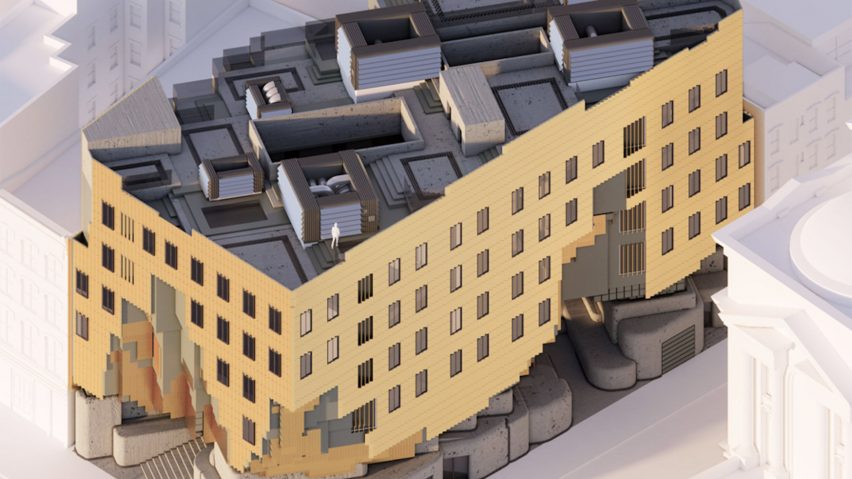
Master of Science in Architecture at Pratt Institute
The Master of Science in Architecture course at Pratt Institute encourages students to consider social, environmental and material contexts within architecture.
At Pratt Institute in New York City, the Master of Science in Architecture invites designers to question how architecture can evolve in response to the urgent conditions of our time.
The programme merges advanced design research with experimental methodologies to prepare architects to engage with the social, environmental and material realities shaping the built world.
Open to students with a background in architecture, the one-year programme spans fall, spring and summer semesters, fostering both critical inquiry and design experimentation.
Within Pratt's Graduate Architecture, Landscape Architecture and Urban Design department, students work in an interdisciplinary setting where architecture, landscape and urban design operate in dialogue, expanding the possibilities of architectural thinking and practice.
Drawing on the creative resources of an art and design school, the MS in Architecture curriculum integrates diverse tools and techniques – from material research and digital fabrication to spatial and visual experimentation. Students graduate equipped to rethink the role of architecture in creating more adaptive, expressive and sustainable futures.
For more information, join us for a virtual information session on 3 November 2025 at 12PM ET.
School: Pratt Institute
Course: Master of Science in Architecture
Type: Postgraduate
Location: Brooklyn, USA
Course dates: September 2026 to August 2027
Application deadline: 5 January 2026
Find out more about the course and apply ›
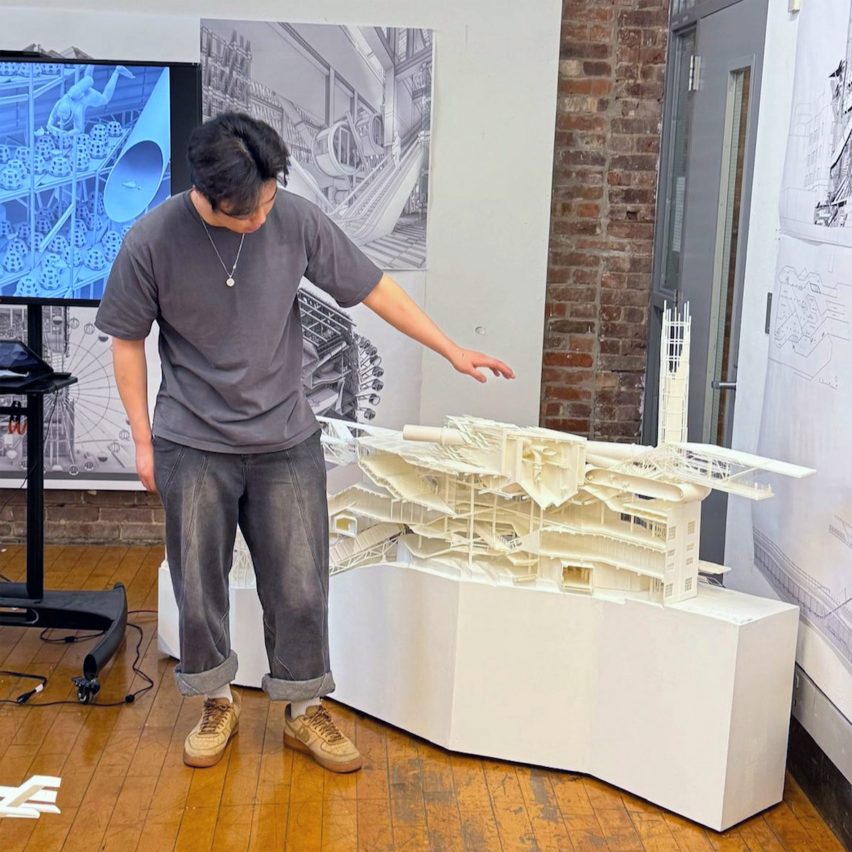
What will I learn during this course?
– Critically question and redefine architecture's role in addressing the urgent social, environmental and material challenges of our time
– Engage in advanced design research and develop experimental methodologies to expand architectural thinking and practice
– Work interdisciplinarily across architecture, landscape and urban design, understanding how these fields inform and enrich one another
– Use diverse tools and techniques, including material research, digital fabrication and spatial and visual experimentation
– Develop the ability to design for adaptive, expressive and sustainable futures, positioning architecture as an active agent of change
– Integrate creative approaches from art and design disciplines, leveraging Pratt's broader artistic context to inform architectural innovation
What are the requirements?
– Applicants must have earned a Bachelor of Architecture (five-year BArch) or a Master of Architecture (MArch) from an accredited school of architecture or the international equivalent
What facilities and resources are available?
– Pratt's School of Architecture is located in Higgins Hall, a blend of historic architecture and a contemporary addition by Steven Holl
– Spacious design studios, critique spaces, a lecture hall and the Hazel and Robert H Siegel Gallery, foster collaboration and public engagement
– Computer labs featuring the latest modeling, visualisation and simulation software
– Pi-FAB, the architecture shop, is designed for precision model making and material experimentation, including CNC, lasercutting and a robotic arm for digital fabrication exploration
– The Higgins Hall Reading Room supports research with extensive print and digital resources in architecture and urbanism
– The Spatial Analysis and Visualisation Initiative (SAVI) is an interdisciplinary research, consulting and education centre focusing on spatial data and visual storytelling
– The 3D-printing centre offers a comprehensive suite of additive manufacturing technologies, including FDM, resin and wax printers and high-resolution 3D-scanners
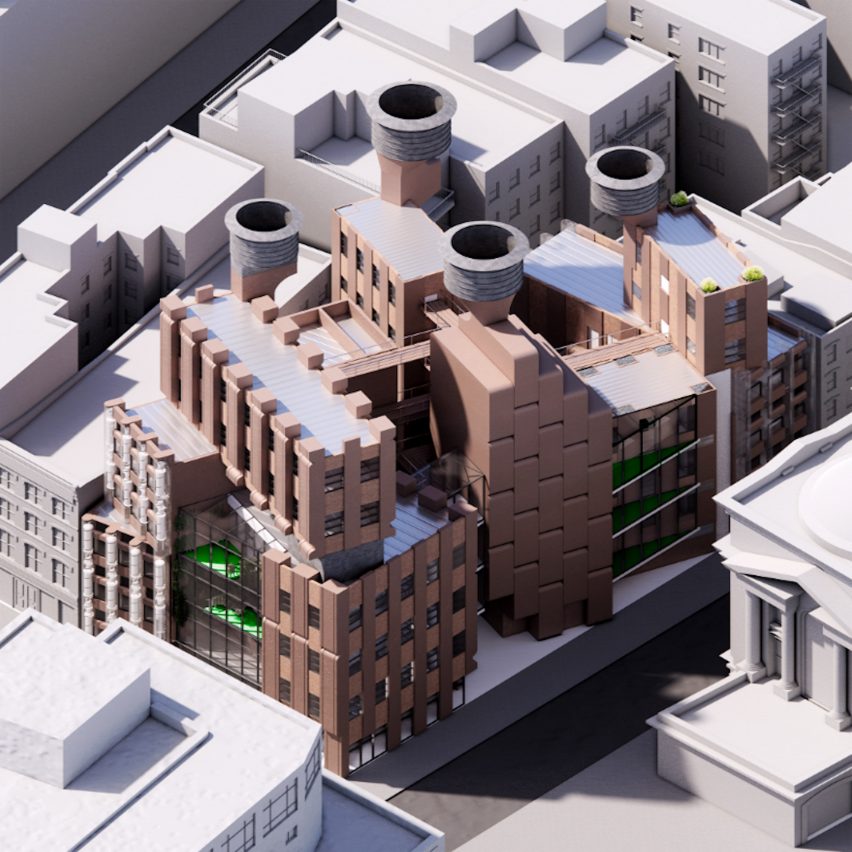
What career prospects can I expect upon graduating?
MS Arch graduates are well prepared for careers that bridge advanced design, research, and technology. Many go on to work in architecture and urban design firms, sustainability and building performance consultancies or design-technology roles focusing on computation, visualisation or digital fabrication.
Others pursue teaching, research or public-sector positions addressing environmental and social challenges.
Who teaches this course?
– Jeffrey Anderson, adjunct associate professor
– Clelia Pozzi, adjunct assistant professor
– Erich Shoenenberger, adjunct associate professor, CCE
– Fabian Llonch, visiting professor
– Alex Tahinos, adjunct assistant professor
– Alexandra Barker, adjunct associate professor,CCE,academic coordinator of MS programmes
Dezeen Courses
Dezeen Courses is a service from Dezeen that provides details of architecture, interiors and design courses around the world. Click here for more information.