

Spanish studio SelgasCano has completed a concept bookstore in east London, with handmade wooden bookshelves based on the fictional Library of Babel and a strict no-phone policy (+ slideshow).

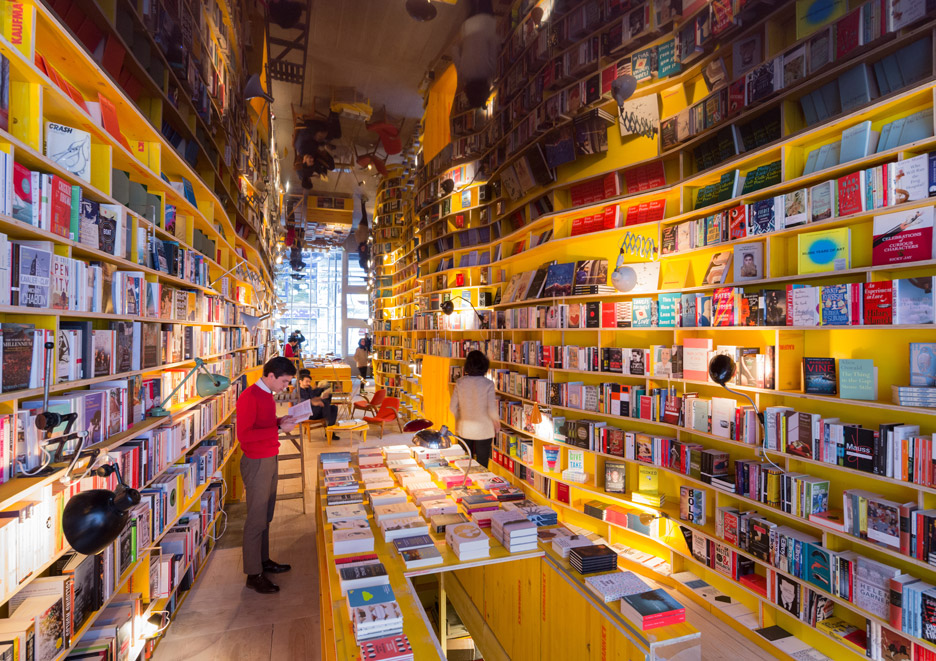
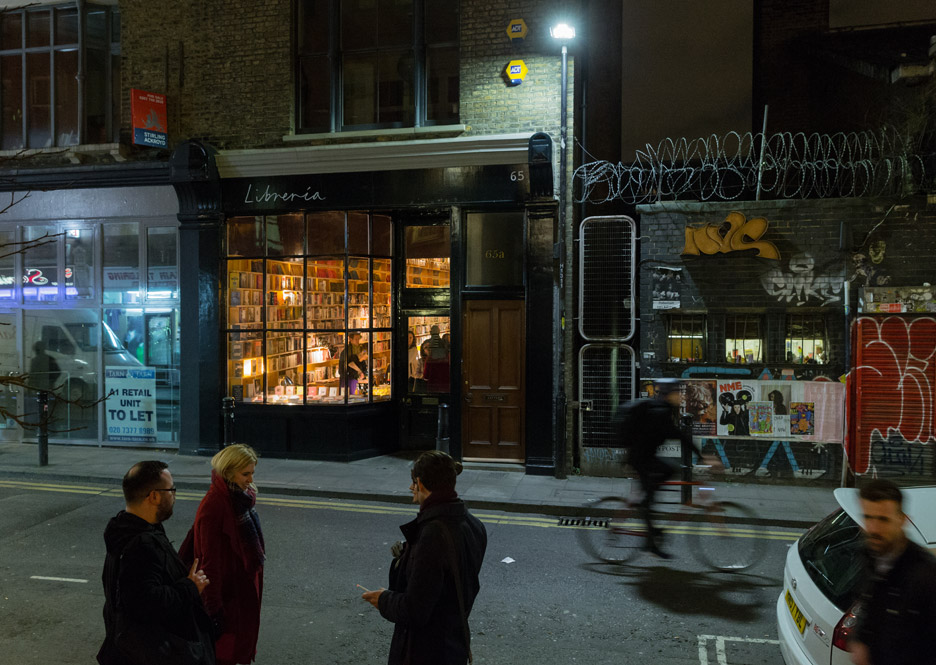
Located at 65 Hanbury Street, Libreria is intended to inspire a fresh appreciation for books rather than digital devices, and for handicrafts.
José Selgas and Lucía Cano, the architects behind last year's colourful Serpentine Gallery Pavilion, used the 1940s tale by Argentinian author Jorge Luis Borges, The Library of Babel, as the starting point for their design.

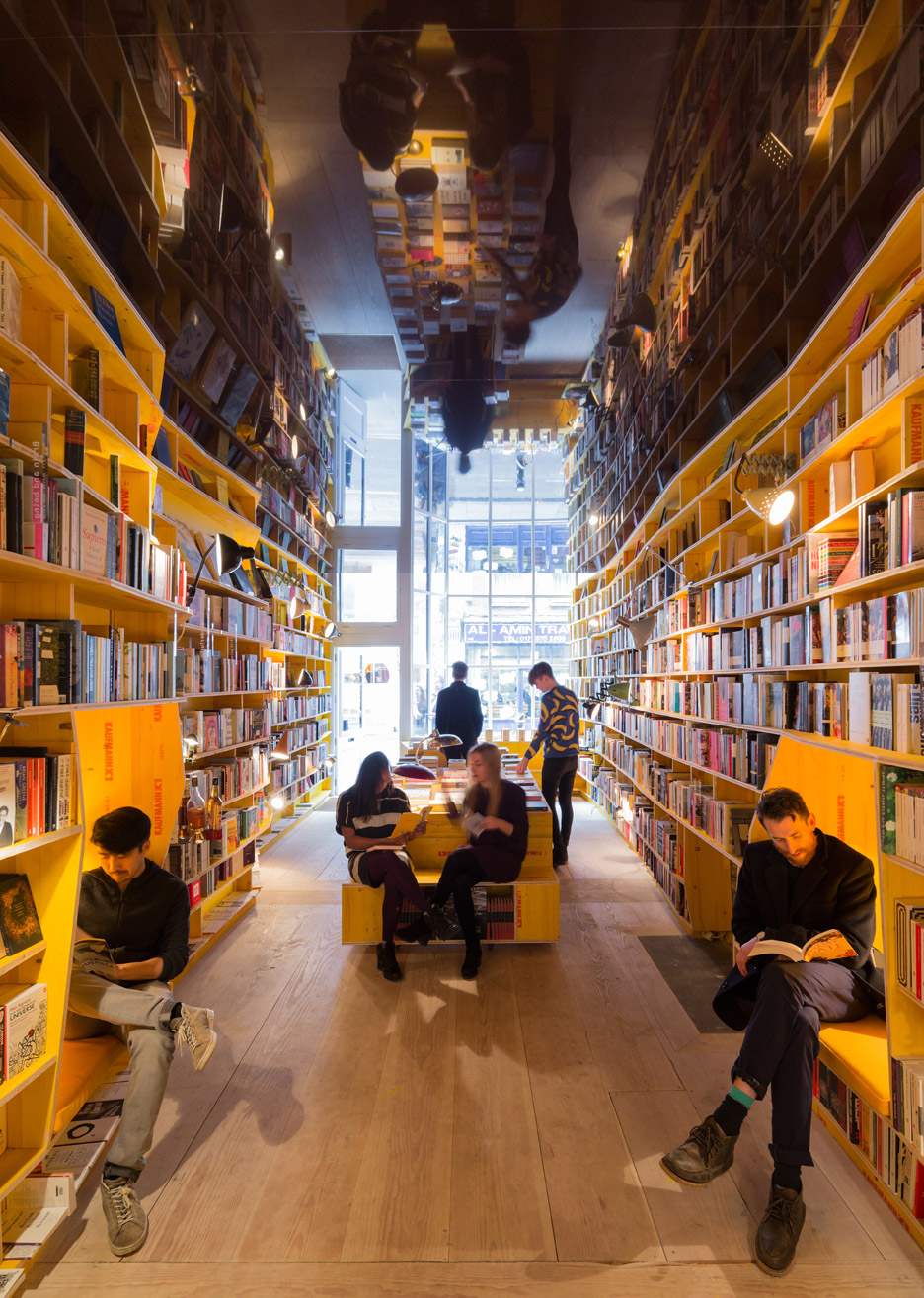
This fantasy story features an almost infinite library where hexagonal galleries contain every possible combination of letters. The architects attempted to recreate this sense of boundlessness using irregular shapes and mirrors.
The project is being led by Second Home founders Rohan Silva and Sam Aldenton, who previously commissioned SelgasCano to design their flagship creative space, also in east London.

The project has been years in the making, according to Silva, and will also integrate a printing press and a community space.
"We believe in the value of books and literature," he said. "Across industries we are seeing a return to physical material things and a fresh appreciation of craftsmanship. These things are not being killed by the digital; they are being given new life."
"One of the joys of physical book buying is having an experience unimpaired by algorithmic recommendation – encountering works you might never otherwise see," he added. "When curated well, bookshops are the best place to encounter new ideas."

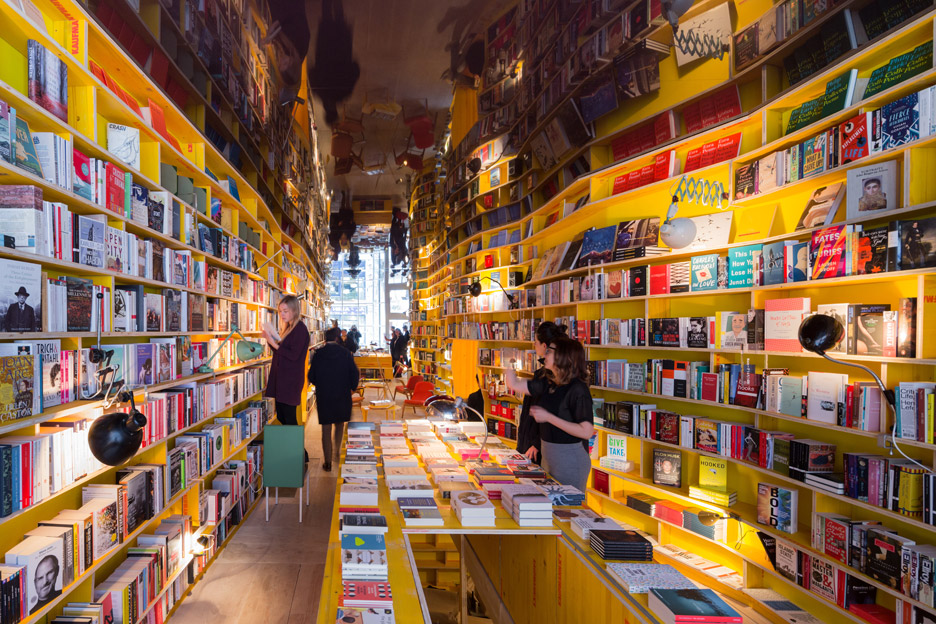
Walls on both sides of the shop are covered in the handmade shelves, built using unfinished recycled wood by artists from the Slade School of Fine Art.
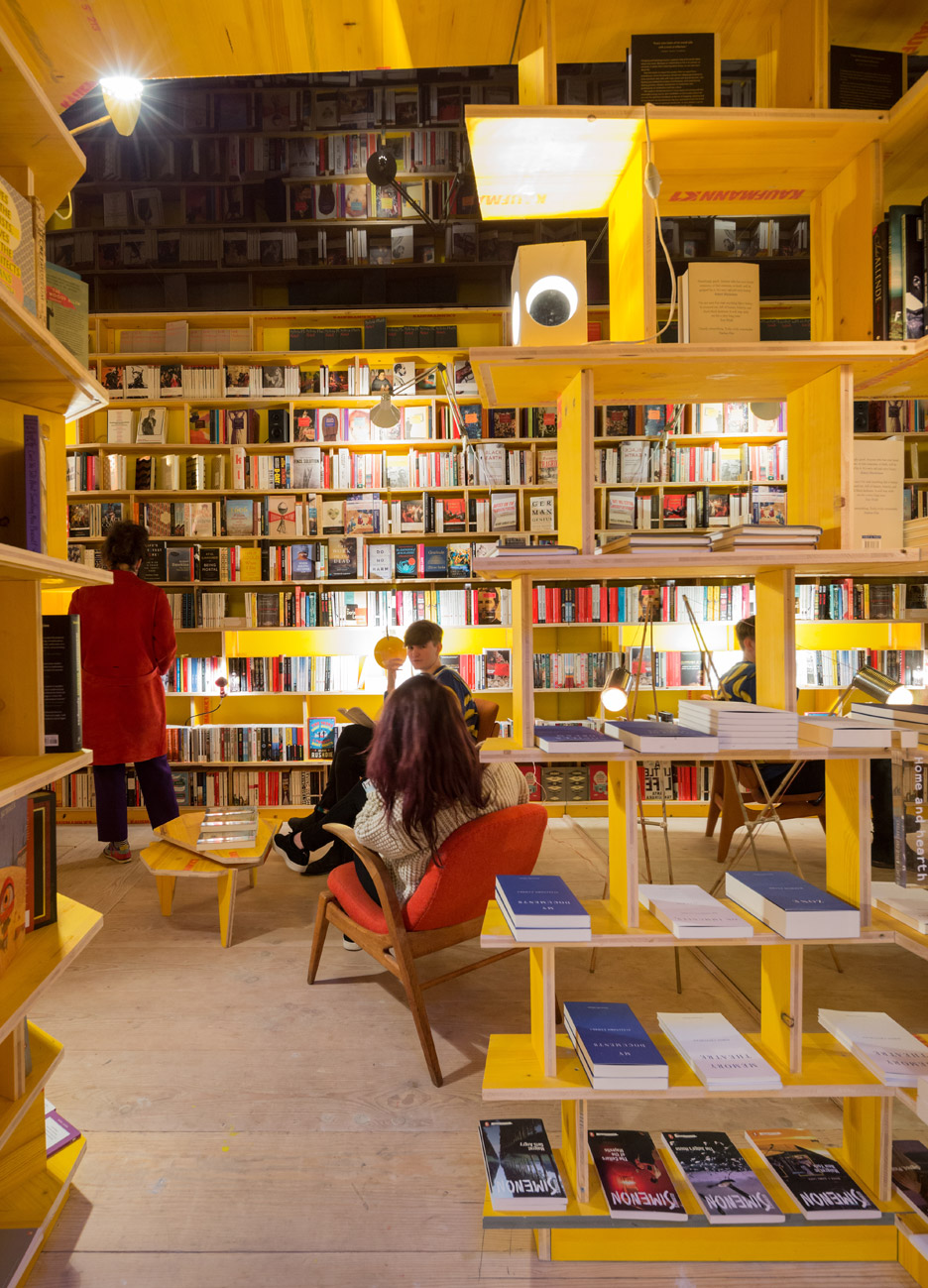
They angle outwards, creating several zigzags, and integrate nooks where visitors can sit down and read. They also form partitions between different areas.
Books are organised across the shelves by theme, rather than being broken up into typical categories. Some are also displayed on tables, built using the same wood as the shelves.

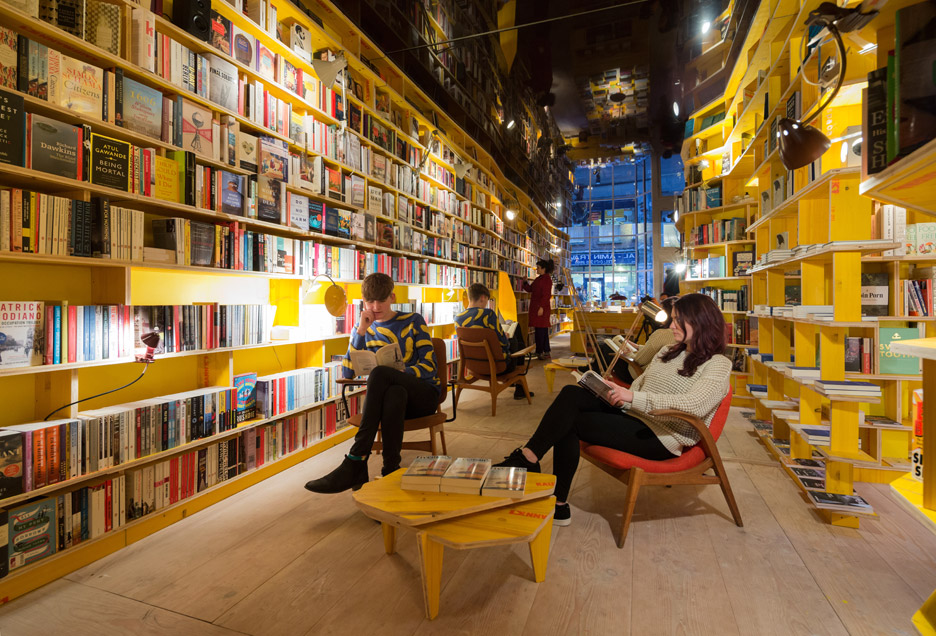
The entire ceiling is mirrored, making the bookshop appear twice the size.
"Libreria's design emphasises both craftsmanship and the delight of discovery," explained Aldenton. "The long flowing lines of the shelves seem to mirror one another, and are in turn reflected in the mirrors of the interior."
"They allow the categories to run horizontally and be layered – so a book of poetry might be displayed right above one on evolutionary psychology, expanding your chance encounters while browsing," he said.
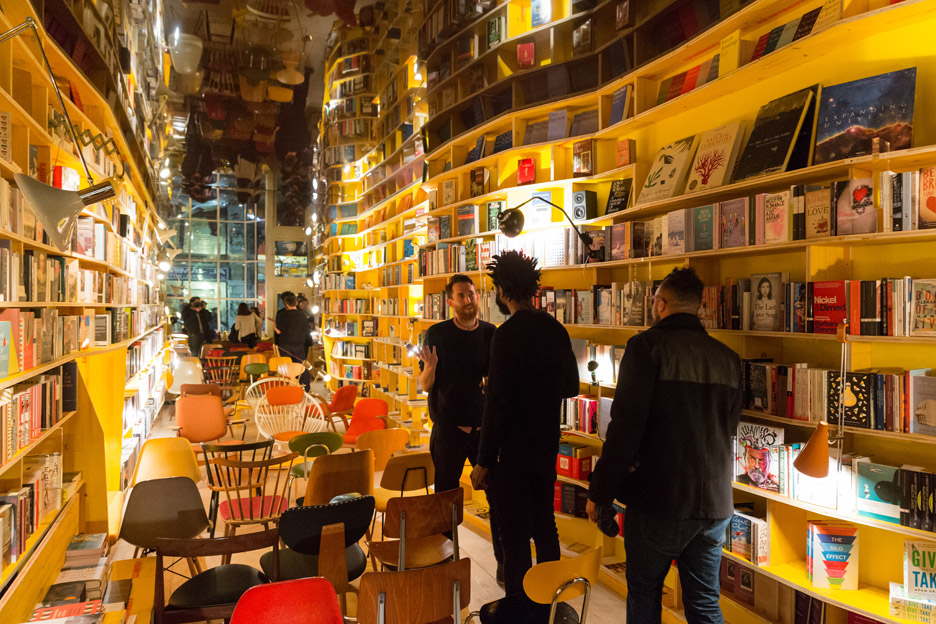
Other details include mismatched chairs and a variety of lamps, all chosen by Selgas and Cano.
Libreria will operate a no-phone policy to encourage visitors to treat the space as a sanctuary. But it will make use of digital software to manage both its stock and its events programme – encompassing everything from seminars to performances.
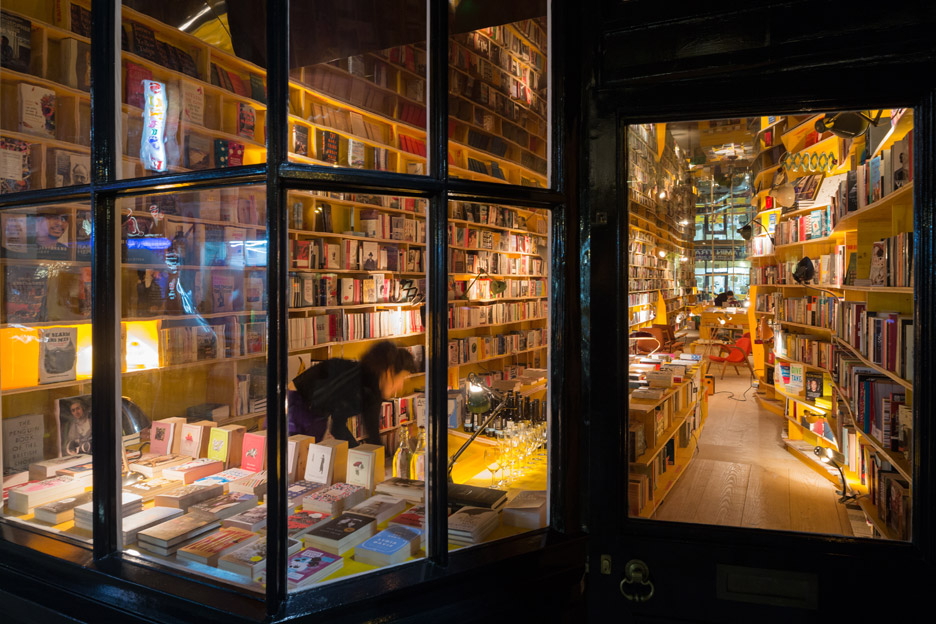
International authors will be invited to speak and to curate shelves, and bespoke print runs of limited-edition titles will be created from the printing press. There are also 24-hour events planned for the space.
"We're building a vibrant, interdisciplinary community that reimagines what you can do with and around books," said director Sally Davies.

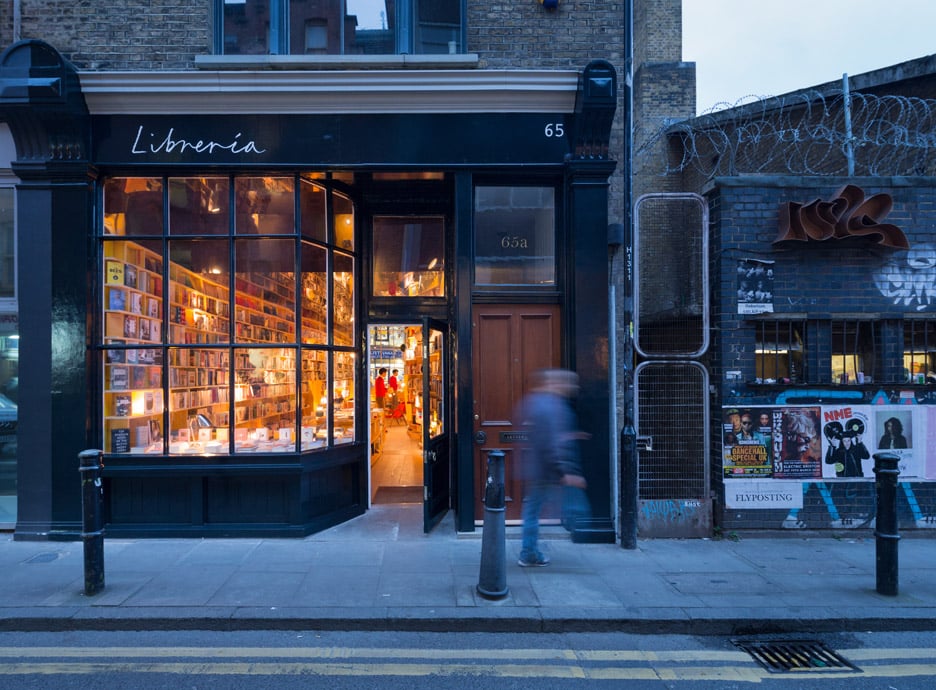
"We’ve reached a cultural tipping point, I think, where people are becoming aware of the costs of being constantly digitally connected – and instead crave experiences that are tangible, human, immersive," she added.
"At Libreria we're bringing together the widest possible range of people, ideas, arts, crafts and disciplines in a warm, welcoming atmosphere that delights the senses and inspires the mind."

Second Home purchased SelgasCano's Serpentine Gallery Pavilion, and has moved it to LA to become a performance and meeting space for the company's first US outpost.
It has also paid for another pavilion by the same architects to be moved to Nairobi to serve as a school for 600 people.