Ten iconic Arts and Crafts houses that show "the humanisation of the handmade"
The architecture of the Arts and Crafts movement emphasised locality and the handmade at the dawn of the Industrial Revolution. Here, author David Cole has selected 10 examples from his recent book about the style.
With roots in the mid-19th century, the Arts and Crafts Movement covered art, decor and architecture, and prioritised place-based thinking and the handmade over both neoclassicism and industrial mass-production.
Starting in Britain, the movement had an impact worldwide and was led primarily by three figures, Augustus Pugin, John Ruskin and William Morris.
"At its core, it was a reactionary movement," wrote David Cole in his recent book, Great Houses of the Arts and Crafts Movement: One Hundred Masterworks 1860–1914.
Many of the buildings have gothic features, but what unites them, according to Cole, is a focus on local materials and labour practices.
The movement struggled under the paradox of creating down-to-earth homes for elite clients, as well as its inability to keep up with machine culture.
"Yet, for all its paradoxes, contradictions, and unfulfilled and fanciful utopian dreams, the movement's houses, and the beautiful and practical hand-made objects that furnished and adorned them, remain to this day," wrote Cole.
"The machine-made and mass-production would, of course, always prevail."
"But humans continue to value the art and the humanisation of the handmade, and the Arts and Crafts houses of the villages, the towns and the countryside of Britain continue to survive today as works of art themselves, and as timelessly beautiful homes for their fortunate inhabitants – just as the founders of the movement, over a century and a half ago, had envisioned."
Today, a renewed fascination with contextual buildings and more localised production has taken hold again all over the world, making the Arts and Crafts Movement interesting again, nearly 200 years on from its inception.
Read on for ten of the great Arts and Crafts exteriors and interiors from the book, with commentary from Cole.
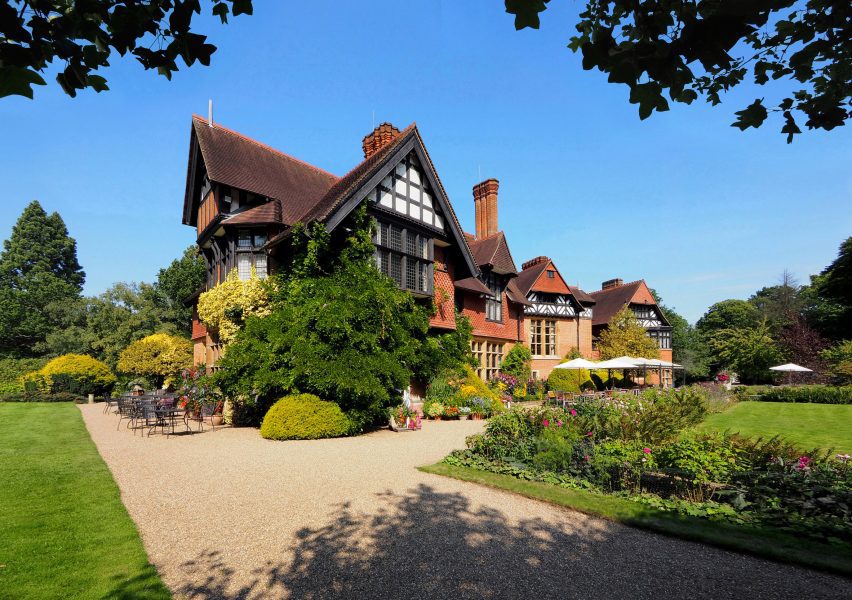
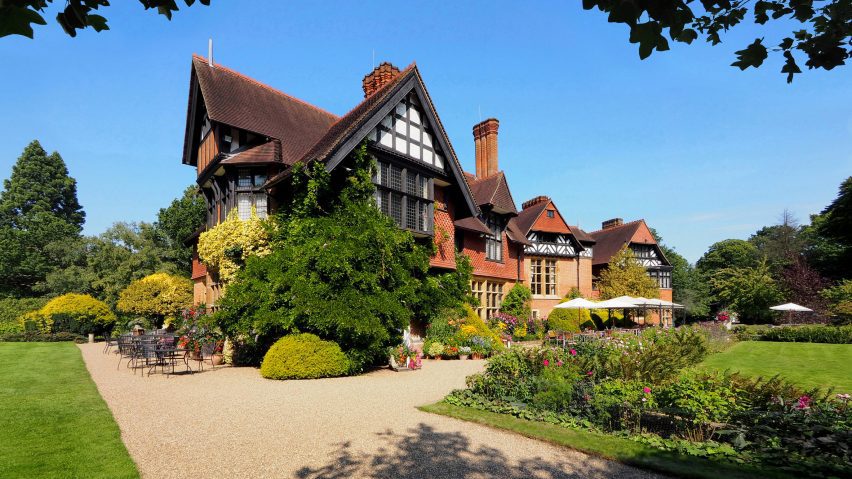
Grim's Dyke, by Richard Norman Shaw, Middlesex, 1870
"Richard Norman Shaw was one of the two pioneers of the Arts and Crafts Movement, along with Philip Webb. Shaw's great architectural invention was his 'old English style', which combined varied regional architectural manners of half-timbering, wall tile-hanging, clusters of tall, varied brick chimneys, and jostling configurations of steep gabled red-tiled roofs.
"Shaw's style was highly influential, not only throughout England, but also internationally in the work of HH Richardson, and McKim, Mead and White's American East Coast Shingle Style.
"Grim's Dyke was built in Harrow Weald, north-west of London, as the home of the Victorian artist Howard Goodall, the main garden view showing Shaw's distinctive configuration of 'cranked' built forms in plan, the picturesque composition of the building's many gables, tall chimneys, and the richly colourful palette of red brick, stone, tile-hanging and half-timbering epitomising his 'old English' manner."
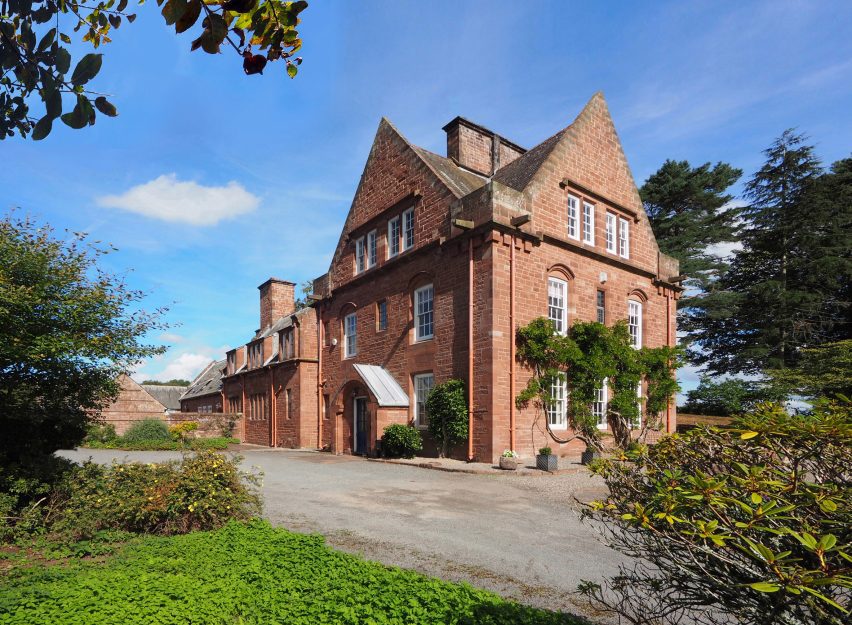
Four Gables, by Philip Webb, Cumbria, 1878
"Philip Webb was the father of the architectural Arts and Crafts Movement – his first commission, the famous Red House in Kent, designed for William Morris in 1860, being the first house featured in the book. After Red House, Webb's architectural journey would move away from the more overt forms of the gothic, as in Four Gables in Brampton, in northern England.
"True to Ruskin's principles of a building's design embracing its location, the building was constructed of the local red sandstone, and the distinctive square footprint and squat tower-like form, supporting the eponymous four-gabled roof, was Webb's reference to the Peel Tower fortifications built throughout the district in the fifteenth and sixteenth centuries.
"Although the Arts and Crafts Movement expressed an essential 'anti-classical' vernacular manner, with influences of Tudor as at Four Gables, Webb would occasionally employ subtle classical references, as in the arched pediments to the building's first-level windows."
Avon Tyrrell, by William Lethaby, Hampshire, 1889
"Inspired by AWN Pugin's descriptions of the medieval design guilds, the Arts and Crafts designers keenly shared their designs among their peers, forming designer-craftsman societies and guilds across the country, with William Lethaby being a founder of the Art Workers' Guild in London.
"Lethaby applied an intensely spiritual approach to his work, in 1891 publishing his book, Architecture, Mysticism and Myth. He was also committed to the principle of architectural form and composition deriving directly from the floor plan and functionality of a building.
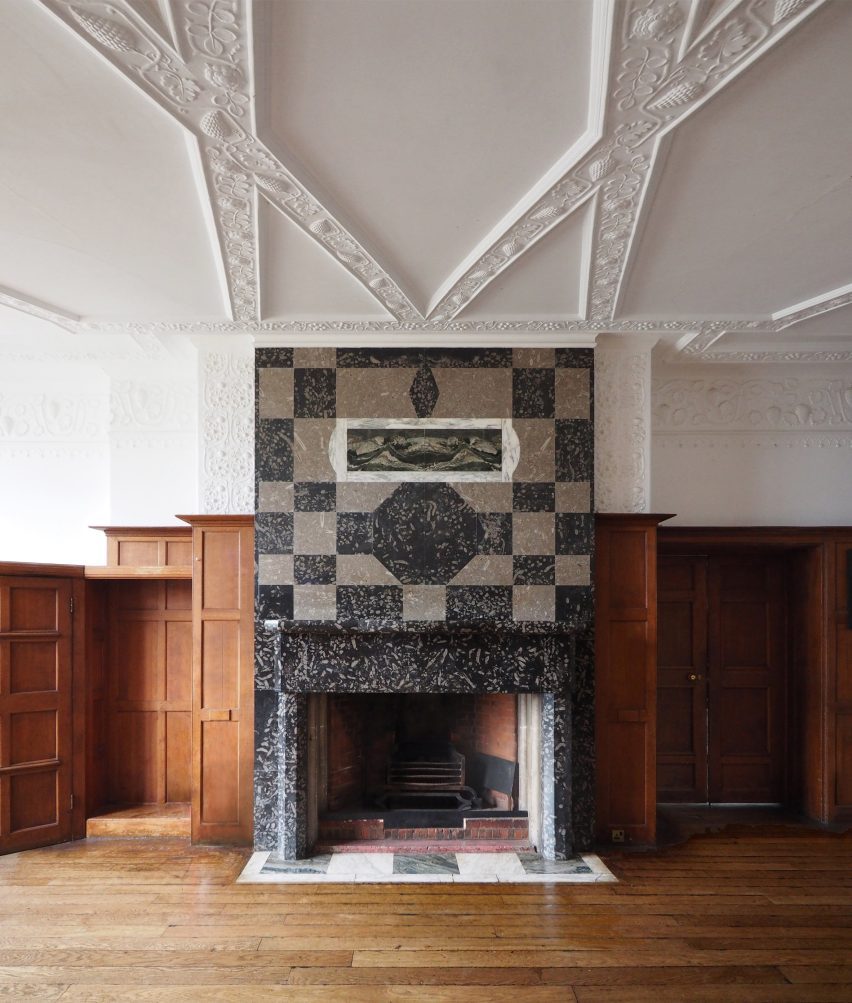
"Avon Tyrrell, a substantial country house, was Lethaby's first private commission, its interiors incorporating designs of local flora, in delicate timber inlays, fretwork, and decorative plaster ceilings designed with Lethaby's friend Ernest Gimson. The hall fireplace, pictured here, incorporated a dramatic irregular grid of two tones of grey marble, framed by fine oak wall panelling."
Blackwell, by MH Baillie Scott, Cumbria, 1898
"Mackay Hugh Baillie Scott was one of the movement's supreme creators of the 'artistic house'.
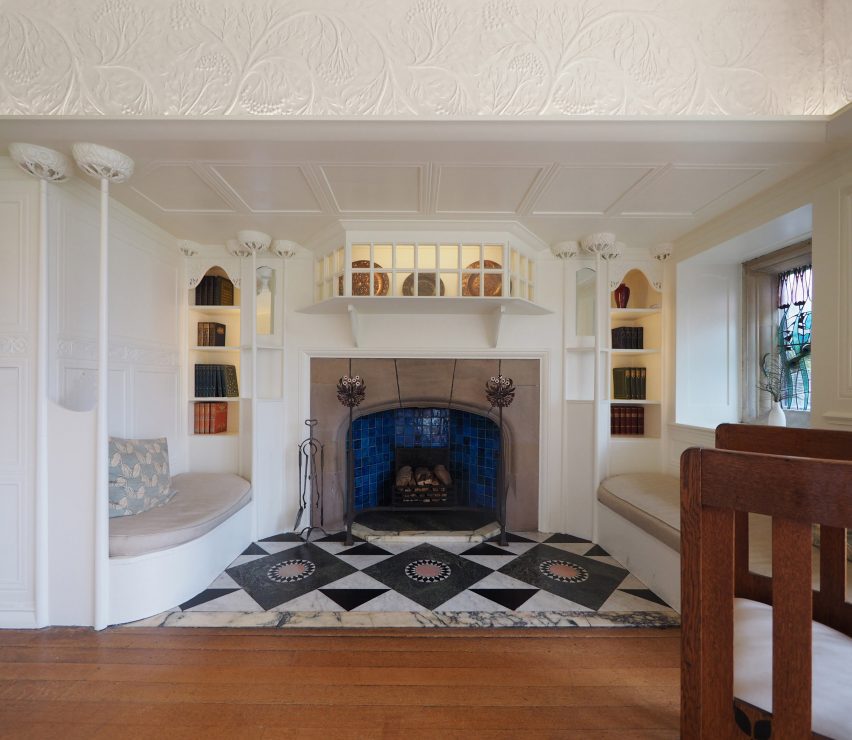
"Overlooking Lake Windermere in the north of England, built for a Manchester brewer, Blackwell was Baillie Scott's masterpiece. Whilst the exterior architecture of the building incorporated robust, plain, white roughcast walls, stone window dressings, and slate-clad gabled roofs, by contrast, the interior designs, in many instances depicting the local birds and flora, were exquisitely detailed, with hand-carved timbers.
"A variety of wall treatments of timber panelling, half-timbering, stained glass, hand-woven wall fabrics and fireplaces faced in a variety of De Morgan tiles or local stone. Pictured here, the fireplace in the White Drawing Room overlooking the lake and the main garden."
38-39 Cheyne Walk, by CR Ashbee, London, 1898
"For some of the movement's designers, commitment to the ideals of Morris and Ruskin meant living those ideals – moving from the cities, and embracing a country lifestyle, working alongside local builders and craftsmen. In 1888, CR Ashbee established his Guild of Handicraft in London's East End, which manufactured hand-crafted Arts and Crafts household objects and jewellery, while also working as an architect designing urban residential projects.
"Leaving the city, in 1902, the charismatic Ashbee relocated his Guild of around fifty staff and their families to the remote Cotswold town of Chipping Campden, where he would remain for nearly twenty years, with many of the Guild members remaining there the rest of their lives.
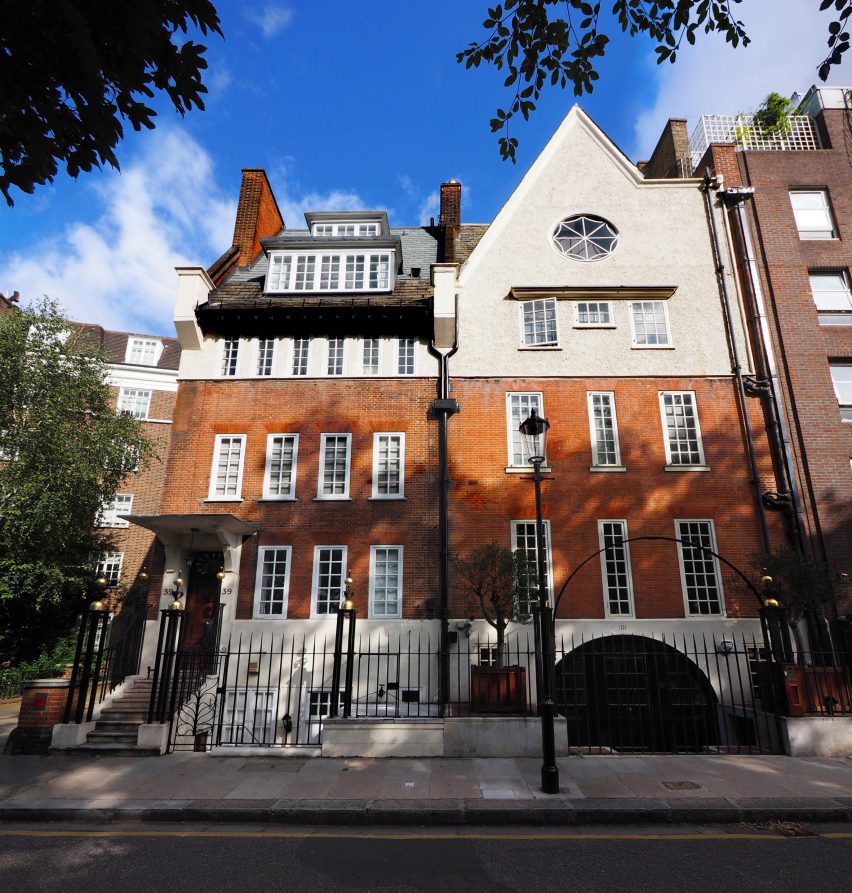
"The two townhouses in Cheyne Walk, Chelsea, designed by Ashbee before his move to the Cotswolds, are among the most original and sophisticated designs of any urban buildings of the Movement."
Goddards, by Edwin Lutyens, Surrey, 1898
"Many architectural historians maintain that Edwin Lutyens, alongside Christopher Wren, was Britain's greatest-ever architect. A prodigy, Lutyens grew up in rural Surrey and formed an affection for the local farm buildings and cottages. By the turn of the century, not yet 30, Lutyens had already designed a dozen of the Arts and Crafts Movement's most brilliant houses.
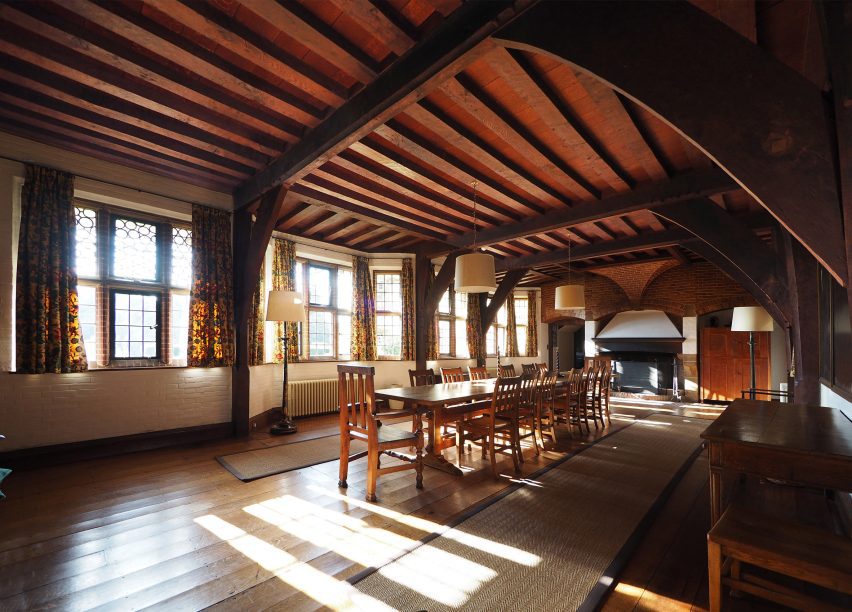
"Goddards was built as a philanthropic project as a country holiday home for ladies of limited means. The 'common room', pictured here, illustrates Lutyens's authentic traditional Surrey craftsmanship.
"Ironically, around 1906 when he designed his classical masterpiece, Heathcote in Yorkshire, Lutyens turned his back on the vernacular manner which had forged his early career, in favour of the classical. Over the next nearly forty years, his astounding career would follow exclusively in that manner."
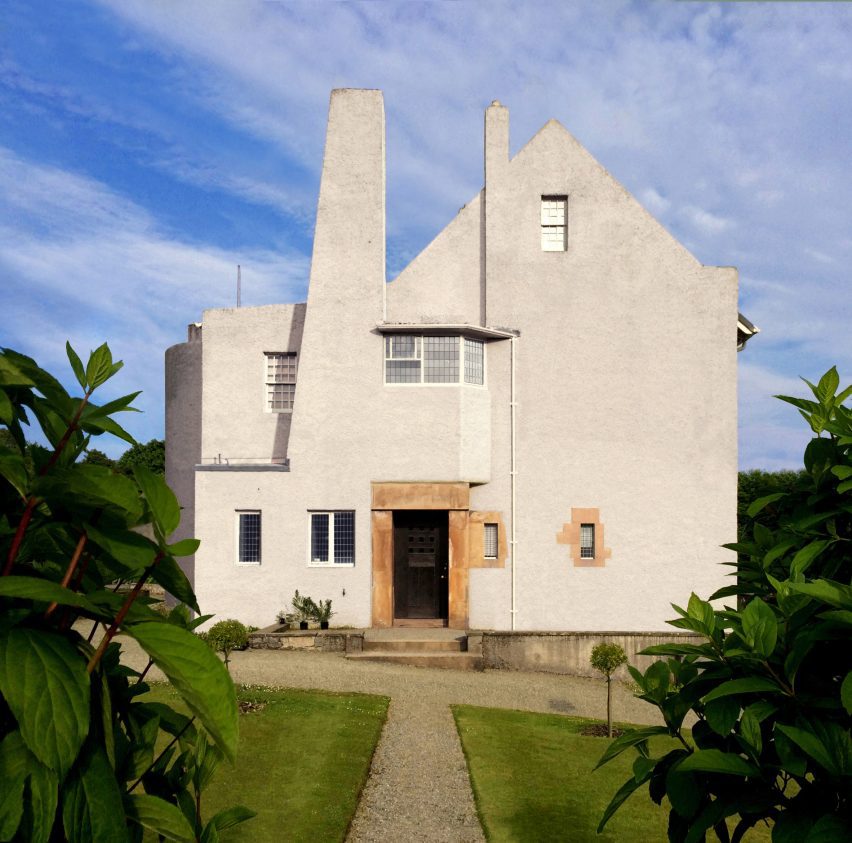
Hill House, by Charles Rennie Mackintosh, Dunbartonshire, 1902
"Charles Rennie Mackintosh's fame and design reputation has continued to thrive over time. His brilliant career was brief, designing just two substantial houses, both north-west of Glasgow: Windyhill and, two years later, Hill House.
"Largely confining his work to Glasgow, he undertook a series of extraordinary fitout designs of the Cranston Tea Rooms, a small number of ecclesiastical and commercial buildings, and, his other great masterpiece, the Glasgow School of Art.
"Mackintosh's originality was so extraordinary it almost defies categorisation. The exteriors of his two great houses faithfully reflected the forms of traditional Scottish architecture, albeit in a highly contemporary manner. For his interiors, exhibiting the subtle influences of Japanese design, he designed every component: from his extraordinary furniture, to light fittings, clocks, cutlery, fire irons and stained glass; his remarkable decorative schemes always embodied within his overall artistic and philosophical vision of his buildings."
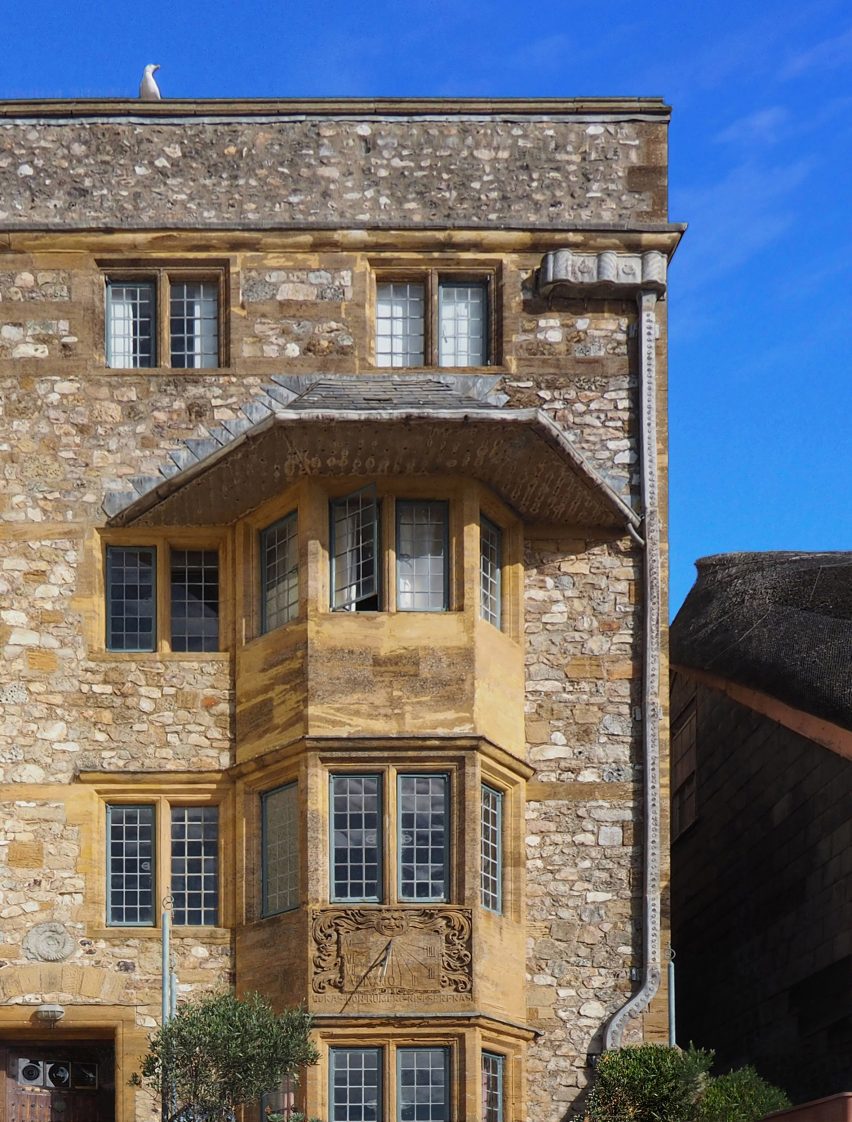
Sundial House, by Arnold Mitchell, Dorset, 1903
"Tower-like and eye-catching, overlooking the English Channel in the village of Lyme Regis, Sundial House exemplifies the passion of heart and fertility of mind of the Arts and Crafts architects, especially through the movement's zenith around the turn of the century.
"Sundial House is a building of delight, intrigue, individuality, and unusualness. It was constructed in a variety of local rubble stones, of variegated blues, greys and pale ochre colours, many impregnated with prominent fossils.
"The front elevation, punctuated by a hooded three-level bay window, incorporated a carved 'smiling sun' sundial in the first-level spandrel. Mitchell further expressed the building's Jurassic context by embedding a series of strategically placed ammonites in both the front boundary fence and the main south elevation walls."
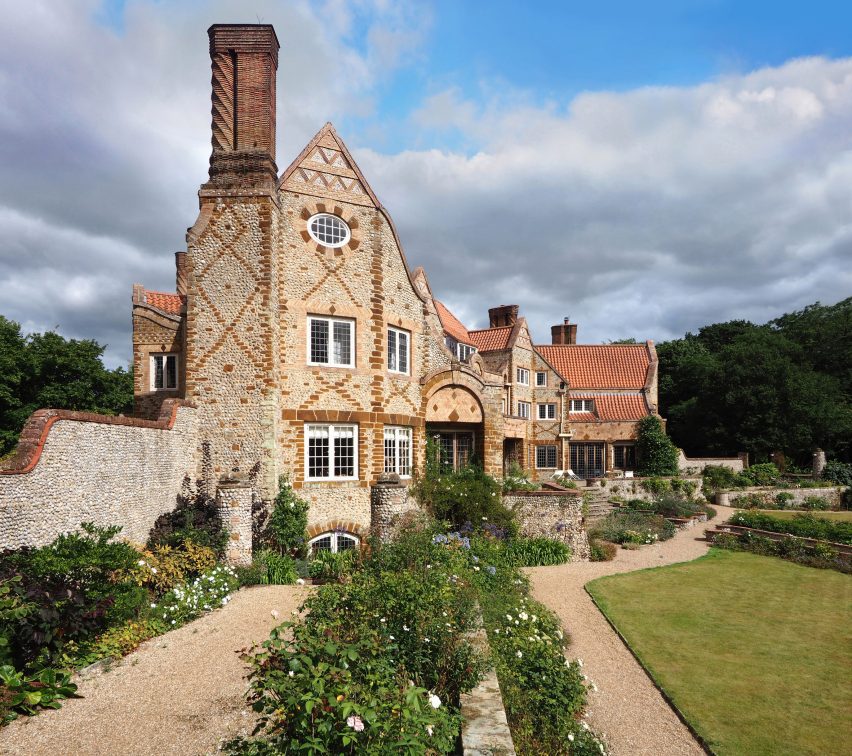
Voewood, by ES Prior, Norfolk, 1903
"Voewood is the most strangely wonderful building of the Arts and Crafts Movement. So breathtaking is the pure personal expressionism of Prior's building's facades that his significant achievement of creating the culmination of his own butterfly-plan typology could almost be overlooked.
"Together with Mackintosh's Hill House and Lutyens's Marsh Court, Prior's dazzling masterpiece stands as one of the greatest buildings of nineteenth- and twentieth-century Britain.
"ES Prior took to the design of his elevations as would an abstract painter to their canvas – as joyous creations of colour, texture, pattern, randomness, restlessness, invention, earthiness, and wit. Both the floors and the walls of the building were constructed in reinforced concrete, with the walls faced in large flint pebbles, quarried on-site, and abstractly patterned shapes of local sandstone and clay tiles."
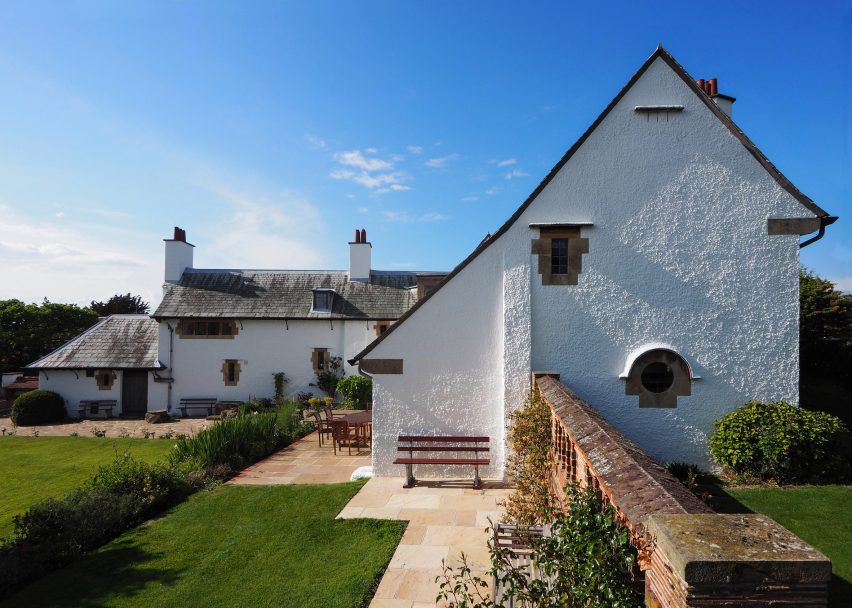
The Homestead, by CFA Voysey, Essex, 1905
"Through the 1890s and 1900s, CFA Voysey was one of the most celebrated designers in both Britain and Europe. Influenced by William Morris, he initially designed wallpapers and fabrics, before his architectural career flourished.
"Voysey's architectural manner embodied his deep commitment to simplicity, fine proportion, quality of craftsmanship and a fundamental humane spirit. He designed every aspect of his houses, including the furniture, the fabrics, and household items, from fire irons to cutlery.
"Voysey's exterior architectural design vocabulary, which became much imitated, incorporated steep slate roofs over roughcast walls, iron casement leadlight windows with quoined sandstone dressings, massive anchoring chimneys, polygonal bay windows, and decorative metalwork door and window fittings. The Homestead, designed late in the heyday of his career, epitomised Voysey's consistent and understated architectural vocabulary of materials and details, and his informal approach to fenestration composition."