


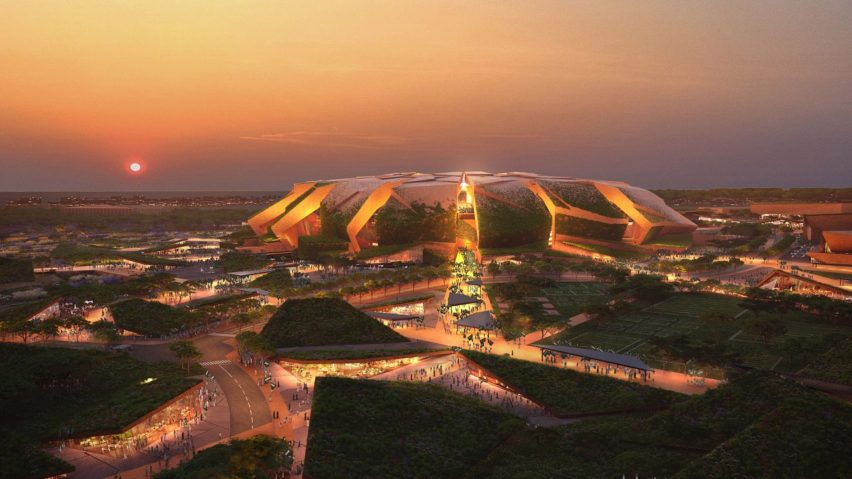
For our Future Stadium series, we asked nine of the world's top stadium architects to predict the biggest shift in stadium design over the next 10 years.
To determine how stadium design will shift over the next decade, we asked each of the nine architects: "what will stadiums look like in the next 10 years and beyond?"
Rather than focusing on style or form, almost all the architects focused on what lies around a stadium – the red-hot trend of sports mixed-use districts, which we explored in depth earlier in the series.
The architects were also interested in what goes into a stadium, from healthier materials to the financing, showing that these days top firms are more than happy to play ball with the expanding needs of district developers and teams.
Read on for the thoughts of architects within some of the biggest stadium designers of our age.

Jim Heverin, board director, ZHA
"By 2036, we may see many new stadiums in English football, particularly Manchester, Newcastle, Chelsea and Birmingham. As someone who bid for the Birmingham City stadium, it's fair to say I didn't imagine it as a Victorian factory. Leaving that aside, I think the client's masterplan and brief in Birmingham is demonstrative of a trend that we can see shaping future stadiums.
"We have many new club owners, and many come to it with no background in football. What they bring is ambition and possibly an unsentimental business way of looking at the stadium.
"Birmingham City is looking to build what is already underway in Manchester City, an entertainment precinct. Not solely a new stadium but to surround it with other destinations and mix of uses such as an arena, a hotel, shopping. This should go some way to addressing the age-old issue with stadiums, which is their potential to be a sterile and empty place on non-match or event days.
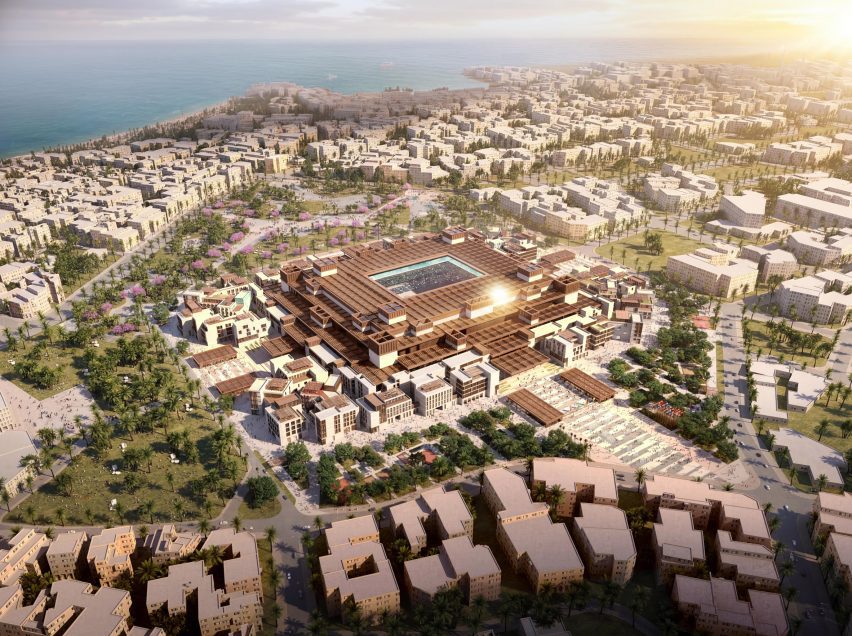
"For their World Cup, the Saudis are proposing some interesting large-scale urban developments. The traditional stadium as a recognisable artifice is subsumed into a larger urban design where it's embedded, even hidden, within a larger cityscape. The Jeddah stadium is hidden within a city massing, think of Highbury, like so many older British stadiums with the stadium partially or fully surrounded by houses.
"Who would have thought that the historic British grounds are being reimagined in Jeddah?"

Martin Glass, director, GMP Architekten
"Stadiums are developing into more and more fully flexible, multi-purpose arenas, evolving from single-purpose sport facilities into broader mixed-use hybrids with the aim of 24/7 usage.
"We understand sustainability in future stadiums must extend far beyond installing solar panels or using recycled materials. 'Building less and adapting more', addresses one of the largest environmental impacts of a stadium: its construction.
"The biggest sustainability challenge may not be technological but urban. A stadium that is transit-connected, intensively used, integrated into the neighborhood, shared by multiple groups, beloved by society and adaptable over decades will be more sustainable than a technologically advanced stadium that sits largely empty.
"Venue design will not focus only on the traditional, typically male, core fan associated with the one typical core sports discipline. By broadening the type of events, but also with women's sports growing rapidly and attendance becoming more diverse, stadiums will need to reflect this much broader range of users.
"From the perspective of an architect, we see stadiums among the most compelling building types because they transcend the conventional role of architecture. They are not simply places that contain an activity; they amplify human emotion, memory, and collective identity."

John Rhodes, director of sports and entertainment, HOK
"In many ways, the stadiums of 2035 are already being designed.
"The future of stadium design will be defined by a series of pragmatic but powerful shifts: from spectacle to experience, from singular purpose to continuous use, and from static architecture to adaptable systems.
"Historically, the defining metric has been the C-value – a measure of sightlines that ensures every seat can see the pitch. While this remains important, it is no longer sufficient. Advances in computational design allow us to move beyond a single parameter toward a more holistic 'entertainment value', combining comfort, proximity, acoustics, amenities and atmosphere into a layered experience.
"We are already seeing disruption in the traditional bowl configuration with dynamic movement in the upper tiers/back of the bowl, making them more vertical and responsive to variable events and fields of play. This shift toward individual experience sits alongside a broader transformation in how stadiums are used. Increasingly, they are no longer defined by sport alone.
"Climate change will also play a defining role. Rising temperatures and more extreme weather conditions are driving demand for adaptable environments, including retractable roofs and advanced cooling systems.
"Importantly, not all innovations will be digital. The enduring appeal of a live event lies in its shared, real-time experience. Technology will need to enhance, rather than compete with, that collective focus."
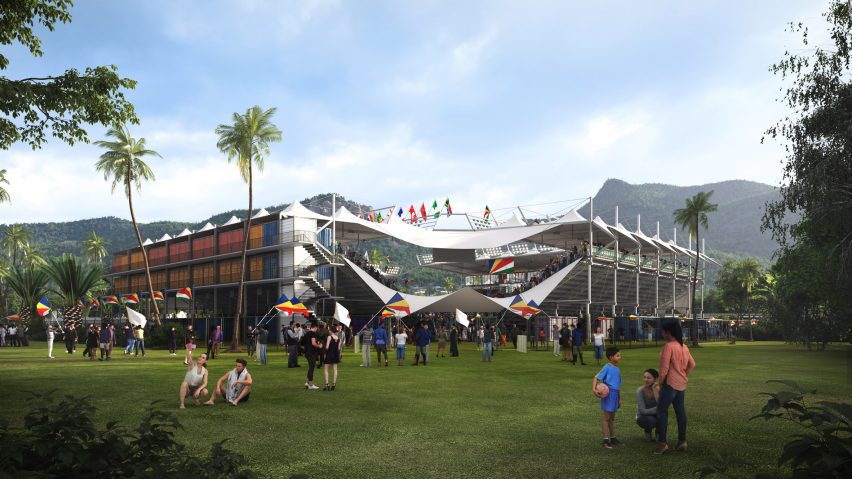
Bob van Bebber, director, Boogertman + Partners
"The future of stadium design in Africa is not about building the biggest, most advanced stadiums; it is about designing and developing the cities, communities and sports ecosystems around them.
"It's very easy to be seduced by visions of huge, billion-dollar stadiums, but the most important question is always: what happens after the tournament?
"To be sustainable, future African stadiums need to become community hubs that are used every day of the year, not just on big match days or for concerts. That means they should be co-located with other revenue-generating uses such as retail outlets or arenas.
"Civic services such as clinics, libraries, police, social grants services and transport nodes would also work well. The more you can bring together, the better. Without public transport, stadiums risk ending up like spaceships in a sea of parking.
"Winning hearts, however, is crucial. Parachuting in a foreign concept and decorating it with ill-considered African-inspired graphics won't do the trick. The role of the designer is to uncover the stories that matter to the communities the stadium will serve and express them through architecture.
"Moveable facilities could be used to test markets without committing to massive capital expenditure. Perhaps impermanent architecture should play a greater role in the development of sports infrastructure over the next decade."
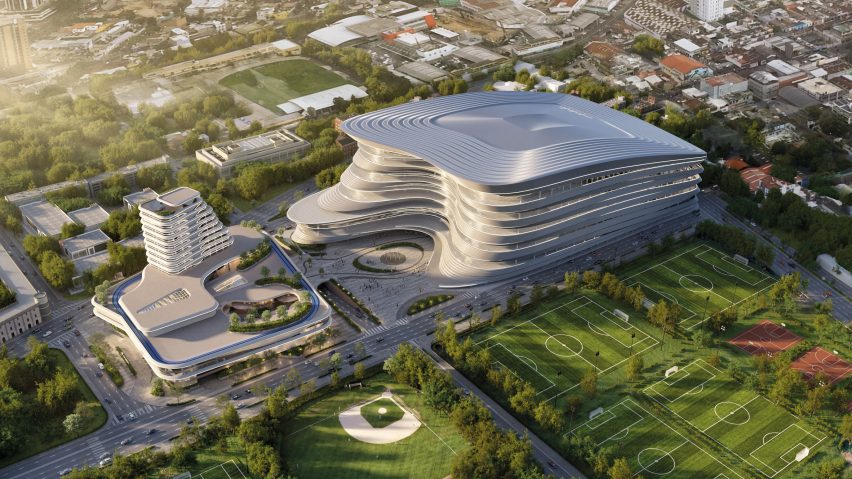
Fred Ortiz, global practice director of sports and entertainment, HKS
"Over the next decade, stadiums will evolve from single-purpose venues into adaptable civic destinations that support sport, entertainment, tourism and everyday public life.
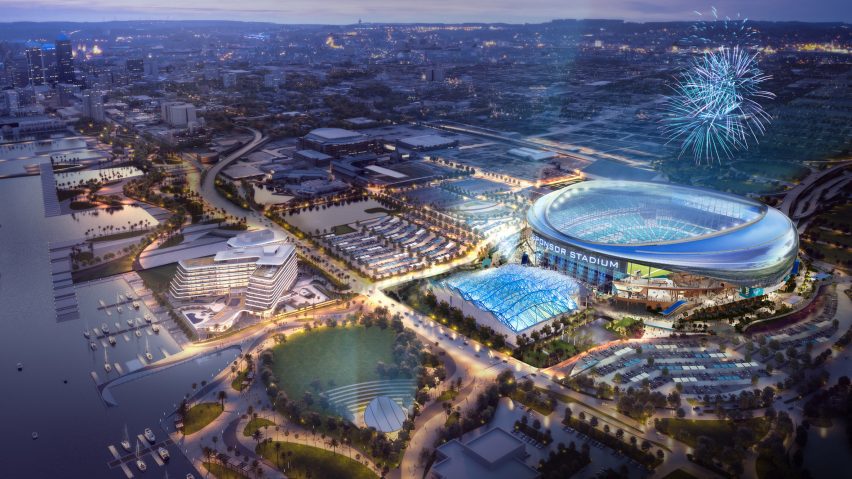
"The era of isolating stadiums on cheap land surrounded by parking is ending, replaced by integrated developments that anchor vibrant, year-round districts.
"Today's leading venues already serve as civic catalysts, combining flexible, enclosed designs with climate-responsive architecture that improves comfort through smarter approaches to heat, shade and ventilation while supporting a diverse calendar of events.
"The fan experience will become increasingly immersive, extending beyond the stadium into the surrounding precinct and to digital audiences worldwide. Ultimately, the most successful stadiums will be those that reflect the culture, history and identity of their communities—the venues their cities simply cannot imagine living without."
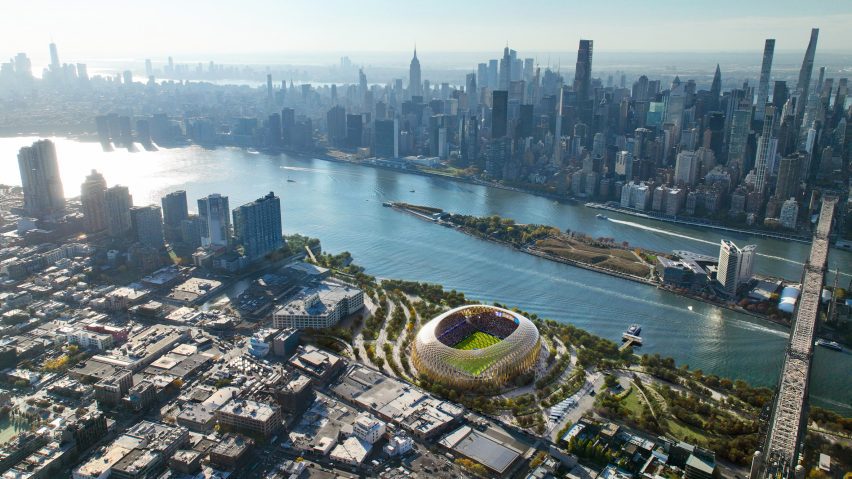
Colin Koop and Ryan Culligan, design partners, SOM
"The largest structures in our cities should be supercharged by our greatest ambitions. For too long, stadiums have been treated as short-lived containers for spectacle, surrounded by seas of asphalt, activated by episodic events, and often discarded long before the end of a reasonable lifespan.
"We have an opportunity to bring the park back to the ballpark. With a more rigorous, performance-driven approach to fabrication, material sourcing, and circularity, venues can move from carbon emitters to carbon sinks.
"Advances in low-carbon materials, clean energy, and digital fabrication have already opened the door.
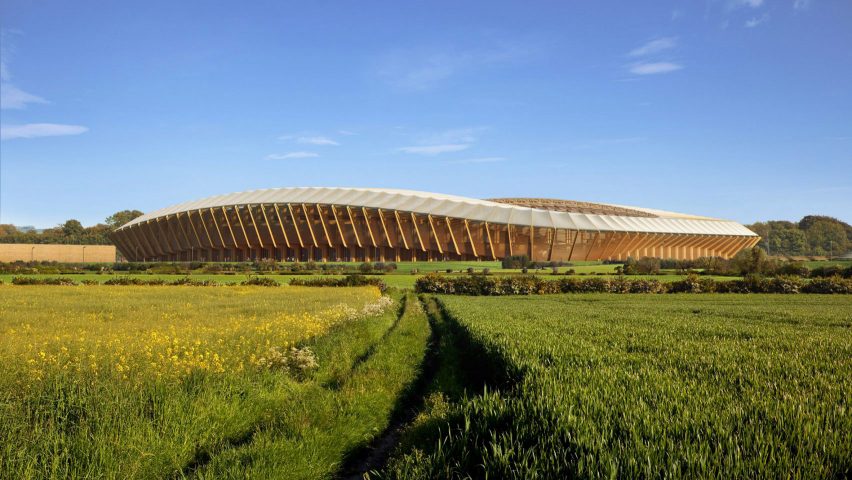
"In designing the Queen's Braid, we have already explored how wood can meet the challenges of scale and long spans through an optimized woven timber shell. With their vast footprints and roof areas, stadiums can also become platforms for energy generation, and district-scale infrastructure.
"In the next decade, the best stadiums will be beautiful, civically engaged, and technically and environmentally ambitious."
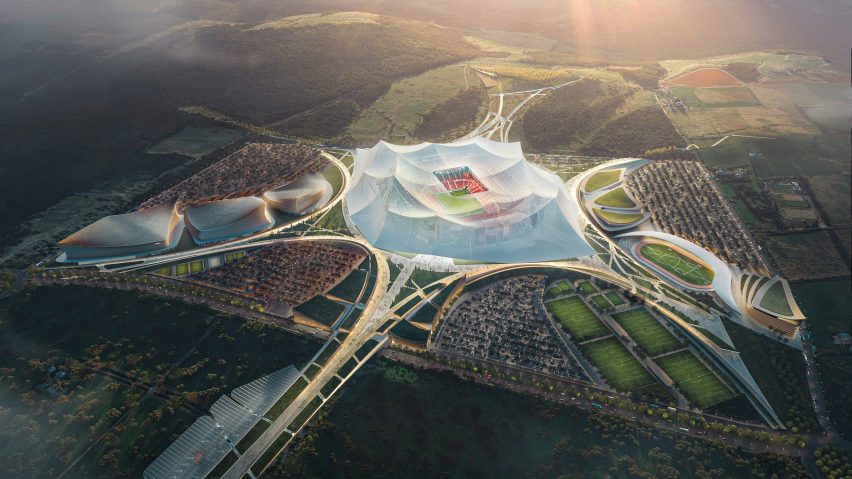
Scott Capstack, head of design, Populous
"Over the next decade, the most successful stadiums will continue to be defined by how well architecture connects people, place and purpose, both inside and outside the venue.
"Stadiums will be valued by how connected they are to and within their surrounding community. These civic anchors will be part of a broader mixed-use district that allows for everyday activation beyond major events.
"The venue's architecture itself will become more flexible, enabling venues to evolve over time and accommodate changing sports and entertainment formats without requiring redevelopment. Projects like Highmark Stadium in Buffalo and Tottenham Hotspur Stadium with its retractable pitch demonstrate how future venues will seamlessly transition between events and experiences.
"From a technology perspective, it will become an invisible layer that enables more personalized experiences. Every facet of the fan experience will be connected digitally.
"The stadium of the future will be measured by more metrics than capacity and revenue. They must deliver measurable and lasting social, economic and civic value."
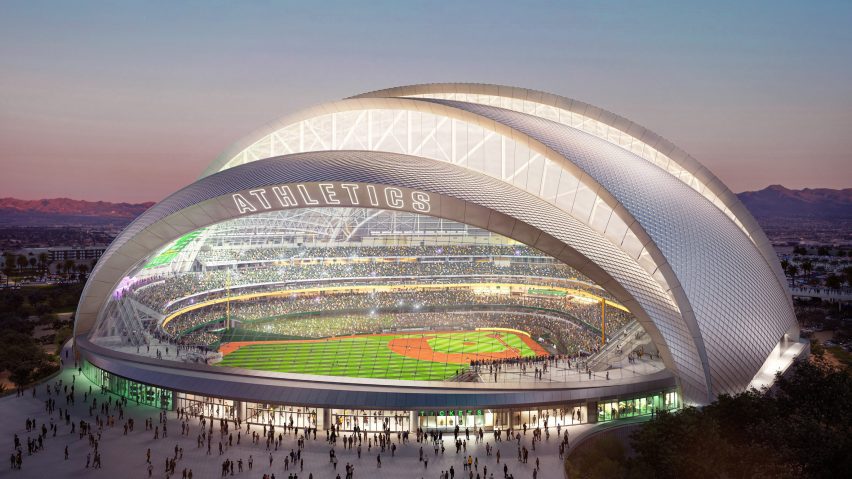
Frankie Sharpe, director of sports, BIG
"If the last 10 years tell us anything about the next 10, it's that technology will be the primary force reshaping the stadium experience, and the personal device has become central to all of it. A decade ago, mobile ticketing, real-time wayfinding, frictionless concessions, and augmented reality were all cutting-edge developments, but they have shifted to the baseline expectation at modern venues.
"As we look forward, the challenge for designers is to integrate new tools in ways that feel seamless, intuitive, and human-centered, so that the experience is enhanced rather than needlessly complicated or, more importantly, distracting from the field/court/stage.
"Sustainability will continue to guide our industry and in the next 10 years, we will see the advancement of building systems that are more efficient and lower in embodied carbon.I believe we are approaching the first true mass timber stadium or arena. The designs are out there; we just need to get them built.
"Regardless of the number of solar panels sitting on the roof, or how much supplemental material is mixed into the concrete, a building that operates like a fortress for most of the year is underperforming, both fiscally and sustainably.
"The future of stadium design should be measured not only by the monetization of game day, but by the value these buildings create on ordinary days.
"The next generation of stadiums must maximize return on investment by being profit-focused, technologically advanced, and architecturally ambitious, while also being creative in their openness, usefulness, and how they build a deep connection to the communities they serve."

Future Stadium
This article is part of Future Stadium, our series exploring the growing role of monumental sports buildings in architecture and urbanism around the world.