



Designer Simon Weckert has created a colourful camouflage shirt that cannot be detected using AI video systems.
Developed in response to a pilot project to use artificial intelligence (AI) video surveillance at Berlin's Kottbusser Tor, which starts this month, the shirt was designed to stop the user being recognised as a person.
Named Digital Camouflage, the shirt aims to confuse the AI-powered object-detection system by subverting what the system recognises as a person.

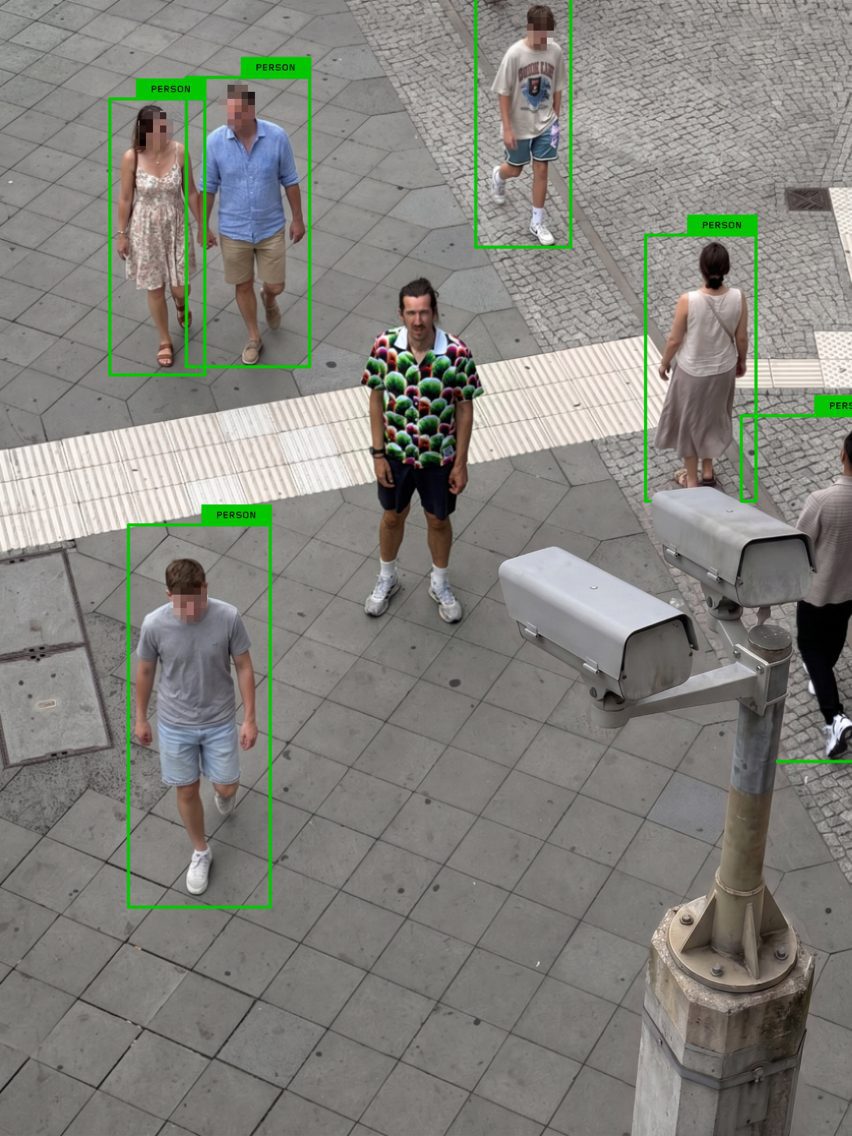
"AI systems are made of multiple layers and never learned what a human is – they learned what humans statistically look like in millions of training images," said Weckert.
"In the early layers it's edges, contrasts and texture gradients; deeper in the network it's part-like patterns: the head-and-shoulders silhouette, the proportions of limbs against a torso, the continuity of a body's outline against the background," he continued.
"A 'person', for the machine, is a bundle of visual statistics – and that is exactly its weakness."
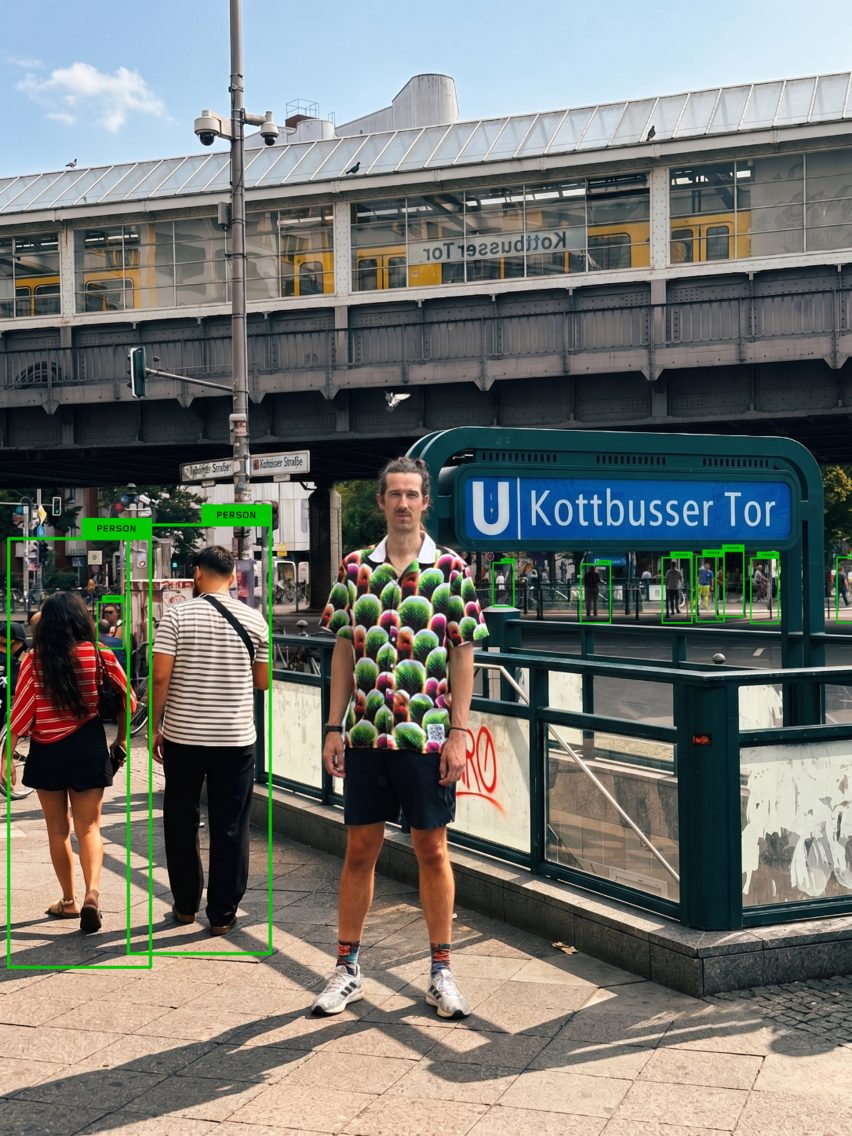
The shirt uses a combination of bright colours and patterns to confuse the AI systems so that it doesn't recognise what it is seeing as a person.
"Both [colour and pattern], and neither alone – it's their interplay, optimised against the machine rather than the human eye," said Weckert.
"The saturated colour transitions fire strongly in the network's early layers, while the overlapping shapes break the continuity of the body's outline, so the detector can no longer bind the parts into one figure," he continued.
"The pattern essentially shouts over the quiet statistical whisper that says 'person'. To a human it reads as an almost hypnotic textile; to the AI model it reads as nothing at all."
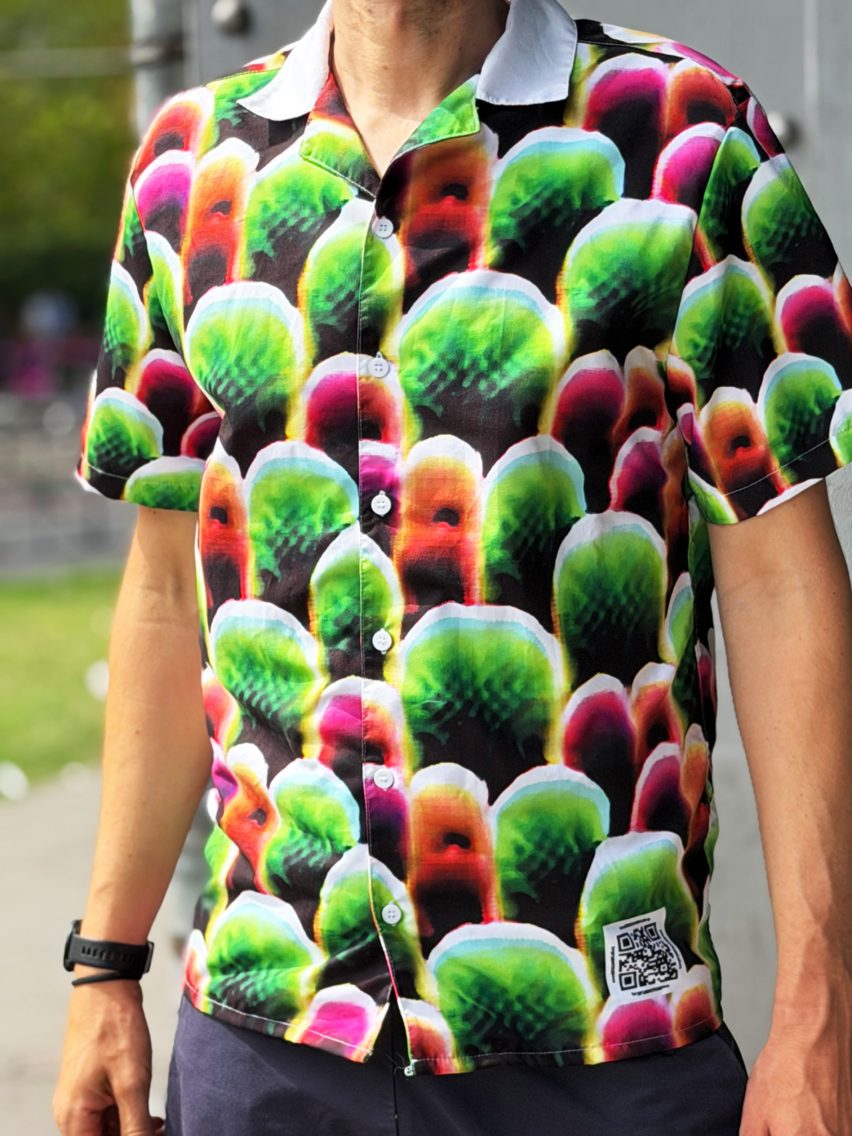
Weckert developed the pattern on the shirt using AI. He tested iterations using an AI version of trial and error known as an "adversarial loop".
"The pattern was developed in an adversarial loop with the detection system itself: generate a candidate, show it to the detector, measure how confidently it still finds the person, adjust, repeat – until the confidence collapses," said Weckert.
"This was necessary because a machine's blind spots are not intuitive to humans; you cannot design against machine perception by eye, only the machine can tell you what it fails to see. There's a poetic symmetry in that: the same class of AI that watches the square also taught the shirt how to hide."

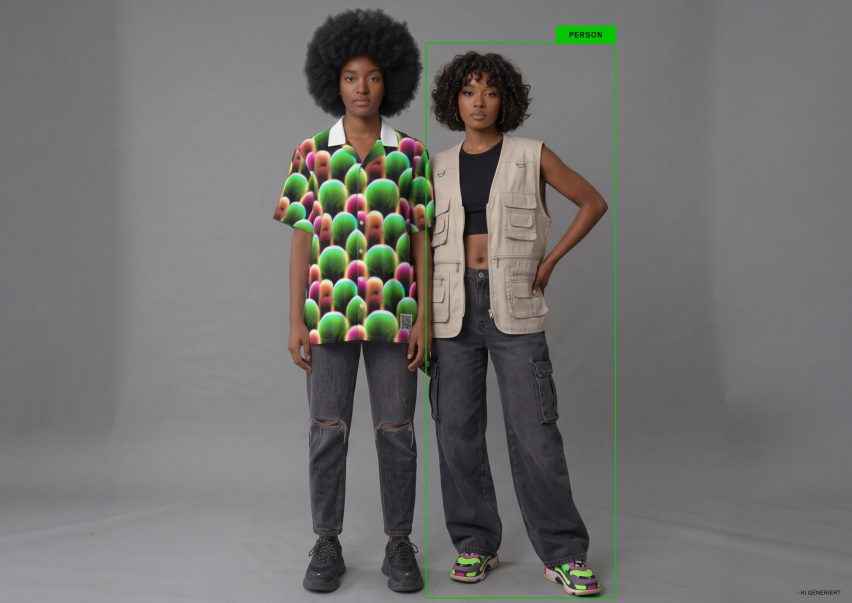
Weckert tested the shirt using Yolo, an open-source, real-time AI object detection system.
Another piece of clothing that was tested using Yolo was a piece of knitwear that protects the wearer's biometric data without the need to cover their face.
The photography is by Simon Weckert.