


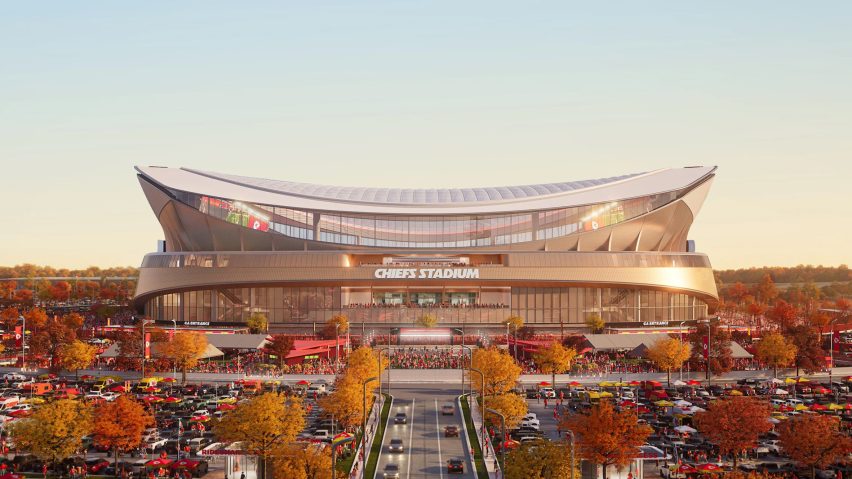
With the professional American football season kicking off today, we take a look at some upcoming stadiums and overhauls, from Washington DC to Kansas City.
Late this summer, global architecture studio Populous completed a ground-up stadium for the Buffalo Bills in New York, representing a new wave in NFL stadium construction in the East.
The last major wave of stadiums for the league happened in the early 2020s with SoFi Stadium in Los Angeles and Allegiant Stadium in Las Vegas, both built to accommodate teams moving into the cities.
In the late 2020s and early 2030s, a new generation of NFL stadiums will come online. Two of the stadiums included in this list are new builds, while the other two are overhauls of existing structures. In the design, we see a trend towards enclosed stadiums with glass roofs and plenty of auxiliary development.
Two stadiums not included are the upcoming Bears stadium, as the team is still figuring out whether it will leave Chicago, and the Broncos stadium in Denver, which has a master plan and architect but no renderings as of yet.
Read on for the next generation of NFL stadiums.

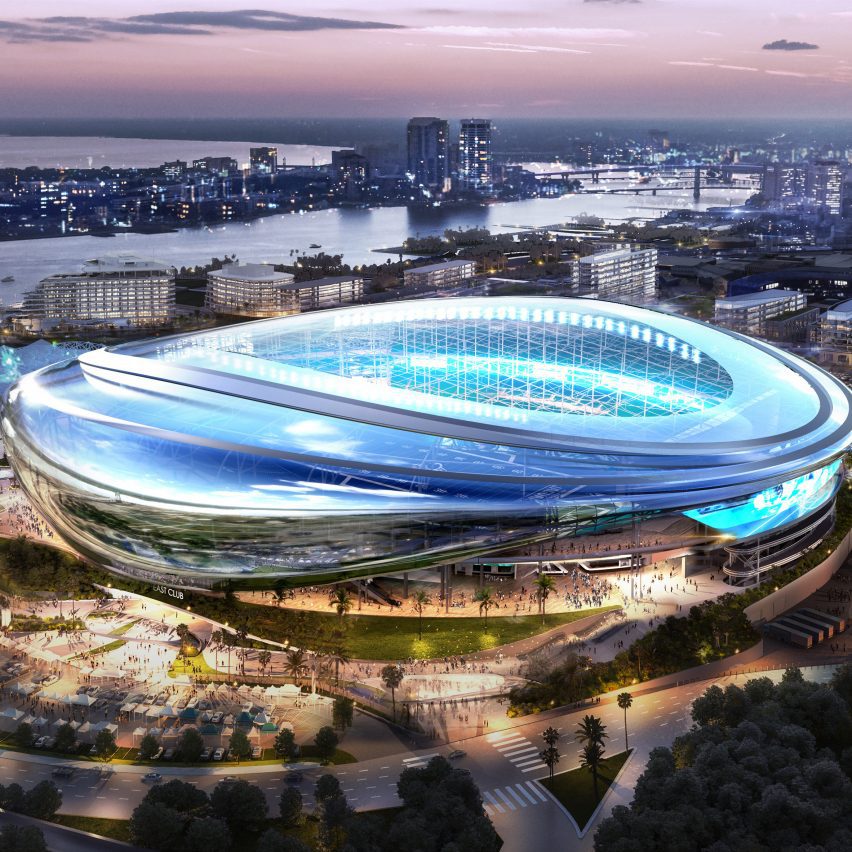
Everbank Stadium, Florida, by HOK, 2028
Instead of building a new stadium, the Jacksonville Jaguars have opted to wrap their current stadium in a new expressive facade complete with mirrored elements and LED screens, a massive departure from the current steel-framed, open-bowl stadium.
Designed in 1996 by HOK Sport (now Populous), the current stadium is open to the elements, which presents challenges in the wet, hot climate of Jacksonville.
HOK has dubbed its design for the 62,000-seat venue as the "Stadium of the Future".
It will have openings on the outside to help modulate the temperature and feature an overhang above the stands, as well as extensive landscaping on the perimeter, which has been described as a "subtropical" park.
Find out more about Everbank Stadium ›


Commanders Stadium at RFK Campus, Washington DC, by HKS, 2030
No other stadium in recent memory has caused as much of a stir as the upcoming 70,000-seat stadium for the Washington Commanders – except for maybe the drama over the Bears' potential move to Indiana.
Due to its proximity to the national capital, the federal government has put its hand on the scale of the design, with a Trump aide publically calling for the stadium to be collonaded, in line with the government's classical architecture mandates.
The HKS-designed result walks the line between the classical and the modern, with a plinth, columns and an elegant cable-net, anti-clastic glass roof framing views of the Capitol building and other landmarks.
Located next to the Anacostia River on the site of the former RFK Stadium, the building will feature extensive outbuildings in hopes of fostering a stadium district, as well as hardscaping for pregames and other civic uses.
Find out more about Commanders Stadium at RFK Campus ›

Bank of America Stadium, North Carolina, by HOK, 2030
Much like in Jacksonville, HOK will return to renovate a stadium completed by HOK Sport in the late 1990s for the Carolina Panthers in Charlotte.
The renovation here will take a lighter approach than in Jacksonville, though, and the new Bank of America Stadium is only one featured here without the glass roof structure, with the Panthers preferring to keep the structure open.
A new crown will be added to the top of the stadium, which the team said will resemble a crown, a not-so-subtle reference to Charlotte's moniker – "Queen City".
The base of the structure will be clad in glass while the "strategic interventions" will add plazas and park-like space to the exterior.
Find out more about Bank of America Stadium ›
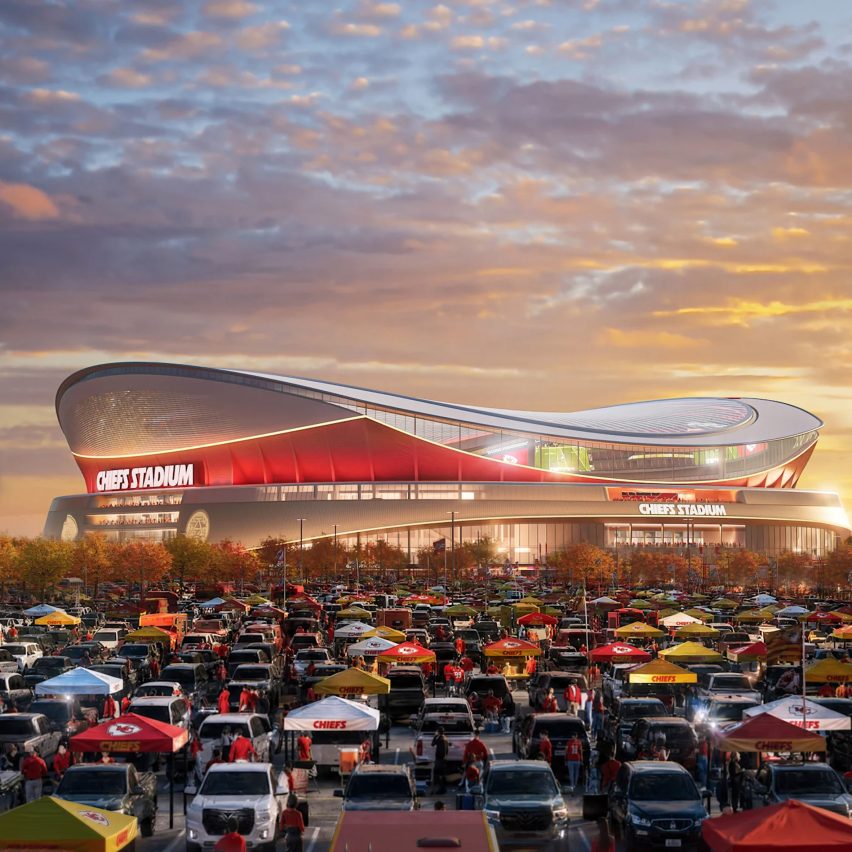
Chiefs Stadium, Kansas, by Manica and HTNB, 2031
Careful readers may notice that the above says Kansas and not Missouri, the side of the two-state city where the Kansas City Chiefs have played at Arrowhead Stadium for more than 50 years.
The new 70,000-seat structure was designed to pay homage to Arrowhead Stadium with red facade elements that slope up dramatically.
However, the new stadium will feature a glass-covered roof with an anti-clastic roof similar to the design for Commanders Stadium.
Notably, the stadium will eschew the sports district, connected model and be located relatively far from the urban core and surrounded by parking lots, which the studio said will be specifically tailored to tailgating.
Find out more about Chiefs Stadium ›