Spatial Ecologies at the Royal Danish Academy
The Spatial Ecologies course at the Royal Danish Academy supports students in developing architecture practices that address global issues, with opportunities to work directly with communities, industries and ecosystems.
The Royal Danish Academy is launching a new master's programme in Kalundborg, grounded in the same academic excellence as our architecture education in Copenhagen.
While it benefits from the Academy's established methods and strong professional network, Spatial Ecologies is a pioneer programme that looks at architecture across scales.
Spatial Ecologies understands architecture as a practice grounded in the material, ecological and cultural layers that shape environments over time. The programme approaches place not as a passive backdrop, but as a living and historical medium where geological, biological and social processes intersect.
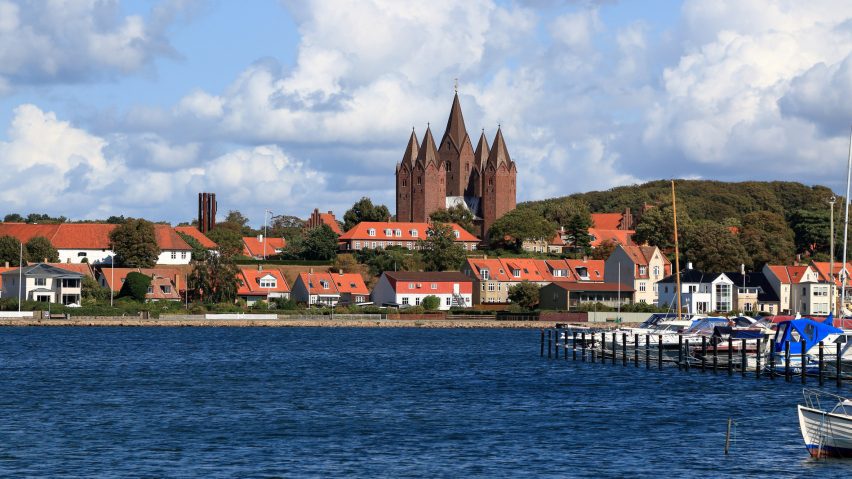
Situated in the coastal town of Kalundborg, Denmark, the education is deeply influenced by the local landscapes and facilities. The town and its region serve as one of the programme's 'living labs'.
Its industrial symbiosis, coastal landscapes and agricultural areas offer real contexts for understanding how global issues appear locally. Students work directly with communities, industries and ecosystems, transforming observations into spatial and material proposals.
Learning within the programme Spatial Ecologies is rooted in making. Through drawing, modelling, mapping, full-scale testing and dialogue with stakeholders, students learn to read environments through scientific, cultural and artistic lenses.
School: Royal Danish Academy
Course: Spatial Ecologies
Type: Postgraduate
Location: Kalundborg, Denmark
Course dates: September 2027 to June 2029
Application deadline: 1 March 2027
Find out more about the course and apply ›

What will I learn during this course?
– Students develop architectural responses that integrate care, ethics, experiential qualities and precision – preparing them to think and act across scales, disciplines and timespans in a world facing ecological transition
– Across all semesters, students learn to work trans-scalarly – from detail to territory – and to design with attention to time, maintenance and change
What are the requirements?
To be eligible to apply, applicants must have a bachelor's degree in architecture or architectural studies from a nationally recognised school of architecture.
This means that your degree must be recognised by a national architectural association or board as a degree that leads to a professional qualification as an architect.
What facilities and resources are available?
– With its unique location in a coastal town in Denmark, students will collaborate with many local stakeholders
– Each student has their own desk and space for studying and building models
– Teaching and exhibition spaces
– Extensive suite of labs and workshops available in person
– Access to the architecture library in Copenhagen
What career prospects can I expect upon graduating?
Graduates develop strong competencies in design, ecological understanding and material knowledge.
They are prepared to work in architectural and landscape practices, public agencies, research environments and consultancies focused on sustainability and transformation.
Who teaches this course?
– Taneha Kuzniecow Bacchin, head of programme
Dezeen Courses
Dezeen Courses is a service from Dezeen that provides details of architecture, interiors and design courses around the world. Click here for more information.