MA Regenerative Design at Central Saint Martins
The MA Regenerative Design online course at Central Saint Martins challenges students to create sustainable designs that restore local biospheres while considering social and cultural contexts.
Course details
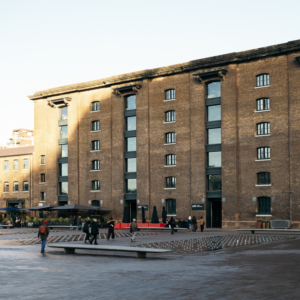
School: Central Saint Martins, University of the Arts London (UAL)
Course: MA Regenerative Design
Location: online
Course dates: starts September 2027, with a duration of one year (45 weeks) full-time
Application deadline: 17 February 2027
Course overview
This practice-based MA is for designers and ecologists ready to shift from observation to participation; working within ecological systems and real-world contexts through situated, hands-on practice.
Designing for a more-than-human world requires participation, working from within living systems, rather than outside them.
On this course, students learn from ecosystems as active collaborators, exploring how design can support the flourishing of interconnected human and more-than-human communities.

What will I learn during this course?
The MA Regenerative Design positions design as a catalyst for ecological and social transformation.
Grounded in the principle of interdependence, the course recognises that we are inseparable from the systems that support and shape us.
Regenerative designers do not stand apart from ecosystems; they participate within them, learning from multispecies, engaging with place, and cultivating the conditions for multispecies worlds to thrive.
What are the requirements?
Students must have an honours degree in a relevant design or ecology subject area or an equivalent EU/international qualification.
They should also have at least one year of professional experience. Students also need specific English language requirements, including IELTS level 6.5 or above, with at least 5.5 in reading, writing, listening and speaking (please check the main English language requirements webpage).
What facilities and resources are available?
Students have term-time access to a range of open technical facilities, including:
- open technical facilities
- the loan store
- digital fabrication bureau
- digital labs
- digital print
- paint/surface
- photography studios
- 3d capture lab
- casting
What career prospects can I expect upon graduating?
Graduates may pursue careers in regenerative design, ecological research and interdisciplinary practice, working collaboratively across design, ecology and community-led initiatives.
The course also supports graduates in establishing independent practices that explore new approaches to ecological and social regeneration.
Who teaches this course?
Judith van den Boom, course leader.