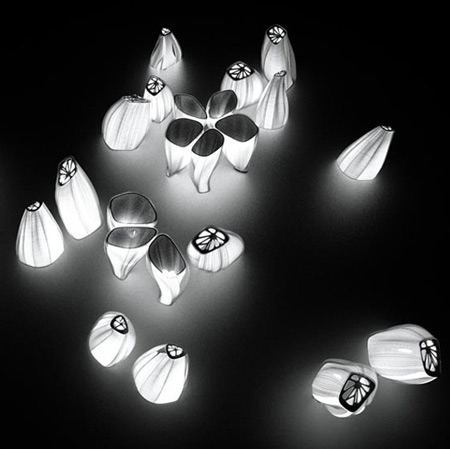
Tie Fan of WE Design collective presented a conceptual design for an inflatable emergency shelter at the Alan Baxter gallery in London earlier this month.
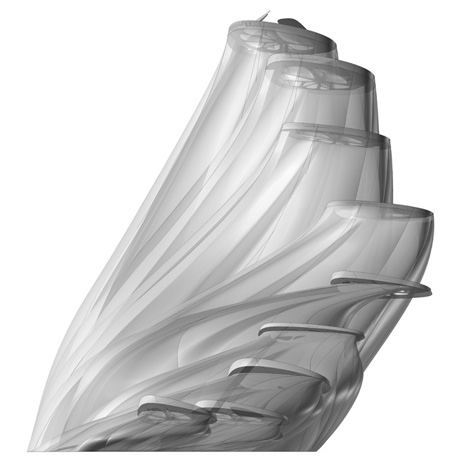
The design consists of a double-walled tent, which is inflated and kept rigid by a solar-powered fan.

The tents would be erected vertically for use as a shelter or upside-down to form a water collector. The tents could be linked to make larger units, such as medical or community centres.
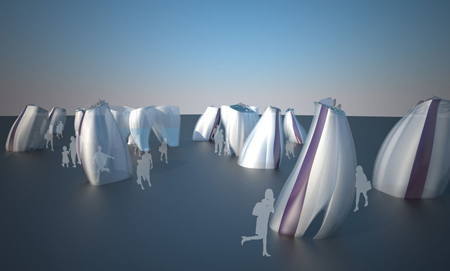
The SWAS tent was designed as part of a project focusing on providing relief to disaster areas called Delivery to Sichuan.
Here is some information from WE Design:
–
SWAS tent
SWAS tent is an inflatable structure for shelter, water storage, natural ventilation (air) and solar energy collector. The structure is easy to transport to the disaster site. A quiet fan keeps the tent inflated as long as needed. The structure is installed in less than five minutes and can be folded up in the accompanying bag when deflated.
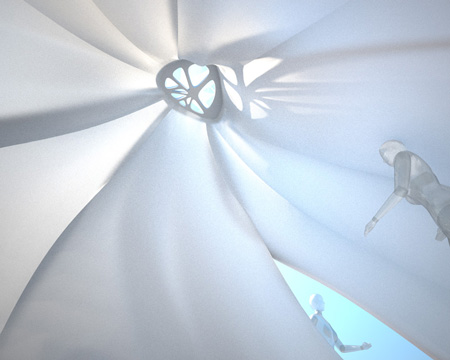
Thin photovoltaic-cell film mounted to the inner layer of the surface provides electrical power. The double layer skin is the self supported structure and also provides excellent insulation at night. The geometry of the structure, informed by the principle of natural ventilation, helps to cool the internal space during the day.
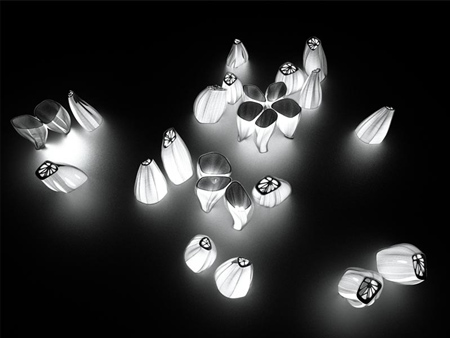
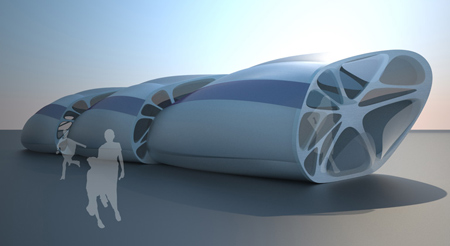
The structure can be set up in three different ways. It can be set up vertically to be a family tent; it can be turned upside down to form a shelter and work as a rainwater and condensation water collector; it can also be horizontally connected to form a bigger space for public uses like medical centre, classroom and community centre etc.
The light weight, translucent material encloses the survivor, with integrated design considerations for solar power, ventilation and water supply. We want to make people feel like being inside an enormous bubble separated from the outside chaos and protected.
“The idea is that you receive not just a tent but a life supporting package”.
SWAS tent, design by the team led by Tie Fan, is one of the five schemes exhibited in the exhibition: Delivery to Sichuan. In this exhibition five design teams were invited to come up with a conceptual design to address some or all of the following issues: Fast delivery to natural disaster spot; easy construction; effective shelter; addressing short-mid term needs in emergency; exploring new material and innovation; memorial for the lost life; evoking hope for the people who survive.
Nearly 300 professionals attended the viewing evening event in central London Alan Baxter Gallery on 4th September. “Delivery to Sichuan” exhibition is organised by WE (West East) Design, which is a non-profit organisation, a multi-cultural, cross-disciplinary collective platform to serve the needs of all those design professionals interested in China, through a professional forum. Current members consist of architects, designers, artists and curators. The group is unique because most members are active Chinese and Sinophiles working in the high profile design offices of their profession, familiar and enthusiastic about the culture in both west and east. Most of the members have studied and worked both in China and abroad and encountered cultural and ideological differences between west and east. They form the unique ‘WE’ character reflecting in their design philosophy and feel like to use the best of ‘WE’ to create the excellence.
–
Posted by Rose Etherington


September 19th, 2008 at 2:32 pm
so cool
September 19th, 2008 at 2:58 pm
It looks like ugly, How can people live inside? Looks more like a stage art. Designer just want to be a designer which never make them never become a real designer.
September 19th, 2008 at 3:08 pm
doesn’t look like a shelter to me at all. above all shelters have to be cheap and made up from stuff that’s easy to get. This one looks a bit like a high-tec attraction to some designer event or something.
As for that, the aestetics of the thing are quite interesting, however i doubt that it’s technically possible unless it’s supposed to make you feel like you’re inside a wind tunnel.
September 19th, 2008 at 4:10 pm
lame lotus root
September 19th, 2008 at 4:32 pm
i wonder if garlic really keeps vampires away?
September 19th, 2008 at 10:23 pm
Too many haters, lets see some of your work and idea’s.
September 20th, 2008 at 1:16 am
I think this is a wonderful design and takes into consideration the survivor’s experience in a very traumatic situation. I love the multiple usages of the tent which is intelligent and seems very user friendly. I don’t agree with the other negative comments. –Cheryl Janis, author of Planet Pink n’ Green - http://www.planetpinkngreen.com
September 20th, 2008 at 5:55 am
good
September 20th, 2008 at 2:34 pm
It looks interesting.
congratulation for Fan Tie.
September 21st, 2008 at 12:55 am
“Designer just want to be a designer which never make them never become a real designer.”
my god these people cant even string a sentence together let alone provide any enlightening critique, come on lets do better than “this suxors” people
Im quite liking the idea of having some kind of natural disaster, my life torn asunder and being forced to move into what looks like sculpture….
September 22nd, 2008 at 3:14 am
anyone else notice how the people in the renders are carrying handbags and wearing heels? one is even on the phone; where did this disaster happen, milan? love it!
September 22nd, 2008 at 1:07 pm
Can we sleep in this bed? Or am I taken a wrong view…?
September 22nd, 2008 at 4:02 pm
“The design consists of a double-walled tent, which is inflated and kept rigid by a solar-powered fan”
i await more detail info from the architect to explain how the structure works…
apart for the eye candy rendering, it looks and feels claustrophobic and the (impossible) solar power fan to keep the structure inflated will no doubt be noisy…
September 22nd, 2008 at 5:17 pm
perhaps realistically, this project may not be the best solution, alas all the negative comments. But the capability and the flexibility of this design shall be put to account. As previous post mentions, this idea do take the mental side of traumatic event into consideration.
As for the figures with handbags… come on. Did you expect to see a grayscale figure with one hand torn and eyes popping out? Who cares if one of those are holding a bag.
September 27th, 2008 at 9:08 am
Yawn.
September 30th, 2008 at 12:51 am
The worlds most expensive disaster housing.
To make a building rigid you probably need a 1kw fan (bounce house size) which would need about 5 sq meters of solar panels to power it, and if you need to keep it up at night you would need twice as many solar panels and some batteries. Currently solar panels are at best $3/ watt, so 2kw is about $6k and figure another few hundred for the battery system. Having the fan at the top makes more work for the fan, as it has to support it’s own weight as well as inflating the walls, and when it rains the fan blows the water into the tent walls. All of this to avoid using tent poles. Go figure.
This is sadly another typical example of a designer who has learned to make some pretty shapes in a 3d program, but has not spent any time thinking about the actual problems of the project.
October 8th, 2008 at 2:48 am
i want buy this one. i think this in very underful and good design.
November 18th, 2008 at 2:30 pm
what happened to form follows function?