


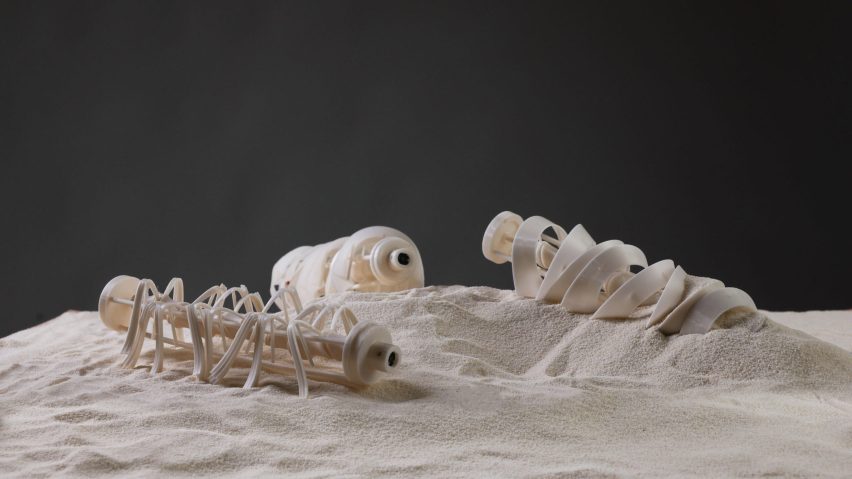
Dezeen School Shows: moving, mechanical creatures informed by insects' anatomy are among the projects from Virginia Commonwealth University School of the Arts in Qatar.
Also featured is an online convenience store designed to help users understand social media algorithms and a tangible image gallery, which questions the superiority of digital archives in forming memories.
Virginia Commonwealth University School of the Arts in Qatar
Institution: Virginia Commonwealth University School of the Arts in Qatar
School: School of the Arts
Courses: Masters of Fine Arts in Design
Tutors: Rab McClure, Reema Abu Hassan, Robert Bianchi, Marco Bruno, Stella Colaleo, Giovanni Innella, Joshua Rodenberg, Yasmeen Suleima and Michael Wirtz
School statement:
"The MFA in Design programme is interdisciplinary because designers face complex problems that defy easy categorisation.
"Increasingly, artists and designers need to navigate between and to blend disciplines, maximising resources and working adaptively to create new environments, visuals, messaging and artefacts.
"Our full-time, two-year graduate programme trains students to understand clients, collaborators and design challenges in original and authentic ways.
"The programme combines aspects of fine arts studio practice, digital craft and architecture, as well as graphic, fashion and product design to provide a hybridised education.
"Our programme's strength lies in its ability to support each student's unique interests, providing a customised educational experience tailored to the needs of each individual."

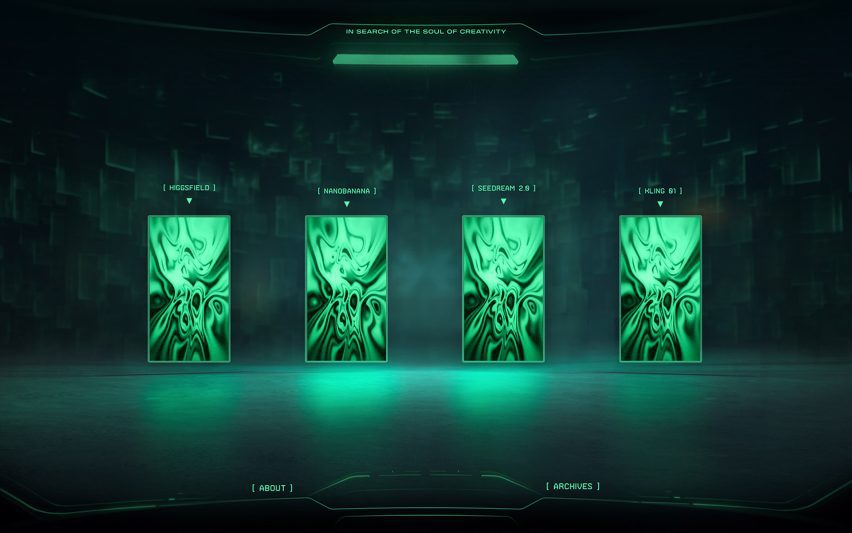
In Search of the Soul of Creativity by Fatima Nazir
"When images can be generated in seconds, what remains uniquely human in the act of creation?
"In Search of the Soul of Creativity investigates where authorship, agency and meaning reside within design practices that are mediated by generative AI.
"Rather than using AI to produce predictable results, this research deliberately relinquishes control to observe how generative systems interpret language through their own learned associations.
"Through a practice-led investigation across four generative models within the Higgsfield platform, user prompts were progressively shortened from full sentences to single words, revealing recurring patterns and cultural biases hidden within those systems.
"In response, this thesis proposes "The Designer's Journey," a framework where meaning occurs not only at the moment of generation, but also during acts of selection, sequencing and adding context. This project culminates in four short films in an interactive digital portal, demonstrating that while AI may generate images, the designer ultimately forges the meaning."
Student: Fatima Nazir
Course: MFA Design
Email: nazirf[at]vcu.edu

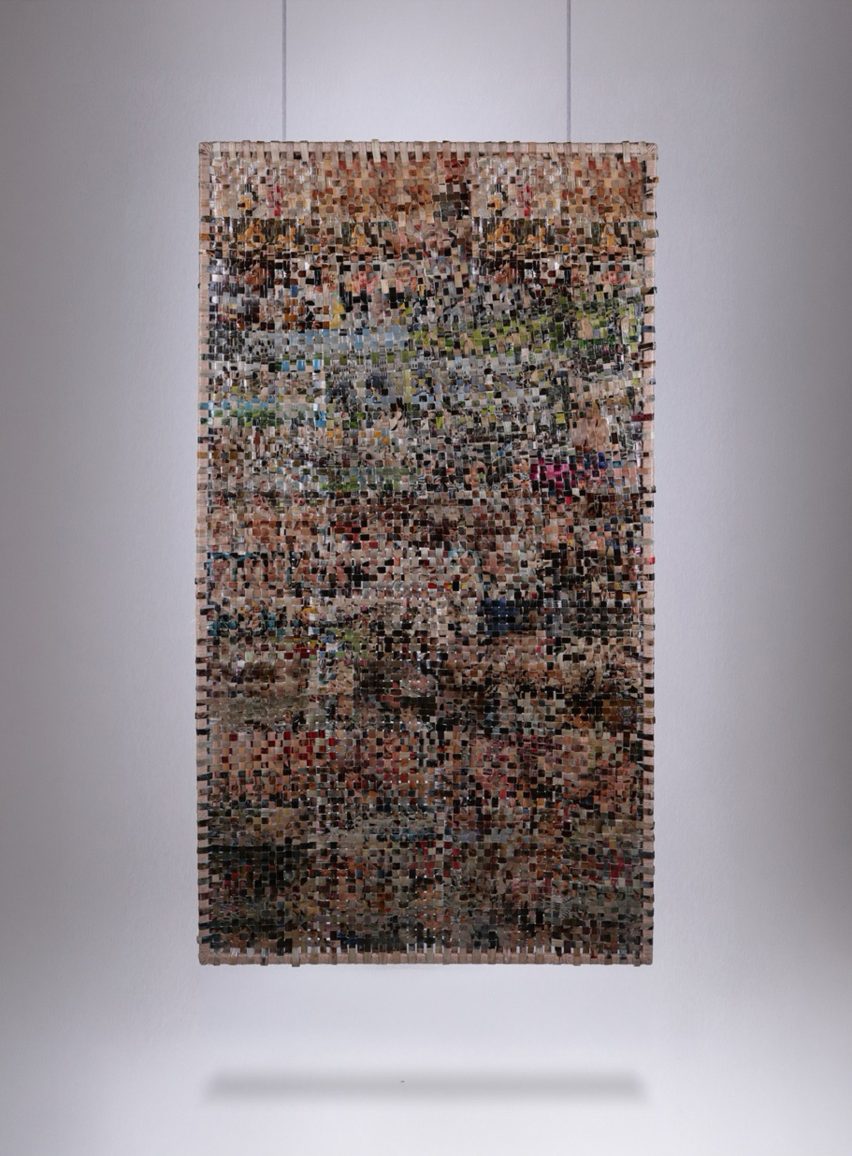
Between the Veins by Alice Aslem
"What happens to a childhood stored behind a password? This thesis began with a simple moment of scrolling through my son's photographs on my phone.
"As the images multiplied, they began to lose clarity, turning into an overwhelming digital archive. This made me ask: what kind of memories am I preserving for him?
"Having grown up between analogue and digital worlds, Between the Veins explores how I navigate memory through material objects and digital archives.
"Using weaving, images are transferred onto screw pine and palm leaves. In this process, digital files of his childhood are translated into organic fibres of shared memories. These durable materials introduce textures and variations that fragment the images, reflecting how memory is formed in parts, rather than a complete record.
"The resulting work is a tangible archive, inviting viewers to question the superiority of infinite digital storage by experiencing memory as something which is organic, tactile and embodied."
Student: Alice Aslem
Course: MFA Design
Email: aslemam[at]vcu.edu

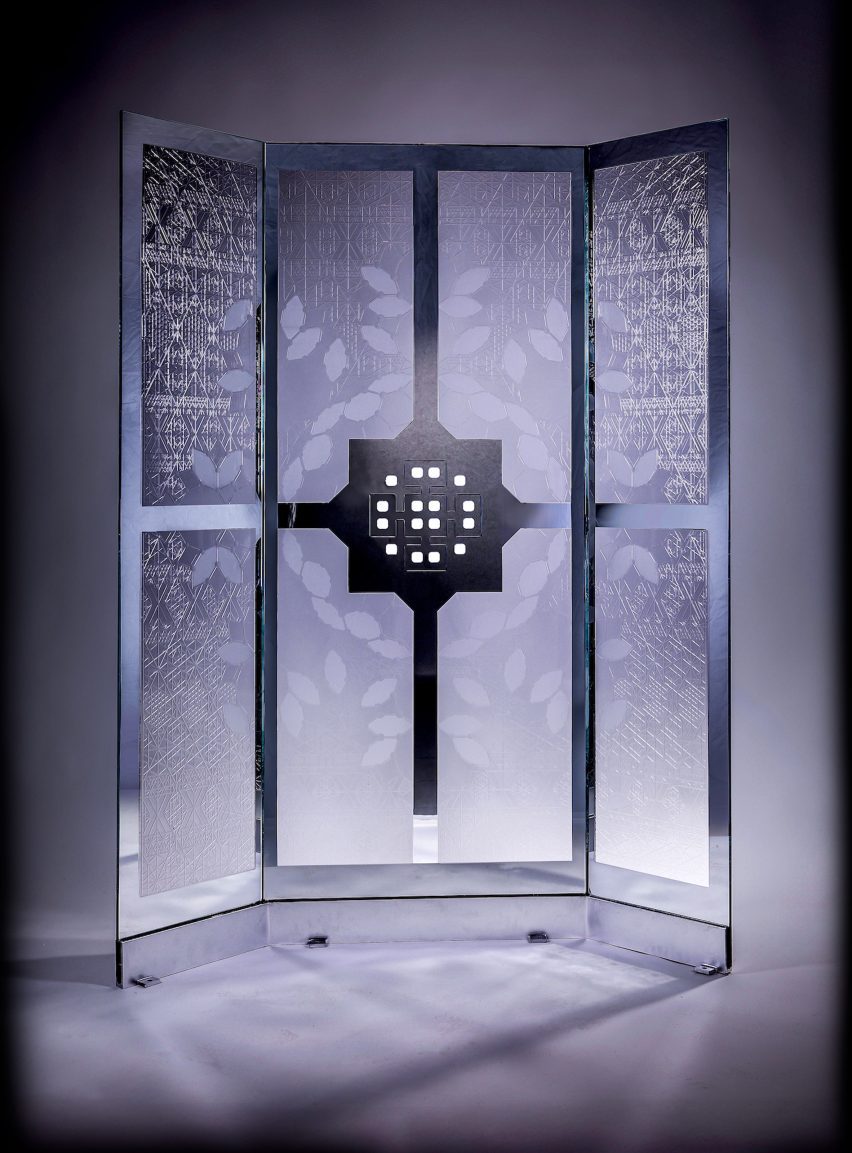
Mediator by Selma Fejzullaj
"Adolf Loos’s declaration that "ornament is a crime" defined modernist design, establishing a legacy that dismisses ornamentation as wasteful and regressive. This research questions that legacy by repositioning aesthetics as a divinely grounded value, inspired by the Qur'anic vision of Paradise.
"In this celestial realm, beauty is not wasteful but a manifestation of divine perfection. Conceptually, the project reclaims ornament as a vital tool for contemplating metaphysical themes. Materially, it reimagines glass, shifting it from modernist "radical honesty" to a medium of layered depth.
"Combining traditional Islamic ornamentation practices such as Girih and Chaharbagh, the project evokes the Qur'anic vision of Paradise by showcasing a glass installation that reaffirms the value of ornamentation.
"The project foregrounds ornamentation as a sophisticated semiotic system. Rather than being viewed as mere distraction or excess, it is celebrated as an inextricable part of function."
Student: Selma Fejzullaj
Course: MFA Design
Email: fejzullajs[at]vcu.edu


Munajat by Shawky Abdalla
"Contemporary design discourse remains grounded in functional, seemingly user-centred paradigms, often neglecting what lies beyond the tangible aspects of human experience.
"This research challenges such frameworks by positioning design as a dialogue with what lies beyond the physical, where meaning shapes form.
"Drawing on Islamic philosophy, particularly the relationship between zahir and batin – outward form and inward meaning – the study repositions design as a medium for remembrance (dhikr) rather than mere utility.
"Through a critique of modernist and postmodernist principles, the research proposes an ergonomics of the soul, where objects engage memory, introspection and transcendence in meaningful and lasting ways.
"Time is approached as a thematic design problem, not to measure it more precisely but to encounter it more intuitively and inventively, reflecting on its ephemeral nature.
"The project culminates in three multi-sensory objects that unfold through time, guiding deeper awareness, reflection and spiritual attunement."
Student: Shawky Abdall
Course: MFA Design
Email: abdallasa2[at]vcu.edu

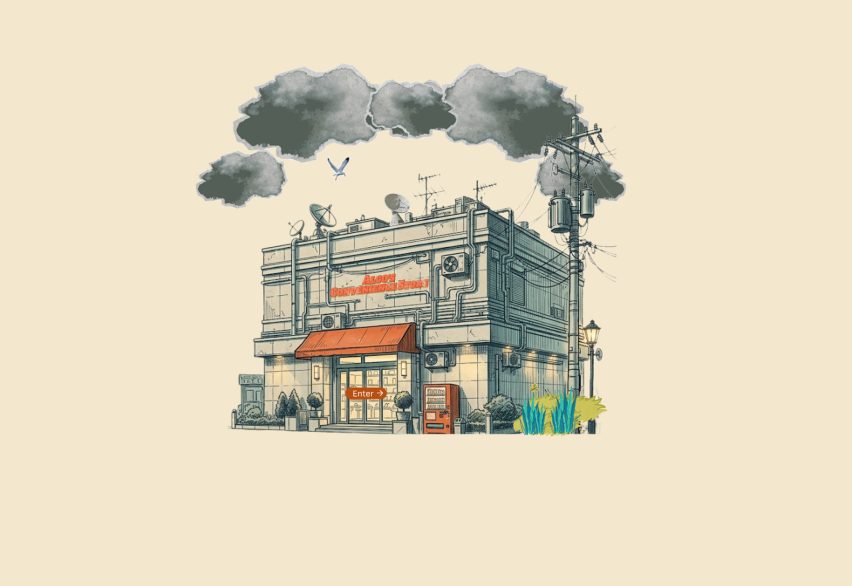
Algorhythm by Fariha Ahmed
"Forcing the world online, the Covid-19 pandemic turned social media-based hobbies into income generating cash cows. Digital creative spaces became sites of capitalist logic, where hobbyists became both labourers and commodities.
"Nowadays, profit-focused algorithms continue to operate subtly, shaping creative behaviour and decision-making in ways that are difficult to recognise and even harder to resist.
"Algorhythm replicates and translates this experience. Structured as a navigable convenience store, this interactive digital work invites audiences to walk the aisles and meet ALGO – the algorithm personified – to understand how platform mechanics function behind the scenes.
"The elements in this online convenience store are drawn from autoethnographic research into my ongoing hobby of rug-making (tufting) on Instagram.
"What begins as a simple walk through the store turns into a powerful lesson in platform literacy, where audiences experience firsthand how algorithmically guided social media platforms extract value from creator labour and audience attention alike."
Student: Fariha Ahmed
Course: MFA Design
Email: ahmedf13[at]vcu.edu
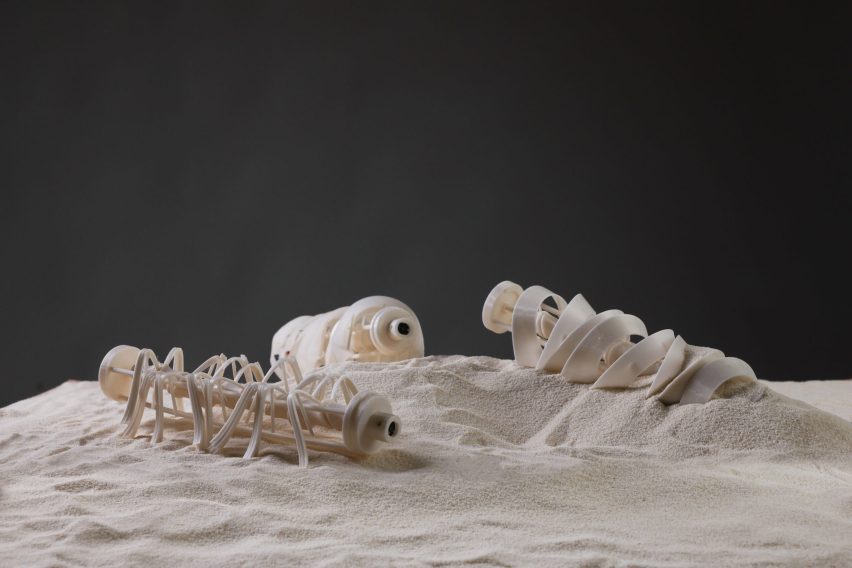
Contours Of Duration by Jood Elbeshti
"Insect anatomy offers an elegant example of motion derived from structure. Inspired by insect movement, Contours of Duration employs a cam-and-follower system, which consists of moving, leg-like parts that are designed to engage a series of rotating cams.
"The shape of each cam's surface activates the legs in unique ways, generating a repetitive movement, which demonstrates how geometry produces distinct motion behaviours over time.
"Through repeated testing and controlled variation, trace emerges as a central methodology, whereby movement over time creates a distinct pattern of marks, which makes motion visible and reflects how subtle changes to surface and form will generate different behavioural outcomes.
"As the research develops, trace becomes central not only as a record of motion, but as a design tool for reading, comparing and understanding behaviour over time.
"The outcome takes shape as a behaviour archive, where mechanical iterations and their traces reveal the relationship between geometry, movement and time."
Student: Jood Elbeshti
Course: MFA Design
Email: elbeshtij[at]vcu.edu
Partnership content
This school show is a partnership between Dezeen and Virginia Commonwealth University School of the Arts in Qatar. Find out more about Dezeen partnership content here.