


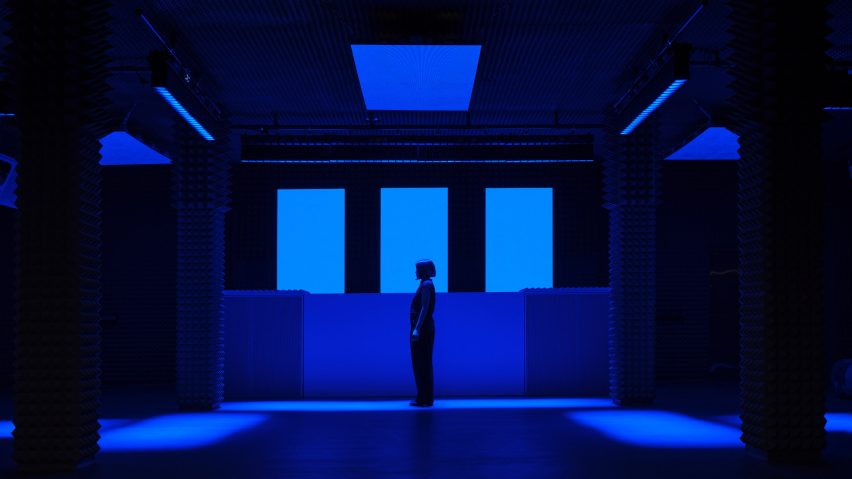
Spanish practice Clap Studio looked to "dead rooms" for its renovation of the El Cubo room at nightclub Spook in Valencia, Spain.
Following the success of their project for sister club Oven, the studio reimagined El Cubo, one of four rooms at Spook – an iconic nightspot that was a staple of the rebellious and hedonistic 1980s Ruta del Bakalao club circuit.
"The brief was simple and demanding at the same time," said Clap Studio technical architect Àngela Montagud. "[The owners] wanted us to renew the room, but with full respect for what Spook is and has been."

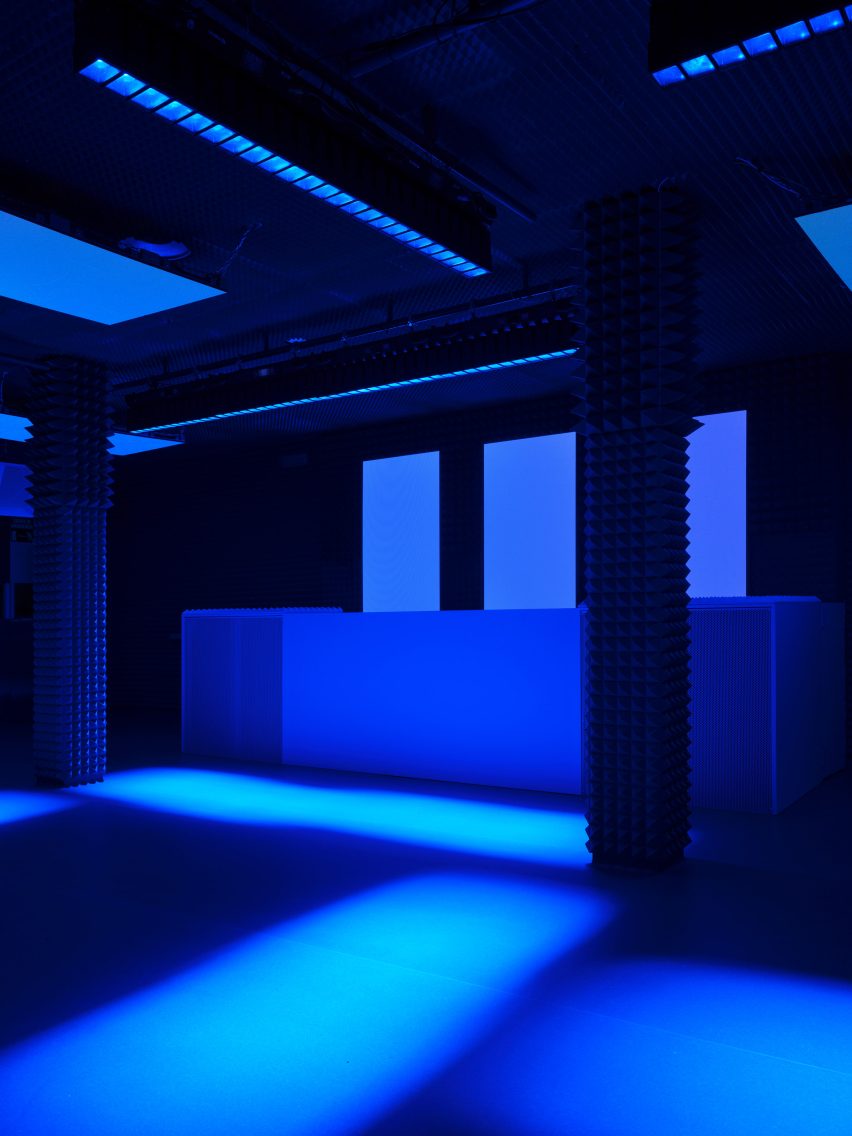
The studio decided to base its design on the concept of a "dead room" – an audio isolation space typically found in professional recording studios.
"A dead room is the most acoustically precise space there is," Montagud told Dezeen. "Total absorption, the environment is built for listening to music with absolute accuracy. Spook is, above everything else, a place about music," she continued.
"Taking the most music-respectful room that exists and turning it into a place to dance felt like the truest way to honour what this club is."
The studio was aware of the paradoxical nature of basing the design of a nightclub on a space typically designed for listening and concentration.
"Tension was the whole point," explained Montagud.
"We liked borrowing the language of the first to intensify the second, using the geometry of precise listening to build a room where hundreds of people feel the music rather than just hear it," she continued.
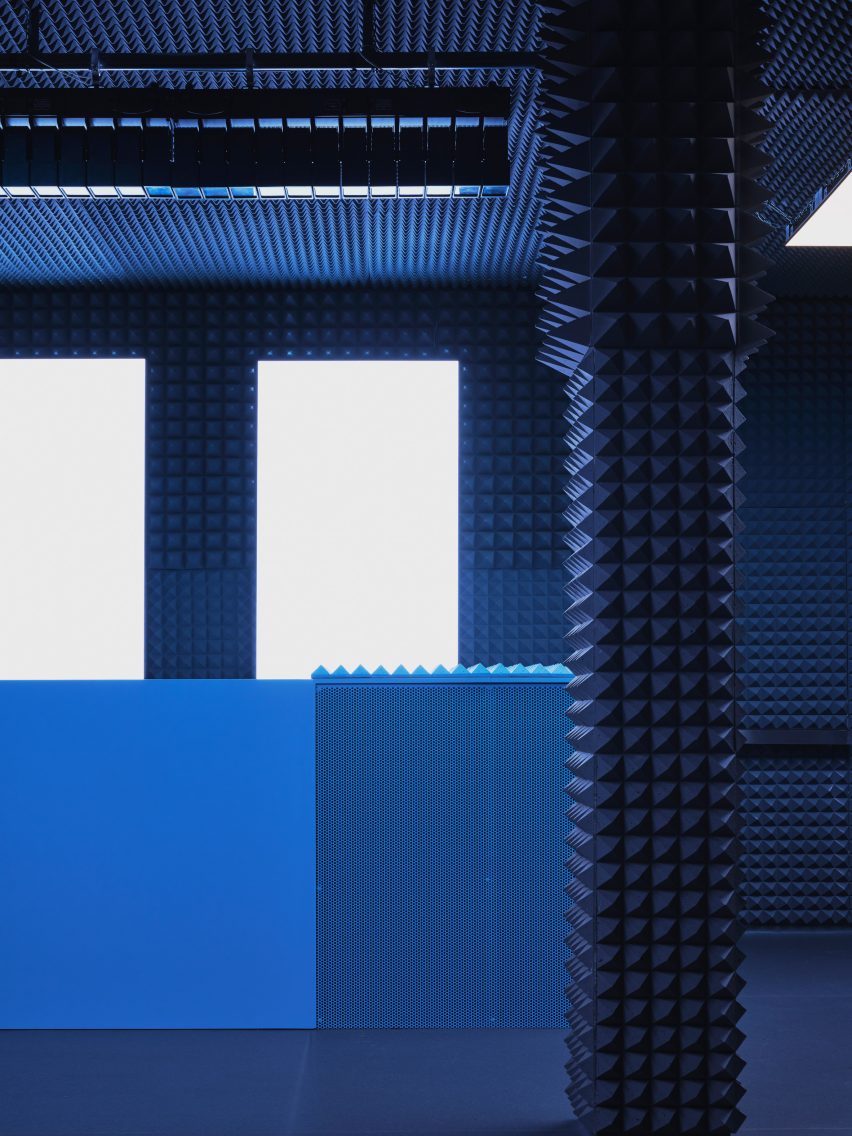
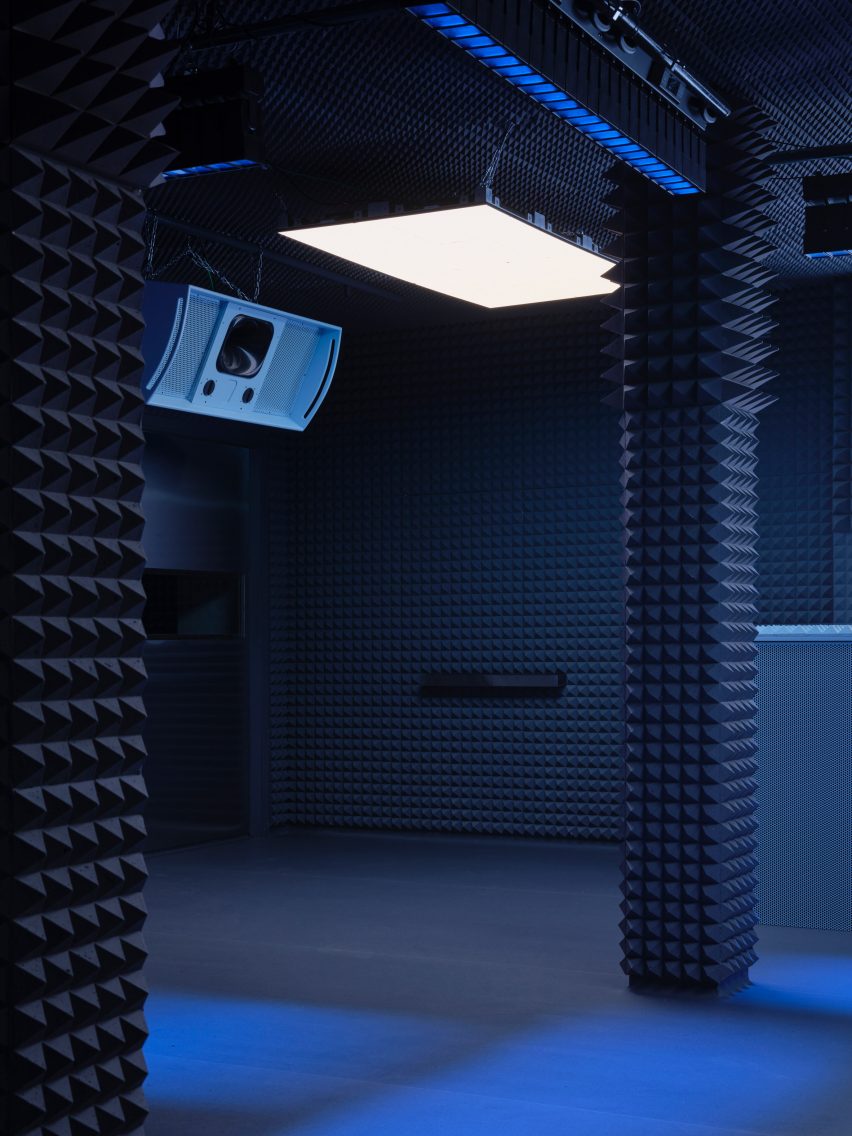
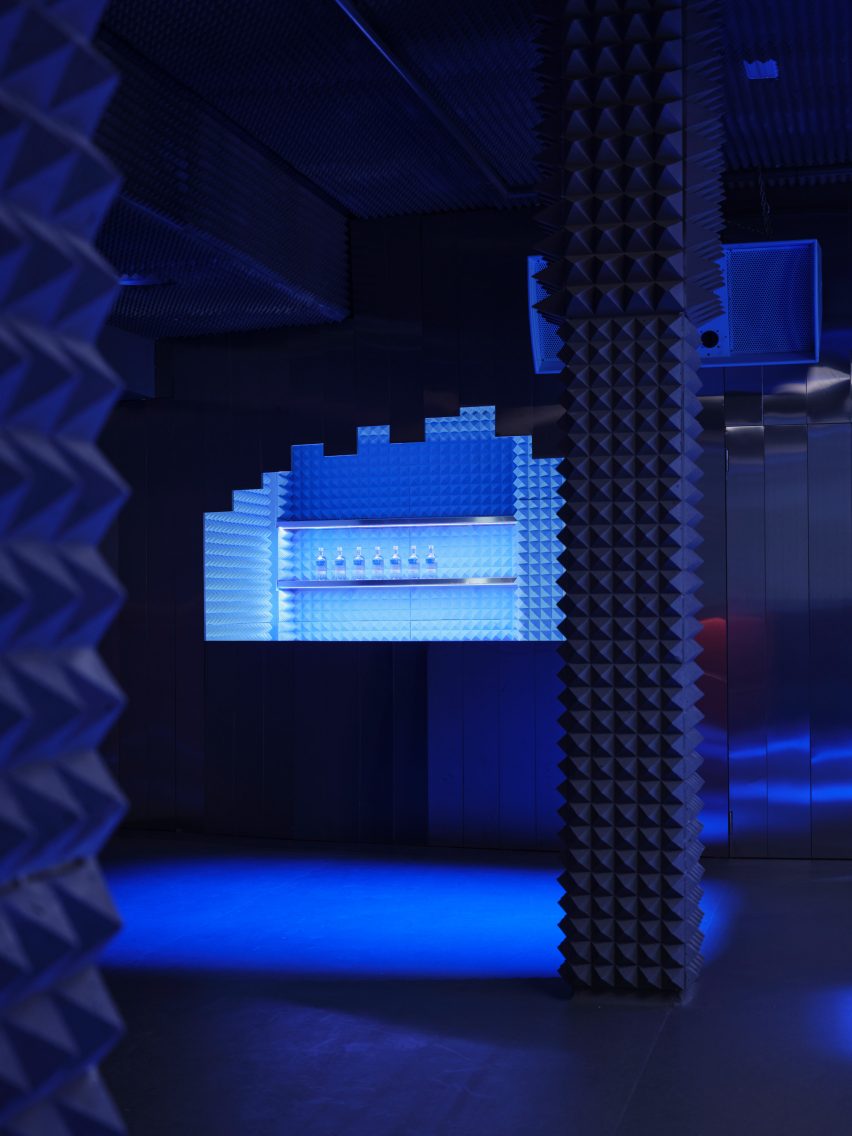
The 140-square-metre room's walls, ceiling and pillars were clad in an array of pyramids that emulate the acoustic panels used in dead rooms.
Surfaces within reach of the crowd – up to two-and-a-half-metres high – are rigid pyramids of porous plaster with a dark grey cement-effect finish.
"In a studio you can line everything in acoustic foam," said Montagud. "In a club you can't, anything people can touch has to be rigid and durable, or the finish is destroyed within a week."
"The real acoustic foam is where hands can't reach it – the entire ceiling, the large pyramids on the wall behind the DJ, and the upper sections of the columns," she continued.

The focus on functionality continues throughout the rest of the room's material palette which was centred around "the reality of a working club".
Atop the vinyl floor, and arranged around the central dancefloor, the lacquered-wood DJ booth stands adjacent to a curved bar built from vertical wood and steel panels.
The bar was finished in stainless steel, which runs on to a striking curved wall featuring aluminium slats at varying heights that allow for the lighting to dynamically strike around the room.
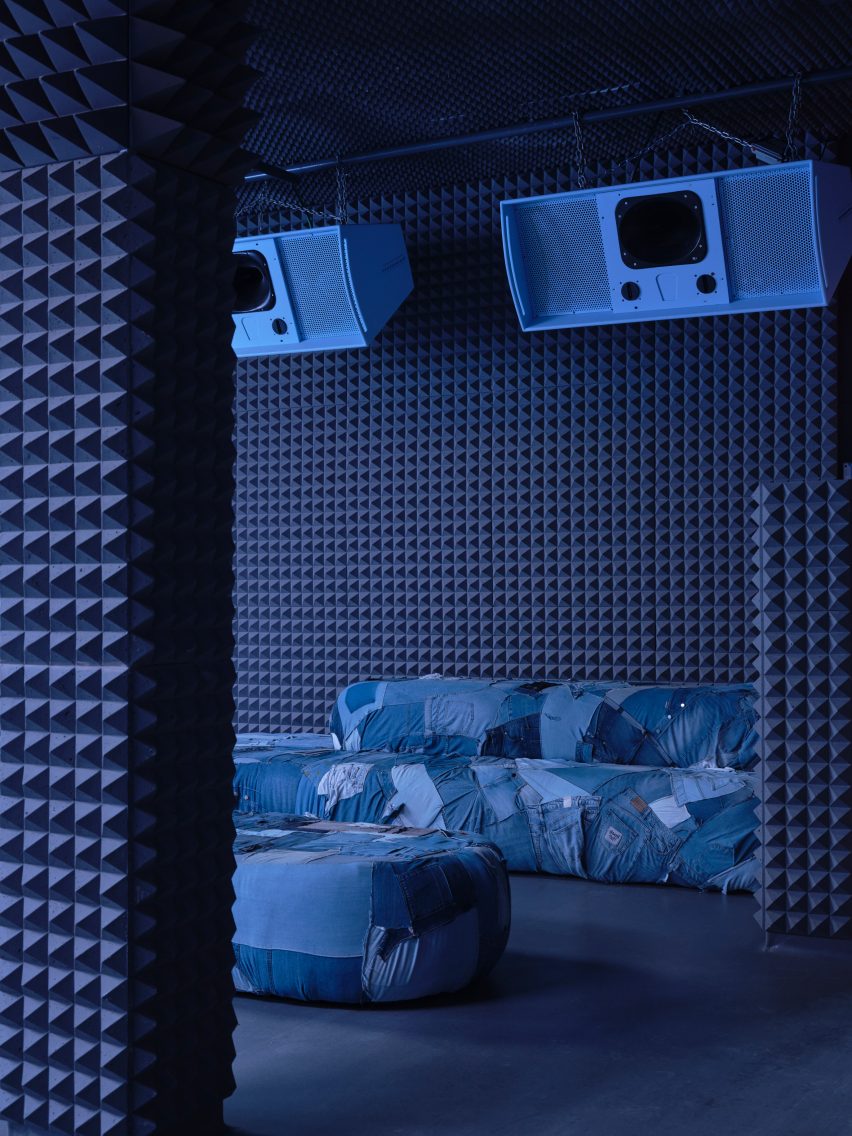
Opposite the bar, the studio designed a bespoke sofa and pouf upholstered in reclaimed denim – a nod to Spook's former counterculture patrons – while the original, functioning, speakers from the club's heyday punctuate the corners of El Cubo.
The room was finished in a striking blue accent that runs through coloured elements of the plaster, the lighting and the seating, which, according to the studio, is evocative of Spook's "sober, dark, techno" identity.
Throughout the space, Clap Studio aimed to ensure that the architecture and interior finishes did not overshadow the music.
"The room isn't the subject, the music is," said Montagud. "The most important thing here is invisible, the sound. If the architecture shouts, it competes with that."
Other nightclubs previously published on Dezeen include a sultry and saturated coloured venue in Hong Kong inspired by director Wong Kar Wai's films and the intimate renovation of upstairs bar at London's iconic Ronnie Scott's jazz club.
The photography is by David Zarzoso.