


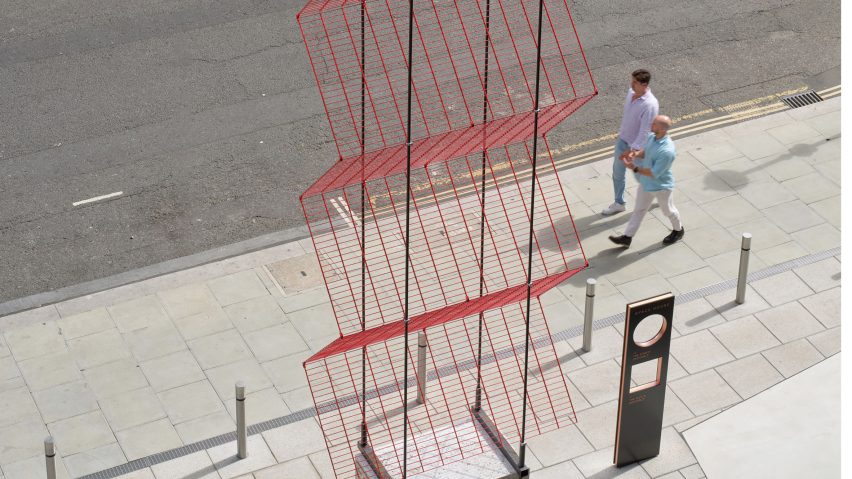
Artist Rana Begum and engineering studio Webb Yates have created a pylon-informed tower from fence material at this year's London Festival of Architecture.
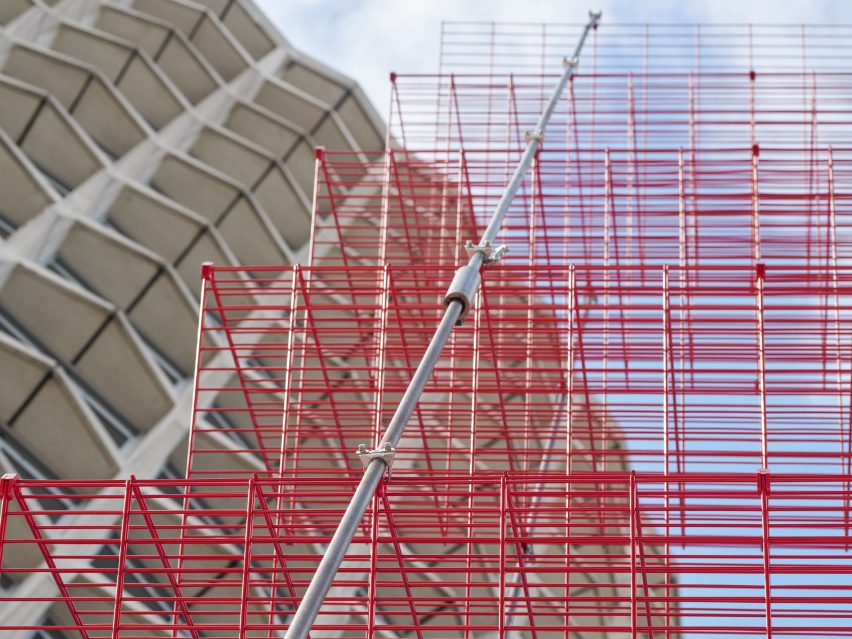
Named No.1616 Fence, the 13-metre-high tower was constructed from industrial, powder-coated mesh that is more commonly used for fencing.

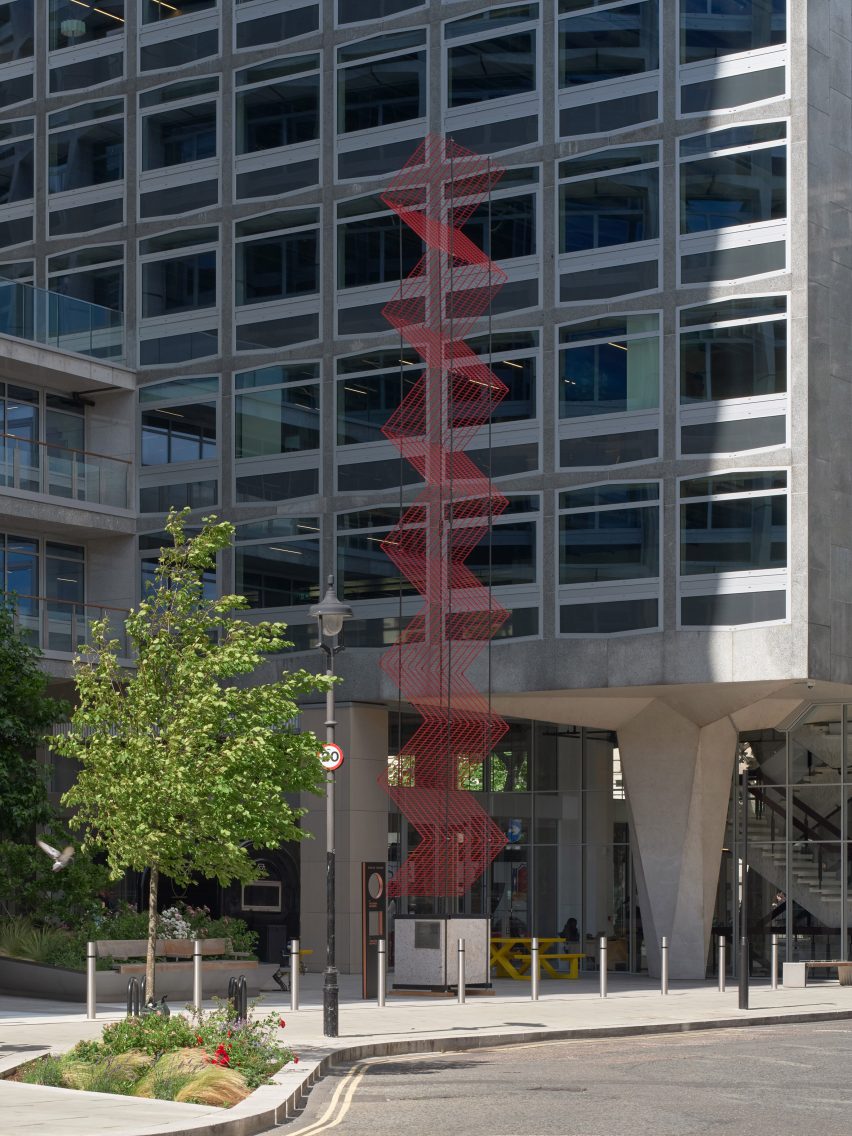
"You might come across this material in both open landscapes and urban contexts, it is familiar and functional," Begum told Dezeen.
"The material is made to be used as fencing – so it is impossible not to make connotations with the act of creating barriers, or cordoning off land, which is exclusive to some and inaccessible to others. The work, in its verticality, quite literally turns this on its head."

Erected outside Space House, which was recently refurbished by Squire and Partners, the tower is the third in a series of collaborations between the artist and engineering studio made from the material.
Each of the installations aims to question the idea of boundaries and borders. This tower, created as part of the London Festival of Architecture (LFA), was directly informed by the architecture of electricity pylons.
"We love pylons!" said Begum. "We take photos of them wherever we go and the structures vary in style and colour."
"One time we had been jogging in Savannah where they have a huge radio mast in the middle of the town – that was a moment of inspiration," added Webb Yates co-founder Steve Webb.
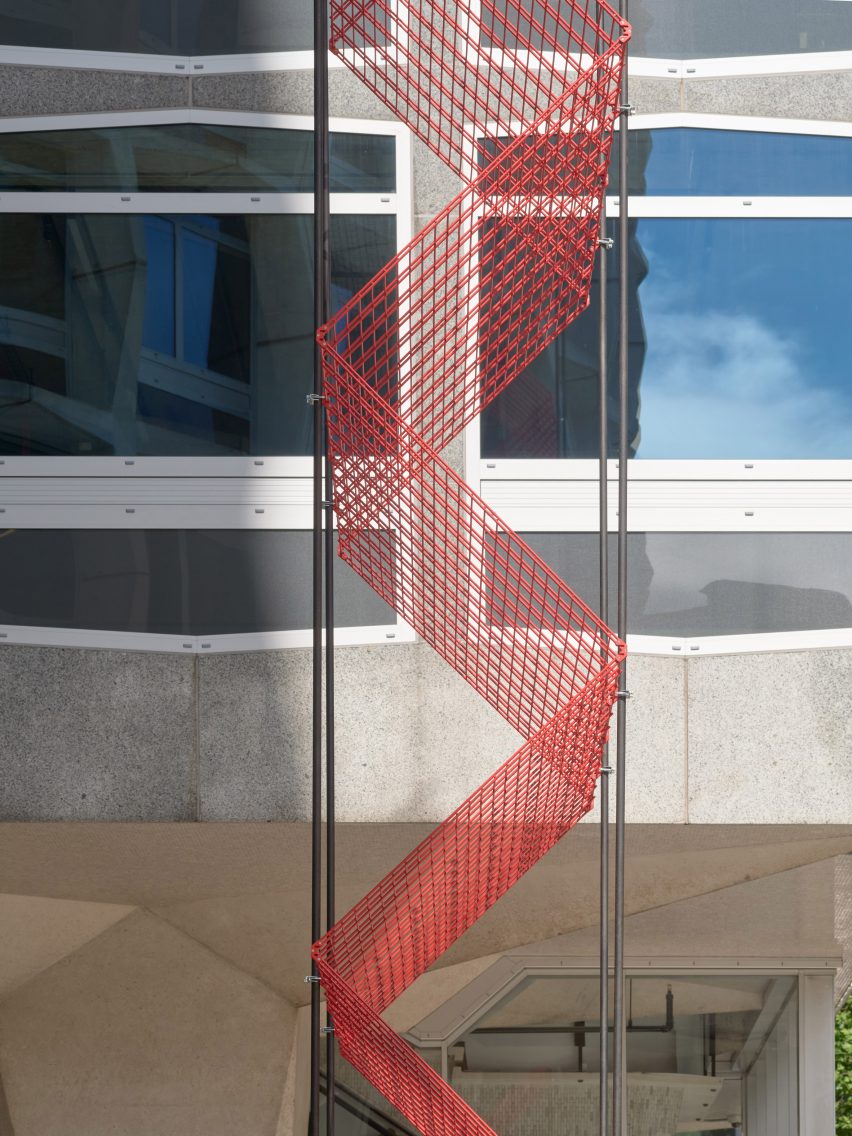
"We are always fascinated by trusses, their repetition, triangular patterns and refinement. We thought of using the fence zigzag as diagonal in a structure."
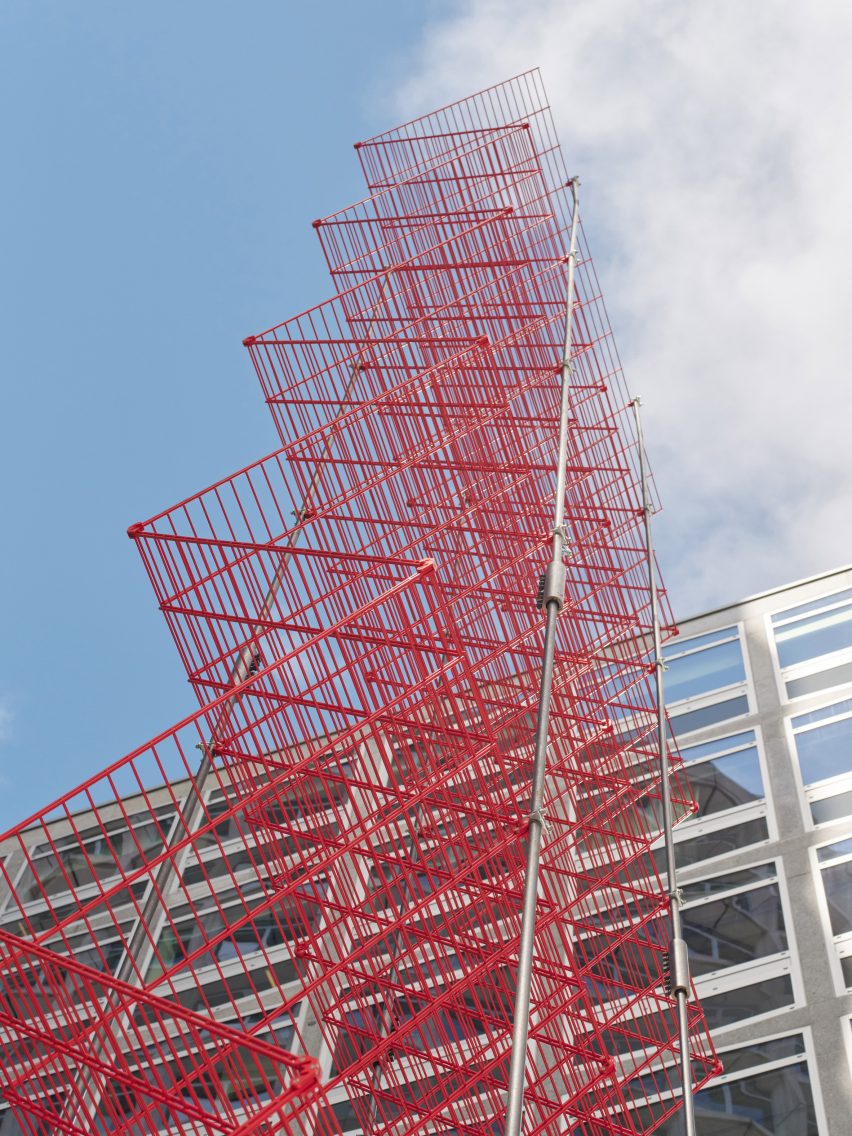
Begum and Webb Yates used fence material for the installation to draw attention to current discussions on borders and how those discussions are framed.
"In the current political climate we are facing a lot of division and renewed focus on borders and boundaries," said Begum.
"We wanted to use a material that we encounter in daily life, and bring attention to how numb we have become to these kinds of boundary-asserting materials and less mindful of their impact or function in society."
"The density and porosity of the fencing panels and their colour shifts according to your viewpoint," she continued.
"It can almost appear and disappear, at one moment asserting its presence, and then slipping away or becoming a thin line when seen from another angle."
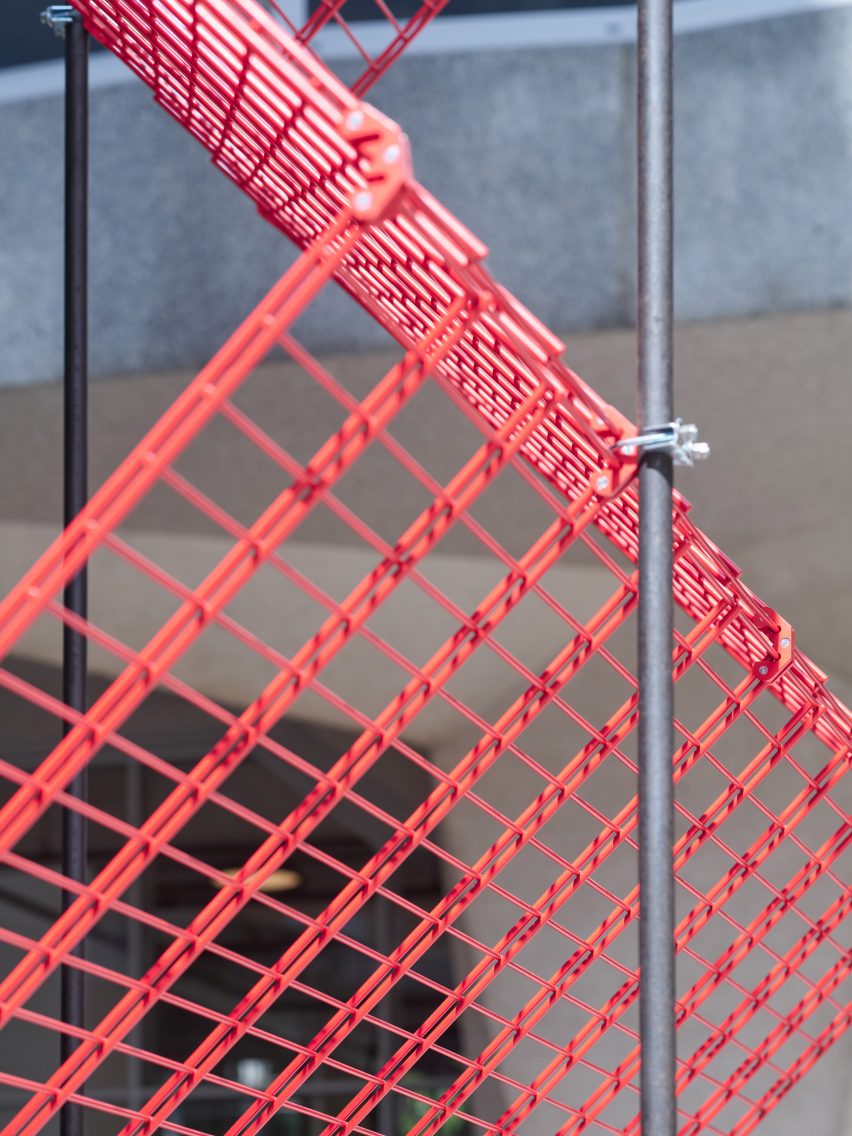
Following the London Festival of Architecture, Begum hopes that the tower will find a new home. However, if it does not, the installation was designed to be fully disassembled.
"Here we have tried to make it from standardised, bought items assembled together in a way that almost nothing is cut or welded and can be fully disassembled," said Webb.
"We had this joke that we could order it all from the internet in the morning, put it together for lunch, then take it down and return it for a full refund by nighttime," he continued.
"It would be great to find a home that challenges the work, otherwise it will be taken to bits and returned for a refund!"
Last year at the London Festival of Architecture, UK studios POOR Collective and Wiggle Wonderland created an artwork-covered pavilion to draw attention to London's night workers, while Simone Brewster mimicked ancient architecture for another colourful pavilion.
The photography is by Andy Stagg.
Project credits:
Artist and engineer: Rana Begum and Webb Yates
Fabricators: BLOQS Create
Collaborators: Space House, HB Reavis, Albion Stone, Setworks