


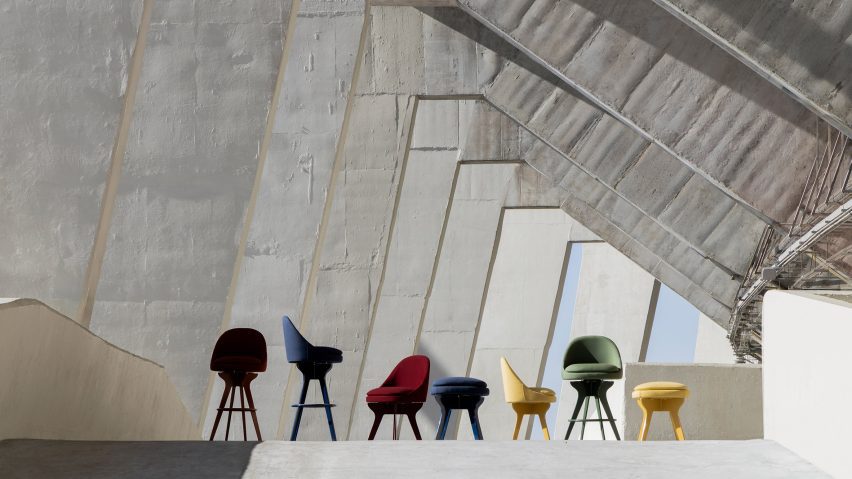
A group of local designers have showcased a custom furniture collection as part of an overall overhaul of the interiors at Mexico City's Azteca Stadium, one of the venues for the 2026 FIFA World Cup.
Mexican studios CUAIK | CDS, Luis Huerta, Estudio Ignacio Urquiza Ana Paula de Alba, CAAM Arquitectos and Clásicos Mexicanos collaborated for an overhaul of the hospitality programming at Azteca Stadium, also known as Estadio Banorte.

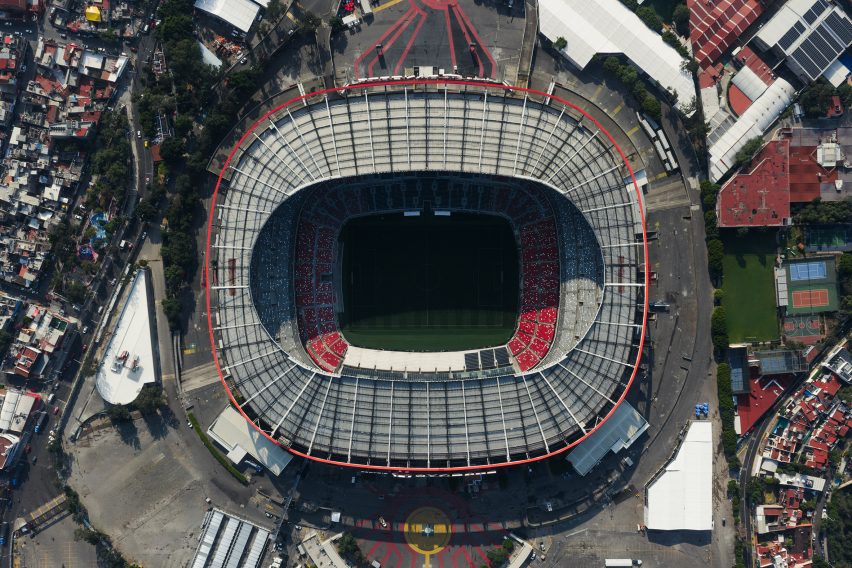
Concurrent with a revamp of the stadium's superstructure by architecture studio Populus, the Mexican design consortium's work covered 15,000 square metres of space within Latin America's largest stadium.
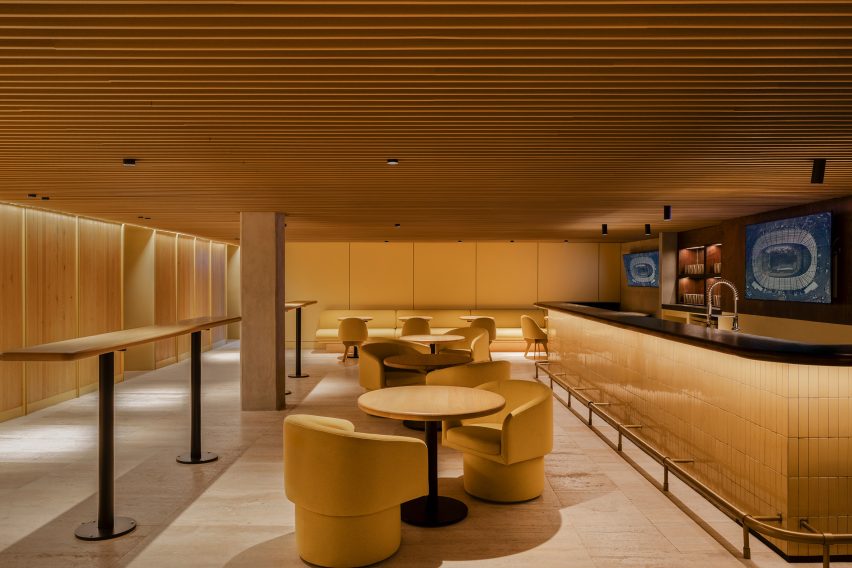
It covered street-level access points, reception areas, lounges and other hospitality aspects, all presented with different chromatic schemes, stitched together by a custom furniture collection.

The five studios said they wanted to preserve the spirit of modernism imbued in the stadium's original design, as well as its importance as a symbol of Mexico to the world, given its prominence in international sporting events.
"Beyond its sporting dimension, the building is recognized as a cultural symbol, a witness to foundational moments such as the 1968 Olympics and the 1970 and 1986 World Cups," said the studios.
"In this sense, the proposal understands the stadium as a living archive, where architecture has accompanied and enabled a broader national creative expansion."
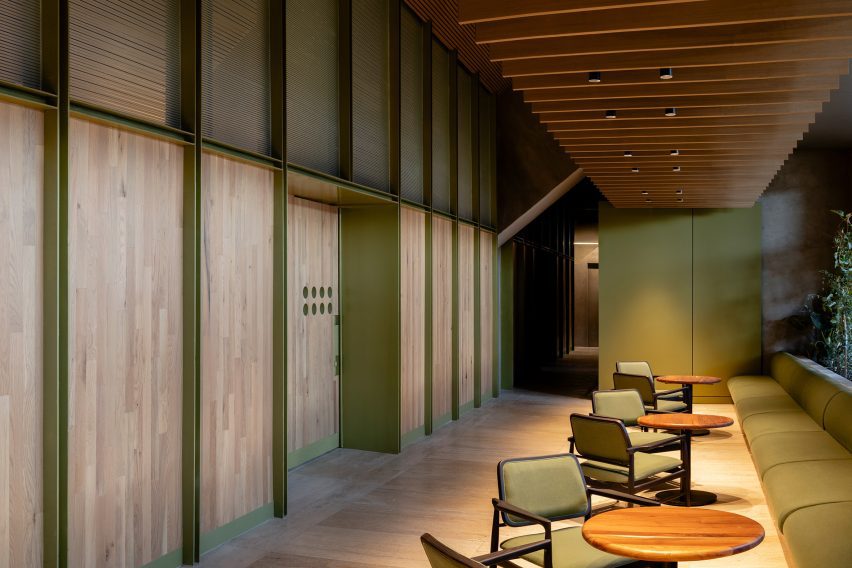
The entry programme on the west side of the stadium was clad in terracotta, which leads to a series of lounge areas, characterised by yellow finishes on the lower floors and green on the upper levels. All these spaces feature central bars and wood detailing.
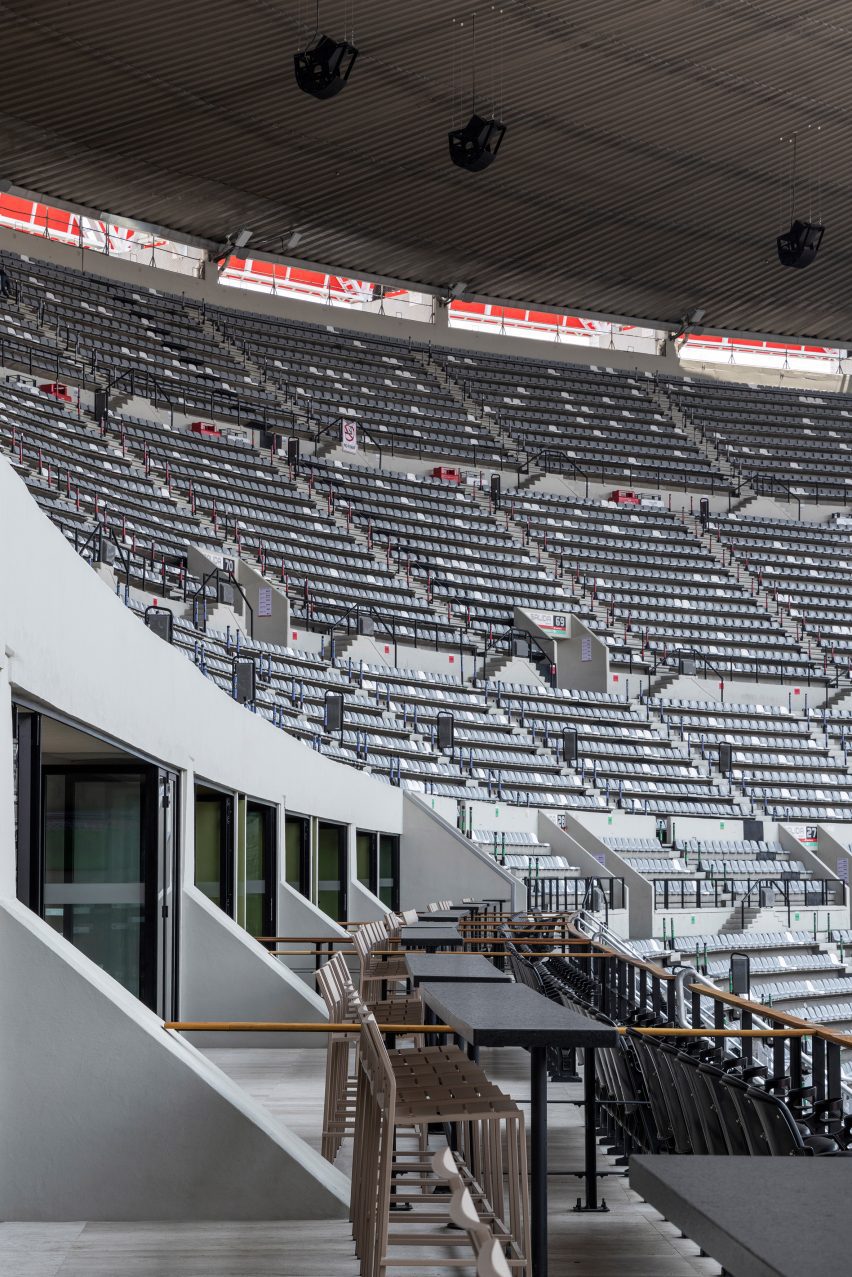
Most of these spaces connect directly out into the stands, with steel-and-wood detailing separating them from the other seating areas.
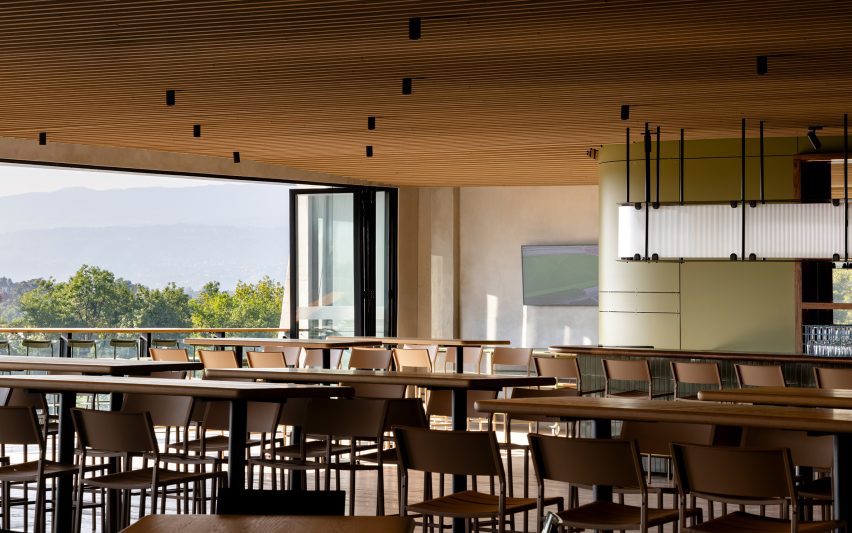
On the east side, the studios added the largest bar area in the stadium. It has a large array of seating and tables and double patios, one looking out over the pitch and the other out into the city and the mountains beyond.
"This permeability redefines the stadium experience, dissolving the boundaries between interior and exterior through an open plan that functions as a social space," said the studios.
Underneath the stands, the studios developed a series of clubs connected to the tunnel and locker room areas in the Lower East Bowl.
This aspect was anchored by the Centerline Club, but has a series of different clubs. These spaces wrap around, following the shape of the stadium, and respond to the "center of the pitch".

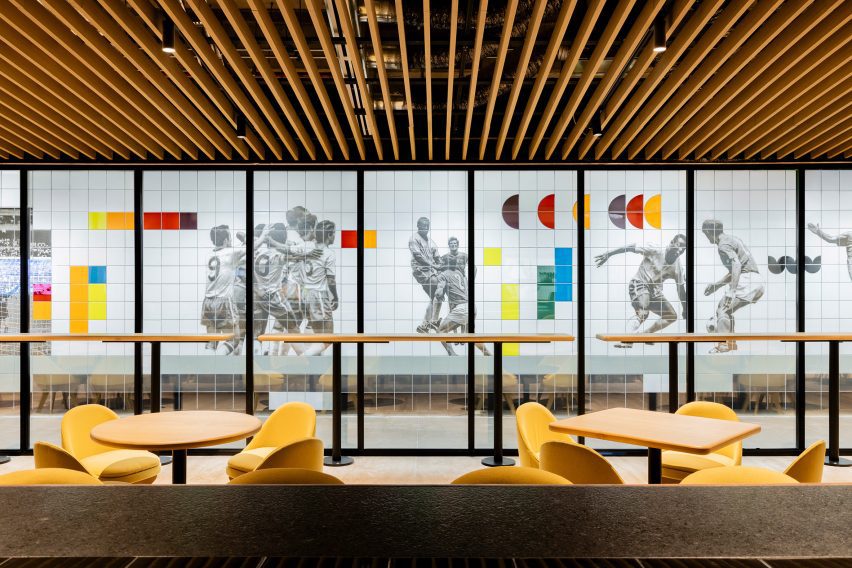
In one of these underground seating areas, a lounge glass wall looks out at a custom mural designed by Guadalajara ceramics firm Cerámica Suro, depicting the history of the stadium.
Throughout, the studios worked with Clásicos Mexicanos, a Mexico City-based platform, to select furniture by manufacturers such as Piztola, Cacao and Patrones for the space.
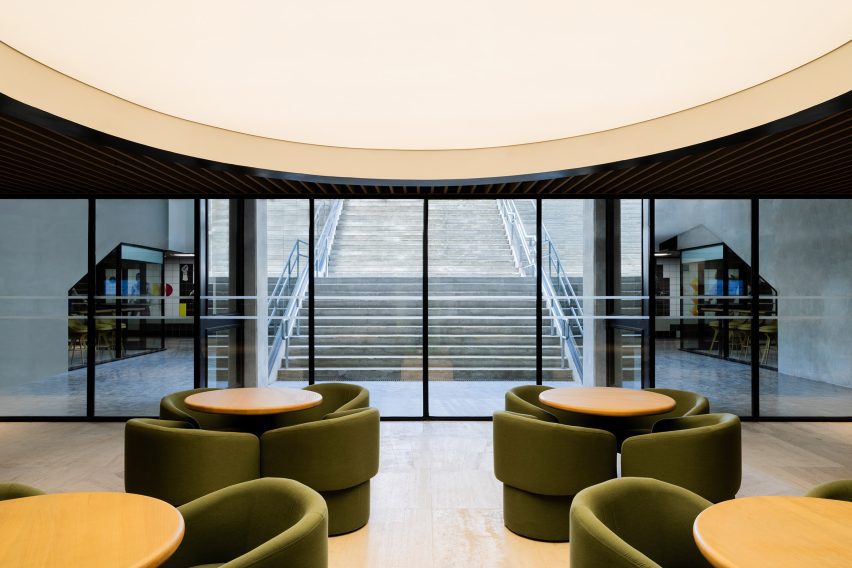
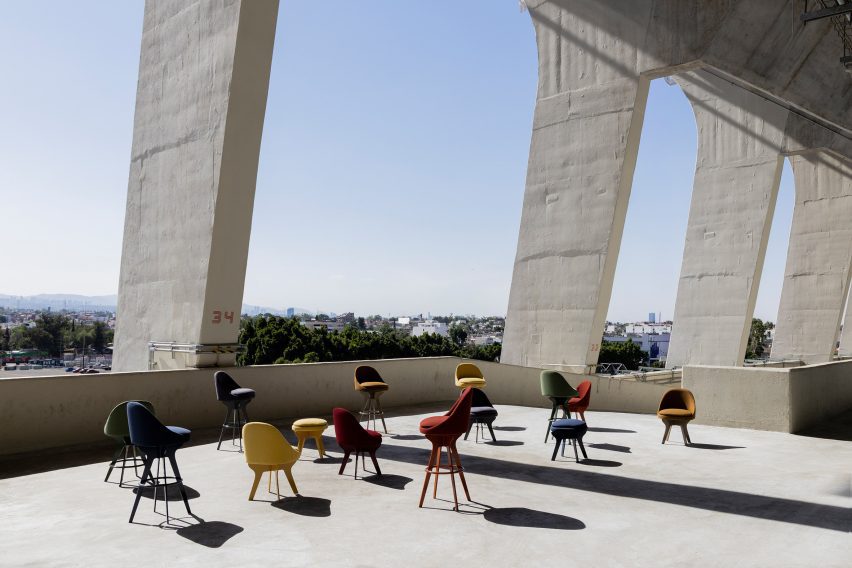
Working in tandem with this curation, Estudio Ignacio Urquiza Ana Paula de Alba, Cuaik | CDS and Luis Huerta created a custom line for the project called The Colección EA, produced by Piztola.
The Colección EA drew on the Azteca Stadium's architecture, with colours that align with the chromatic organisation of the spaces.
"[The collection] reinterprets the stadium’s geometry and structural logic in pieces that vary in height, color and function," said the studios.
"Benches, chairs and stools in seven distinct colors unfold as a coherent system that dialogues with each environment, responding to programmatic needs without losing a clear formal identity."
Overall, the studios aimed to reinforce the monumental identity of the stadium.
"Because if the Mexico City Stadium has always been an icon, this intervention confirms that its legacy – and its future – remain, indeed, monumental," they said.
The 2026 FIFA World Cup is currently taking place in several cities across North America. We listed out all of the stadiums and their architects.
The photography is by Zaickz Moz.