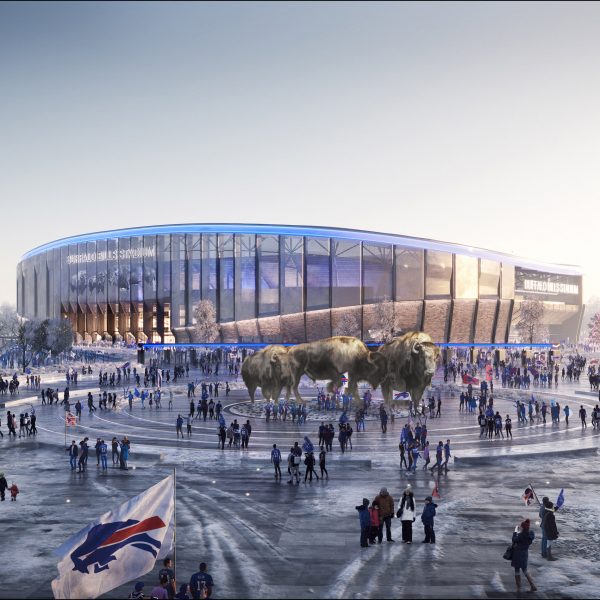
Sixteen stadiums hosting games at World Cup 2026

With the World Cup kicking off in Mexico City today, we look at the architecture of the 16 stadiums in the USA, Mexico and Canada hosting games at the tournament.
Unlike many previous World Cups, where stadiums were purpose-built for the tournament, all of the 2026 World Cup venues were built for major sports teams a long time before the tournament.
Eleven stadiums across the USA will host matches, all of which are the current homes of NFL American football teams. Some of these have been upgraded or adapted for football, or soccer.
In addition, two stadiums in Canada and three in Mexico are hosting games, including the Estadio Azteca in MexicoCity, which hosted the finals of both the 1970 and 1986 World Cups and is the venue for the tournament’s opening game tonight.
Here are all the 2026 World Cup stadiums:
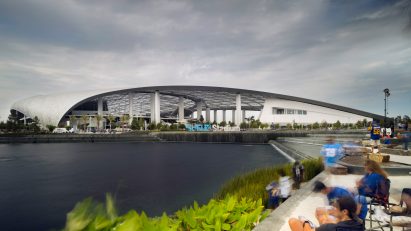
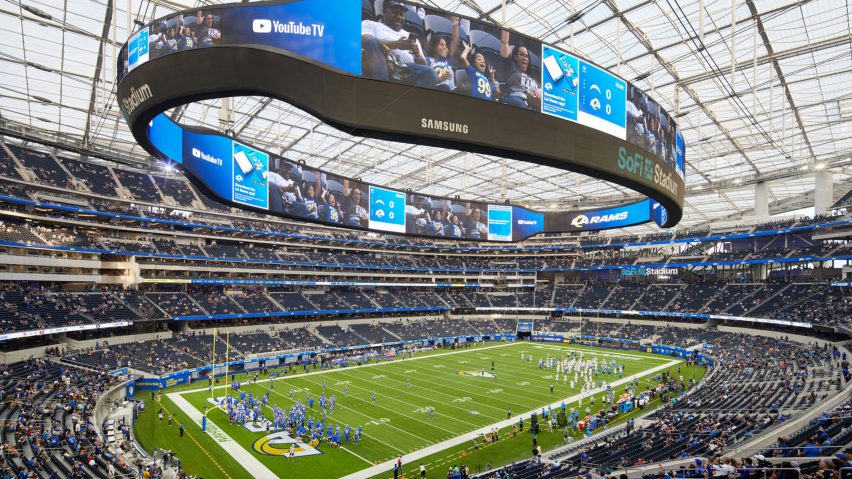
SoFi Stadium, LA, by HKS (2020)
Home of American football teams the LA Chargers and LA Rams, this 70,000-capacity venue is reportedly the most expensive stadium ever built.
Completed in 2020 at $5.5 billion, the SoFi Stadium can be expanded to seat 100,000 for major events like the Superbowl, making it one of the largest stadiums set to host games at the World Cup.
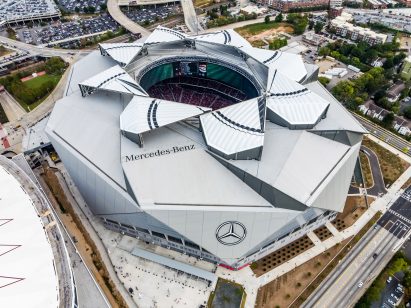
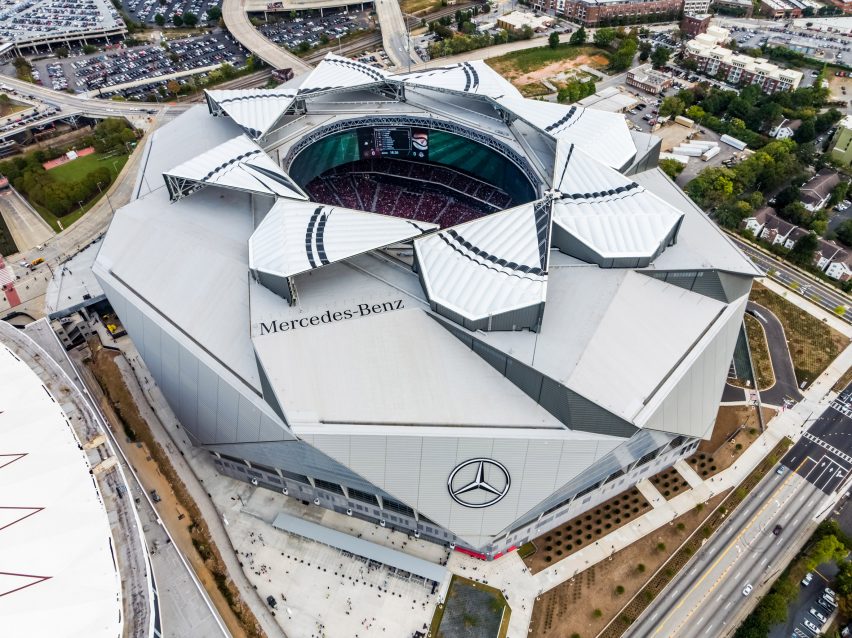
Mercedes-Benz Stadium, Atlanta, USA, by HOK (2017)
One of several stadiums hosting games at the tournament designed by stadium specialist HOK, the 71,000-seat Mercedes-Benz Stadium is home to American football team the Atlanta Falcons.
The angular stadium, which opened in 2017, is topped with a unique roof that “opens and closes like a camera aperture”.
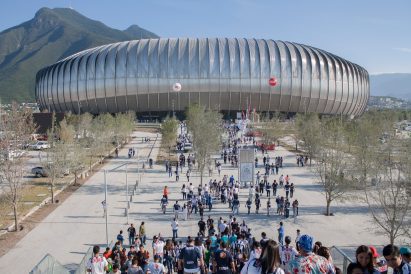
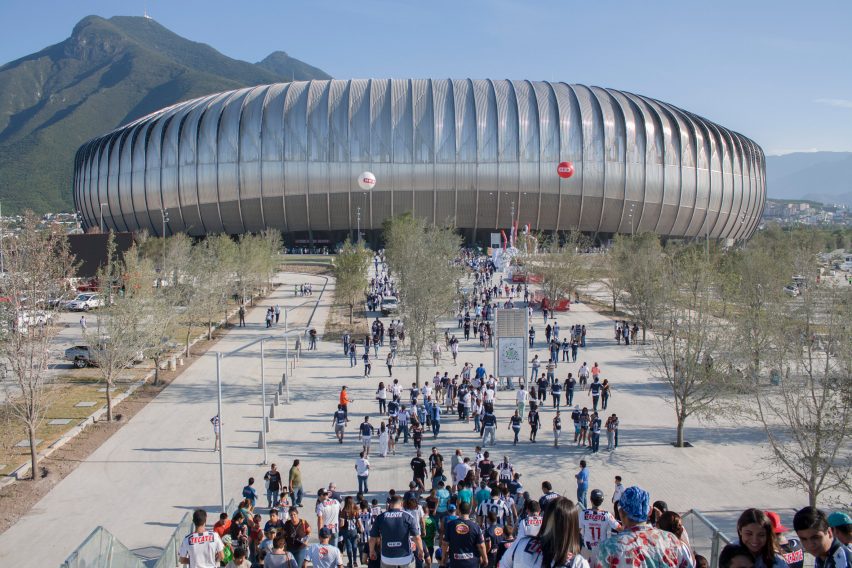
Estadio BBVA, Guadalupe, Mexico, by Populous and VFO (2015)
Nicknamed El Gigante de Acero – or the Steel Giant – for its distinctive appearance, the 53,500-seat Estadio BBVA was designed by Populous and VFO.
One of three stadiums in Mexico set to host games during the World Cup, the venue’s form references brewing pots used locally to make beer.
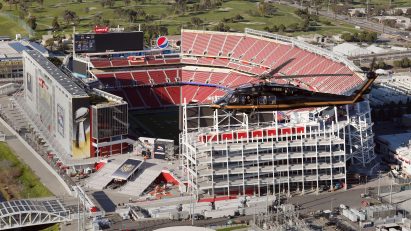
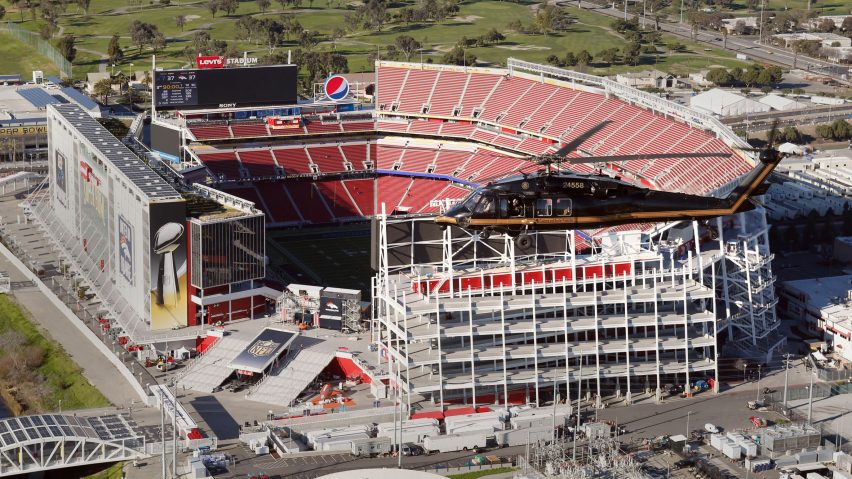
Levi’s Stadium, Santa Clara, USA by HNTB (2014)
Located in Santa Clara, California, Levi’s Stadium has been home to the NFL team the San Francisco 49ers since it opened in 2014.
Two-thirds of the 68,500 seats are located in a large lower bowl, and the stadium can be expanded to accommodate 75,000 for events like the Super Bowl, which it hosted in 2016.
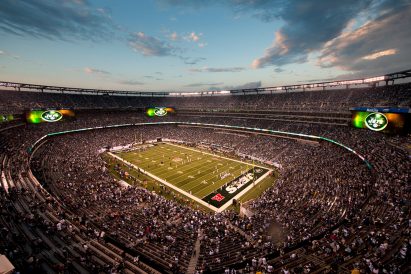
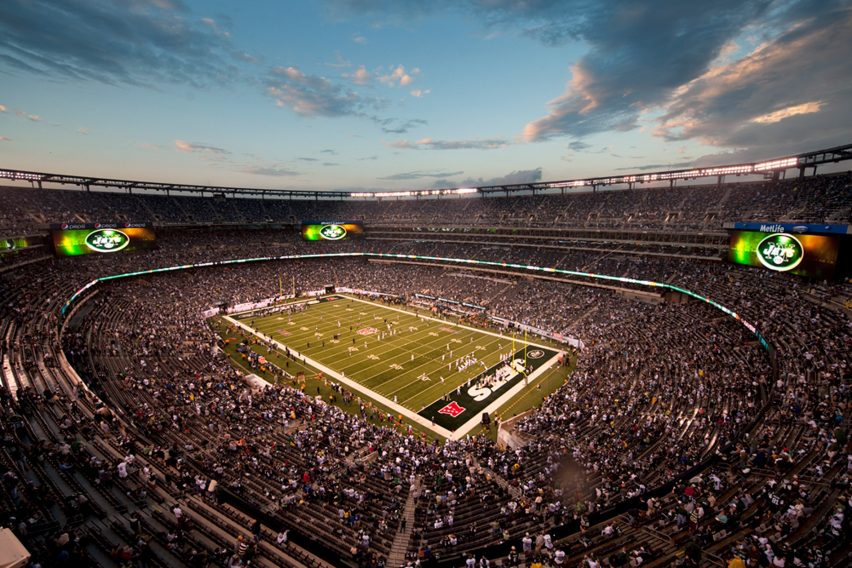
MetLife Stadium, New Jersey, USA, by HOK (2010)
Located near New York City in East Rutherford, New Jersey, the 82,500-seat MetLife Stadium is home to two NFL teams – the New York Giants and the New York Jets.
MetLife Stadium was designed by HOK in collaboration with designers Bruce Mau and Rockwell Group so that it could be transformed from predominantly blue to green to embody the identities of both franchises.
The structure includes rusticated stone to align with the Giants’ traditional values, combined with metal and glass for a modern look desired by the Jets.
MetLife Stadium will host the final of this year’s World Cup.
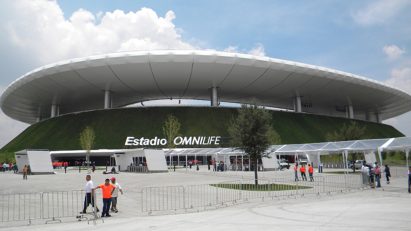
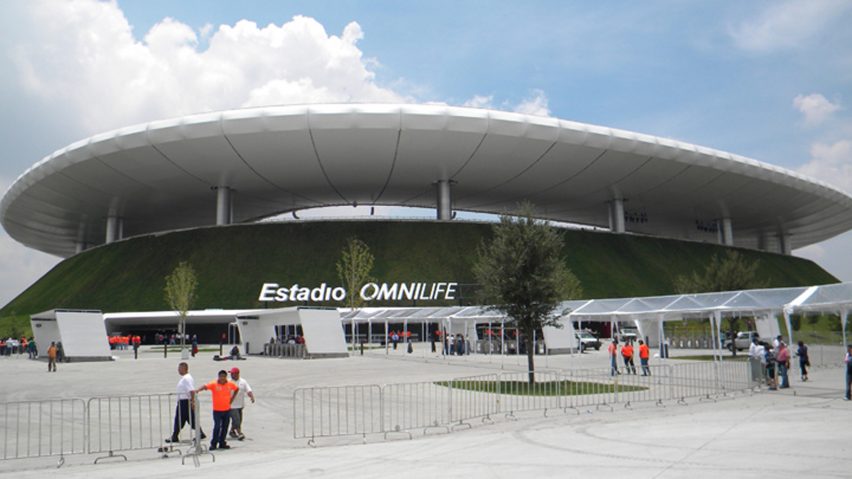
Estadio Akron, Guadalajara, Mexico, by Jean Marie Massaud & Daniel Pouzet and Populous (2010)
Designed by Jean Marie Massaud and Daniel Pouzet and engineered by VFO, the 48,000-seat Estadio Akron is home to the Club Deportivo Guadalajara soccer team.
The stadium has a distinctive form, with a grass-covered lower structure topped with a circular raised canopy intended to evoke a volcano.
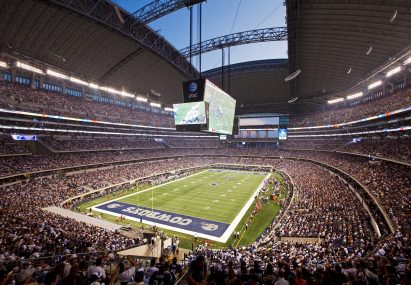
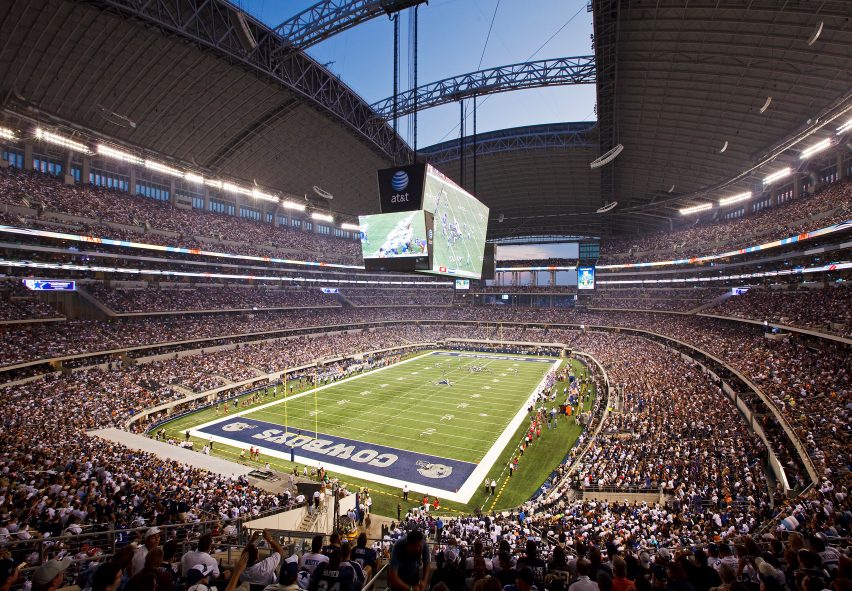
AT&T Stadium, Arlington, USA, by HKS (2009)
Designed by stadium specialist HKS, the 80,000-seat AT&T Stadium in Texas is the home of the Dallas Cowboys NFL team. The structure is crowned with a retractable roof supported on a pair of 91-metre-tall arches.
Its capacity can be expanded to over 100,000 for major events.

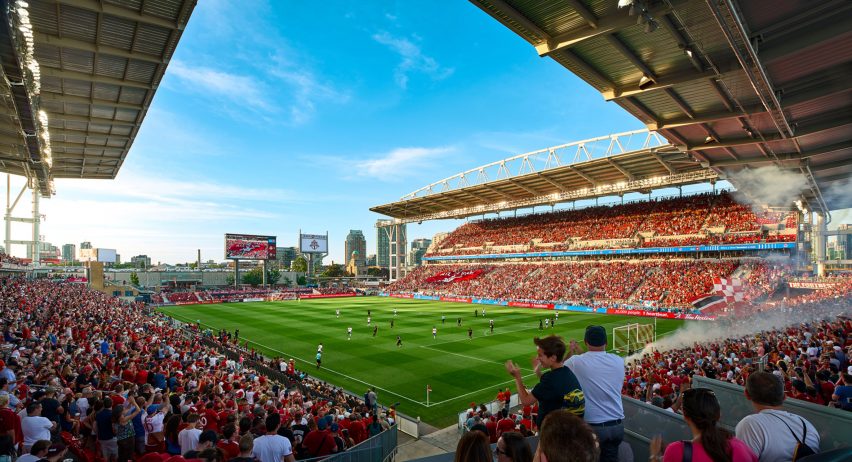
BMO Field, Toronto, Canada, by Brisbin Brooks Beynon Architects (2007), expansion by Gensler (2015)
One of two stadiums in Canada hosting games during the World Cup, BMO Field was designed specifically for soccer and is the home to the Toronto FC MLS team, as well as the Toronto Argonauts of the Canadian Football League.
The stadium, which is set to host Canada’s opening game, was expanded to have a capacity of 27,000 in 2015. The addition of a temporary south stand will give the stadium a temporary capacity of 45,736 for the tournament.
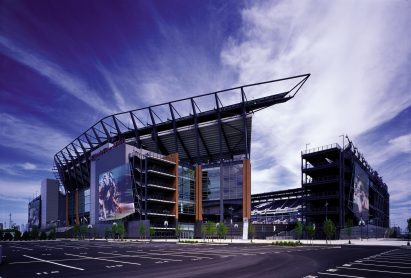
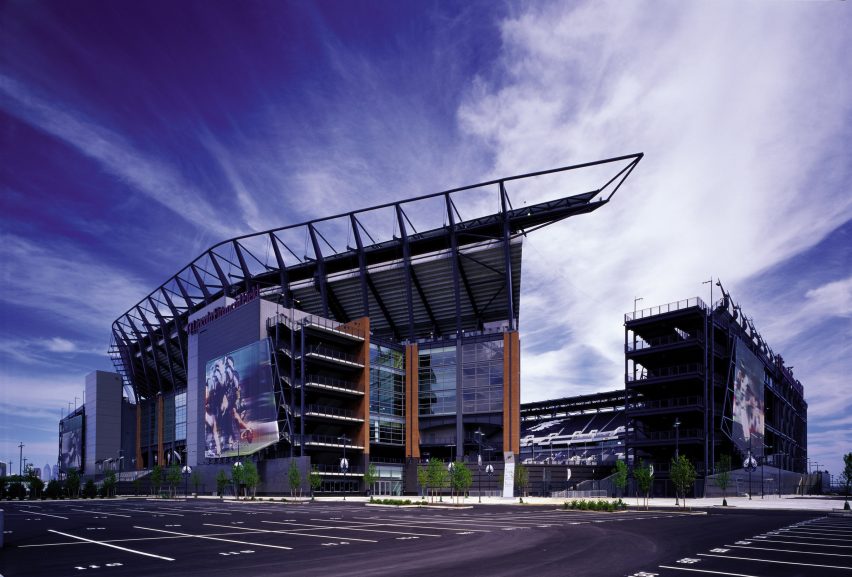
Lincoln Financial Field, Philadelphia, USA, by NBBJ (2003)
Home of the NFL team Philadelphia Eagles, Lincoln Financial Field has a distinctive form with the long east and west stands designed to evoke wings in reference to the team’s name.
The 69,000-seat stadium is open at three of its corners and has a raised “Eagle’s nest” with views of downtown Philadelphia.
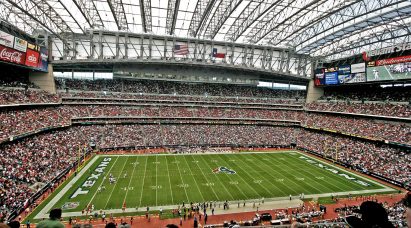
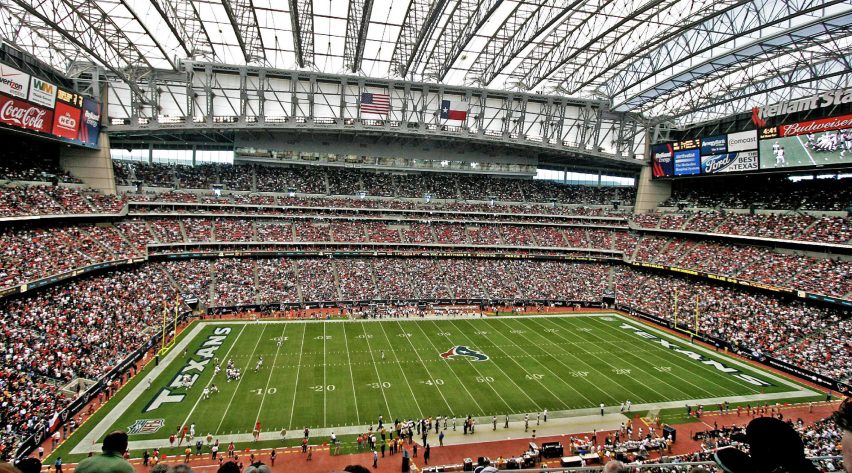
NRG Stadium, Houston, USA, by Populous (2002)
One of two venues in Texas hosting games at the World Cup, NRG Stadium has been the home of the NFL team Houston Texans since it opened in 2002.
Created by Populous, the 80,000-seat enclosed stadium was designed to have an intimate atmosphere similar to a large indoor arena. When it opened in 2002, it was the first NFL stadium to have a retractable roof.
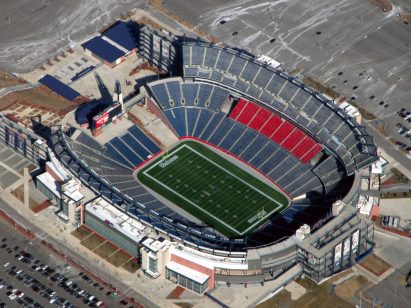
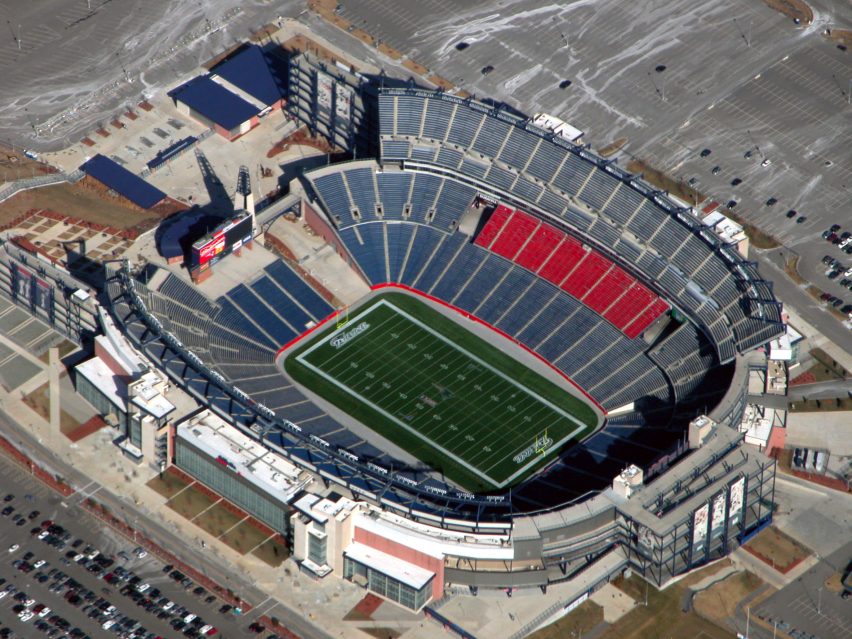
Gillette Stadium, Foxborough, Massachusetts, USA, by Populous (2002)
Built on a series of naturally occurring granite outcroppings, Gillette Stadium is described by Populous as “a unique split-level stadium”.
The 65,000-seat venue in Foxborough, Massachusetts, is home to the New England Patriots NFL team and the New England Revolution Major League Soccer team.
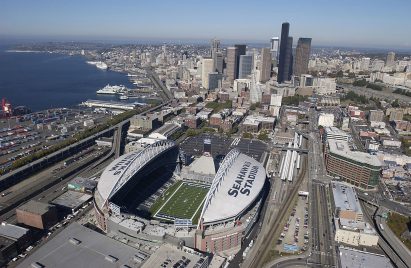
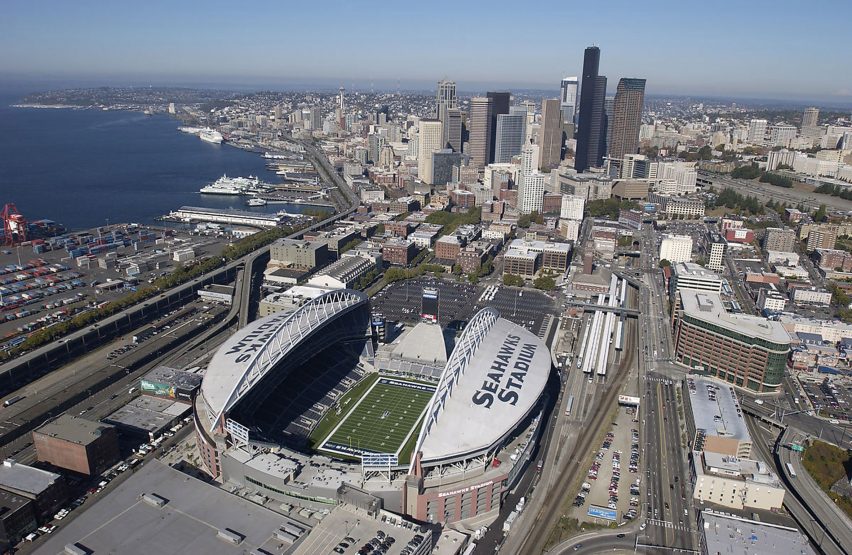
Lumen Field, Seattle, USA, by Ellerbe Becket and LMN Architects (2002)
Designed by architecture studio Ellerbe Becket and LMN Architects for both American football and soccer, Lumen Field is home to the Seattle Seahawks NFL team and the Seattle Sounders FC soccer team.
Opened in 2002, the compact 67-000-seat stadium is flanked by two large arches supporting canopies over the seating stands that are stacked and cantilevered due to the site’s limited space.
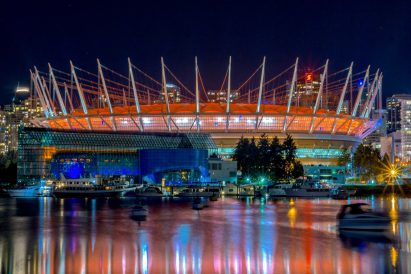
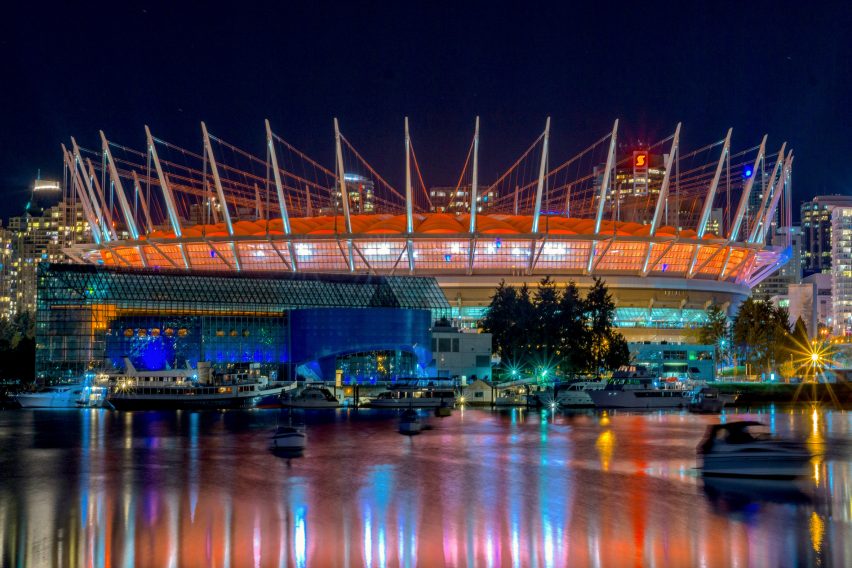
BC Place, Vancouver, Canada, by Studio Phillips Barratt (1983), renovation by Stantec (2011)
Opened in 1983, BC Place was originally designed by Studio Phillips Barratt and underwent a significant revamp by Stantec ahead of the 2010 Winter Olympics, when it hosted the opening and closing ceremonies.
The renovation added a cable-supported, retractable roof to the 58,000-seat stadium, which is home to the MLS team Vancouver Whitecaps FC and the Canadian Football League team BC Lions.
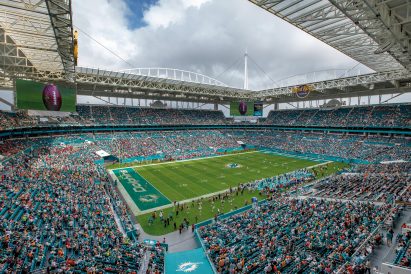
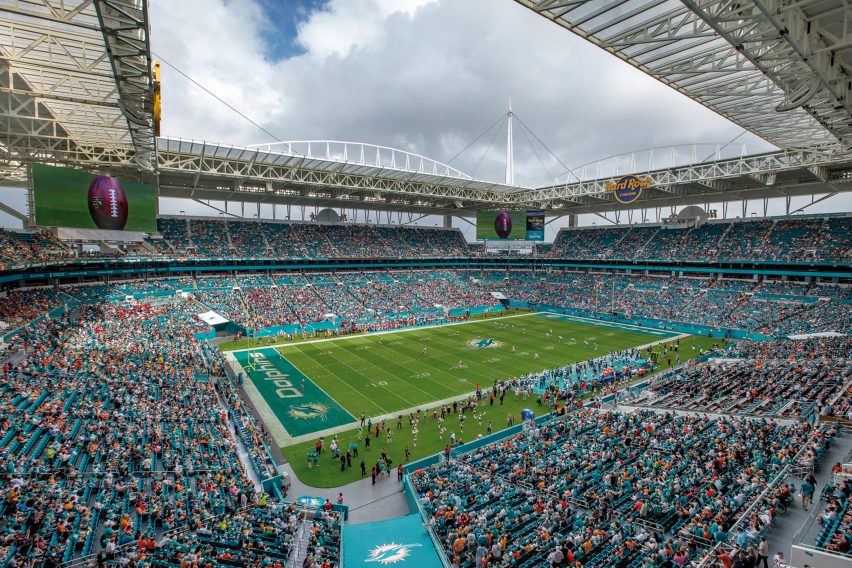
Hard Rock Stadium, Miami, USA, by HOK Sport (1987), renovation by HOK (2017)
Originally opened in 1987, the Hard Rock Stadium is the home of the NFL team Miami Dolphins.
The building was extensively renovated by architecture studio HOK between 2015 and 2017, when a large and distinctive rectangular canopy was hung above the stands from four white masts at the stadium’s corners.
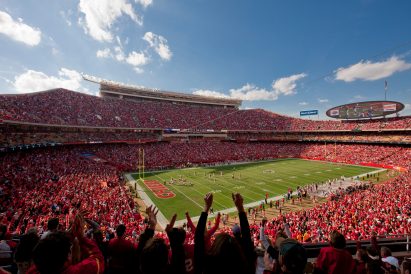
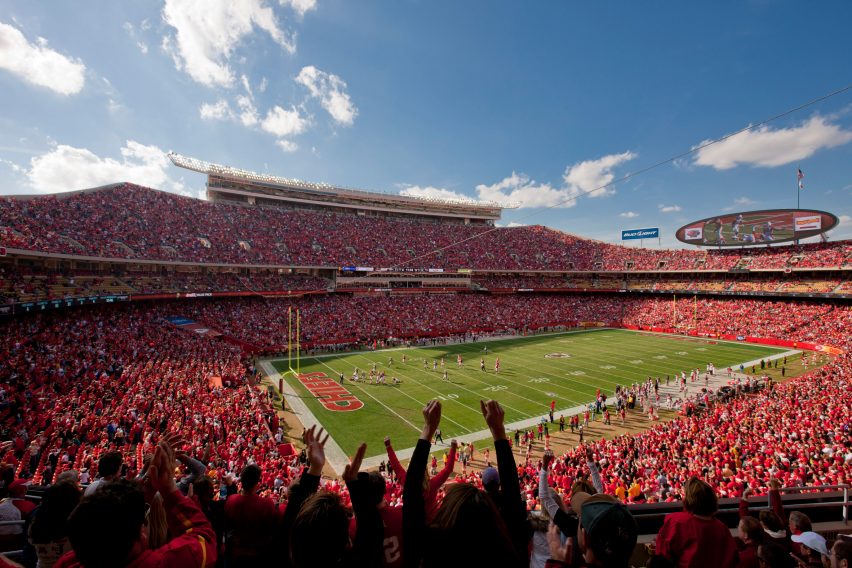
Arrowhead Stadium, Kansas City, USA, by Kivett & Myers (1972), renovated by Populous (2010)
One of the oldest stadiums set to host games at the 2026 World Cup, Arrowhead Stadium opened in 1972 and has been the home of the NFL team Kansas City Chiefs since.
The 76,000-seat venue holds the Guinness World Record for being the world’s loudest stadium. It was extensively renovated by stadium specialist Populous in 2010.
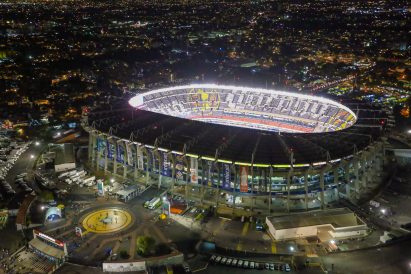
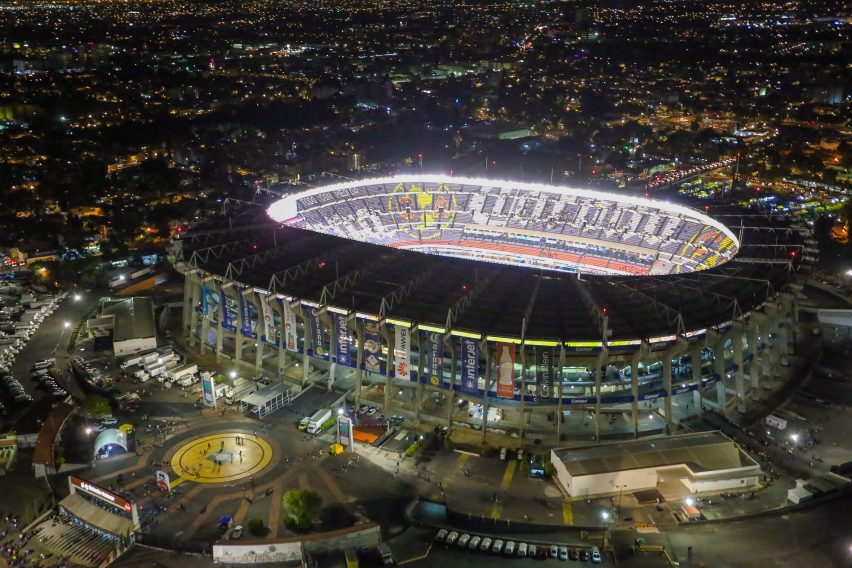
Estadio Azteca, Mexico City, Mexico, by Pedro Ramírez Vázquez and Rafael Mijares Alcérreca (1966), renovated by Populous (2026)
Designed by architects Pedro Ramírez Vázquez and Rafael Mijares Alcérreca, the Estadio Azteca in Mexico City will become the first stadium to host games at three World Cups.
Opened in 1966, the 87,000-seat stadium previously hosted games including the finals at both the 1970 and 1986 World Cups.
Ahead of the World Cup, the stadium was extensively renovated by Populous.
Read more
Recommended stories
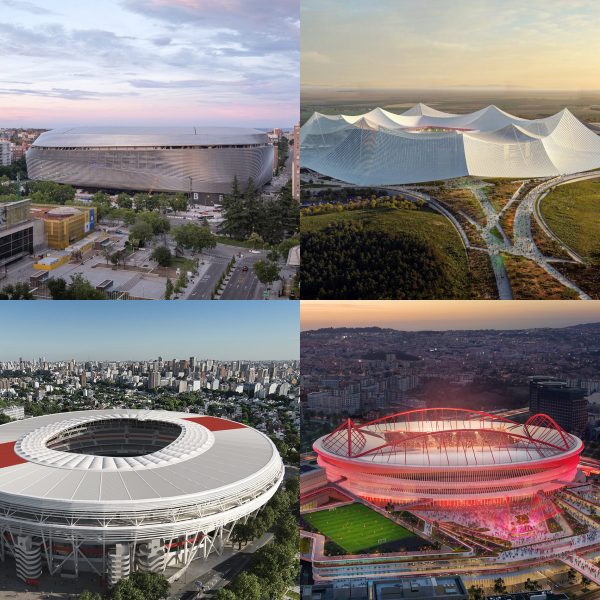
All 23 stadiums set to host the 2030 World Cup
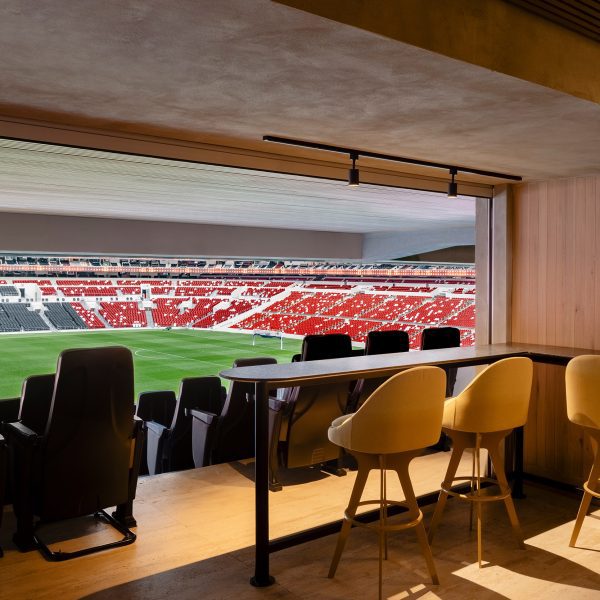
Custom furniture created for Azteca Stadium’s interior revamp
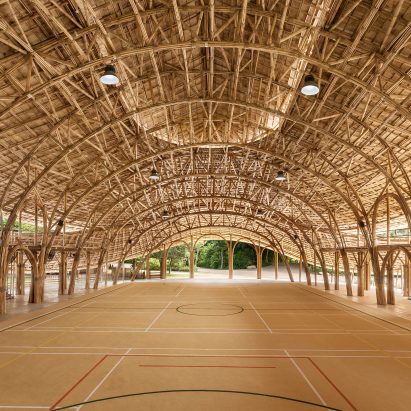
Dezeen’s top 10 stadiums and sports centres of 2018
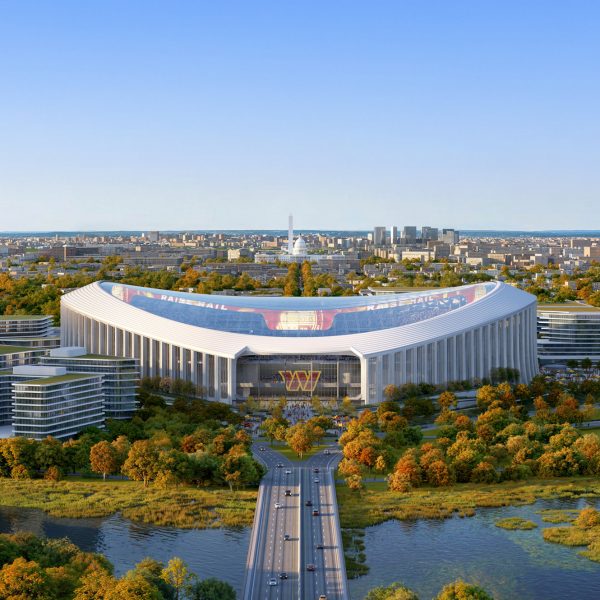
Four upcoming NFL stadiums that show the future of the league
Eight future stadiums set to be built around the world

Super Bowl stadiums of the past, present and future
Eight record-breaking stadiums from the biggest to the most expensive