


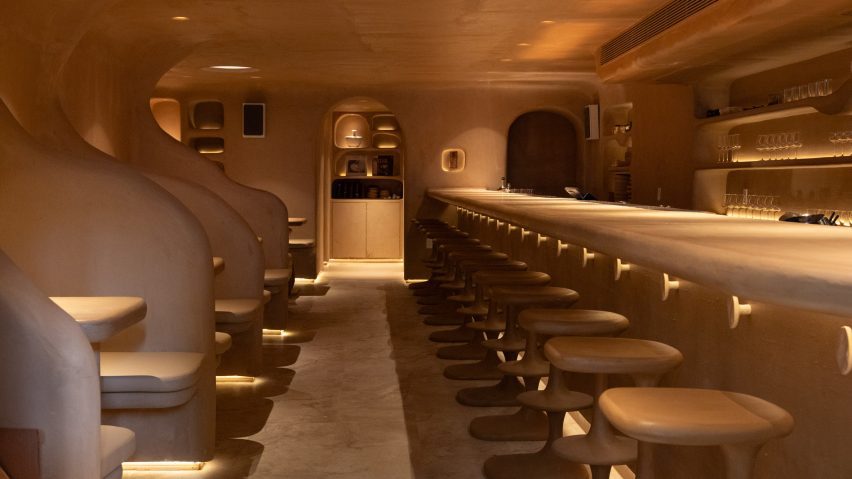
New York-based Wild Form Design Studio has crafted a sculptural interior for a bar called Love Thy Neighbor, which "celebrates the queer community" next to The Stonewall Inn in the West Village.
Opened ahead of this weekend’s Pride celebrations in New York, Love Thy Neighbor sits next to the landmark where a series of protests in 1969 became a pivotal moment in mobilising the Gay Rights Movement.

Founders Shigefumi Kabashima and Elias Popa, along with Wild Form Design Studio, wanted the bar and dining concept to pay homage to the history of this location, both through design and their approach to hospitality.
"Guided by the ethos of no straight lines, Love Thy Neighbor celebrates the queer community, chosen family, and the joys of gathering and belonging," said the team.

Just over the below-grade threshold, a concrete floor panel is gilded with a quote from Marsha P Johnson – a transgender woman who was a key figure in the Stonewall Uprising protests for LGBTQ+ rights, and who continued to fight for queer rights and representation throughout her life.
It reads "No pride for some of us without liberation for all of us" in gold letters and includes her signature below.
A single brick from the original Stonewall Inn is displayed in a niche at the end of the bar, representing those thrown at the police who raided the bar on 28 June 1969 during the uprisings.
"These elements serve as understated reminders of the past, while reinforcing a bright future ahead," said the team.
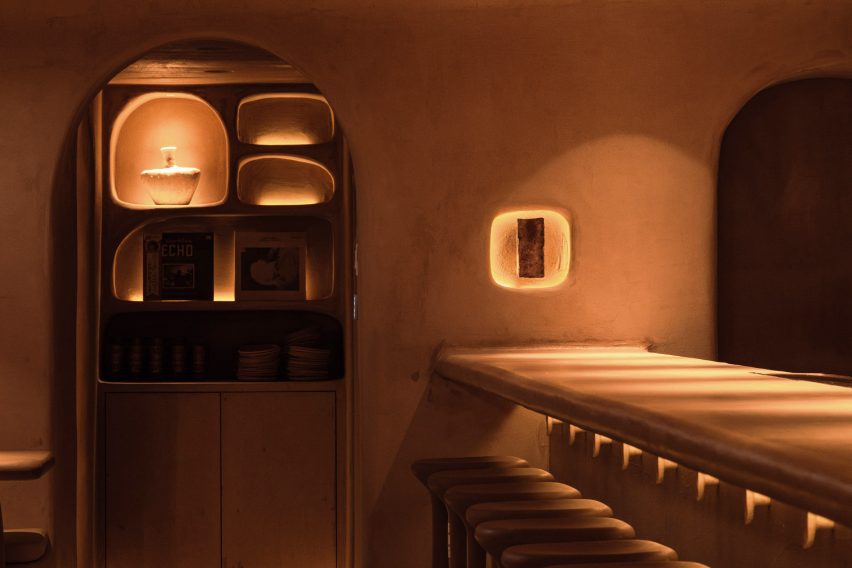
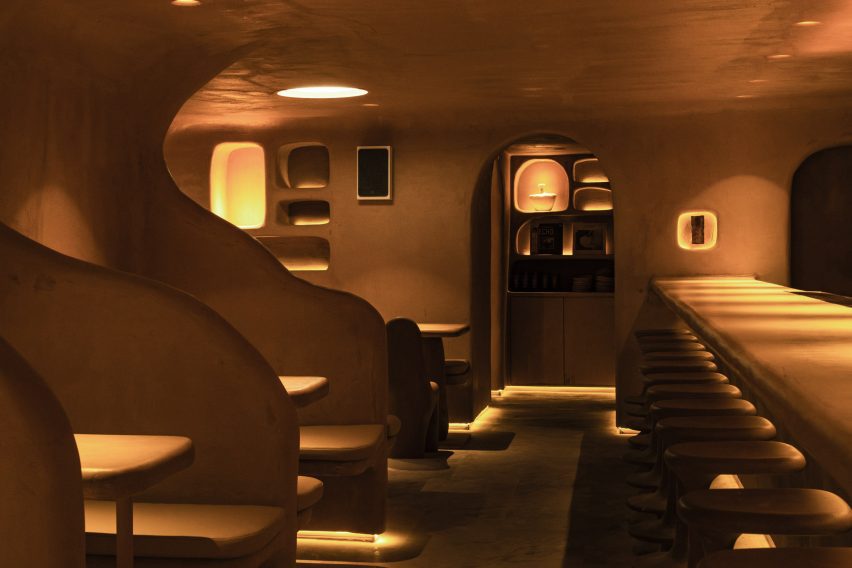
Elsewhere, the curvaceous walls and partitions form an intimate, cavern-like space for 40 guests, and nod to queerness and individuality.
"The idea of 'no straight lines' became a guiding principle for us," said Kabashima. "It reflects not only the design of the space, but also how we think about hospitality: fluid, open, and without boundaries."
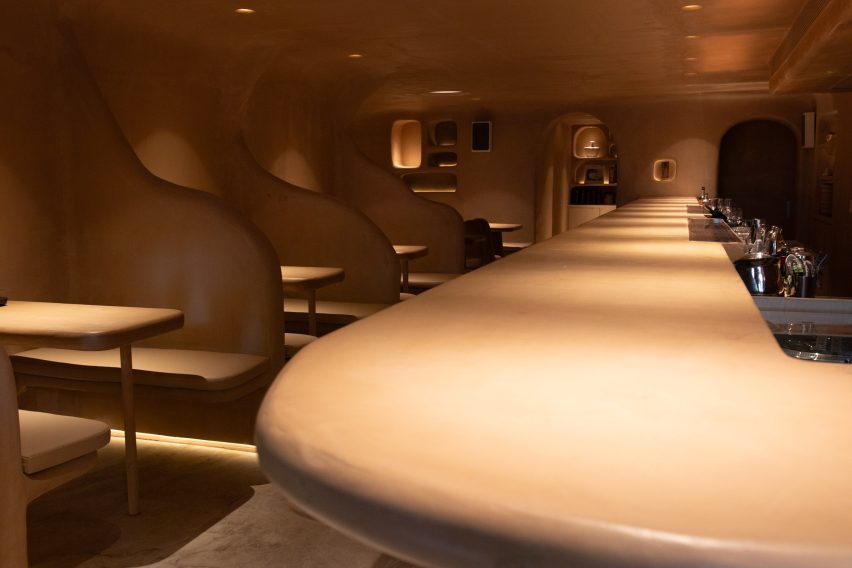
The sculpted surfaces carry warm beige tones across banquettes on the left-hand side, and the bar along the right.
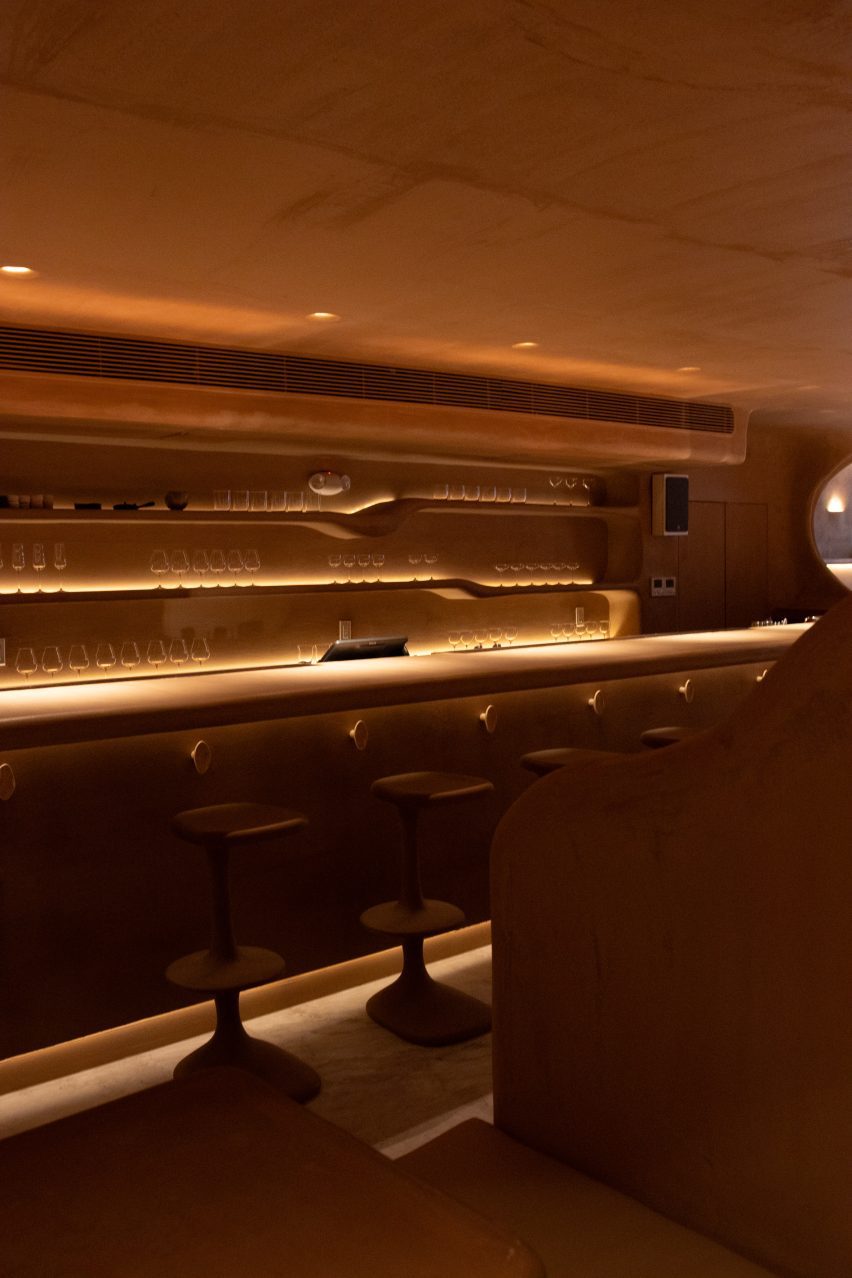
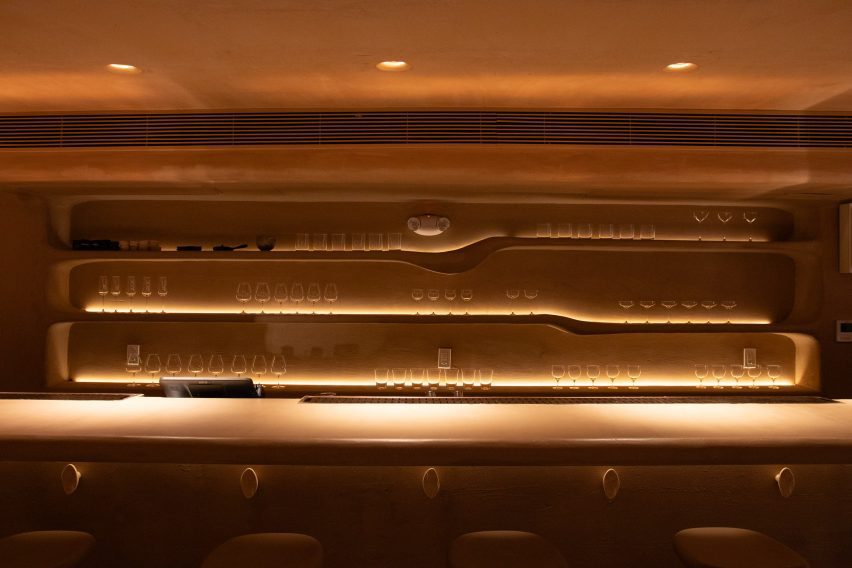
A curated selection of liquor bottles and glassware is displayed behind the bar on back-lit shelves, which slant and dip to continue the free-form visual language.
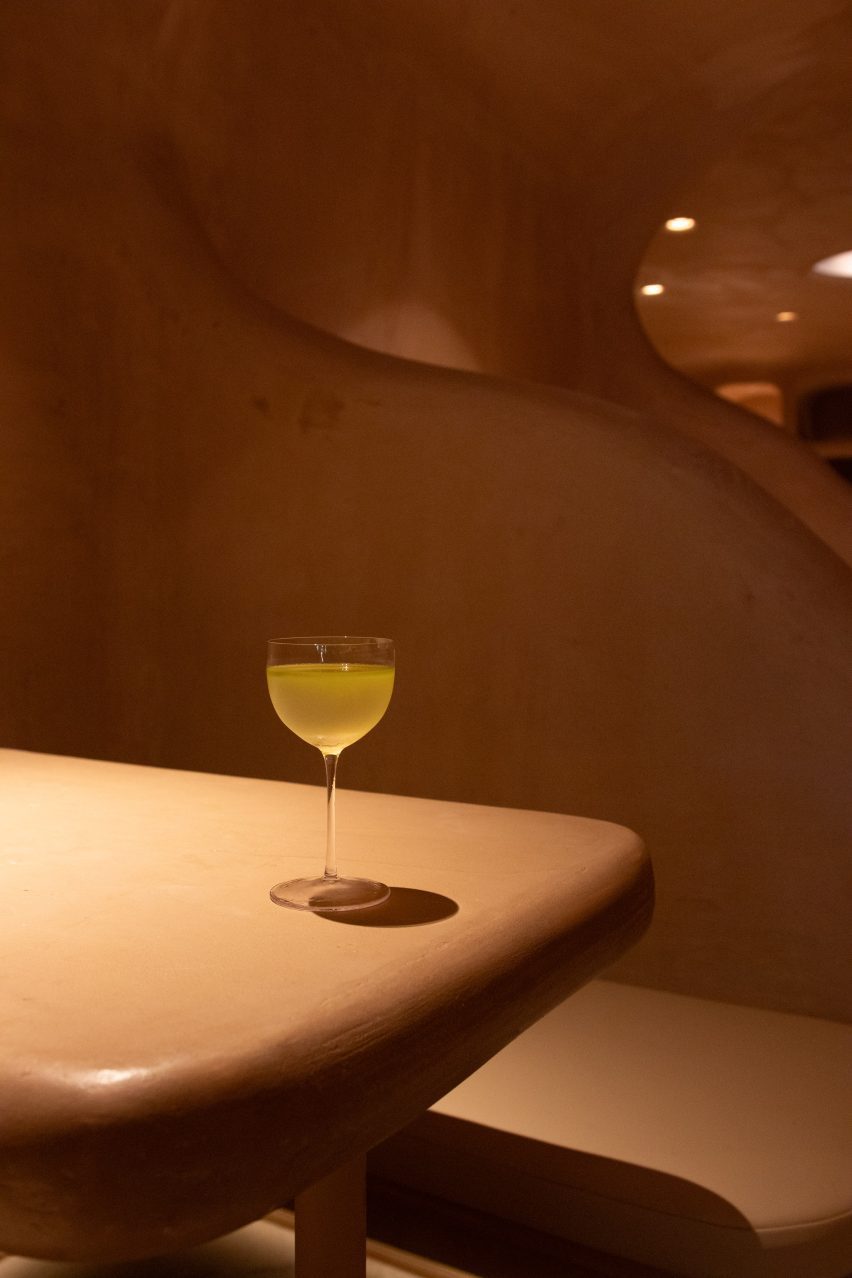
Spotlights illuminate the rounded bar counter and dining tables, directing focus to the food and drinks, while cove lighting traces the fluid edges around the space.
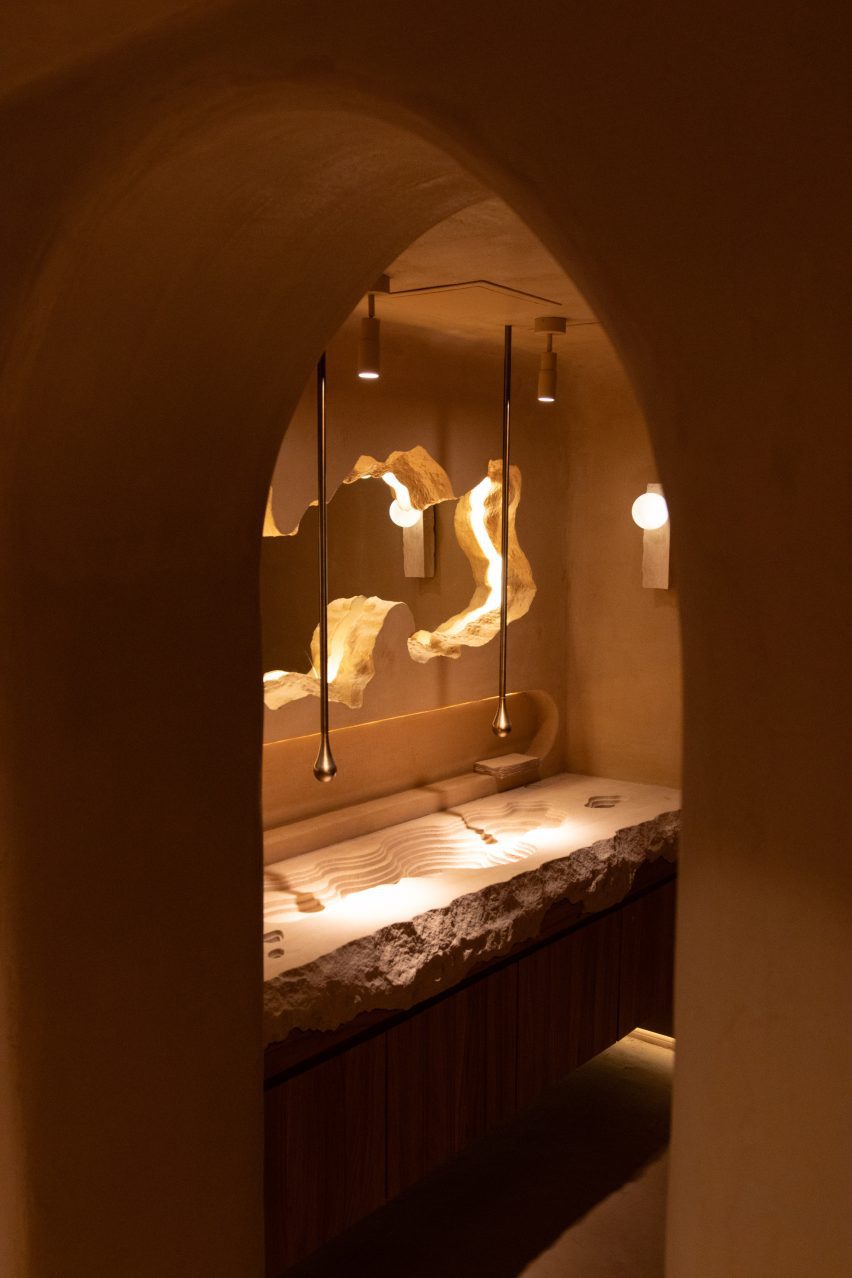
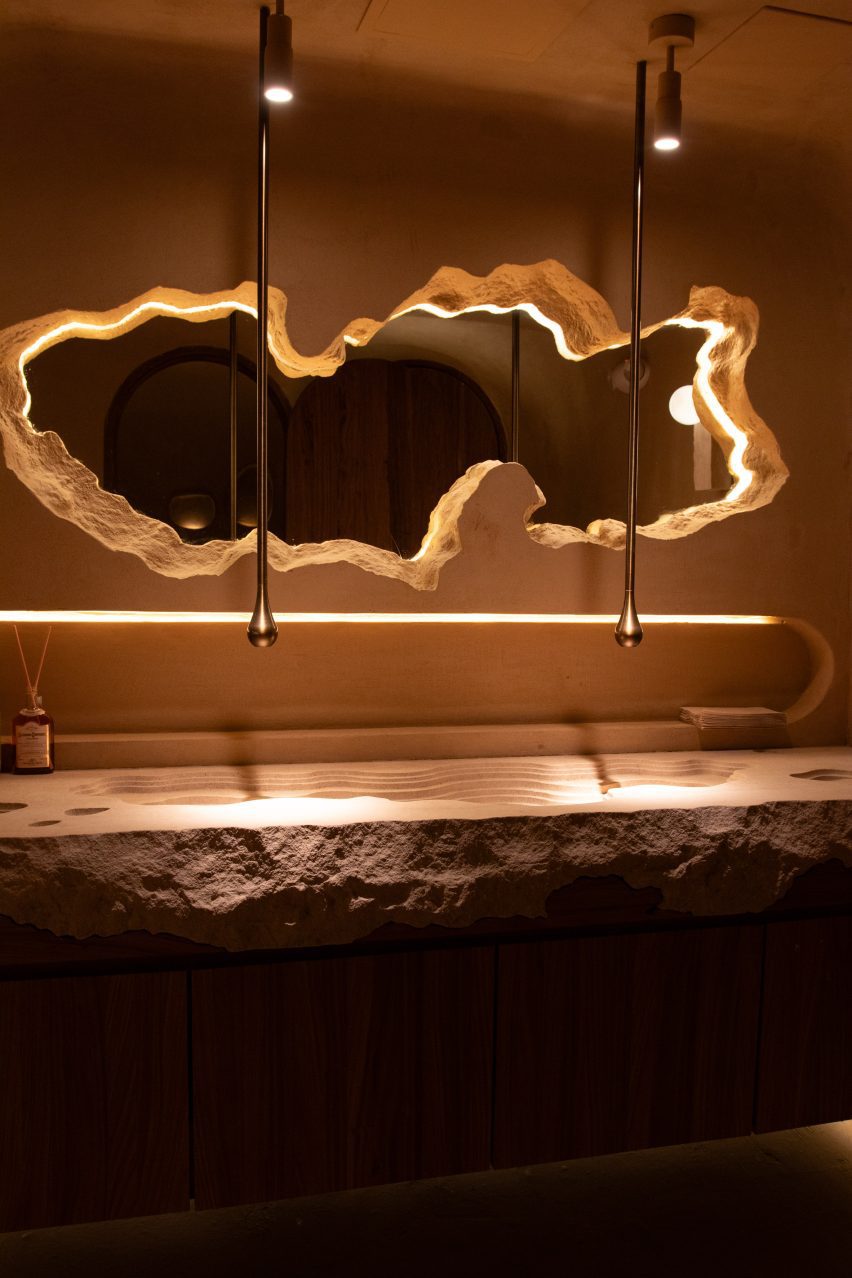
In the rear bathroom, a recessed mirror appears to be carved from the thick plaster walls, the vanity has an equally textured edge and features a long, contoured basin, and bronze-hued faucets are suspended from the ceiling.
Love Thy Neighbor's highly inventive cocktail menu draws on Japanese bartending precision, and uses techniques like clarification, infusion and carbonation to create innovative ingredients like wasabi gin and homemade cola.
Drinks are presented in delicate glassware, while Asian-influenced bar snacks and shareable plates are served on hand-crafted ceramics.
"We wanted Love Thy Neighbor to be a space where people from different walks of life can share a delicious meal, connect, and feel like they belong under one roof, at any time of day," said Papa.
"We want guests to feel a sense of freedom here, both in how they experience the space and how they connect with others," added Kabashima.
Many queer spaces are under threat from a variety of social, urban and economic issues, and continued support is needed to protect venues used by the lesbian, gay, bisexual, transgender and queer (LGBTQ+) community.
The transgender community is particularly being targeted in the US and UK. The architecture profession "must engage" in ensuring safety for trans people, the founder of Queerscapes told Dezeen in an interview last year.
The photography is by Aichan Mama.