


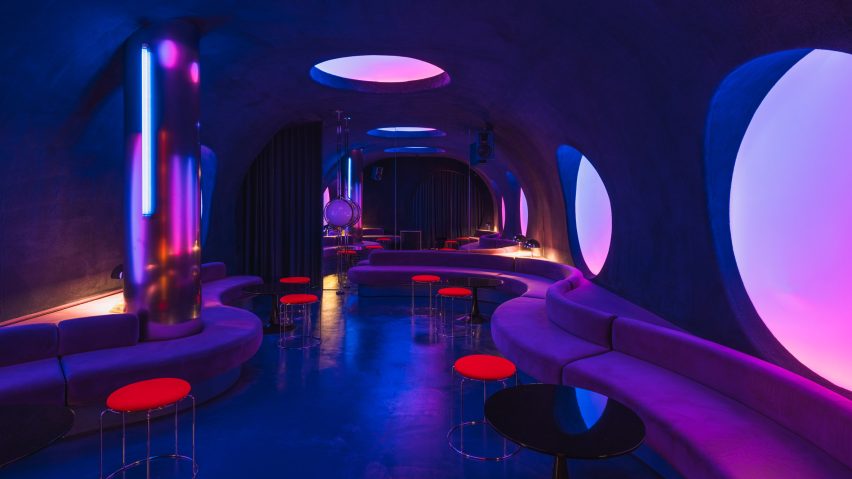
Spanish designer Isern Serra has completed a speakeasy bar in Barcelona featuring multi-coloured modular furniture that evokes Verner Panton's retro-futuristic 1960s installations.
Focacha is the latest venue from hospitality specialist Grupo La Confitería, which tasked Serra's studio with creating a space that pays tribute to an important period in the history of Barcelona's nightlife.

The 1960s and early 1970s coincided with the heyday of Tuset Street where the bar is located, which became a hub for a group of young liberal professionals known in Barcelona art the "gauche divine".
The cocktail bar was designed to evoke the futuristic styling that characterised this time and immerse guests in a multi-sensory environment defined by design, light and music.

"I wanted visitors to feel enveloped by an environment with a strong artistic and emotional presence, capable of sparking curiosity and creating a sense of wonder from the very first moment," Serra told Dezeen.
"More than designing a cocktail bar, the intention was to create a setting that evokes emotions, encourages contemplation and leaves a lasting impression on those who experience it, turning their visit into something truly memorable."
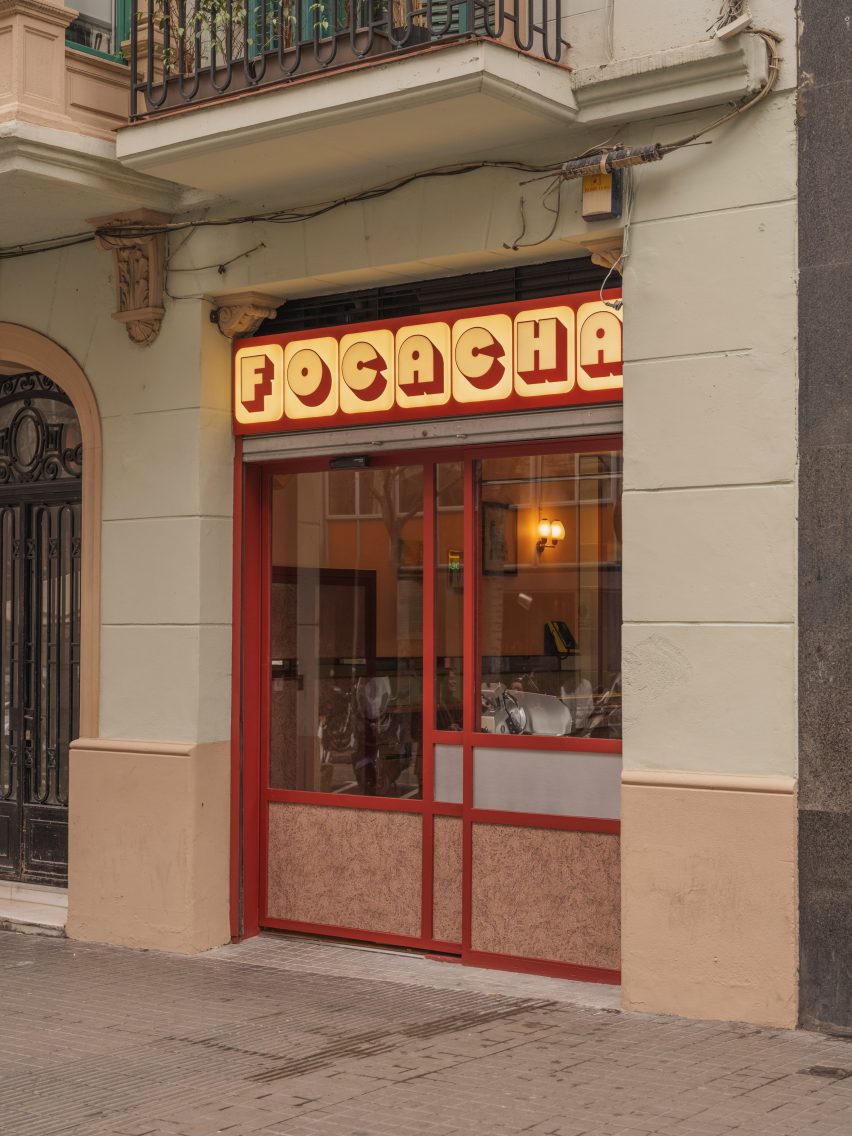
The speakeasy-style venue is hidden behind the facade of a traditional focacceria that has been serving Italian bread for 50 years. Visitors enter through a refrigerator inside the shop, which adds a sense of theatricality to the experience.
The venue was divided into two spaces, the first of which is a bar that pays homage to Danish designer Panton's iconic Visiona installations.
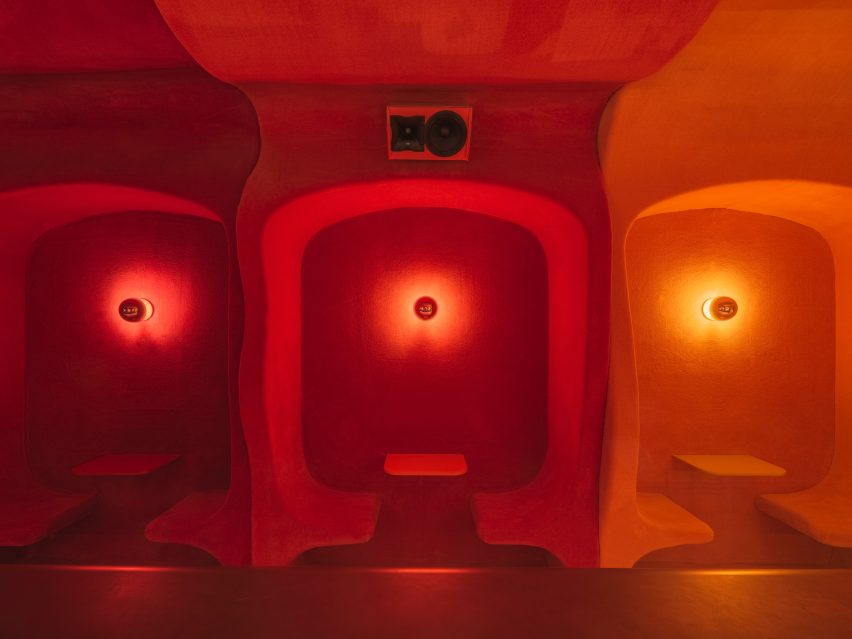
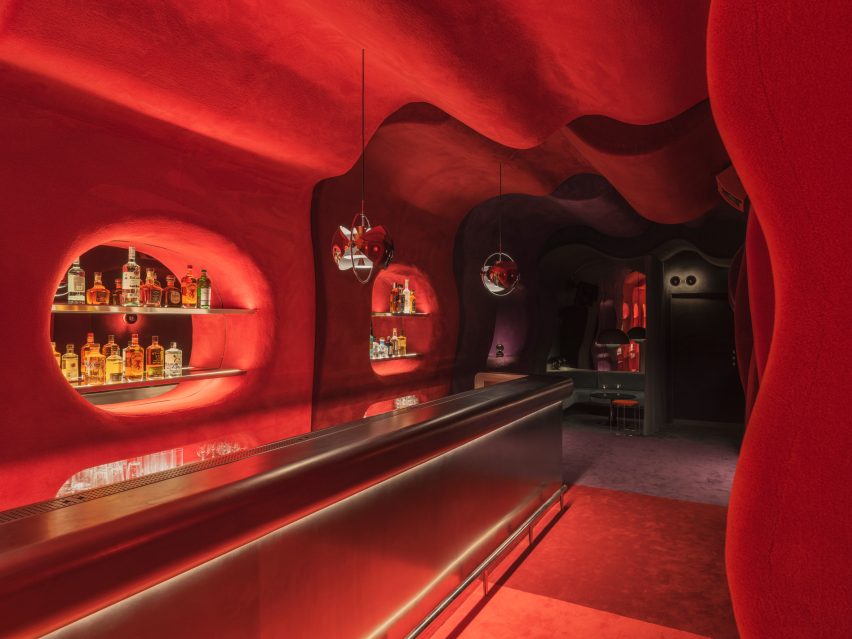
A sequence of seven organically shaped modules ranging in colour from yellow to red surround the space, forming intimate niches for small groups along one side.
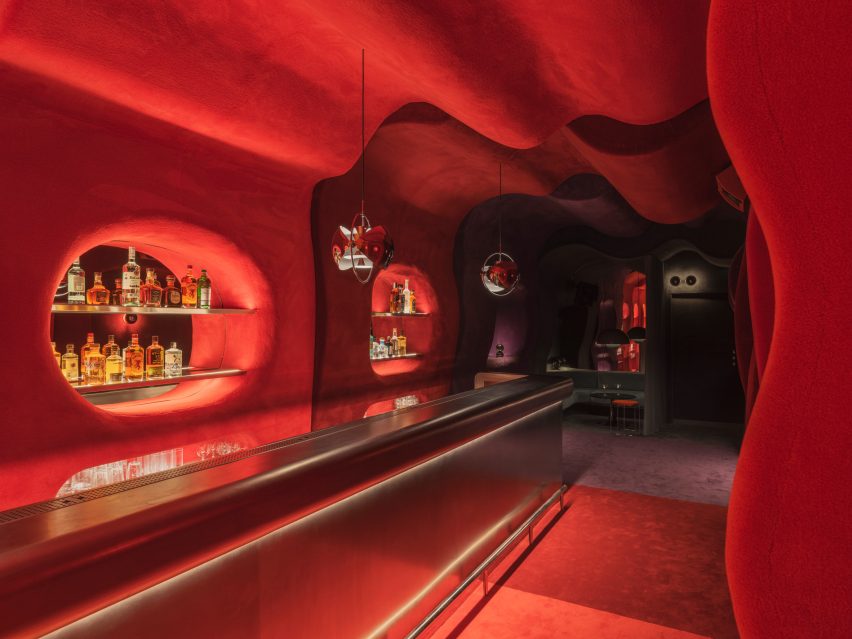
On the other side of the space, a stainless-steel bar with rounded edges subtly reflects the vibrant colours and movement within the room. The fully carpeted ceiling and walls extend behind the bar, where rounded openings accommodate shelves displaying bottles.
"We were inspired by Panton because his creative language perfectly reflects the optimistic, experimental and progressive spirit of the late 1960s and early 1970s," Serra pointed out.
"The goal was not to recreate a retro aesthetic, but to capture the sense of freedom, creativity and innovation that defined that era."
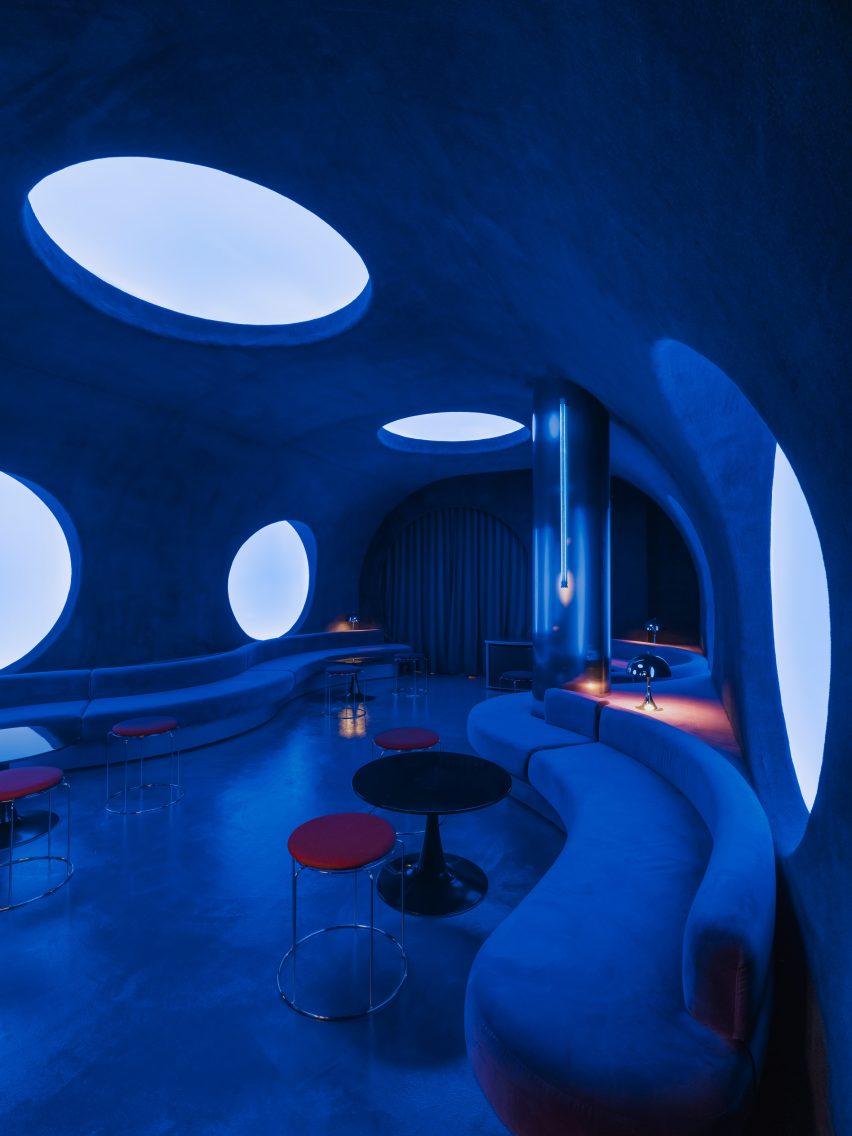
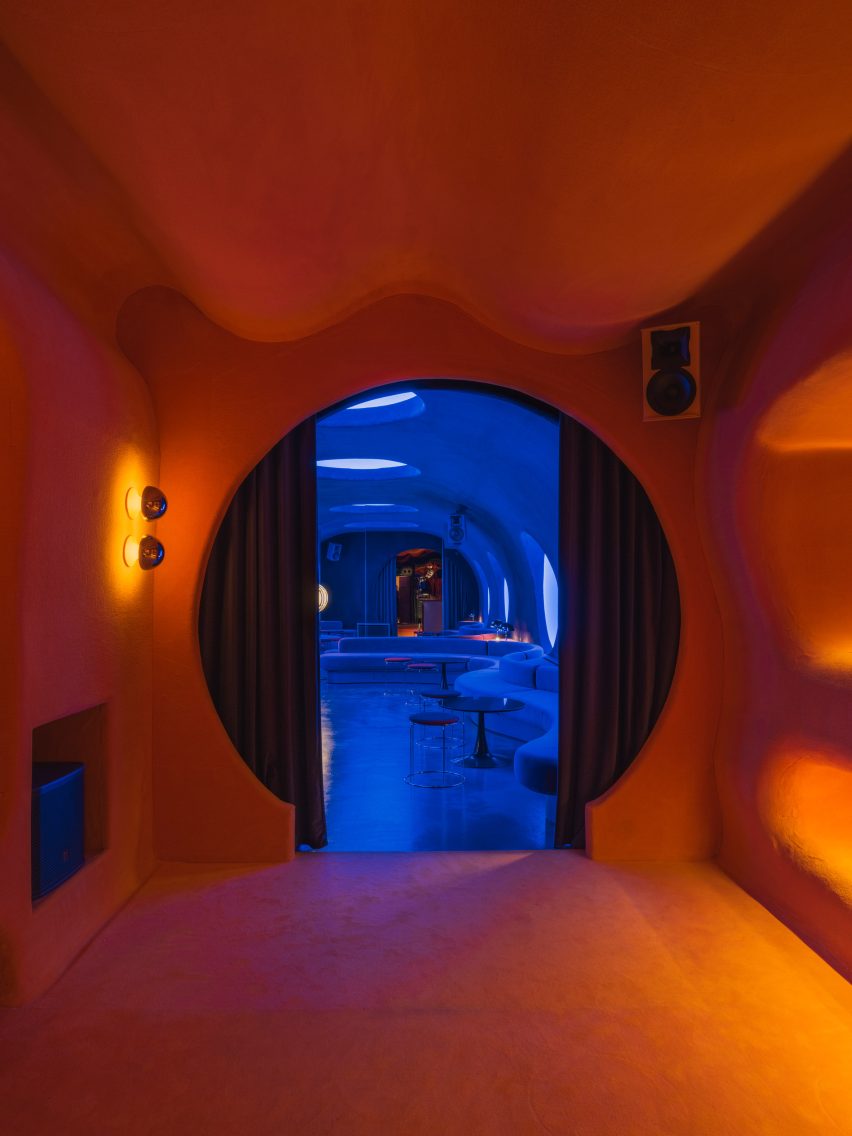
A circular opening at the end of the bar leads into a DJ room designed to merge 1960s nostalgia with a dystopian vision of the future, resulting in a surreal, technology-led aesthetic.
The room is lined with curved banquettes that evoke the era's psychedelic and modular interiors, while the domed ceiling and walls incorporate openings that allow dynamic lighting effects to transform the atmosphere within the space.
Mirrored walls create the illusion of more space, while lighting fixtures including the Panton-designed Flowerpot VP2 and Panthella lamps contribute to a carefully curated atmosphere.
According to Serra, the interior's complex curves demanded a sculptural construction approach that meant elements were not fully defined from the outset and evolved as different solutions were tested using mock-ups and full-scale prototypes.
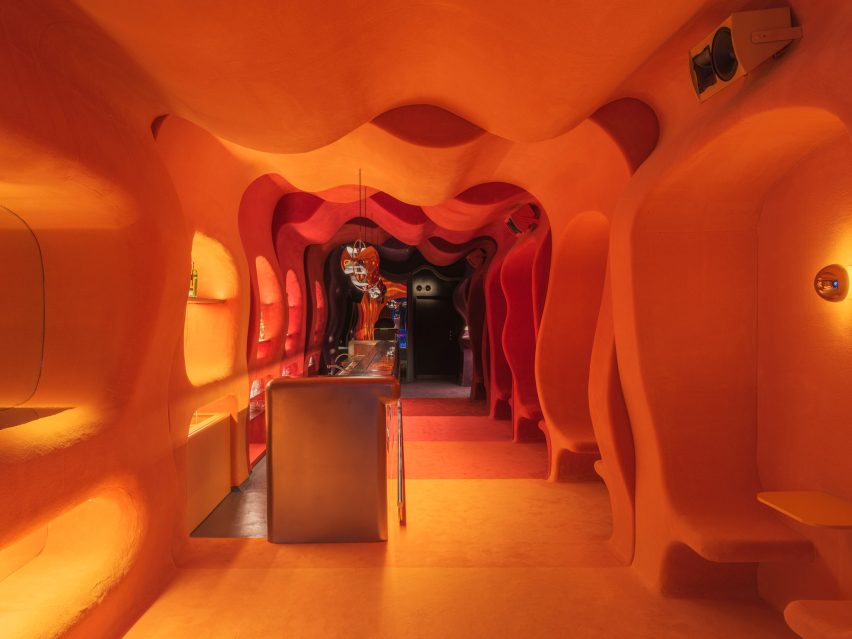
"Rather than building conventional architectural elements," he said, "we were shaping volumes and forms to create a fluid and immersive spatial experience, where every curve contributed to reinforcing the overall atmosphere of the project."
Serra's studio is based in the Poblenou neighbourhood of Barcelona, in a space he designed to embody the practice's values and provide an inspirational working environment.
The architect is known for combining contemporary, vibrant and essential forms with Mediterranean influences. Previous projects include a gallery-like apartment renovation and a bakery featuring cave-like walls.