


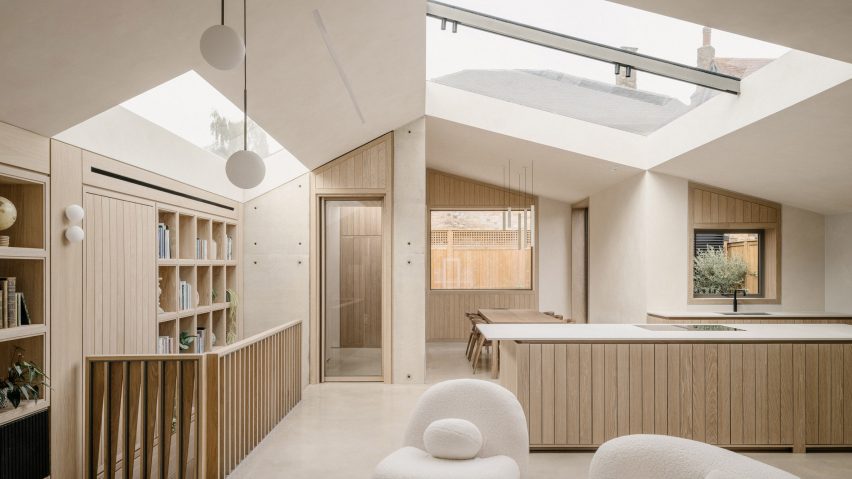
Local studio Stylus Architects has completed Green Lodge, a partially submerged family home in Roehampton Village, southwest London, where a series of sunken lightwells brings daylight into rooms set below ground.
The house occupies a constrained site on the edge of Putney Heath that is surrounded by mature trees, a gothic revival church, Victorian villas and Arts and Crafts houses.

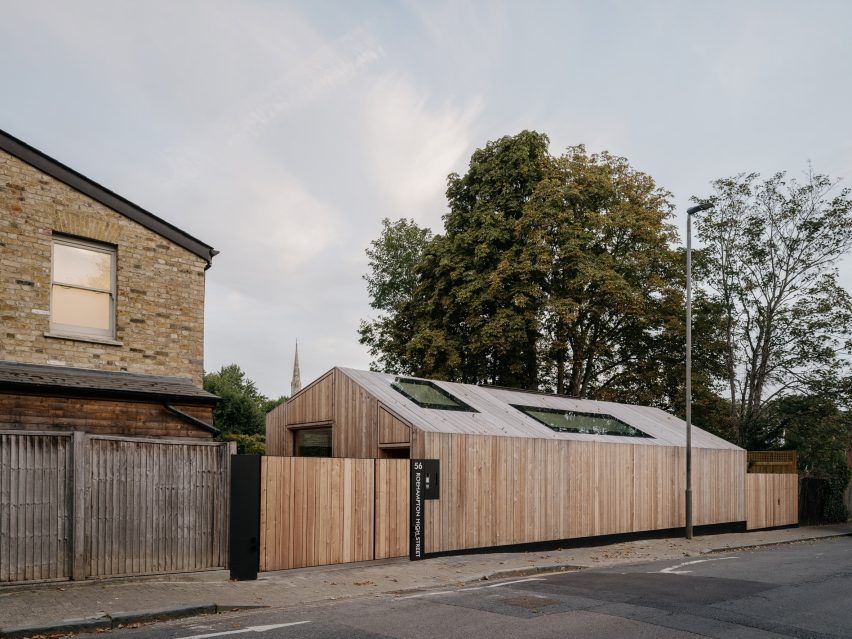
Rather than extending the home upwards, the architects embedded much of it within the landscape, leaving only a single-storey volume visible from the street.
According to Stylus Architects, the partially submerged design emerged in response to planning constraints that limited the building's scale above ground.

"The site demanded restraint," lead architect Matthew Withers told Dezeen.
"Surrounded by heritage buildings and mature trees on the edge of a protected heath, any building that announced itself above ground would have felt at odds with its context."
The home was organised around two full-height, fair-faced concrete spine walls that run continuously from the basement to the roof and remain visible throughout the interior.
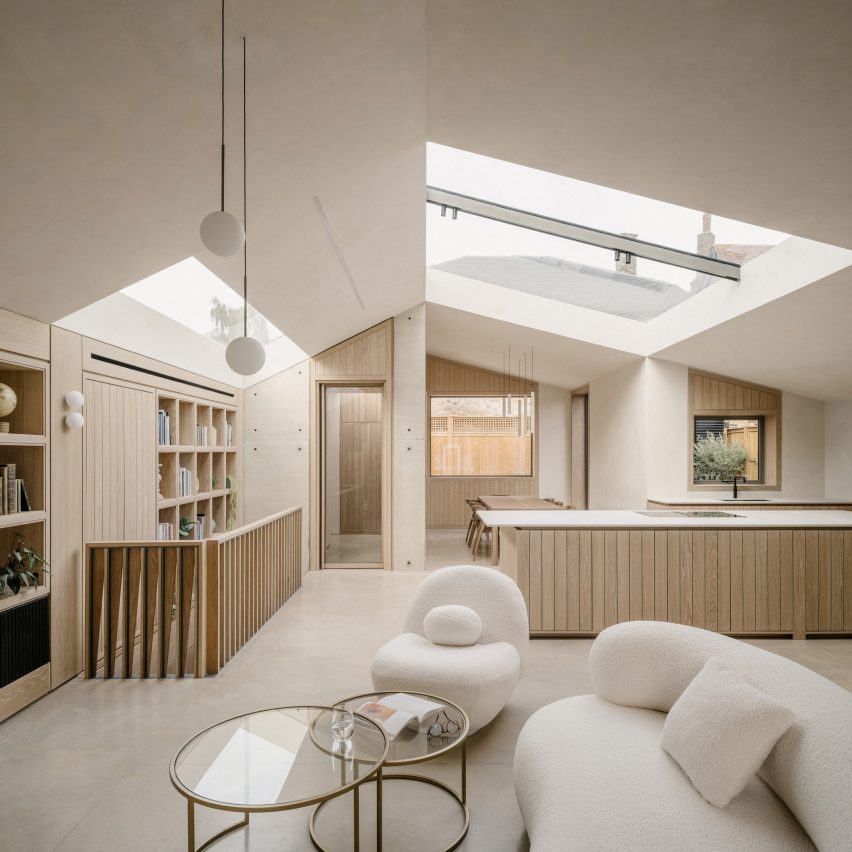
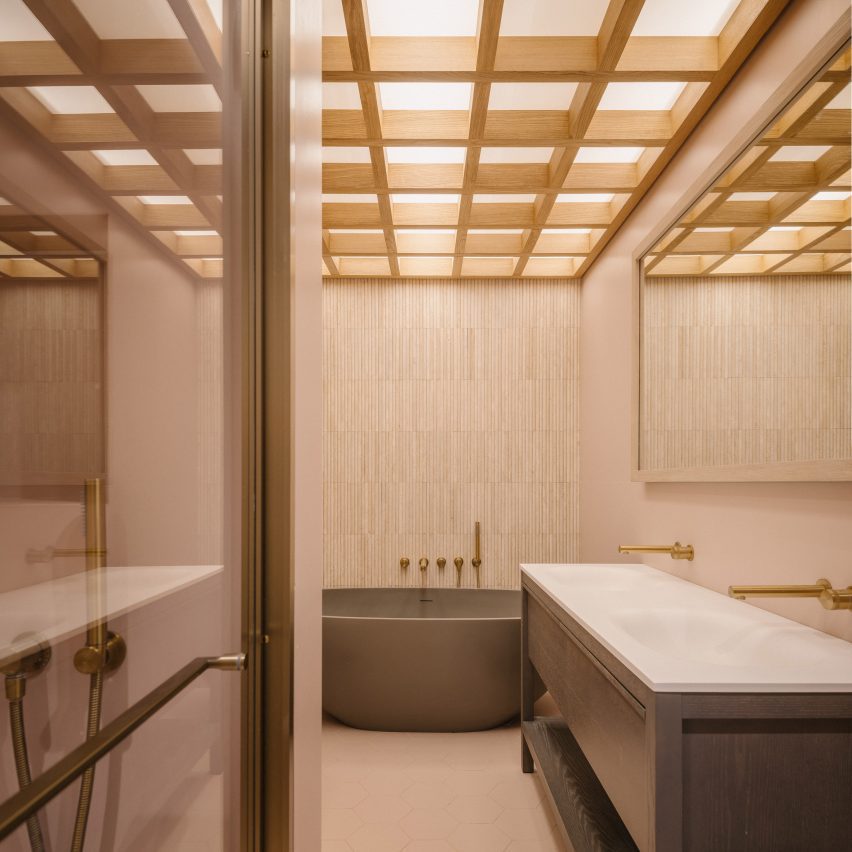
Living spaces occupy the upper level beneath the vaulted roof, while bedrooms and bathrooms were positioned below ground around the lightwells.

To ensure the lower-ground accommodation did not feel like a conventional basement, the studio developed a daylight strategy that was integrated into the design from the outset.
"The greatest challenge was ensuring that the lower-ground accommodation felt like primary living space rather than basement space," said Withers.
"Achieving this required the daylight strategy to be embedded into the architecture from the outset rather than treated as a technical exercise later in the process."
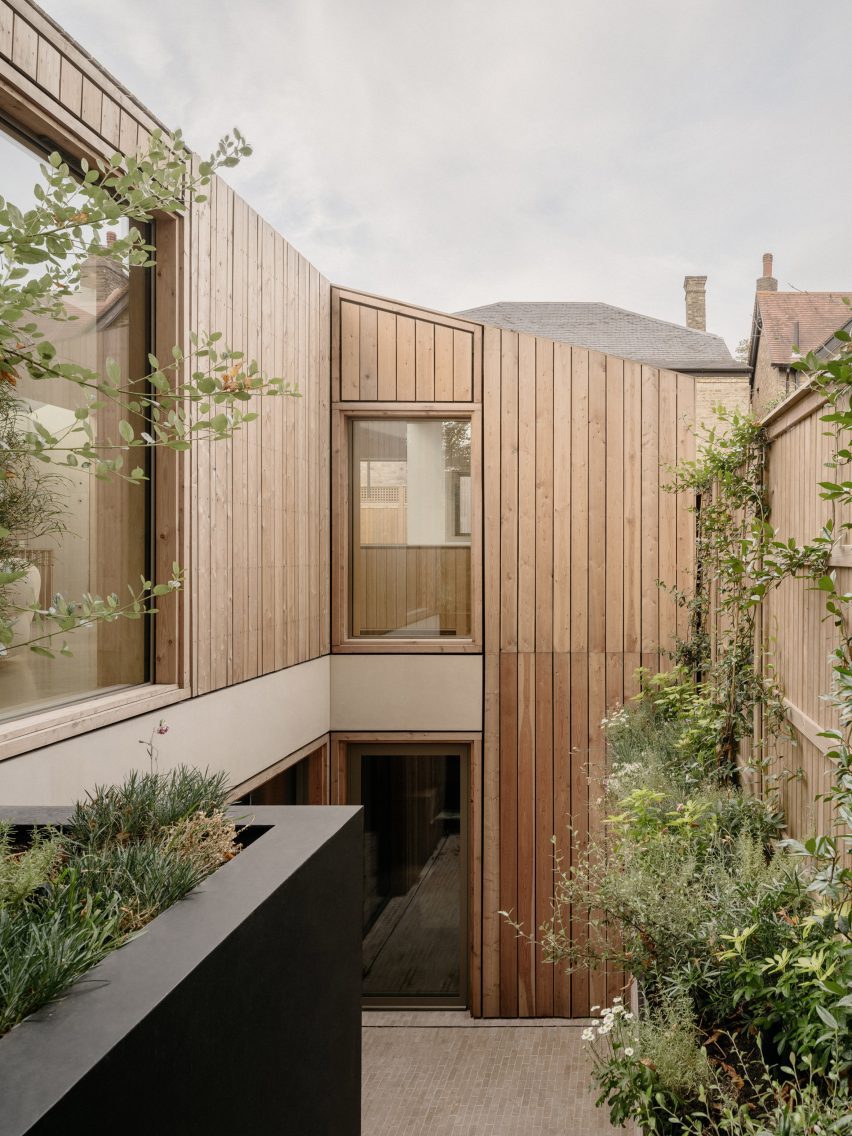
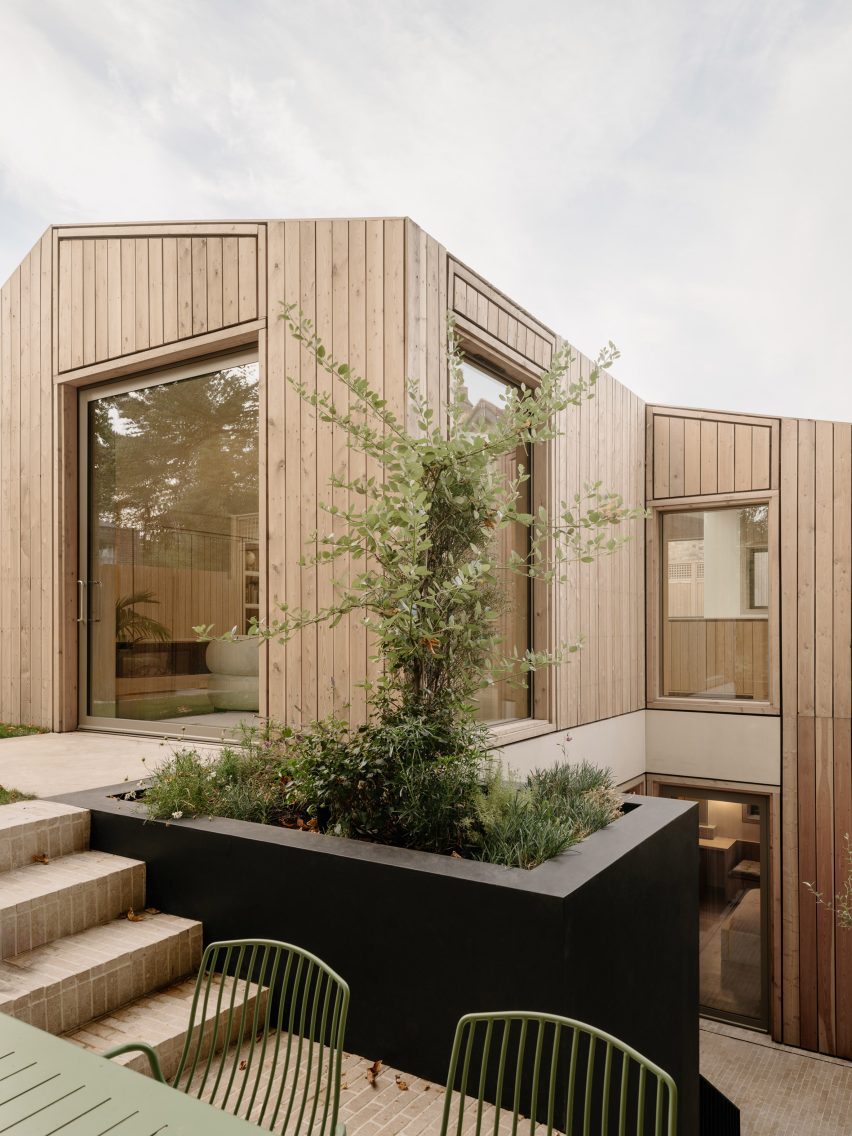
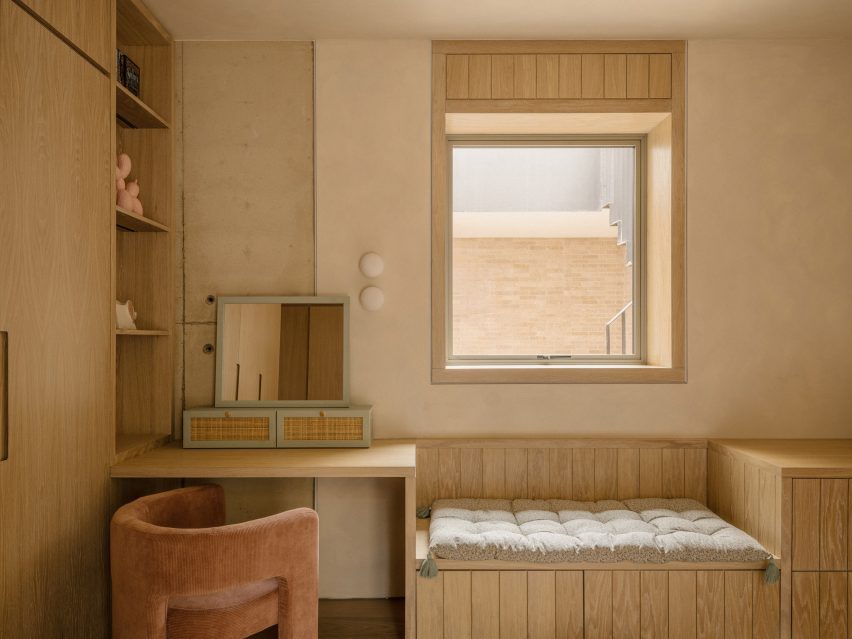
Two south-facing lightwells were cut into the site to bring daylight into every bedroom and bathroom below ground, while also providing access to sheltered outdoor terraces.
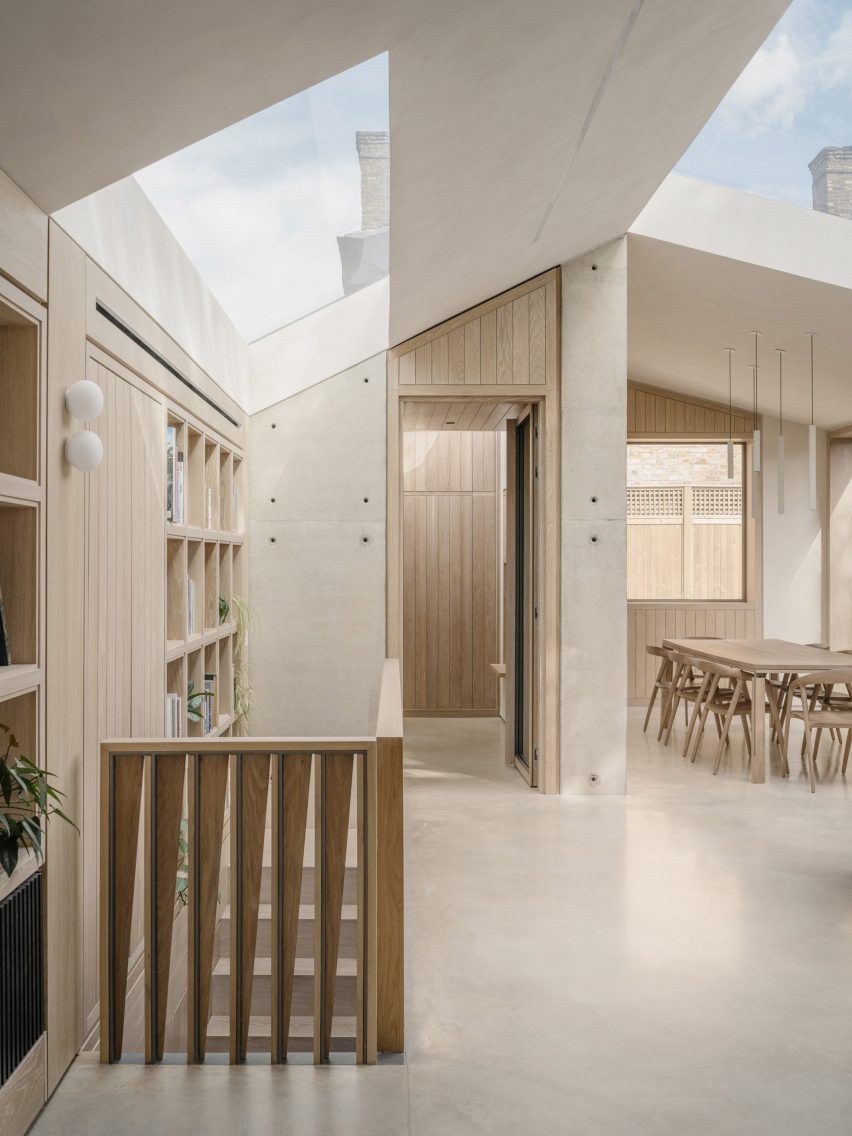
A large rooflight above the staircase channels daylight into the centre of the home, supplemented by additional rooflights distributed across the upper floor.
From the road, the house appears as a modest larch-wrapped volume topped by an asymmetric vaulted roof with photovoltaic panels integrated into its south-facing slope.
The same untreated larch was used to clad both the walls and roof, creating what the studio described as a single material envelope.
The untreated larch was selected for the way it will weather over time, gradually changing from its current honey-coloured tone to a silvery grey finish.
"The building will become progressively less visible and more embedded within its setting," said Withers.
"It was always conceived as something to be discovered rather than announced."
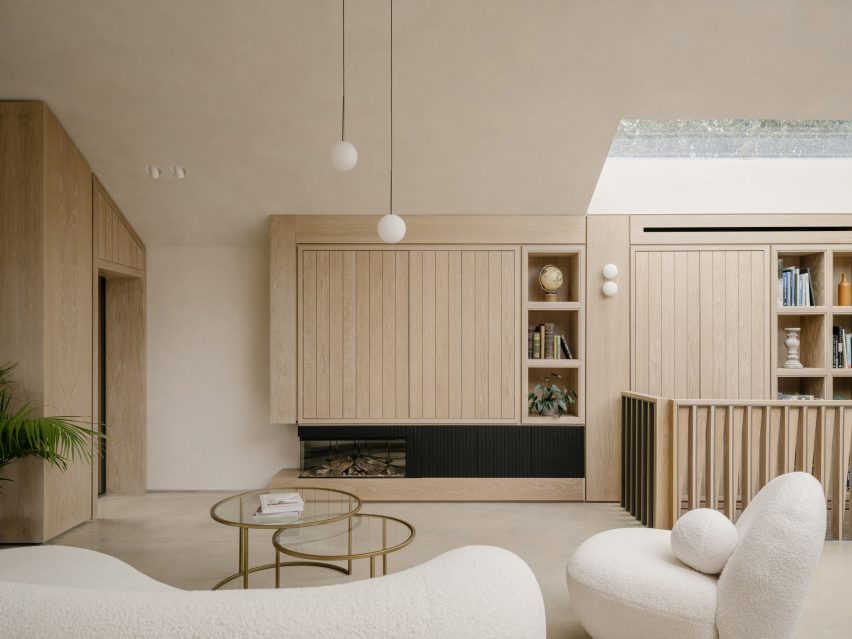
Rather than concealing the structure, the architects left the concrete exposed and paired it with oak joinery, timber wall linings and polished concrete floors.
Built-in desks, storage units, beds and kitchen cabinetry were integrated throughout the house, while a staircase beneath the main rooflight forms a central connection between the two levels.
Embedding much of the house within the landscape also contributes to its environmental performance.
The surrounding earth helps regulate internal temperatures, while the exposed concrete provides thermal mass that stores and gradually releases heat.
Founded in 2017, Stylus Architects is a London-based practice led by Matthew Withers. The studio works across residential, commercial and mixed-use projects.
Other homes embedded into the landscape include a subterranean holiday home in Tehran topped by a green roof that merges with the surrounding landscape and a concrete villa nestled into a shallow hill on a Norwegian farm.
The photography is by James Retief.