


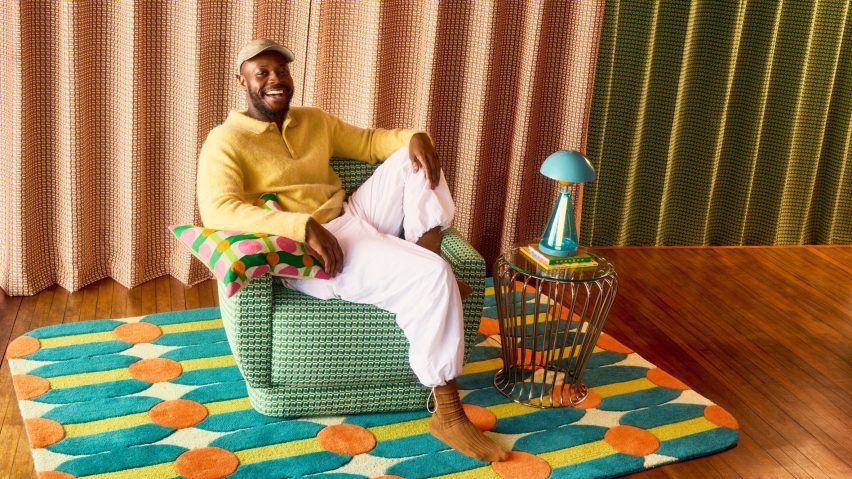
British-Nigerian designer Yinka Ilori has brought a retro 1970s feeling to chairs, rugs, beds, lamps and cushions as part of a 40-piece collection for high-street furniture retailer Dunelm.
Launched today, the Yinka Ilori x Dunelm collection is the designer's first full furniture and homeware collection.
Ilori wanted the collection to be joyful, while evoking the eclectic nature of 1960s and 70s homes.

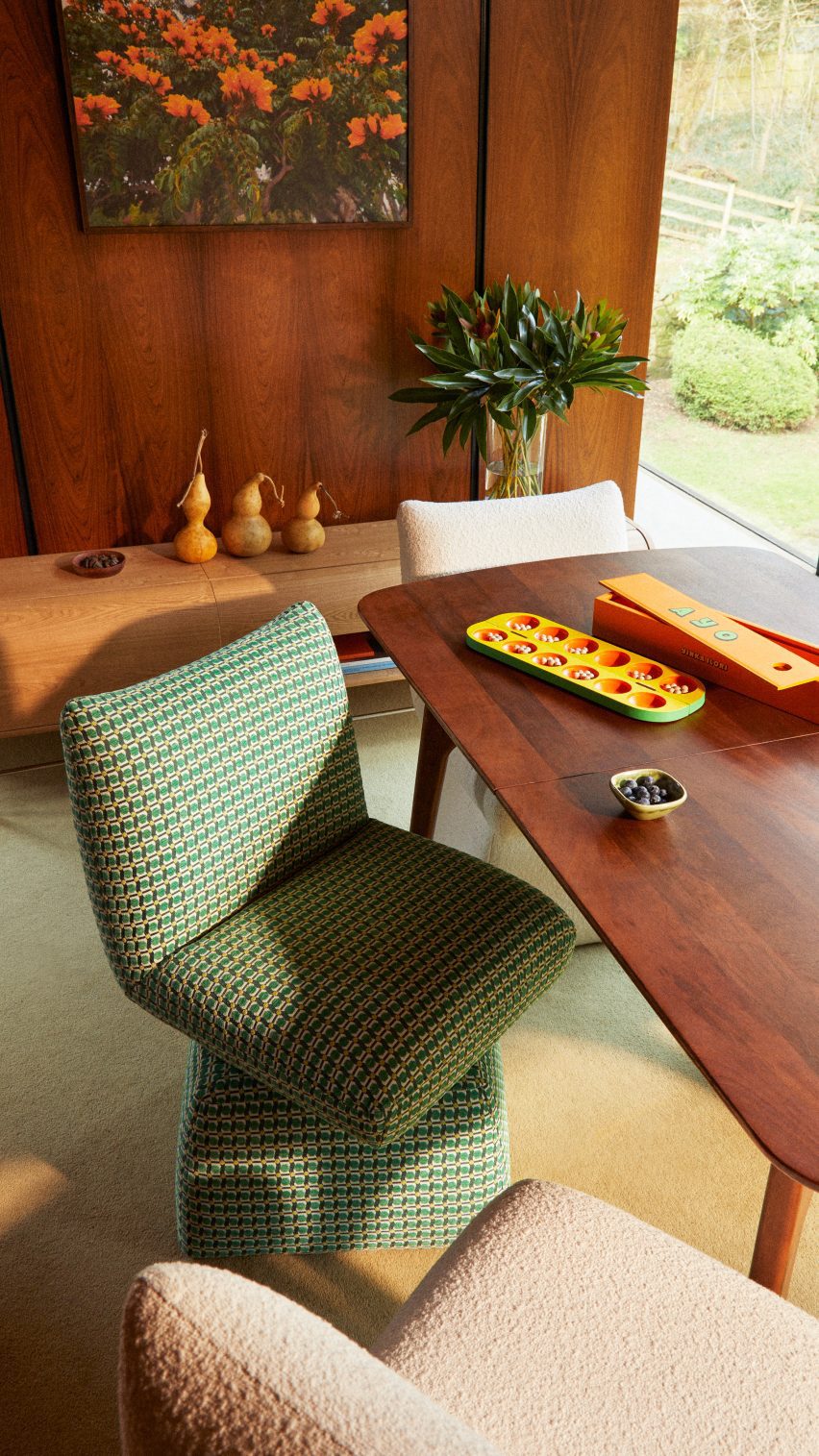
"The thing I was trying to push for this collection was a kind of 1960s or 70s nostalgia feel," he told Dezeen at the launch of the collection.
"The feel of materials, craftsmanship, love of community and just how design plays a big part in how we orchestrate joy and togetherness within the home," he added. "For me, as a kid, design was always at the forefront of that – whether a sofa, or a rug, or a curtain, or a light."

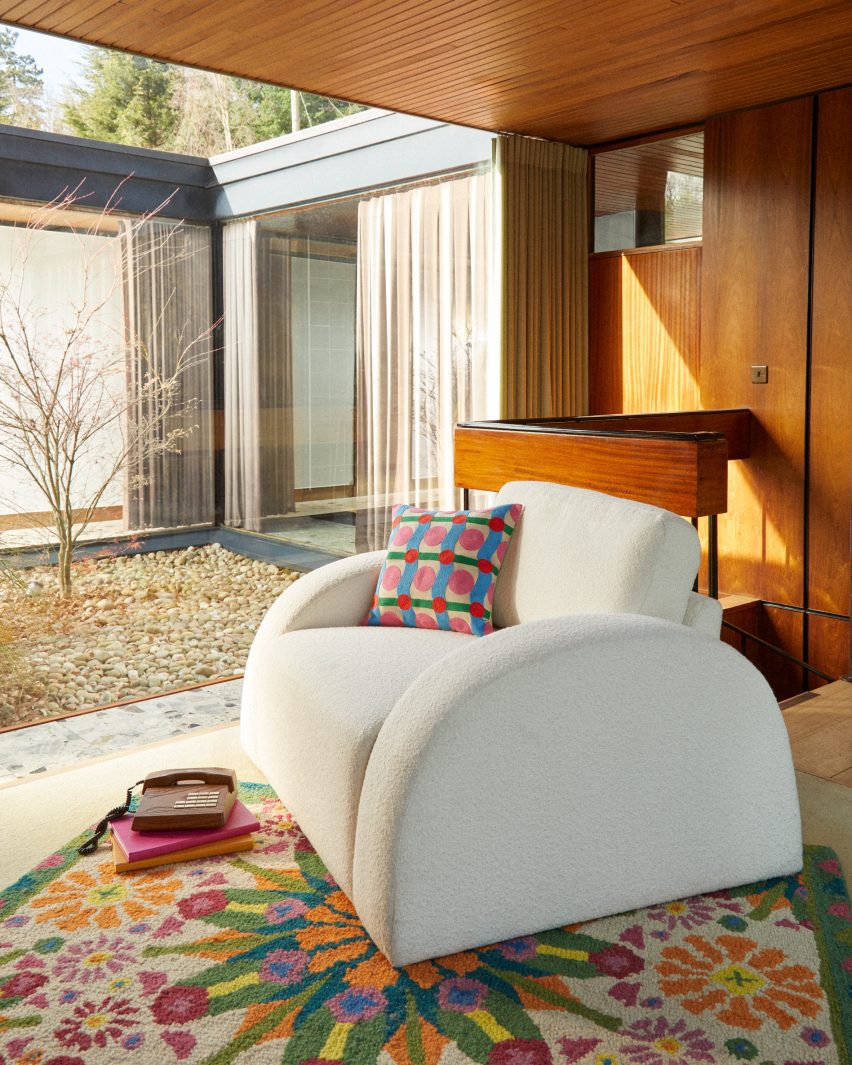
The collection, which contains everything from sofas to bath mats, was designed to be "almost deliberately clashing" as a reflection of the home Ilori grew up in and the communities in Leicester, where Dunelm began as a market stall in 1979.
"Look at the community of Leicester, it's very eclectic," he said. "I think there is this kind of positive clash of communities and colours and textiles – you see remnants of that here."
"It also does remind me of what it feels like being in Nigeria – that energy, that kind of rush, that loudness in terms of objects and tools and materials you can see here."
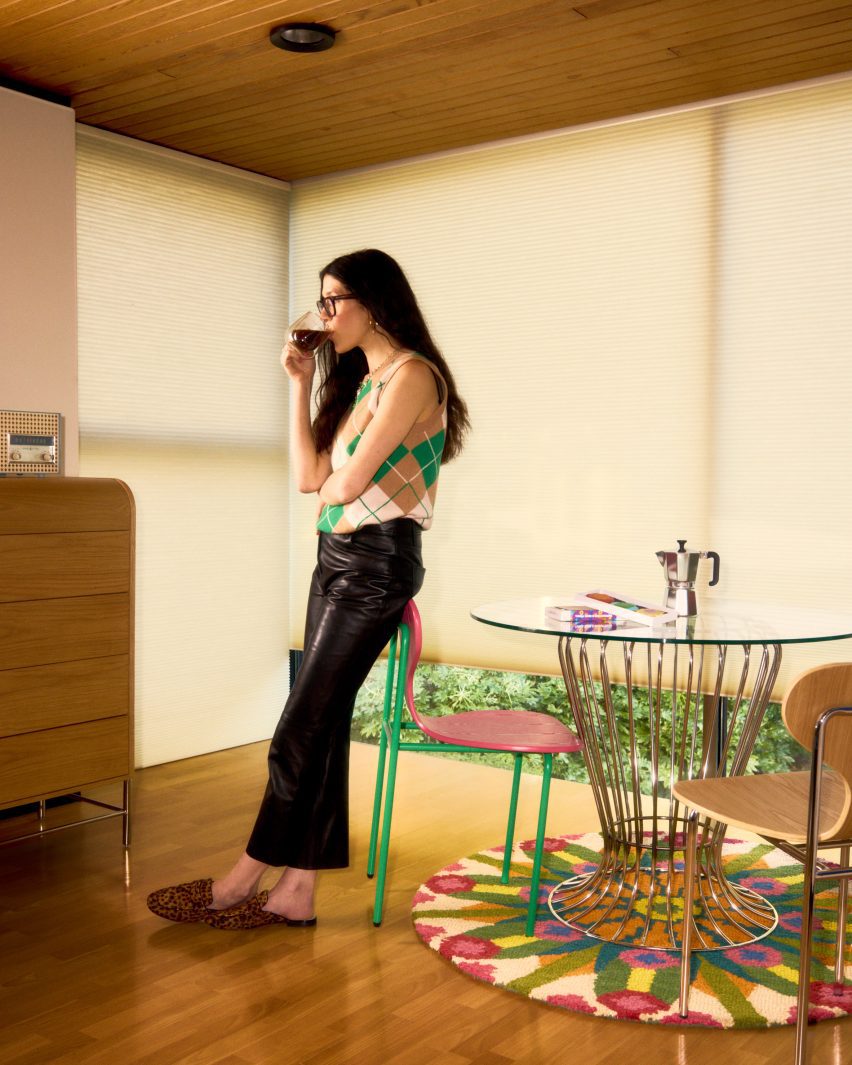
Ilori wanted his first major collection to be available at a price that made it accessible for normal people – the cheapest piece in the collection will be on sale for £9.
"You've known my work for a number of years, and I've always been quite vocal about accessibility across placemaking, design and fashion – whatever it is," he said.
"For me it's about designing objects that are accessible and inclusive, but also really celebrate people and the differences in what they're experiencing," he added.
"So that was one of the biggest things for me – a lamp for £69, I think the sofa is like £299, so all really affordable prices. Whereas most people can't afford to buy a lamp for £2,000 – it just doesn't make sense."
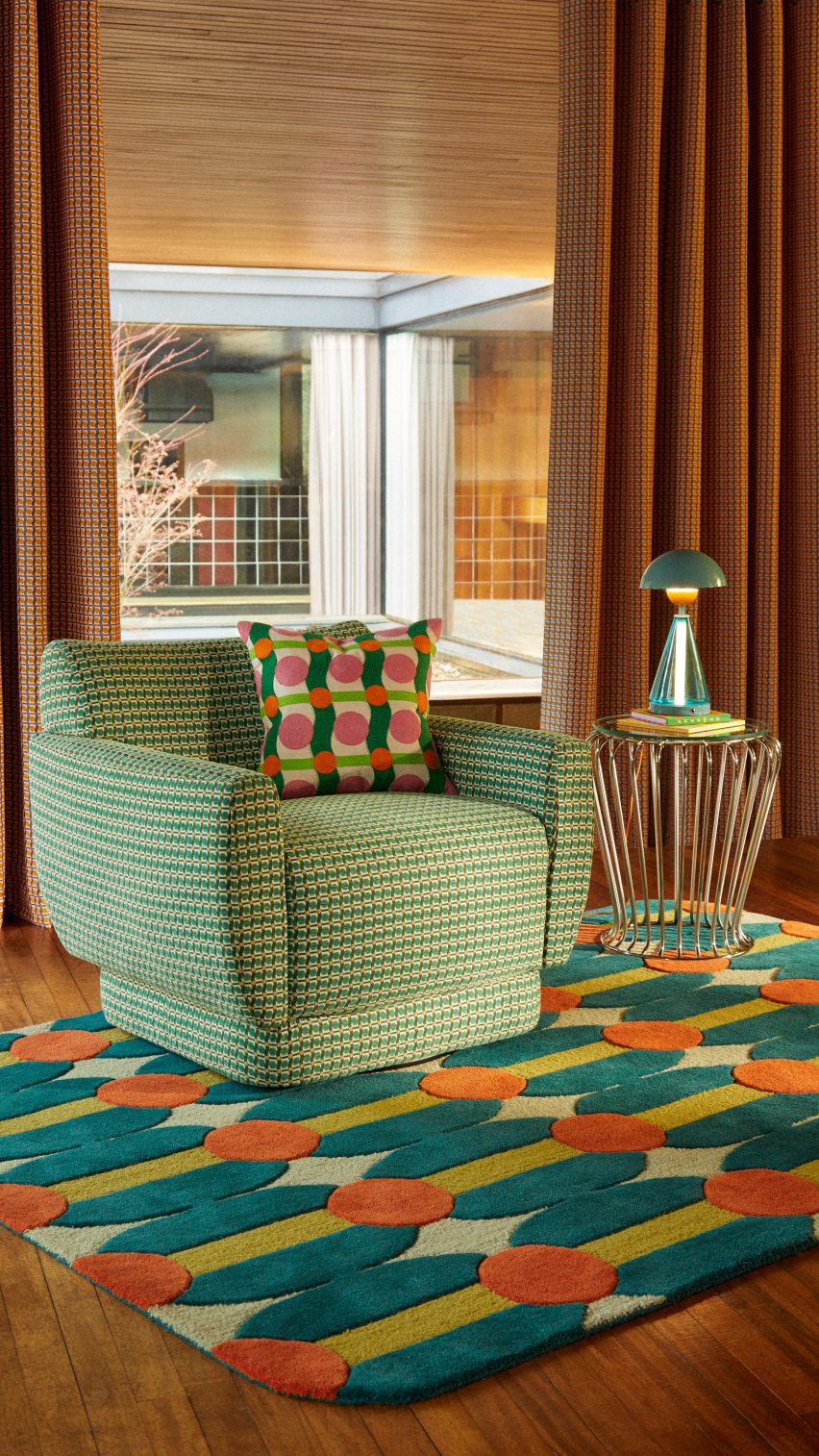
Ilori began his career as a chair designer, but in recent years has become better known for his colourful pavilions and collaborations with major brands including The North Face and MB&F. This collection includes five chairs, and Ilori was excited to design furniture again.
"I studied frontage design when I was at uni, so it's nice to be going back to my roots and just sketching really freely," he said.
"If people make a decision to buy them, that means they actually love that piece and it will really become part of their home or the DNA of their home, so that's nice. It's great to design products and objects that people will really engage with."
Along with colourful chairs – a green swivelling armchair and dining chair, white easy chair and pink-and-green timber dining chairs, the collection contains various other pieces of furniture.
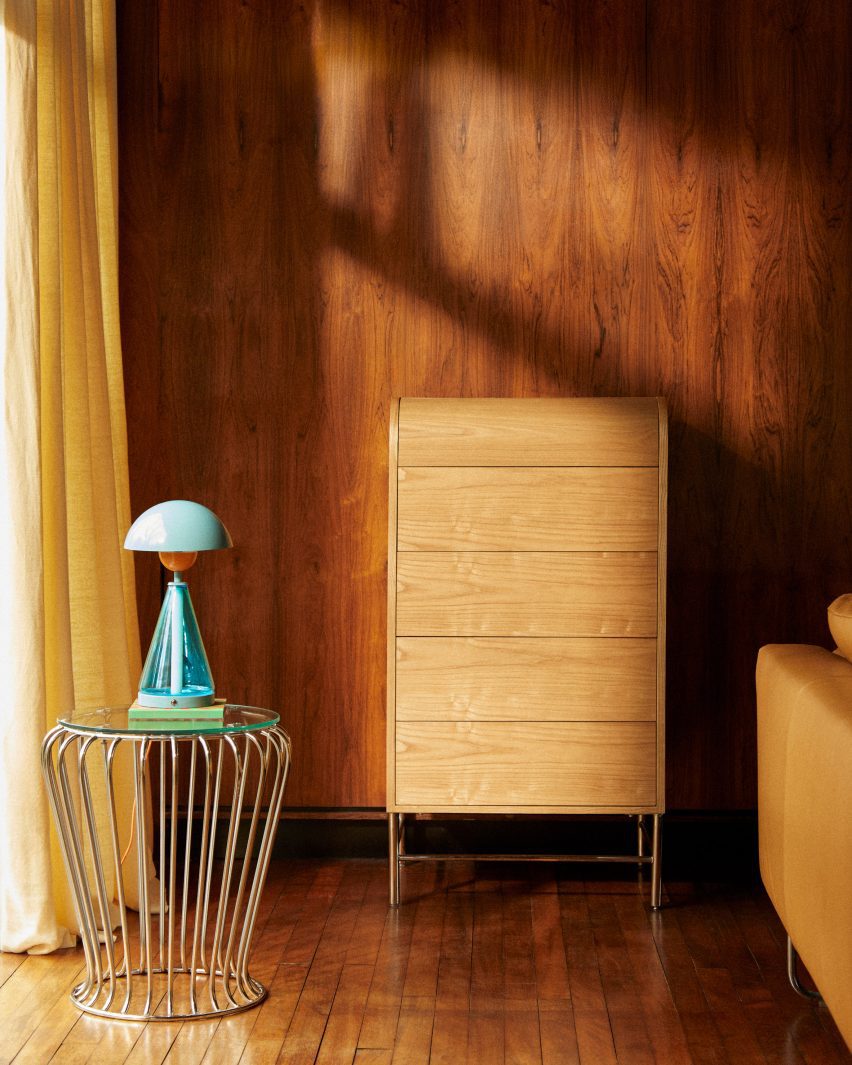
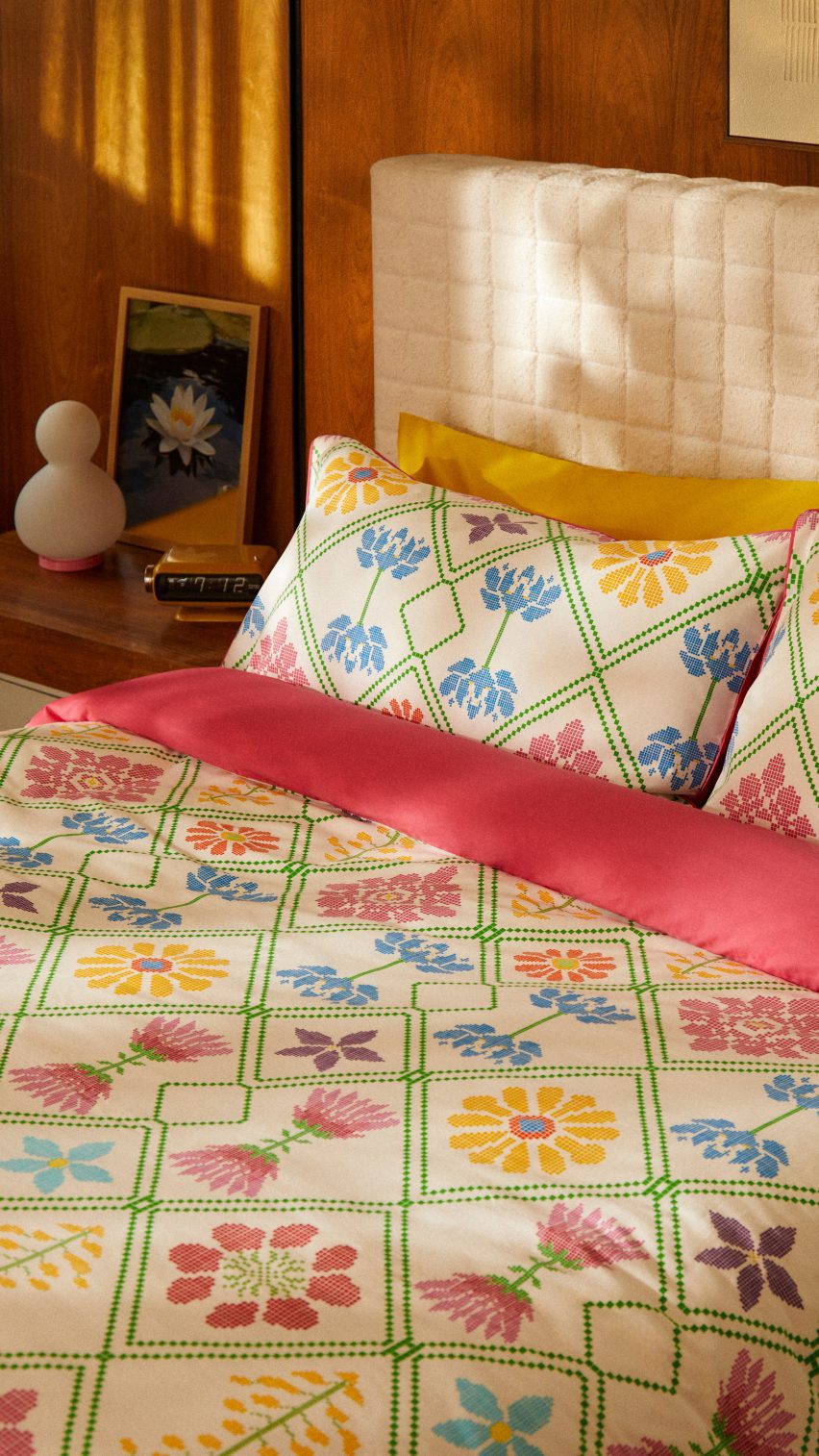
These include an oak-veneer sideboard, a white "snuggle chair" and a bed with a plush white headboard.
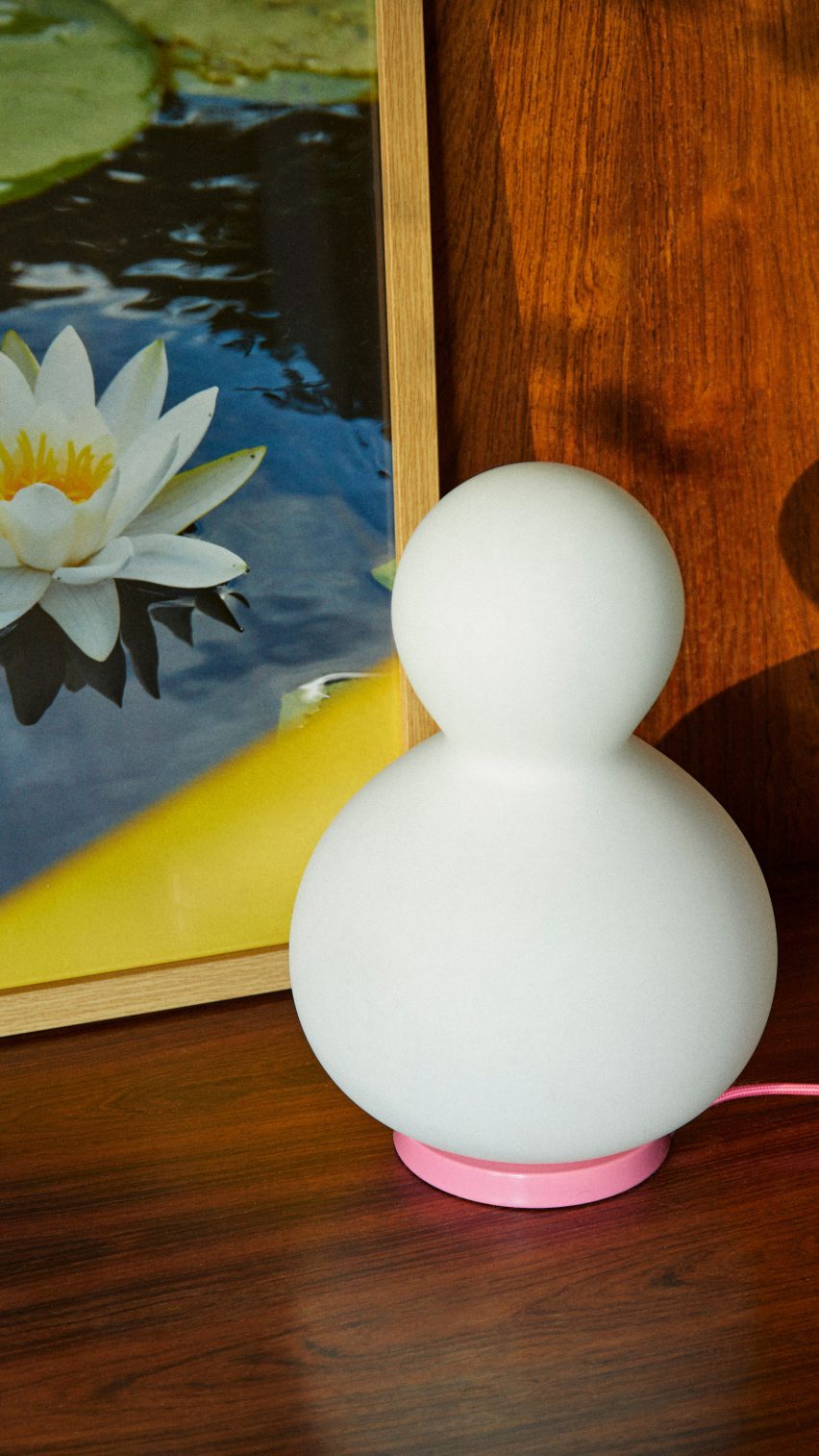
Ilori also designed a mushroom lamp for the collection as well as numerous soft furnishings including rugs, curtains, cushions and hand towels, which are covered with his signature floral motifs.
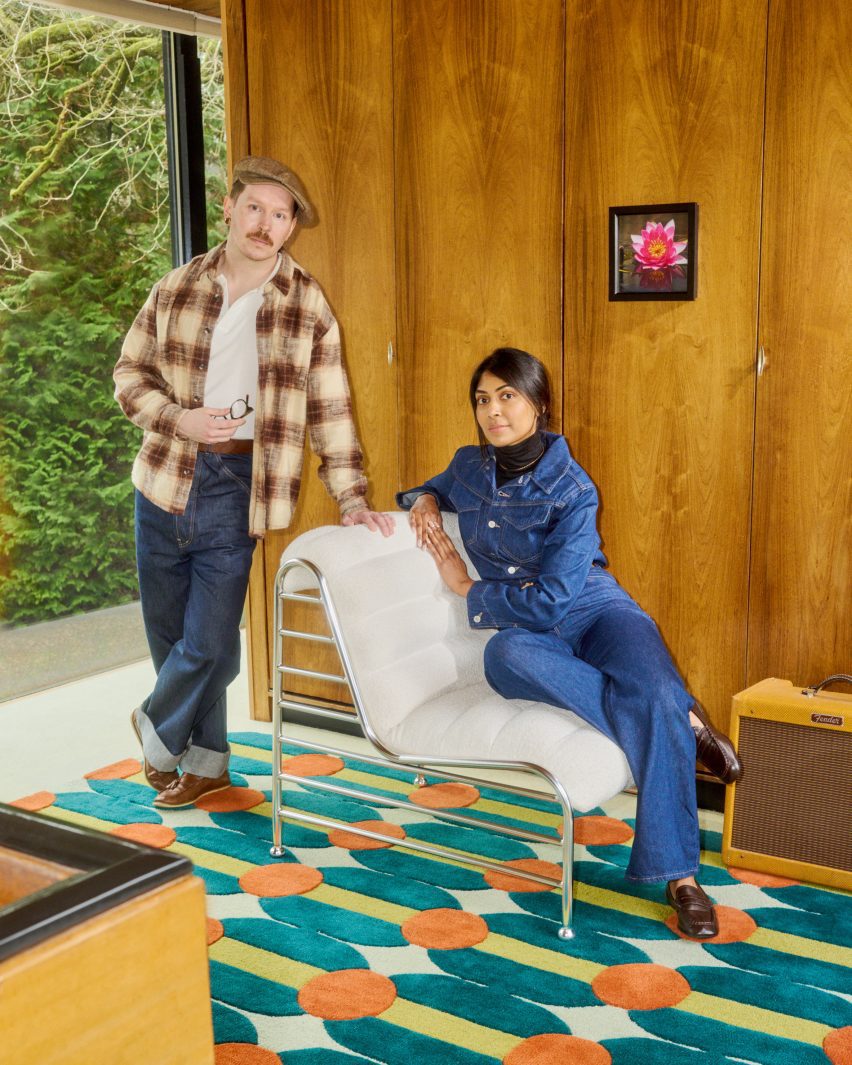
The collection marks the beginning of a three-year partnership between Dunelm and Ilori, which will see the designer create more interior products as well as outdoor pieces for the brand.
In the past, Ilori has been approached by other, more high-end brands to create furniture and homeware. However, he chose Dunelm because the brand gave him relatively free rein to select the overall feel of the collection.
"There were definitely kind of categories we had to tick off – so lighting, furniture, bedding, those kind of things," he said.
"But honestly this was probably, to date, my most favourite collaboration, because I was given free rein to really tap into different design disciplines and categories, whereas in the past I have been offered the chance to work with different homeware companies and brands, where it's been restrictive."
Ilori hopes that the affordability of the collection will mean that it will bring happiness to lots of households.
"I think if the work can be everywhere, and it can plant a small pocket of joy, then I think my job is done," he said.
"I didn't come into this industry to create things that are exclusive or uninviting. It's always been my aim to create designs for everyone, and [in this collection] you can find something from like £9."
He hopes that the collection will also act as a wake-up call for other homeware and furnishing brands.
"I'm really proud of this collection, and I think it's really going to change the way brands think about how they can make design a lot more accessible," he said.
"Sometimes we forget that many people who want good design can't afford it, and this collection really, I hope, is going to change the way we think about that."
Other recent designs by Ilori include a Man of the Match trophy for the Africa Cup of Nations and an installation for Veuve Clicquot.
The photography is courtesy of Dunelm.