


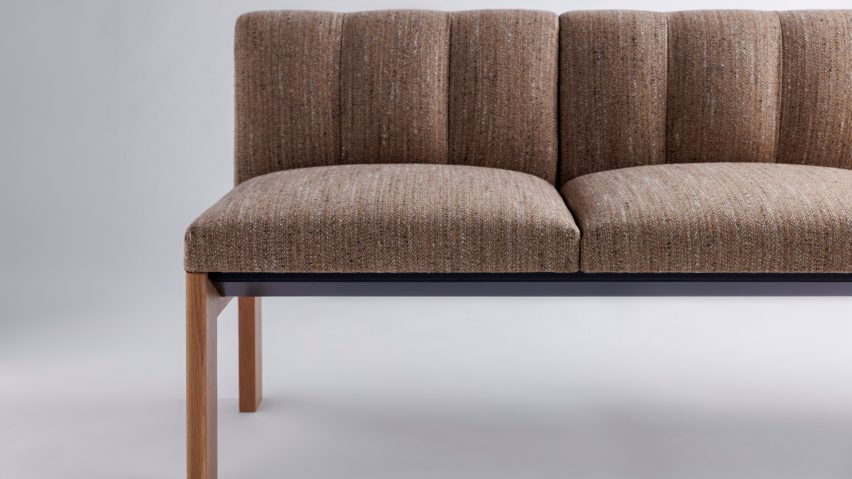
North Carolina furniture company Studio TK has designed furniture utilising manufacturer Plantd's panels, which are made from perennial grasses and marketed as an alternative to traditional engineered woods such as plywood.
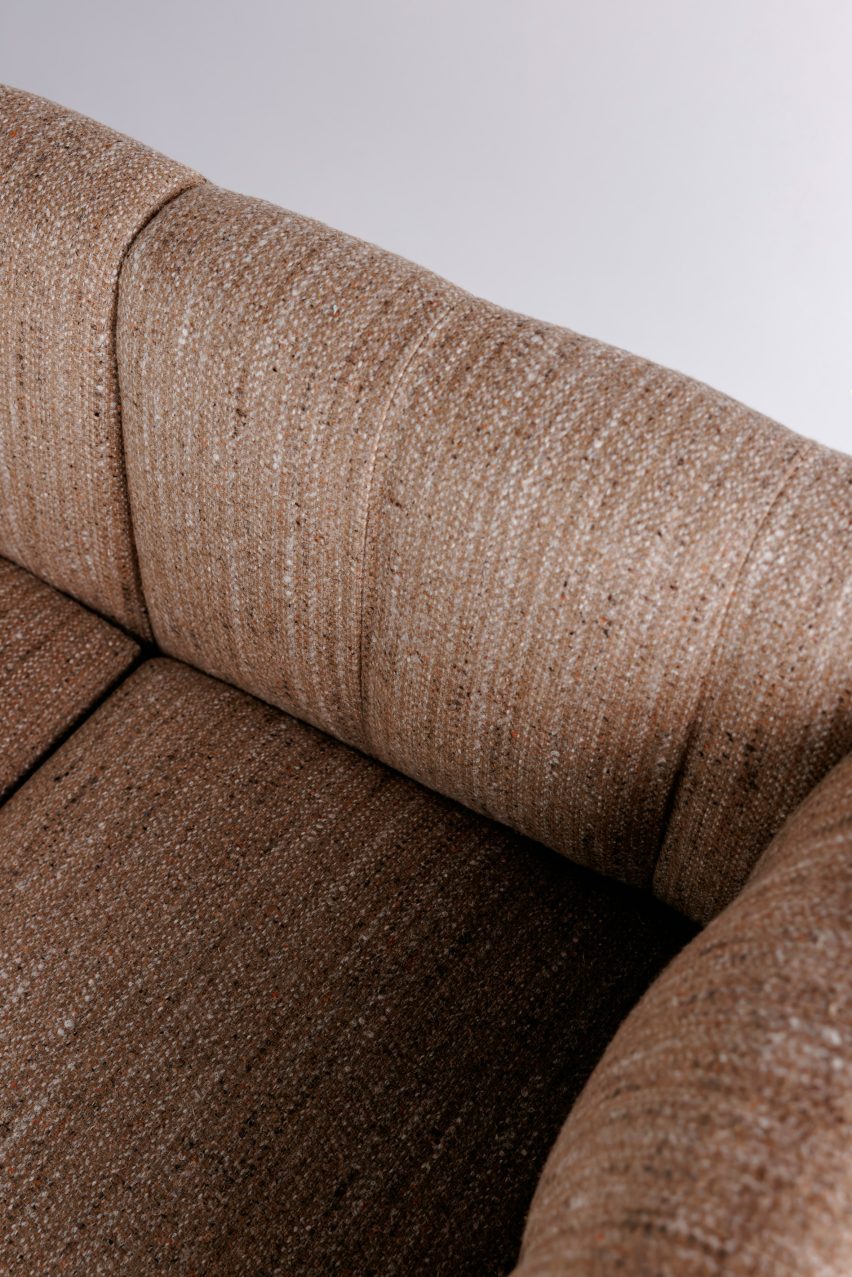
Studio TK released the Clique Luxe collection, using the panels as the non-visible, core structural components of the modular furniture. The panels were made with pressed perennial grass and were used instead of traditional oriented strand board (OSB).
"Because it was carefully engineered to be a carbon-negative, drop-in substitution for standard OSB, it integrated seamlessly into our existing workflow," Studio TK told Dezeen.
"It cuts effortlessly on our CNC machine and holds face staples, nails, and screws exceptionally well, requiring no modifications to our production or design processes."

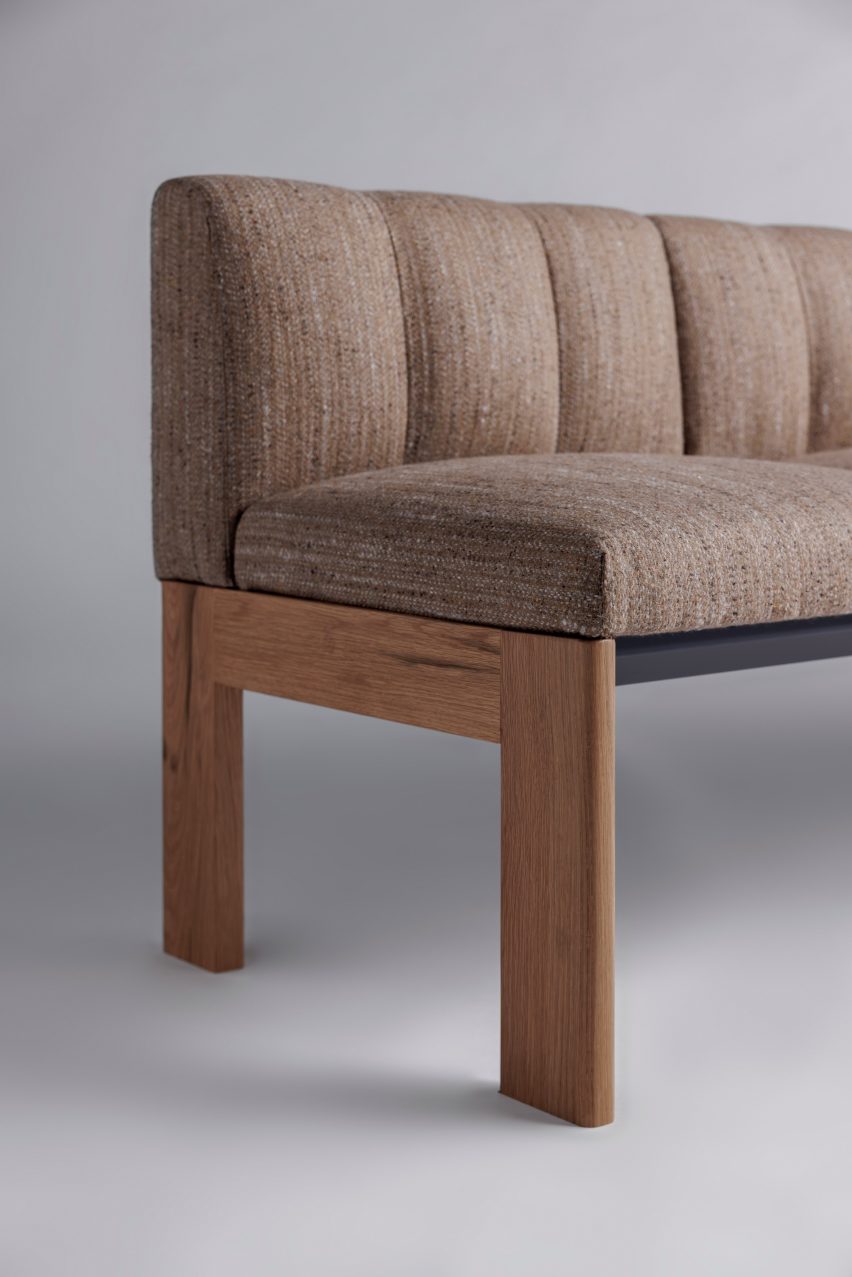
Studio TK continued to say that after using the Plantd panels in its CNC machines and process, it concluded the panels were "noticeably superior" to OSB, calling them "exceptionally durable".
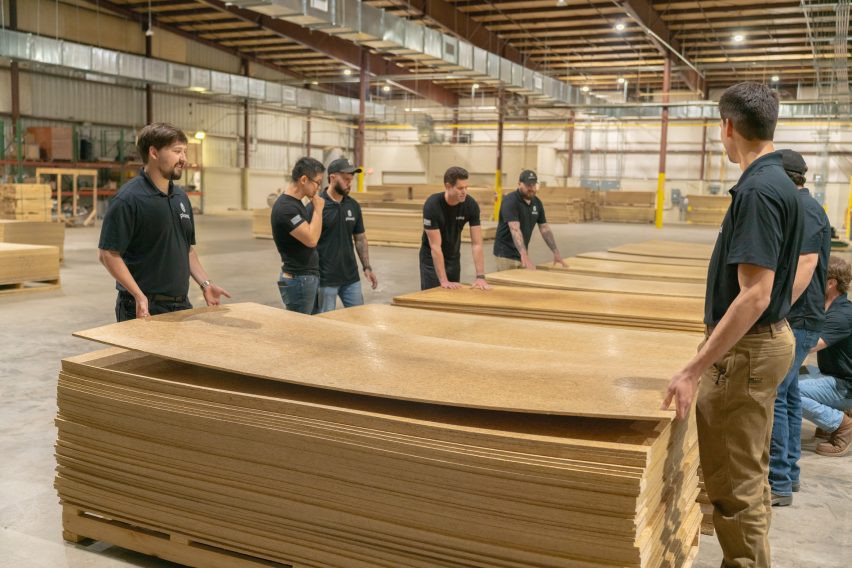
Plantd's process involves collecting fast-growing grasses and pressing them using heat into panels that can be used in place of building materials such as OSB, which is made using shreds of timber adhered together.
So far, the company has collaborated with construction companies, as OSB is most widely used in the sheathing of timber-framed houses.
When asked why the company is focusing on furniture, given the massive scale of materials used in the housing industry, co-founder Nathan Slivernail said that the goal is to show the mass applicability of the product, which it touts as being more sustainable than OSB or plywood.
"We're not solving for capitalism like most startups," Silvernail told Dezeen. "We're solving for carbon."
"We're trying to reinvent lumber, and so in that case, we want anybody to buy this product that's going to use timber-based lumber specifically, so that we can really expedite the amount of carbon that we can lock away," he continued.
The grasses grow quickly and use less land than the softwood lumber needed for traditional engineered wood products. The company began by harvesting wild grasses and has since moved to its own fields, with 400 acres currently planted.
Both Studio TK and Plantd operate out of North Carolina, a hub for American furniture manufacturing.
Silvernail said that one of the advantages of the product is that it can be used in a variety of applications and could conceivably replace not only OSB but also fiberboards such as MDF and HDF.
"They don't have to go and source from three or four different lumber yards, manufacturers or suppliers. They can support one material from us, and then tackle all of their use cases across their furniture lines," Silvernail said.
"We can be the supporting structure that you don't see, we can be the laminated structure, we can be the routed structure."

Studio TK agreed with the assessment, with a caveat.
"Once you realize the potential of this material, the possibilities are wide-ranging – there are dozens of components in our current products where we could substitute with Plantd," said the company.
"The biggest challenge will come from efforts to use the panels as a plywood replacement, as the two have some inherently different performance factors."
Other recent material innovations in mass production include the implementation of ocean-based plastics in the lines of American manufacturer Lucifer Lighting and Tarkett's carbon-negative linoleum.