How stadiums are turning into entertainment districts
As developmental models for sports venues shift, architects and planners are being tasked with designing vast districts to support year-round activity. For our Future Stadium series, we look at the rise of the sports district and some factors driving the change.
According to a study by sports agency Klutch Sports Group and Royal Bank of Canada, as many as 37 sport-anchored mixed-use districts (SMDs) were announced in North America in 2024, triggering a flurry of renderings depicting stadiums flanked by hotels, restaurants, retail and even residential programmes.
"The investment that's being made in these buildings is just so enormous," Janet Marie Smith, executive vice president of planning and development at the MLB team Los Angeles Dodgers and cofounder of boutique sports consultancy Canopy Team, told Dezeen.
"It's gone so far beyond 100 years ago when we would build a playing field, seats, and a few concession stands."

The sports district is being heralded as a win-win-win for a city, its residents and its sports teams. It has been promoted by architecture studios such as Foster + Partners and Rios, the latter predicting that these districts will "attract $100 billion of investment in the next 15 years".
In-progress districts include the MAPS 4 Multipurpose Stadium in Oklahoma City, which recently broke ground.
It was designed to serve as the anchor to a new sports and entertainment district along the city's waterfront, funded by the city and a group of private developers including NBA player Russell Westbrook.
In India, architecture studios BDP, Cox Architecture and Collage Design have revealed designs for the Sardar Vallabhbhai Patel Sports Enclave, a trio of sports facilities that will surround the already existing Narendra Modi Stadium – one of the largest stadiums in the world.
"A stadium as an urban district"
And with their Jeddah Central Development Stadium in Saudi Arabia, architecture studio GMP Architekten (GMP) has taken the concept one step further by affixing "villages" of hotels, restaurants and other facilities directly onto a central, tiered football stadium to create a mini-city.
"A stadium as an urban district," reads the project description from GMP, which goes on to describe the project as relating directly to the urban scale.
"Form, materiality, and proportions of the ensemble are inspired by the architecture of Jeddah's historic old town."
These sprawling zones differ from the suburban stadiums popular in the United States, where the structures would be placed on the fringes of urban zones and surrounded by parking, a phenomenon that HOK director of planning Peter Cavaluzzi, who's worked on several sports districts, has likened to "isolated spaceships".
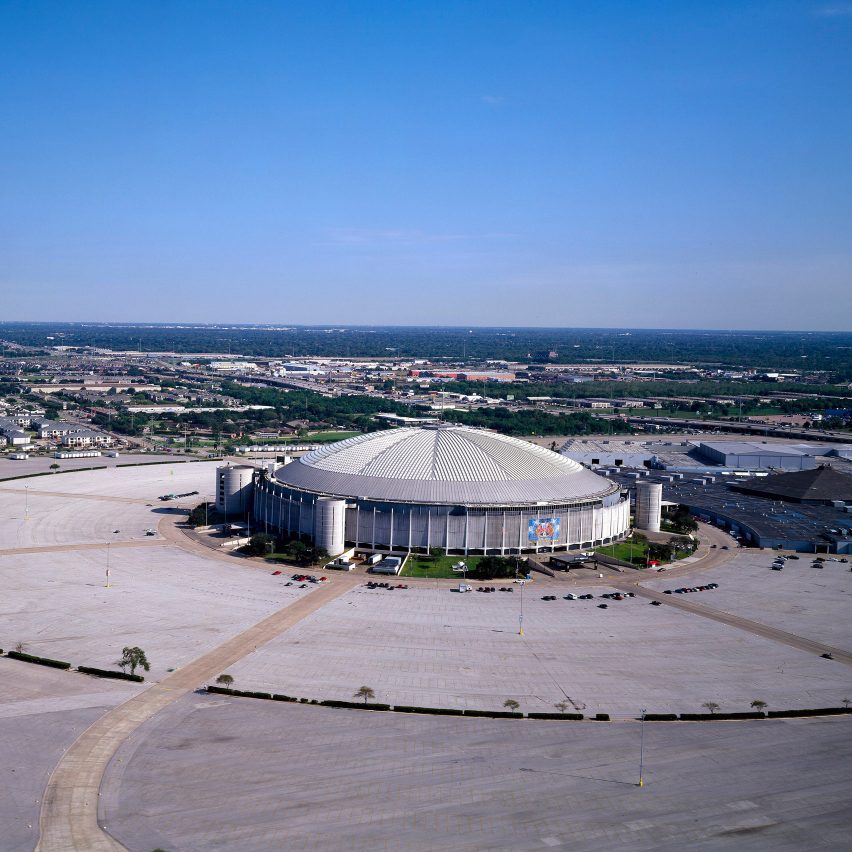
Instead, the modern SMD is shaped primarily by the integration of residential and retail buildings, additional entertainment buildings, access to public transport and a retreat from surface parking.
Residential is often one of the major elements a building team will consider when planning an urban sports district, whether that means increasing the amount of residential programming that already exists around a stadium, building completely new buildings, or conversions.
This promotes foot traffic in an area 365 days a year, while residents require other amenities, such as grocery stores, retail, restaurants, green space, and office spaces, all of which a sports team and a building team may have invested in.
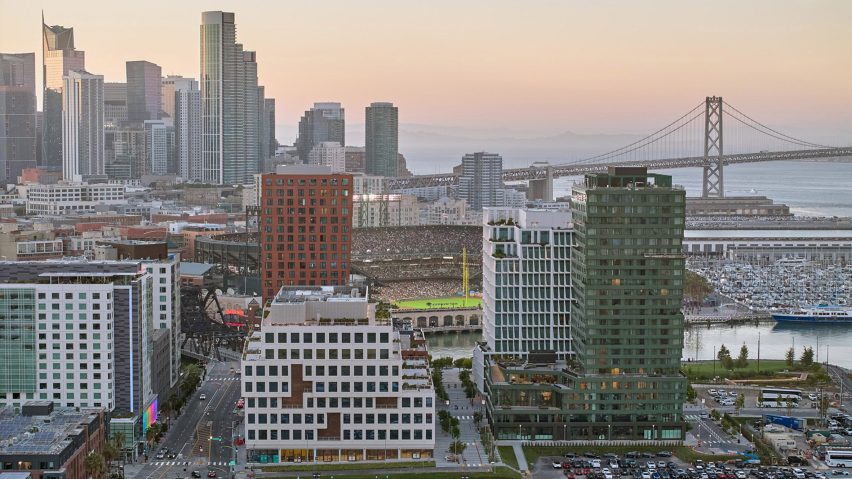
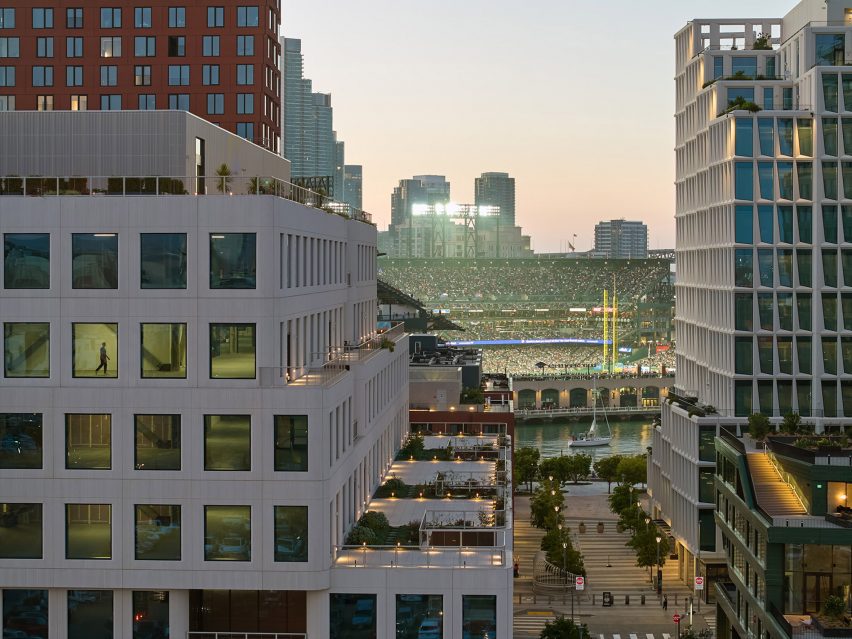
This is the case with the sprawling Mission Rock development in San Francisco, which the MLB Giants own a significant stake in.
Sports teams benefit from mixed-use amenities
Another factor is the deprioritisation of surface parking and a slow but steady embrace of public transport. This shift is opening up land directly adjacent to stadiums, exemplified by New York City's Metropolitan Park project, which sits next to the new Willets Point sports district development in Queens.
Combined, the project will replace swaths of open surface parking around Citi Field with a casino, a park designed by Field Operations, as well as a sprawling residential development surrounding the city's first soccer-specific stadium, Etihad Park.
And for sports teams, they're beginning to understand the benefit of these mixed-use amenities as well.
"It builds their brand, it builds their fan base, and those fans that can't be in the stadium – they could be in the district at watch parties, so it just helps grow the whole organisation," Cavaluzzi told Dezeen.

Cavaluzzi stressed one major element in making these districts "successful" – the working relationship between a city and a sports team.
"The most successful sports developments are when the city and the team have priorities in perfect alignment," said Cavaluzzi. "The city wants to build the city; they want to build streets, they want to build parks, they want to build districts."
Of course, a symbiotic relationship between a city and a stadium isn't new. Commercial and residential services have historically grown up around stadiums organically, as with the auxiliary commerce around Fenway Park in Boston or Yankee Stadium in New York.
But with the SMD, sports teams themselves are stepping into roles as developers, following a decrease in public funding for stadiums and a shift towards private ownership.
"You see a proactive desire to be a part of the civic environment"
"Going back to the early '90s, when cities were still financing venues like Camden Yards in Baltimore and Coors Field in Denver, the public funding era had not totally dried up, but teams and cities were moving into urban centres, and the ballpark itself was being used as a catalyst for other development," said Smith.
"Over time, as the public sector has ceased to fund those things, you see not only a need for those kinds of revenue drivers in order for teams to justify the investment themselves, you see a proactive desire to be a part of the civic environment and contribute to the life and health of our urban centres."
In many cases, the sports team leased the stadium from the local government or another private owner and now must decide to re-sign, build a new home base, or relocate cities entirely, as is the case with the Chicago Bears' plan to move to Indiana after disagreements with Illinois over taxes and funds.
There are currently 40 venue leases in the US set to expire between 2030 and 2039, prompting sports teams to consider whether districts benefit from proximity to denser populations to fill them on non-event days.
Though the example of the Bears' move from central Chicago to a less-dense locale spells the opposite, at least in the US, the district model opens up potential for more integrated stadiums that eschew the isolated, suburban model.
Smith cites Petco Park in San Diego from 2004 as an example of a successful urban SMD.
"Petco Park has a district around it that's so robust and lively that you forget that it wasn't there until the ballpark itself was created," she told Dezeen.
"The location of Petco Park was not intentionally slammed right up against the Gaslamp Quarter, but rather put several blocks away to say – okay, we have several anchors downtown now, let's fill in between."
"The city and the [Padres] agreed that the team not only had the right, but the responsibility for development, and I think that really changed everything."
However, even with the stated intensification of this trend, it's still too soon to tell if the SMDs will result in the vibrant mini-cities claimed by its boosters.
Recent studies, such as several led by University of Texas at Austin associate professor of community and regional planning Miriam Solis, point to kinks that have not yet been worked out and call for further research to understand the impact of stadium development, particularly on surrounding communities.
In a 2026 study led by Solis, the team found that in examining four existing stadiums across the US, there was a lack of "follow-through" with planning. Meaning, after a stadium was built, it wasn't clear how the long-term development of the stadium connected to the long-term development of the city.
"These cities do have plans for stadiums," urban studies associate professor at Queens College Dwayne Baker, who worked on the study, told Dezeen. "But in terms of how it connects with the land use, or if it connects with any other adjoining city plan, we just didn't find that."
"It may well be, but in terms of the publicly accessible documents that we were able to find, it just didn't connect there."

They did note some successes, though.
For Target Field in Minneapolis, the research team noted that the city's plans and goals – for instance, overarching land use changes, zoning, and economic growth – coordinated with the introduction of Target Field.
As stadiums are evolving from "isolated spaceships" into sports districts that are integrated into a larger urban area, their planning strategies need to follow suit, including what party is responsible for executing the long-term vision, whether it be the city or a sports team.
Ultimately, the sports district is like any other development.
"I don't think the sport in and of itself drives a market," said Smith. "It gives an anchor, provides a magnet, gives an allure, a sex appeal."
"It allows for a mix of uses, but you've still got to take the same risk as any other developer in seeking out residents who want to live there, and corporations who want to be housed there, and a robust enough environment that retail can survive."
The top photo is by Bruce Damonte
Future Stadium
This article is part of Future Stadium, our series exploring the growing role of monumental sports buildings in architecture and urbanism around the world.