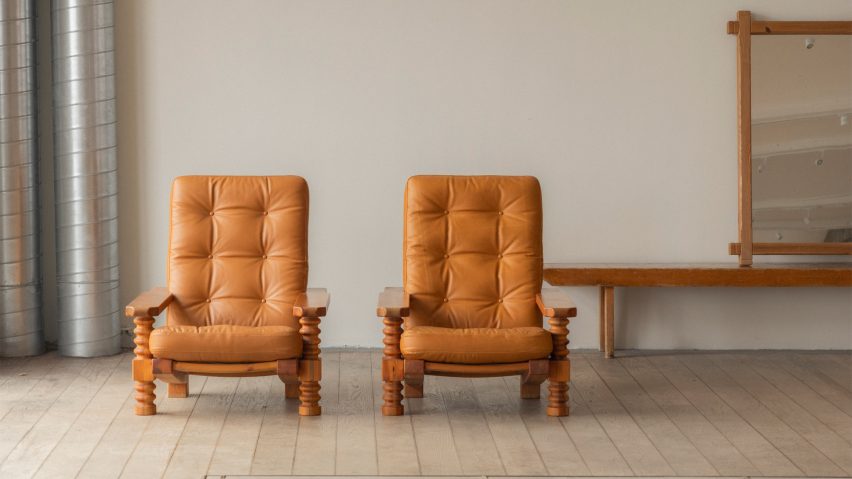
"Design weeks need to start framing repair as aspirational"
This week's 3 Days of Design is an opportunity to challenge the idea that new is better, writes Katie Treggiden.
If design weeks want to remain culturally relevant in an era of impending climate catastrophe, they need to challenge the long-held belief that new is better.
Milan has clearly missed the memo and is still lugging around a now tone-deaf legacy of luxury. But Danish festival 3 Days of Design is young enough to question what all these gatherings of creativity are for.
Design festivals are how our industry communicates
After all, one of the questions the event's CEO and managing director Signe Byrdal Terenziani says she asked herself when establishing the festival was: "How can design contribute to the wellbeing of people and the planet?"
The 2026 theme for 3 Days of Design is Make This Moment Matter, with Terenziani insisting that the design community has "the wherewithal to make a difference", and that now is the time to do so.
She couldn't be more right. According to the Ellen MacArthur Foundation, more than 80 per cent of a product's environmental impact is determined at design stage. This is a responsibility we can no longer ignore.
We are less than four years away from 2030, the deadline for reducing greenhouse gas emissions by 45 per cent to keep within the Paris Climate Change Agreement's global warming limit of 1.5 degrees Celsius. (Spoiler alert: according to Accenture, the majority of businesses are going to miss that milestone.)
So it's urgent, we have the means to make a difference, and yet reports from Milan design week were filled with news of "fancy stuff for rich people", "peak brandification" a "lack of dialogue with the times we live in". Again.
Will 3 Days of Design do any better? Will it really step up and "make this moment matter"? Design festivals are how our industry communicates, and if we're going to make this moment matter, we need to talk about repair.
Visible mending has long been popular in fashion, but is still rare in interiors
The circular economy only has three tenets and one of them is about repair. It's the most resource-efficient way to keep materials and objects in use, and yet it has been strangely absent from design festivals, which have long prized novelty above all else. Until now, perhaps.
Danish textiles brand Kvadrat recently launched Repair Patches – fabric circles, "offering a high-quality, design-led way to repair tears, snags and stains" in its upholstery fabrics. It is refreshing to see a brand embrace repair not just in the future, but at the risk of cannibalising its own sales.
The patches can be used both discreetly on matching fabrics and visibly on contrasting fabrics, which is also a shift. Visible mending has long been popular in fashion, but is still rare in interiors.
And yet the Repair Patches won't be making an appearance at 3 Days of Design, with Kvadrat instead focusing on new launches. It seems that repair, while important, wasn't quite shiny enough to make the cut this time.
As CEO and founder of design futures consultancy TILT Caroline Till explained to me, it's a problem that we, as an industry, created. "The problem lies in many brands having too many product lines and driving newness through a bombardment of short-term seductive marketing," she said.
"A bombardment of short-term seductive marketing" could be the dictionary definition of design fairs. Clearly that needs to change. So, is it possible to use seduction to "sell" people on the idea of repair and the circular economy instead?
It's about changing how objects are designed and valued
That's exactly what Beginnings and Endings, the 3 Days of Design exhibition TILT has curated for flooring brand Tarkett, intends to do. In one collaboration for the exhibition, Danish-Singaporean design duo Christian + Jade has created a collection with Tarkett's linoleum range that dissolves the distinction between floors, walls and furniture.
"It's about changing how objects are designed and valued," they told me. "If something is well made, beautiful, repairable and understandable, we are more likely to care for it. We wanted to make that visible through simple construction, removable fixings and materials that can be separated again."
Elsewhere, Anglepoise is celebrating repair more directly as part of its 3 Days of Design debut. The British lighting brand, which offers a lifetime guarantee on newer lamps and a repair service on older ones, is bringing the 500th lamp it has rewired (gifted by its owner) to Copenhagen.
Visitors to Art Galleri Maria Friis can apply to become its next "custodian" by typing a few sentences onto a vintage typewriter. "Becoming a custodian is very different to becoming an owner," said Simon Terry, the fifth-generation "custodian" of his family business. "It's the idea that you can grow stories and connections with products that can be documented, nurtured, loved, told and passed down through generations."
The choice of a typewriter as the mode of entry resonates with 2026 being what Dazed Magazine has called "the year of analogue," the resurgence of 1990s fashion, and the rise of "grandma hobbies". The irony that these things are gaining popularity via TikTok influencers is not lost on anybody (except perhaps the influencers), but this does seem to signal a genuine shift in aspirations. Perhaps there's a place for repair at design fairs yet.
Design weeks need to change the habit of a lifetime
Meanwhile, 24-year-old Edward Gubi (grandson of founder of Danish design brand Gubi) is betting big on reuse and repair. His venture, Design Preowned, opens its first permanent gallery during 3 Days of Design (pictured top).
Design Preowned sources overlooked Scandinavian vintage furniture, often by lesser-known designers, which is restored and reupholstered. "The design industry has spent decades selling the idea that new is better," he told me. "That logic is starting to break down – people are more ready for imperfection than the industry gives them credit for. What we call imperfection is just evidence of a life lived."
"A scratch on a tabletop, a worn armrest, a patina that deepens over decades, these are things no factory can reproduce," he added. "They are what make a piece genuinely irreplaceable. They are not a compromise. They are the point."
Design weeks need to change the habit of a lifetime and start framing repair as aspirational. Milan missed its chance this year, and may never change, though Copenhagen shows promise.
But we still have further to go. The design community really does have the wherewithal to make a difference but only if we stop creating more fancy stuff for rich people and instead prioritise repairing what already exists – before it's too late.
Katie Treggiden is a craft, design and sustainability writer. She is the author of Broken: Mending and Repair in a Throwaway World (Ludion, 2023).
The photo is courtesy of Design Preowned.
Dezeen In Depth
If you enjoy reading Dezeen's interviews, opinions and features, subscribe to Dezeen In Depth. Sent on the last Friday of each month, this newsletter provides a single place to read about the design and architecture stories behind the headlines.