


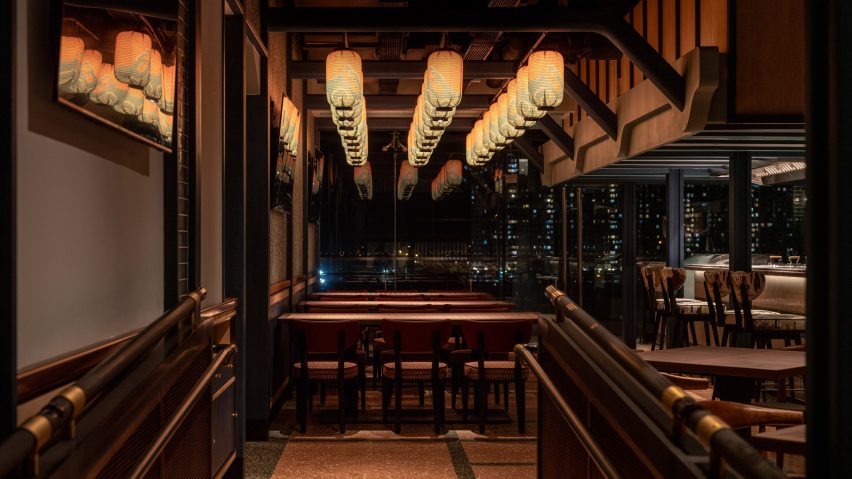
Lanterns, alley-like walkways and other details reminiscent of Tokyo's Golden Gai neighbourhood feature in this restaurant designed by Joyce Wang Studio in Hong Kong.
Genso is one of several dining options at Hong Kong's Sha Tin Racecourse, which opened in 1978 to cater to the city's growing demand for horse races.
The two-floor restaurant offers a variety of Japanese fare, and its interiors take inspiration from Japan, too – most notably Golden Gai, a buzzy pocket of Tokyo's Shinjuku ward known for its grid of narrow alleyways packed with tiny bars and eateries.

"Golden Gai is a city within a city; it has its own rules, its own personality, it really feels like you can escape and lose yourself within it," designer Joyce Wang told Dezeen.
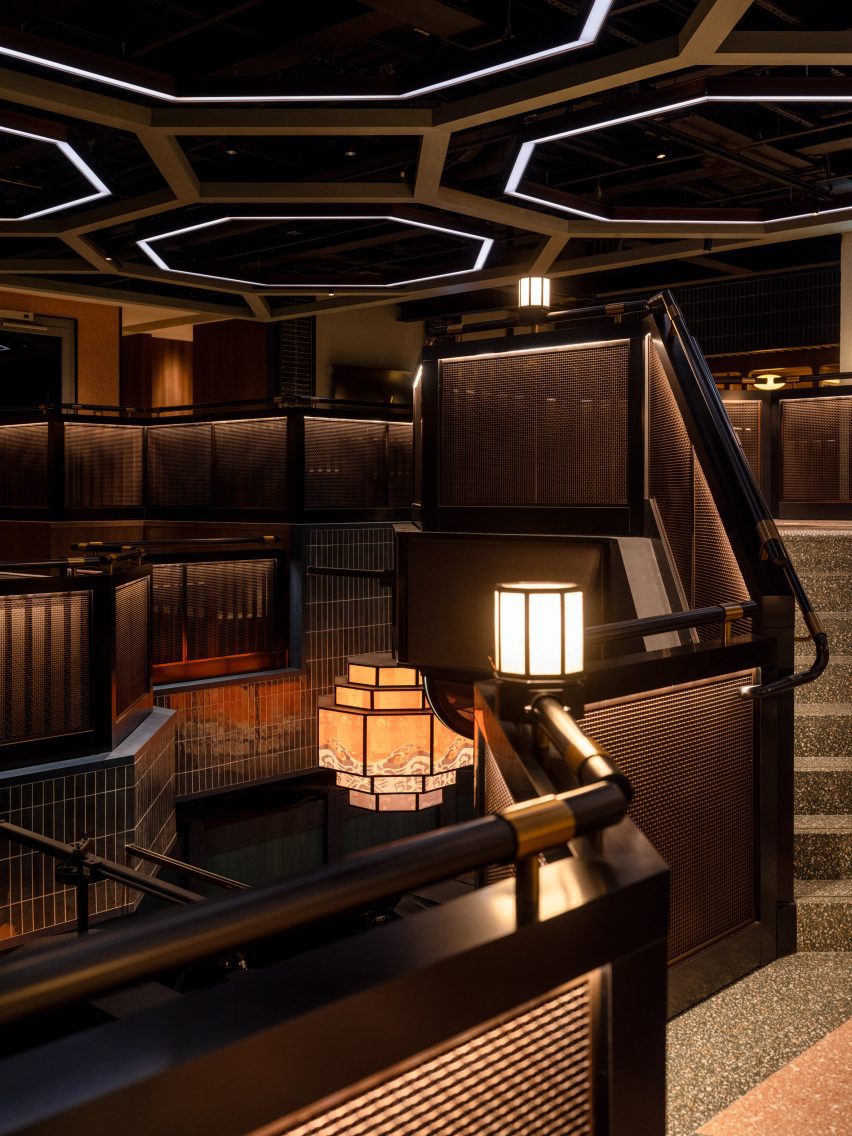
"For Genso, we wanted to recreate that feeling and carve out different levels and layers to the space – in the form of stairs, platforms, bridges, lookouts, walkways – capturing the diverse experiences that exist in a vibrant city like Tokyo, and Hong Kong."

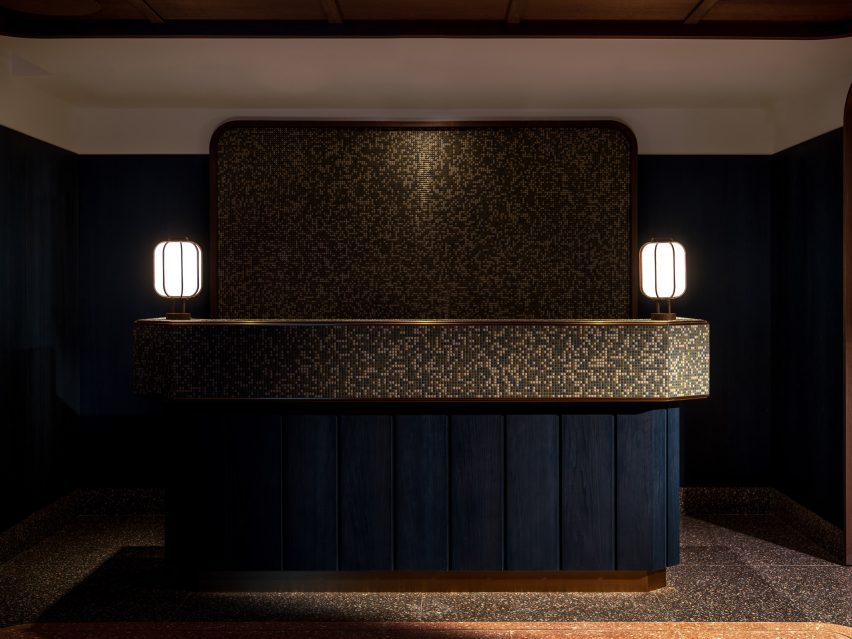
At the front of the restaurant stands a large reception desk. Its base is inky-blue stained timber while the counter is clad with tiny ceramic tiles, evocative of pixelated manga styles or old-school video games.
For Wang, it was important that Genso had a slightly retro feel.
"There's something appealing about a time that is difficult to pinpoint and place; it feels less clearly defined, which allows it to resonate across generations," she explained.
After guests pass the desk, they come to the restaurant's lower level, Fudo Town Food Hall, where Japanese street food is served.
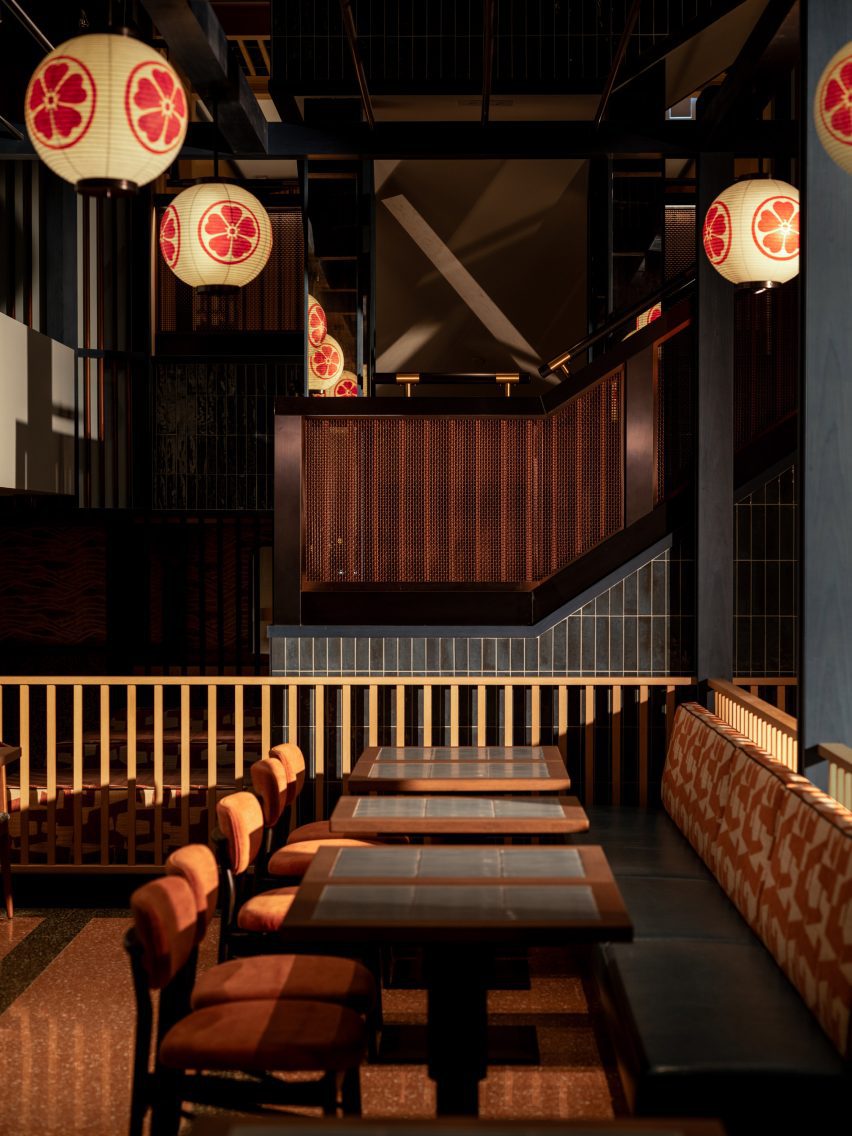
The space is designed to have a casual atmosphere, with a series of open booths and long communal banquettes, upholstered in blue leather and patterned orange fabric.
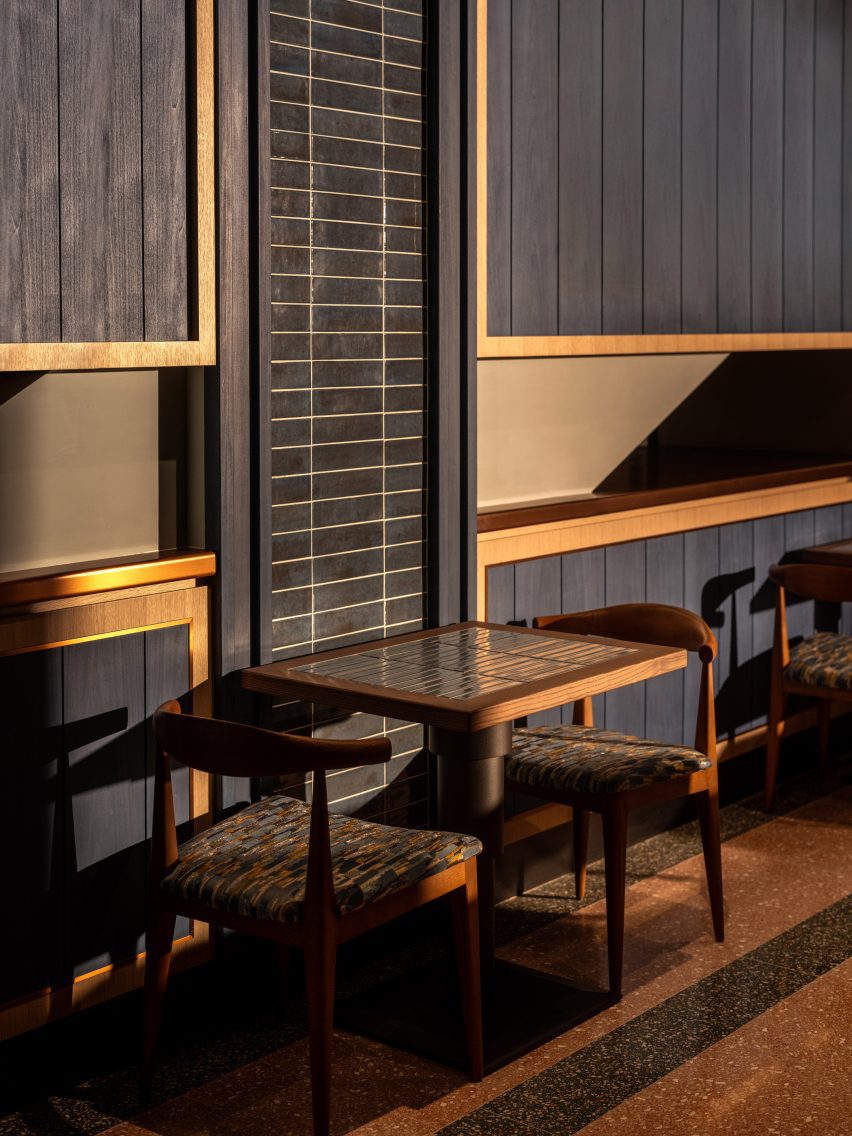
Some of the tables and structural columns were inlaid with blue tiles in a subtle nod to the ceramic building facades often seen throughout Tokyo.
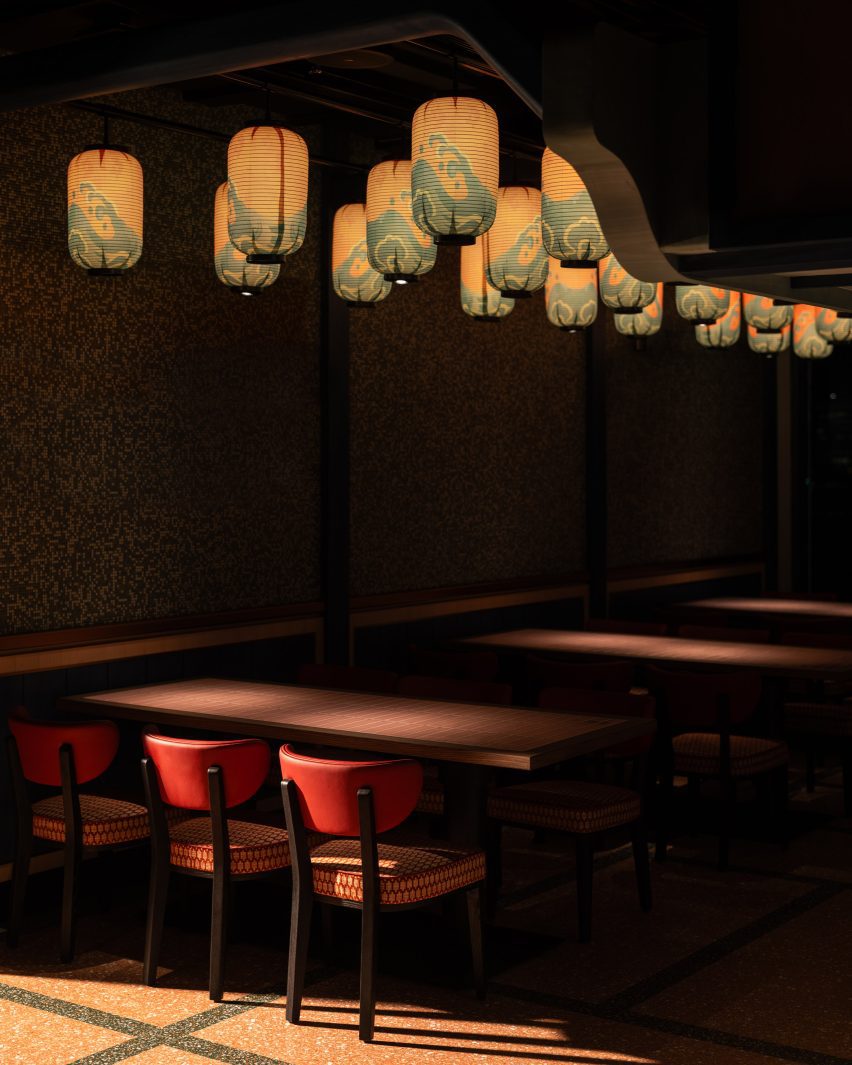
Lanterns – a common fixture outside Golden Gai establishments – are suspended from Genso's ceiling. These were specially designed by Singapore-based studio Foreign Policy and adorned with red flower graphics.
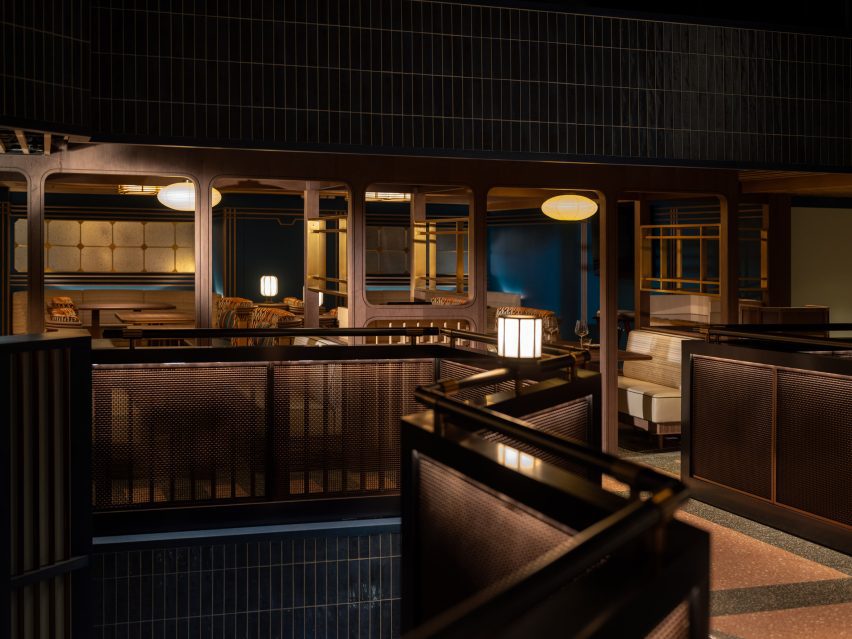
On the restaurant's upper level is a dining space called Izakaya, which is meant to offer a slightly more refined experience.
Much like the floor below, Izakaya features a mix of upholstered furnishings and more hanging lanterns, except the ones here feature a wave-like motif.

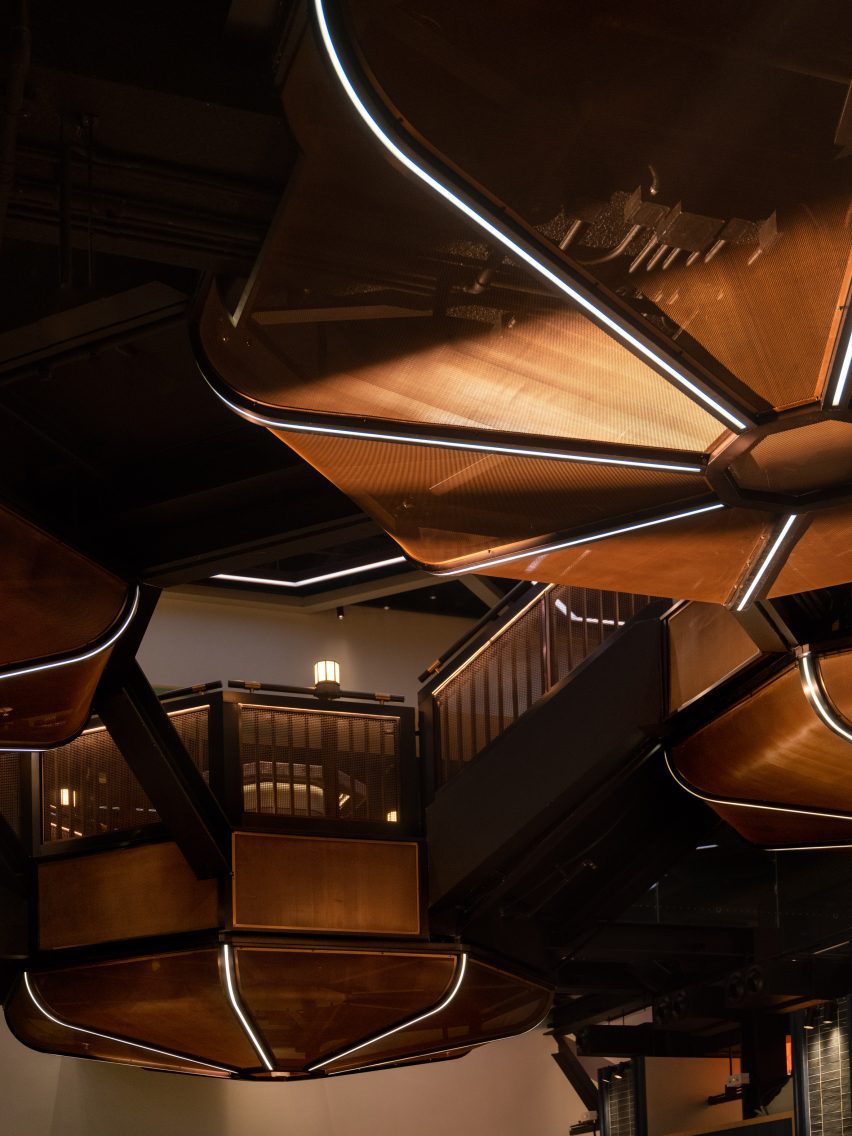
A network of stairs and narrow walkways enclosed by bronze metal balustrades branch off onto interior balconies housing different seating areas. The underside of these balconies is illuminated with strip lights, so they appear as "neon floating islands" to diners in the food hall beneath.
The lighting is also meant to be reminiscent of the radiant signage that can be seen throughout the streets of Golden Gai.
Hong Kong has a number of other striking food and drink spots. Among them is Peridot, which has a lime-green interior dotted with more than 20,000 tiny lights, and Artifact Bar, a speakeasy-style venue designed to emulate underground water reservoirs.
The photography is by Common Studio.