Gregory Orekhov places black fabric in "endless white surface" of Utah salt flats
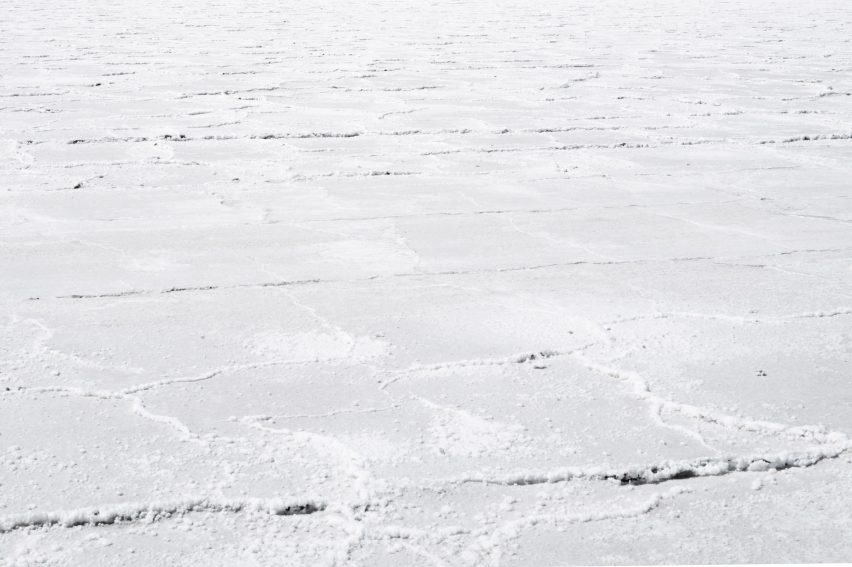
Artist Gregory Orekhov has created the Shadow of Light artwork by installing a black-fabric square at the Bonneville Salt Flats in Utah, USA, to show the immensity of the geology.
The temporary Shadow of Light artwork was installed and photographed in just a few hours at the Bonneville Salt Flats – a federally administered site where salt was formed by the evaporation of an ancient lake.
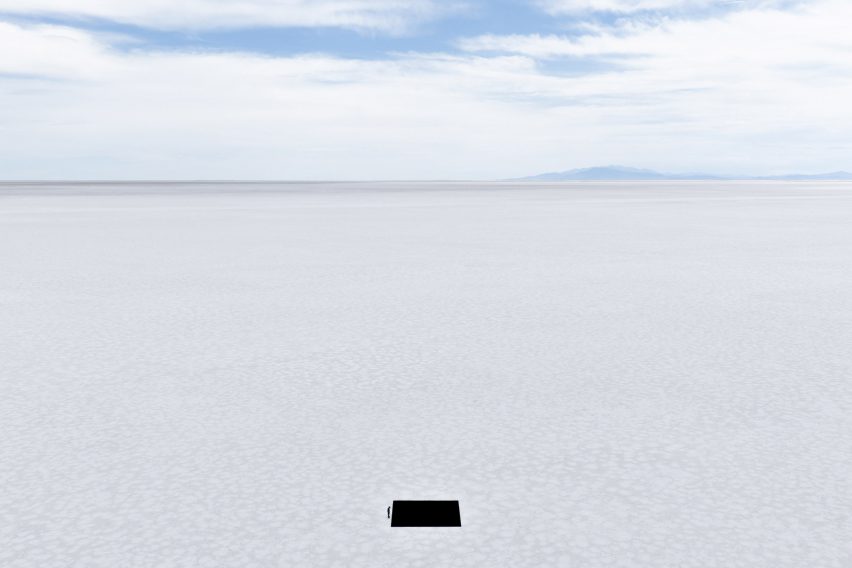
"When I first came to Bonneville, I was struck by its seemingly endless white surface," Orekhov told Dezeen.
"That experience became the impulse for Shadow of Light. The work was conceived specifically for this landscape. For me, it couldn't exist in quite the same way anywhere else."
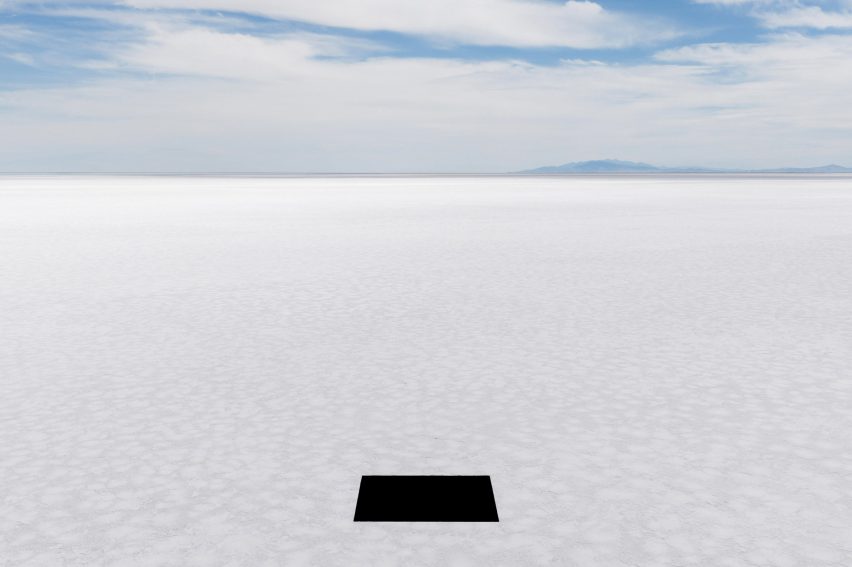
To create as much contrast as possible, Orekhov ordered specialist fabric from Japan that captures 99.9 per cent of visible light and is used mostly in photographic devices that need to reduce light reflection.
The fabric was arranged in a 50 by 50 foot (15 by 15 metres) square. A stainless steel cable was inserted inside to hold down the fabric without needing to anchor it into the ground.
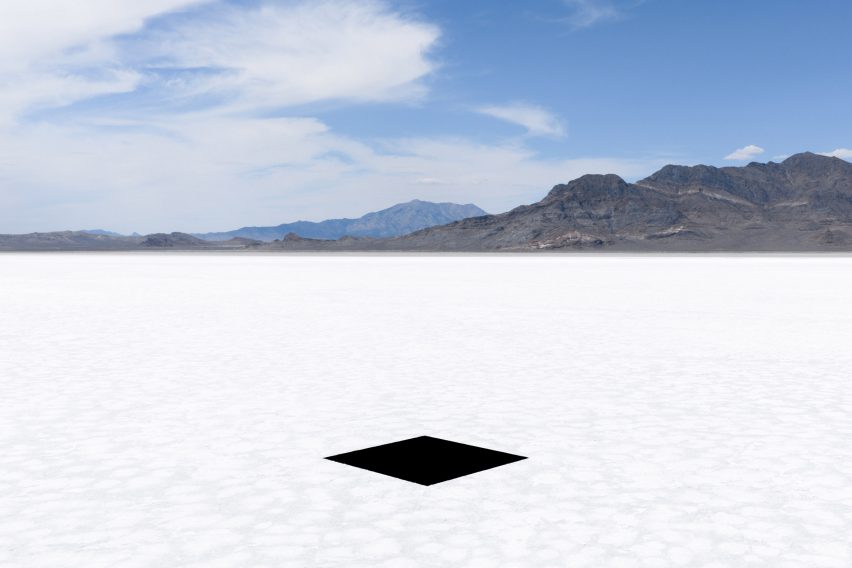
These cables were held to the fabric by pockets sewn into the underside.
According to Orekhov, he and his team waited for five days for the perfect conditions, wind speeds being a huge consideration in the flat, treeless environment.
The result was an "ephemeral" installation that "existed in the landscape only briefly", according to the artist.
Following in the land art tradition, Shadow of Light recalls the framing of the sky in American artist James Turrell's Sky Spaces, but in negative, with the black square putting the landscape itself into perspective, especially when seen from above.

"That is what draws me to land art," said Orekhov. "I'm not interested in physically transforming the landscape or making it submit to the work.
"I'm interested in introducing a single human gesture and seeing how it changes our perception of the entire space around it without changing the landscape itself," he continued.
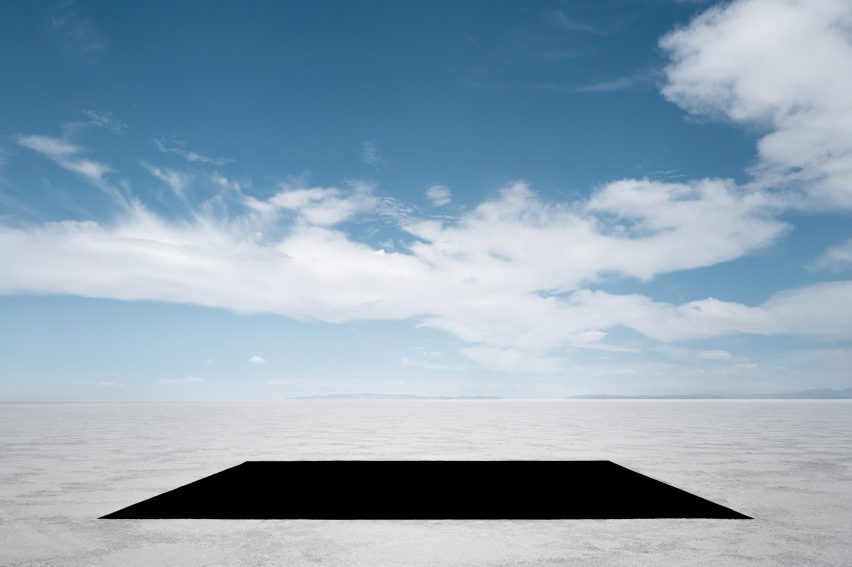
Orekhov also mentioned a more personal note to the work, with the "mark" on the landscape putting his own presence and actions into perspective.
"By creating a brief mark within a space so much larger than myself, for a moment I become aware of my own presence within this immense world," he said.
"For me, nature is not a backdrop or a material but a co-author of the work."
"I can conceive a project and prepare every detail, but I cannot force it to happen," he added. "The wind, the light, the surface, and the sky remain beyond my control. Sometimes I simply have to wait for the moment when nature itself allows the work to appear."
Other recent landscape interventions include a sculpture on the shore of Finland for fish to enjoy after sea levels rise and a monumental soil installation at the Barbican by Delcy Morelos.
Photography and video by Gregory Orekhov. Video editing and score by Nikita Subbotin | Studio Landon.