Shahar Livne's The Devil's Milk furniture explores how rubber "shaped human culture"
Designer Shahar Livne has created The Devil's Milk, a collection of designs that investigate rubber production and its history of violence and abuse.
The designs, which Livne created over two years, include a scale, a cabinet and a bench, made from different types of rubber.
"The concept behind the Devil's Milk project was to investigate the history of rubber production and its material, political, and social cultures," Livne told Dezeen.
"Rubber production and extraction have a long history of abuse and violence, and that is almost forgotten when we see rubber in everyday context," she continued. "Rubber is an essential part of many products and technologies; it has shaped human culture far more than it gets credit for."
Livme sourced the natural latex for the scales and the rubber used for the cabinet from Indonesia, while the bench was made from synthetic rubber used in the film industry.
"During the two years of working on the project, I found many parallels between the human body and the botanical body of the rubber tree," she explained.
"I focused on the idea of botanical kinship – the relationship, indigenous knowledge and spiritual connections humans have with rubber, in this case natural rubber from rubber plants, but also the place of synthetic rubbers in pop culture and fetish, such as in the movie industry."
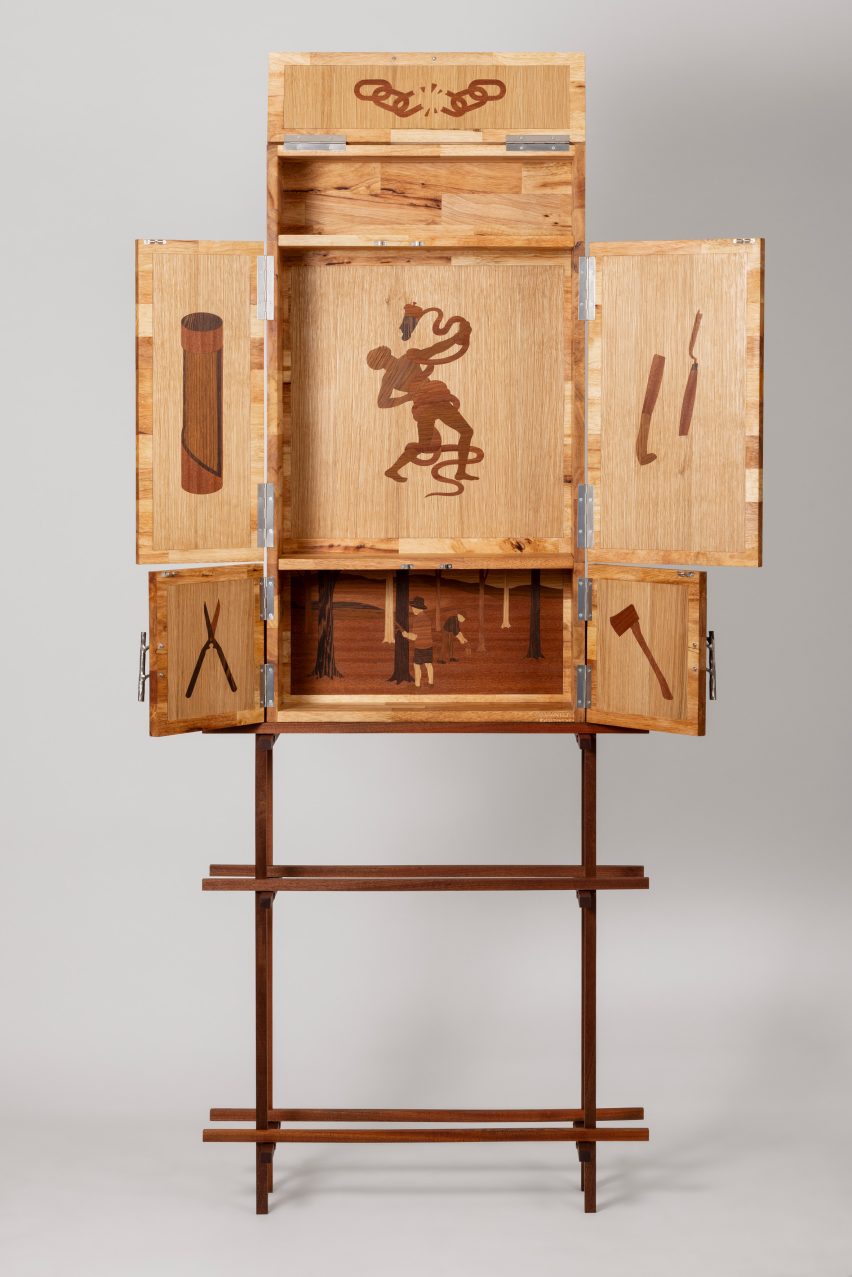
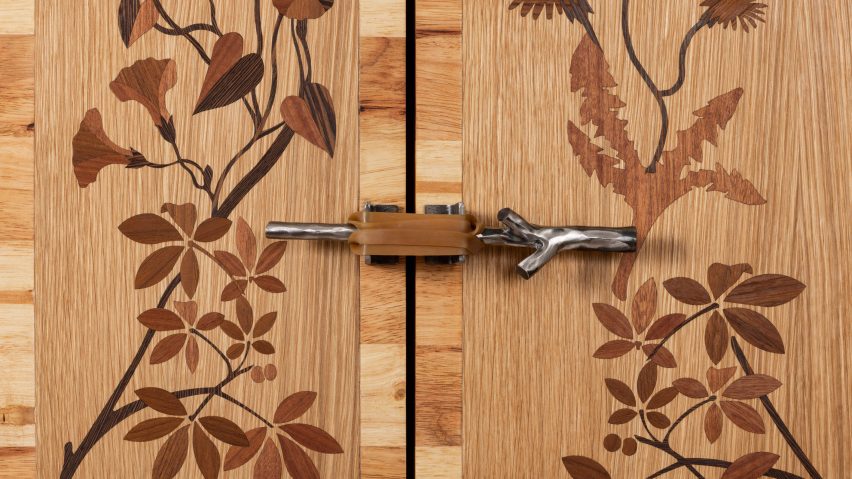
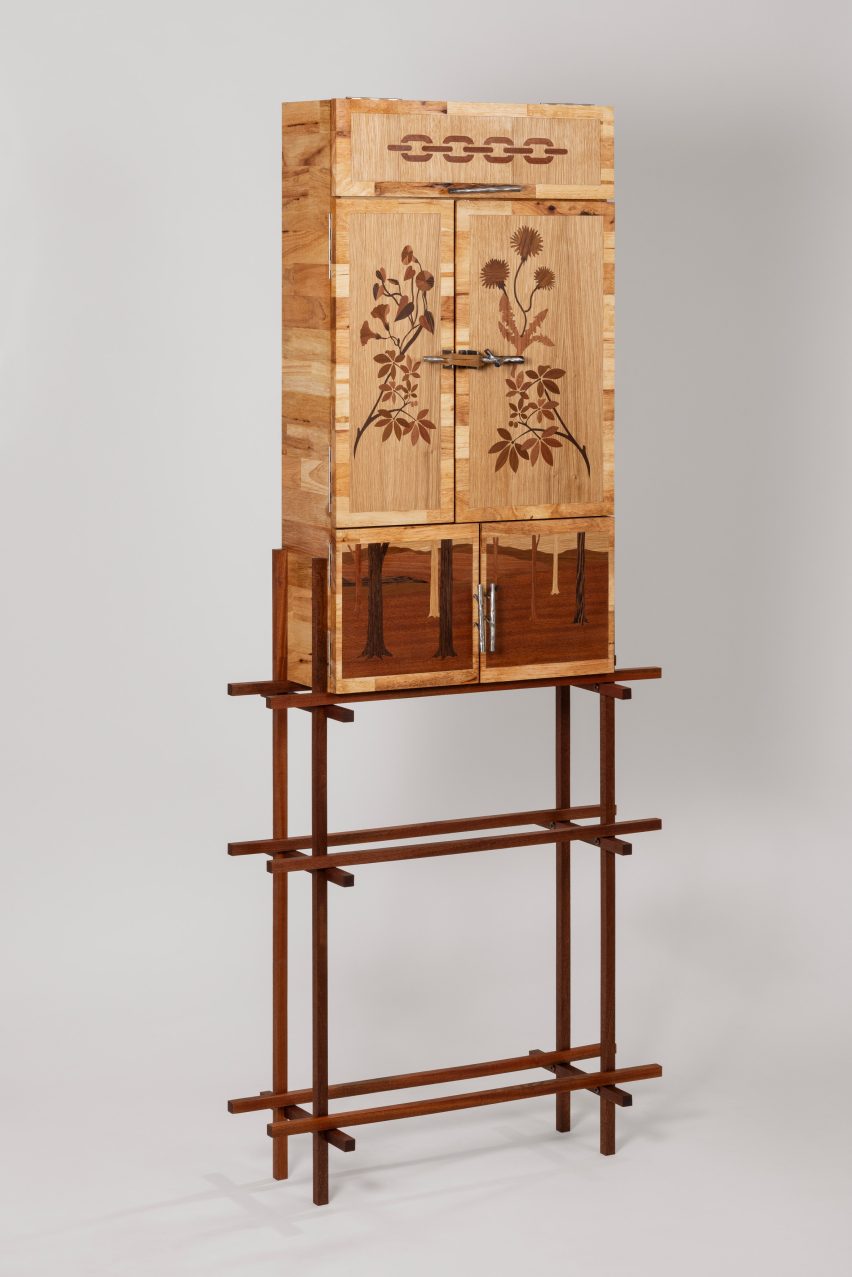
All of the pieces were designed to involve rubber in different ways. For the cabinet, Livne used wood from the bark of the rubber tree Heave Brislius, which is considered cheap wood and has many imperfections.
"I wanted not only to highlight and elevate the expressiveness of the scars and character of the wood in the furniture piece; it is also symbolic," Livne said.
"The wood inlays decorating the cabinet are made of European, African, Indonesian and South American wood species – all places where rubber wood was extracted from or exported to, and by embedding them in the rubber wood, they 'colonise' it."
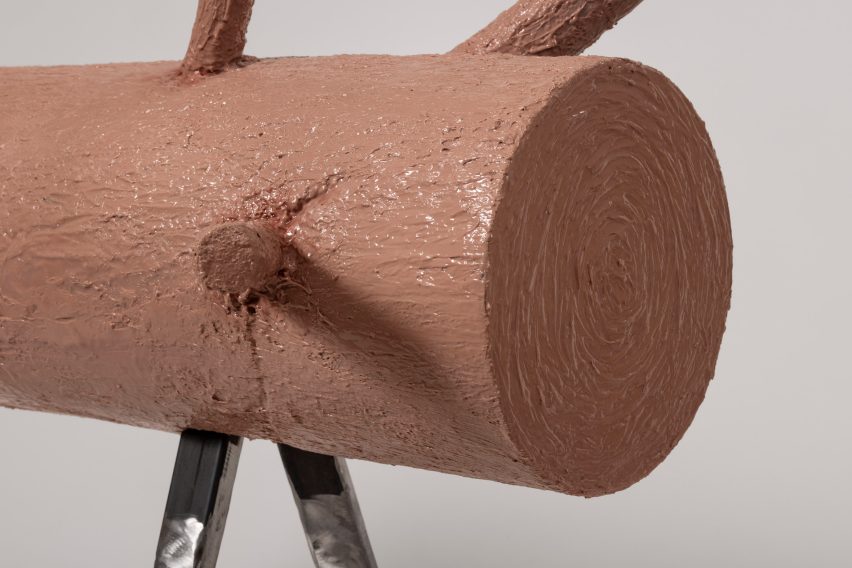
For the bench, which was designed to resemble a log, Livne chose a synthetic engineered rubber material. This was designed to mimic human skin and is used in special effects for props and costumes.
"I used the technique of painting and creating textures in the rubber to create a transition between a human and a tree," Livne said.
"It is inspired by the idea of botanical kinship, the philosophical and ecological world-view that recognises plants as our biological and spiritual relatives rather than mere resources."
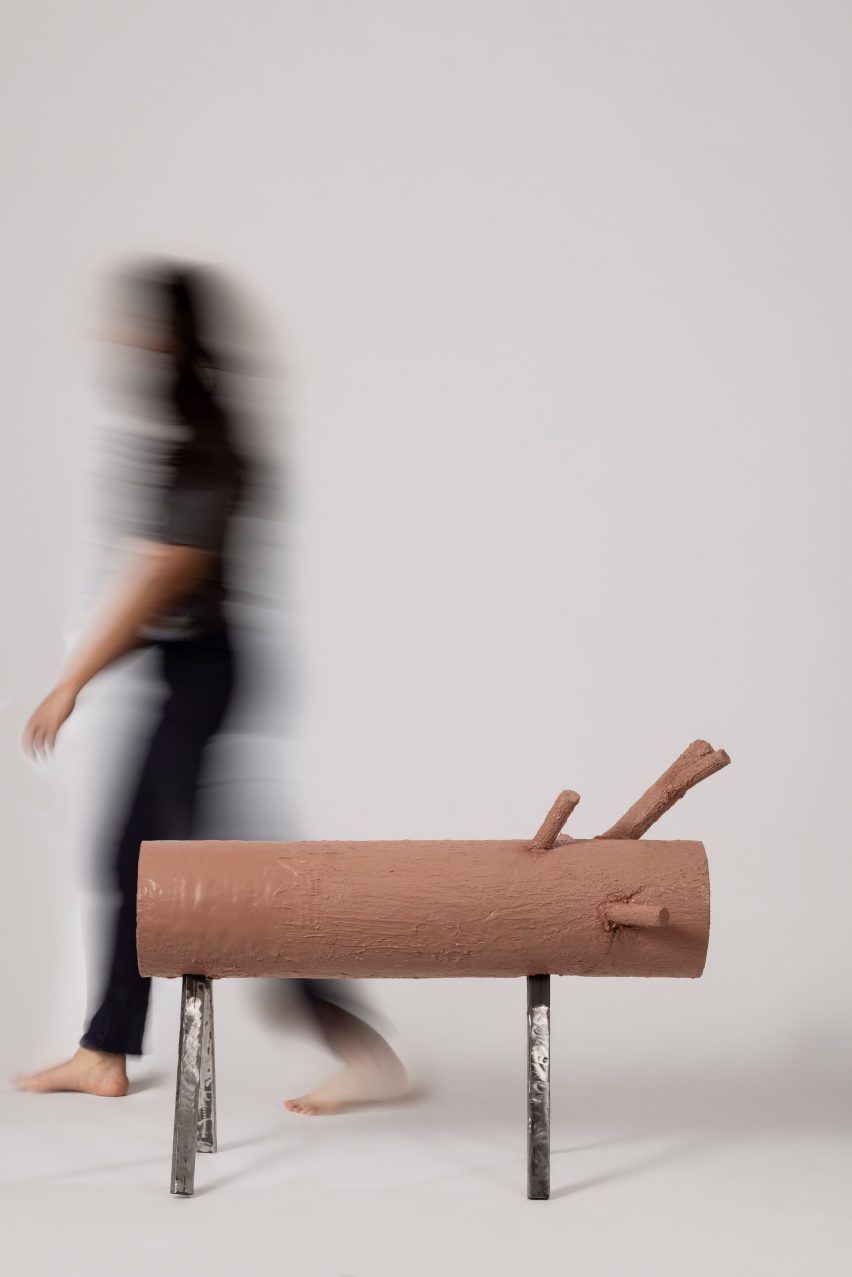
She aimed for the piece to challenge "the colonial 'plant blindness' of Western-centric hierarchies that view nature as passive or inferior," Livne said.
"In the many places where the rubber tree grows naturally, such as in the Congo, Borneo and the Amazon, the relationship with the forest is historically spiritual," she continued.
"It is a living space where trees hold divine forces. Here, collecting from the forest is not an 'economic activity'; it is a social interaction with a conscious, sacred environment."
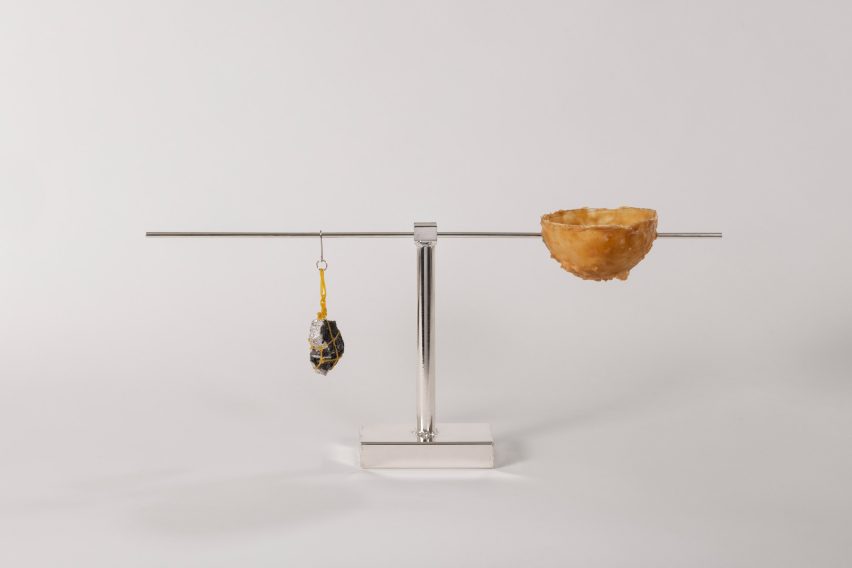
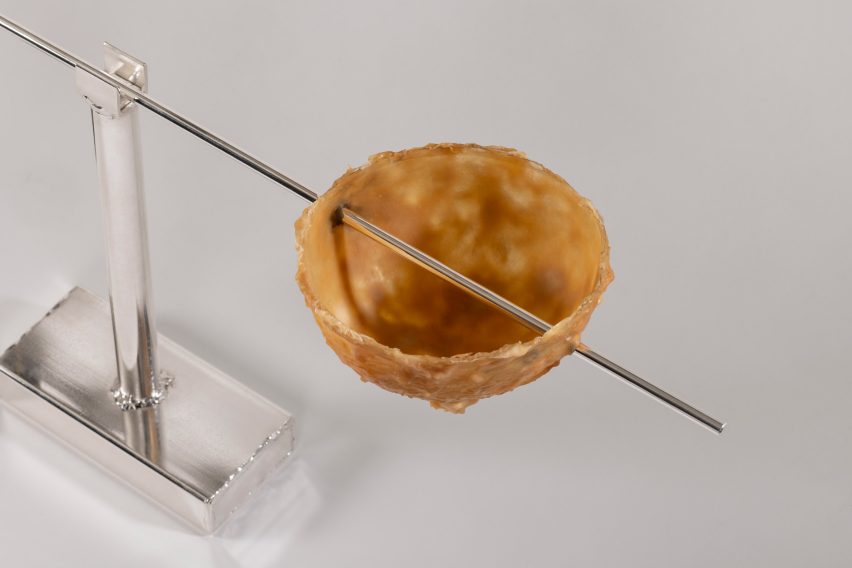
With the scales, Livne wanted to symbolise the economic force of rubber, which she says at one point was compared in its value to precious metals.
"It was aggressively extracted to fuel global industrialisation during the rubber boom in the 19th and 20th centuries," Livne said.
"However, this immense wealth relied entirely on brutal exploitation; raw yields were strictly weighed on scales to enforce strict labour quotas and control Indigenous populations, deforming their bodies."
The title of her project comes from author John Tully's book The Devil's Milk: A social history of rubber, which Livne used as part of her research.
She is currently working on a publication based on her research together with curator Yev Kravt and design studio Droog, who hosted a symposium on rubber with Livne last year.
Livne was named emerging designer of the year at Dezeen Awards 2020 and has previously designed fossil-like jewellery from ocean plastic and trainers from slaughterhouse waste.
The photography is by Barbara Medo.