


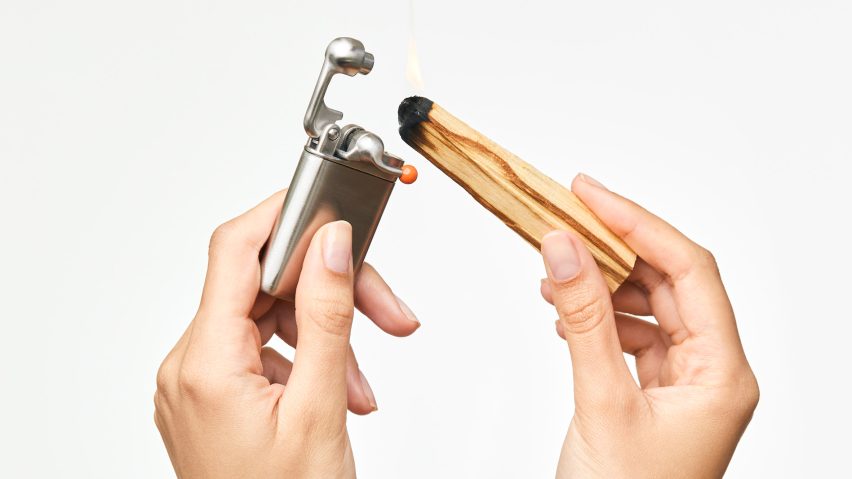
Brooklyn design studio Craighill has designed the Swingtop Lighter with a swinging mechanism and snuffer as part of the brand's brief to pay attention to overlooked everyday objects.
The Swingtop Lighter is made from die-cast stainless steel in Craighill's Brooklyn workshop.
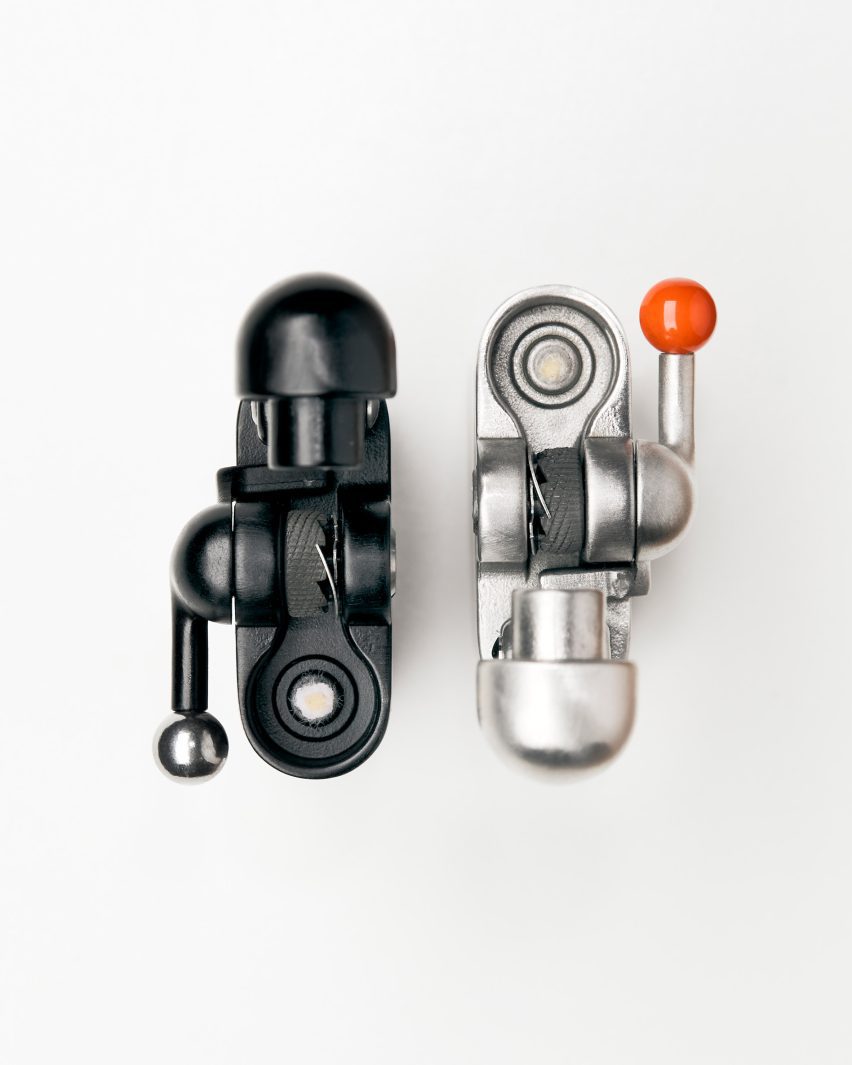
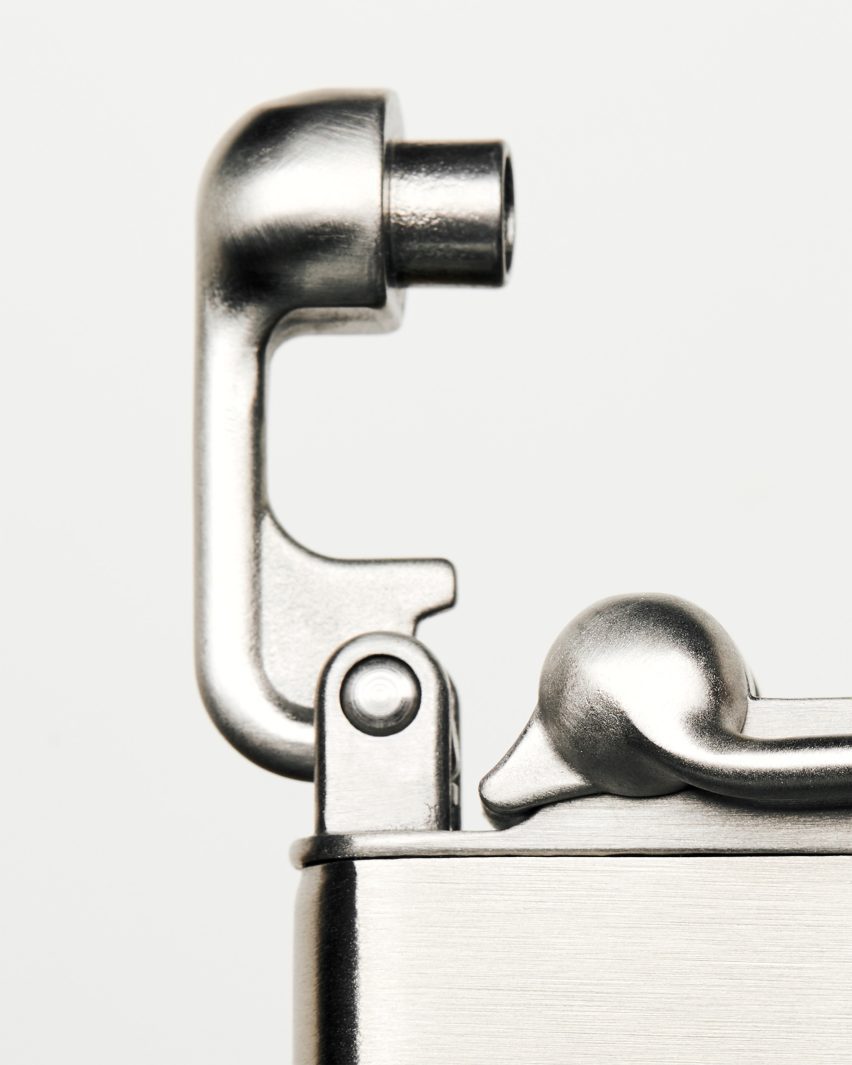
It features a lever that is pressed down to activate the flint mechanism while simultaneously lifting a set-in-place snuffer. The flame stays lit on the wick until the snuffer is swung back onto the flame, extinguishing it.

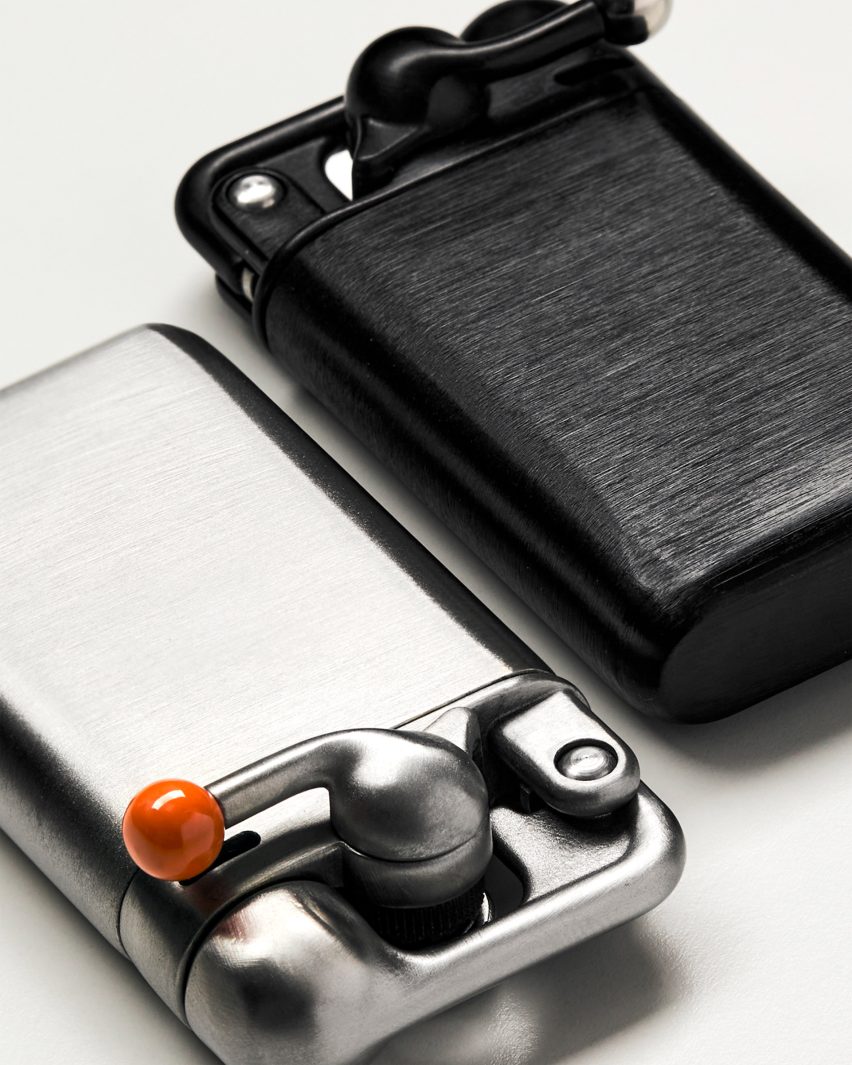
It was designed so that users can refill the fuel well, wick and flint. Two colours, a matte black and silver, were created for the project, with the silver variation featuring a playful ceramic ball at the top of the lever mechanism.
Seeing contemporary lighters such as the standard Bic as difficult to use, the design team at Craighill looked to historical designs, where mechanisms were both more ergonomic and playful than the contemporary disposable plastic variety.
According to Craighill co-founder Zach Fried, this, as well as many other of Craighill's redesigned objects, are meant to last longer and to reach for the feeling of the well-made that many older products had. Though pricey, it was designed to last for years.
"In a moment of planned obsolescence that is very real, we take the path of pursuing material quality," he said.
"We want to bring things forward that feel timeless, but also make sense in this present moment from a visual culture standpoint, and then to execute them in a surprisingly satisfying way, where so many times the things that we interact with daily are disappointing."
Craighill created a large prototype to demonstrate its design
The company has become known for its explanatory videos. For the lighter, it posted videos on Instagram featuring a massive prototype, explaining each of the design features and the problems with contemporary lighters.
It allowed the brand to connect the audience to details, while marketing the products and introducing followers to the studio's more novel designs, such as a glasses holder.
"Taking these very commonplace objects that people are familiar with, and getting very zoomed into some specific interaction or some specific detail that we on the design team kind of obsessed over provides this inroad for people to connect to [design] because it's such a ubiquitous object," said co-founder Hunter Craighill.
"But it's not reimagining everyday objects, but it's a little bit more expansive than that."
Craighill added that while the brand focuses on function, it prioritises playfulness as well, and the videos have a sense of whimsy with the oversized prototypes and personal engagement with the designers.
"I feel like we are like very rigorous in a lot of the design work, and then oftentimes there will be some kind of like wink or twist," said Hunter Craighill.
In the video's comment section, people point out and engage with the designs, sometimes critiquing them or pointing out the datedness of the mechanisms.
Craighill and Fried said they welcomed the debate, noting that many people seemed to resonate with the attention to detail.
"And sometimes the purists do come for us on the internet to say 'this already was a thing'," said Fried. "We know that. We're adding to it, hopefully, and are in conversation with an idea that we find really compelling."
Hunter Craighill agreed, adding that he knows when it's "time to exit the comment sections."
The lighter was launched with the Whitney Museum of Contemporary Art.
Other everyday objects rethought for the present include an exhibition during 3 Days of Design of future-looking cutlery and a capsule collection by Massproductions.