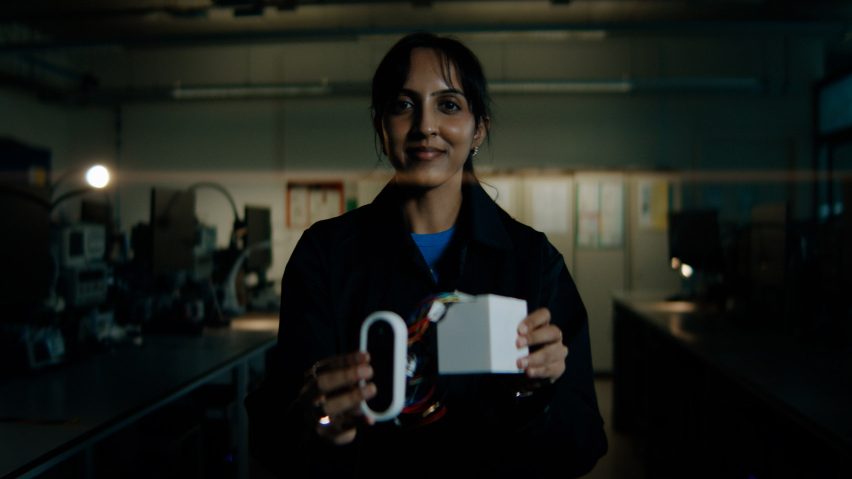
AI-powered alarm for deaf people wins UK James Dyson Award
Design student Gargi Agrawalla has won this year's UK James Dyson Award with a device that uses artificial intelligence to alert deaf and hard-of-hearing users of important sounds like knocks or fire alarms, which they might otherwise miss.
More than 500 samples were used to train the SIVO.GO system so it can recognise these noises and translate them into vibrations and flashing lights, rousing the user without the need for sound.
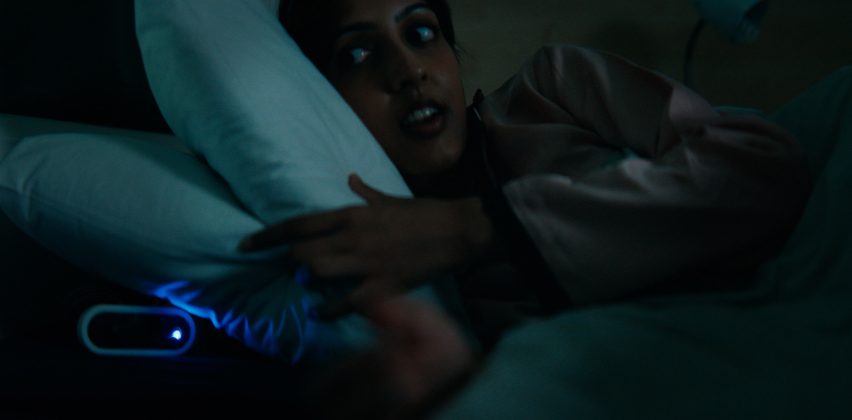
To design the alarm, the Loughborough University graduate drew on her own experience of being born profoundly deaf before receiving a cochlear implant at age 12. Although the implant allowed her to hear sounds for the first time, she discovered that its external sound processor had to be removed when sleeping or showering, which left her feeling uneasy in foreign environments.
"SIVO.GO came from my own experience as a deaf cochlear implant user and the anxiety I felt when travelling or staying somewhere unfamiliar," Agrawalla told Dezeen.
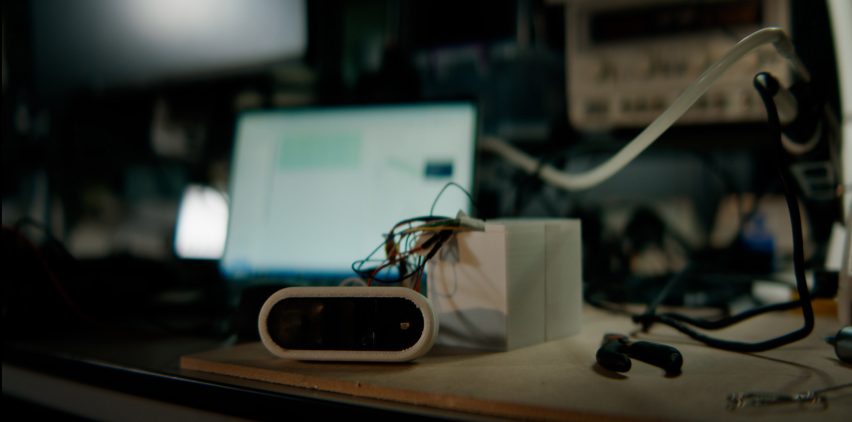
Existing alarms for the hard-of-hearing tend to be bulky and expensive, the student found.
Often, they are also geared towards only one particular sound like fire alarms or a crying baby, requiring users to pack a whole arsenal of gadgets when travelling.
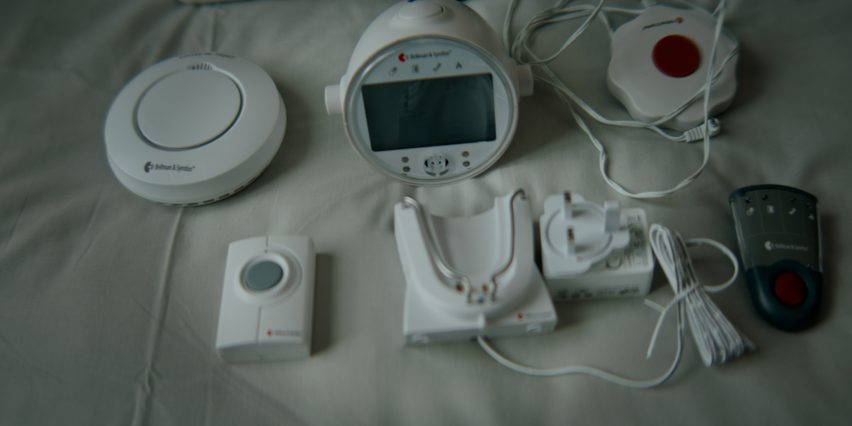
"As a cochlear implant user, I already have to think about equipment such as chargers, a dry box and waterproof accessories, so adding several more safety devices creates extra stress," Agrawalla said.
"I wanted to reduce that burden by creating one portable system that could cover several important alerts and give deaf and hard-of-hearing users more reassurance when away from home."
To achieve this, SIVO.GO uses an AI model trained on more than 500 sound samples, allowing it to distinguish between a range of different noises, from door bells to alarms.
This model is run locally on the device, rather than through Wi-Fi or the cloud, preserving user's privacy while ensuring reliability even in the absence of an internet connection.
To detect knocking or forced entry, the sound processor is also supported by a separate vibration sensor that can be attached to a door.

"During testing, door knocking caused too many false positives because the AI could confuse it with similar sounds such as footsteps or tapping on a table, even after adding more training samples," Agrawalla said.
"To solve this, I created a separate optional vibration sensor that can be mounted discreetly behind a door."
As the winner of the UK James Dyson Award, the graduate will receive a price fund of £5,000 to support the next stages of product development – improving reliability, expanding trials with deaf and hard-of-hearing users, and working towards certification and pilot manufacture.
"The same type of accessible alert system could also help people with tinnitus, neurodiverse users, exhausted new parents, older users, and even hearing people in situations where sound alone may not be enough," Agrawalla said.
The student will also be enter into contention to be crowned the international James Dyson Award winner, which in the past has included a gaming-inspired Parkinson's keyboard and an anti-hair loss helmet for chemo patients.