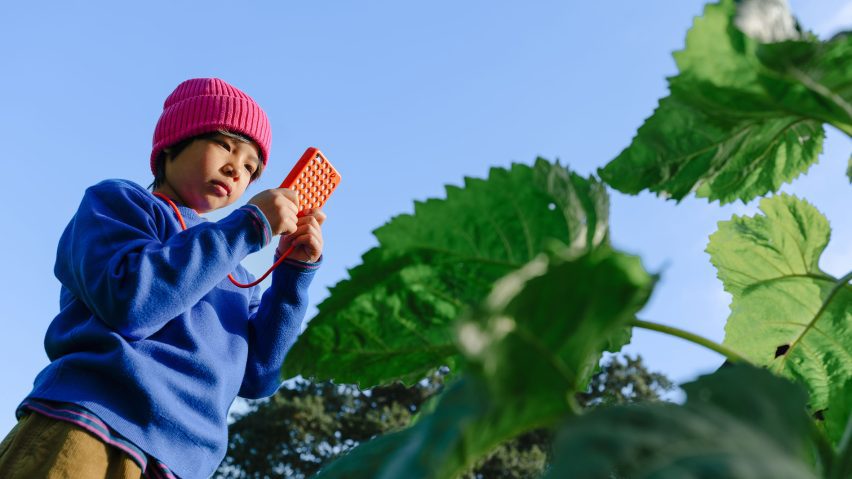
Freckle phone aims to send kids outside to play and engage with the world
Start-up Freckle has created an AI-powered mobile phone for kids, designed around exploration to provide a break from parental restrictions and surveillance.
Developed with design studio Body Shop and targeted at kids aged seven to 13, the Freckle phone has features that encourage kids to spend time outdoors and observe the natural world, alongside more expected communication features like texting and calling with approved contacts.
There is no social media, web browser, app store or anything that could commonly be considered addictive. Instead, there is a suite of new features on its custom ClayOS operating system that are designed to appeal to kids without being unputdownable.
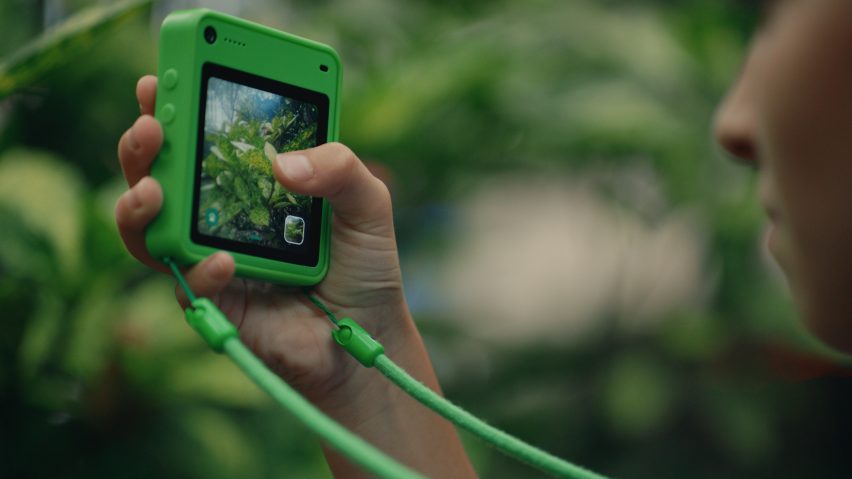
A Quests app lets kids go on ready-made or parent-invented missions, such as finding five different bugs in the park, while a Discovery Camera lets them take photos and find out information about the insect, animal, plant or object they've snapped.
Other apps are centred on story creation and answering kids' questions, while practical features like kid-friendly maps and payment through pre-loaded credit to let them navigate neighbourhood walks and bus trips on their own.
There's also a simple music player and that eternal childhood favourite: walkie-talkie mode.
Freckle was founded by Sam Terris, who previously founded plant-based food company Simulate, and its backers include Reddit co-founder Alexis Ohanian and his venture-capital firm Seven Seven Six.
The particular problem Terris wanted to solve is the lack of independent activity for kids, which denies important developmental experiences of exercising agency, managing risk and problem-solving.

"There's this huge chasm between what we think would really help a kid thrive and self-actualise in today's society and the actual infrastructure designed to do that," said Terris, who began thinking about Freckle while his wife was pregnant with their first child.
"We've seen that this loss of independence for kids is a primary driver of a lot of the anxiety and depression that these younger kids are facing today. Freckle is really an exercise in what would it look like to actually create a device that empowers kids."
Freckle's features were developed extensively with kids, and have a look, feel and functionality that they find appealing. The quests and photo library, for instance, are like "a real-life Pokedex" to inspire collection, Terris says.
There are safety features and guardrails, but parents are encouraged to loosen the reins as much as kids are nudged to grasp them.
"Most products in this space are built around utility for parents, so they tend to over-index on surveillance and control," said Terris.
"We believe the best way to give kids more independence is to take them seriously. Right-sizing technology doesn't have to mean stripping it of joy."
Parents get an alert if their kid leaves a preset "safe zone", so parents do not need to constantly monitor their location, and they'll be informed if a child mentions a sensitive topic like bullying but won't receive a full activity log.
AI underpins several of the apps – all of which can be optionally removed – but there is no open-ended chatbot and it is not intended to be an AI "companion" of the kind that is sometimes criticised for encouraging over-attachment or limiting play.
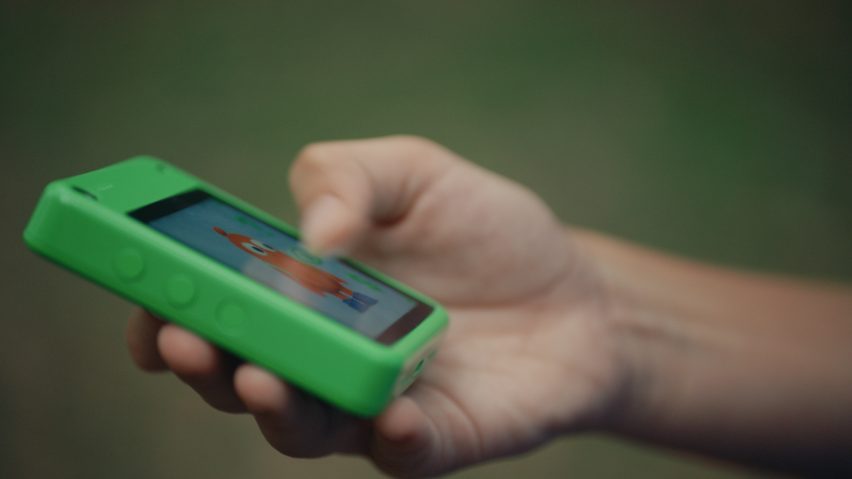
Instead, there are three AI-powered tools with a narrow purpose and corresponding characters: a wizard that can answer questions, a classifier that uses computer vision to identify objects and critters, and a storyteller for building interactive tales with family or friends.
"It's really easy to set effective guardrails now," said Terris. "If they ask about anything that's not really information dense, the product basically always ushers them back to a parent or a friend. It's not really there to continuously talk about your day."
Freckle also promises that the company will respect children's privacy, with a policy that will require verifiable parental consent, limited windows for data retention, and a prohibition on data use for training AI models.
The company worked with a 3D animator on the character design, based on clay models, for ClayOS, and with Body Shop, a new studio whose founders' past projects include collaborating with Modem on the Dream Recorder and 1X on the Neo robot, for the industrial design.
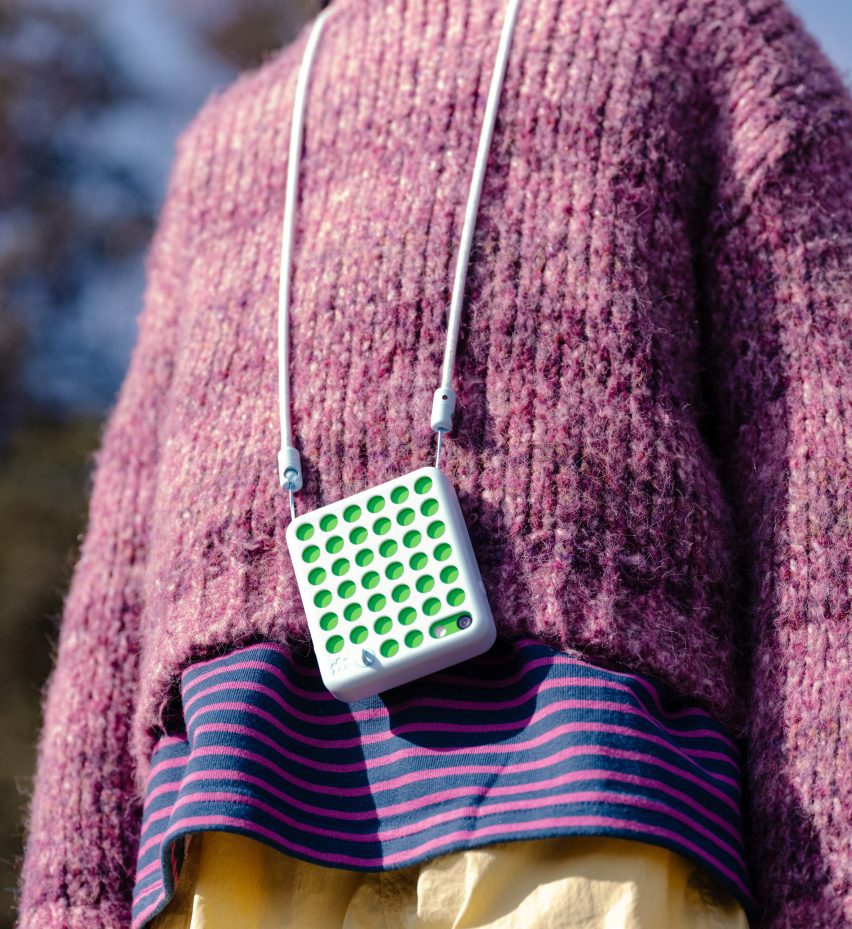
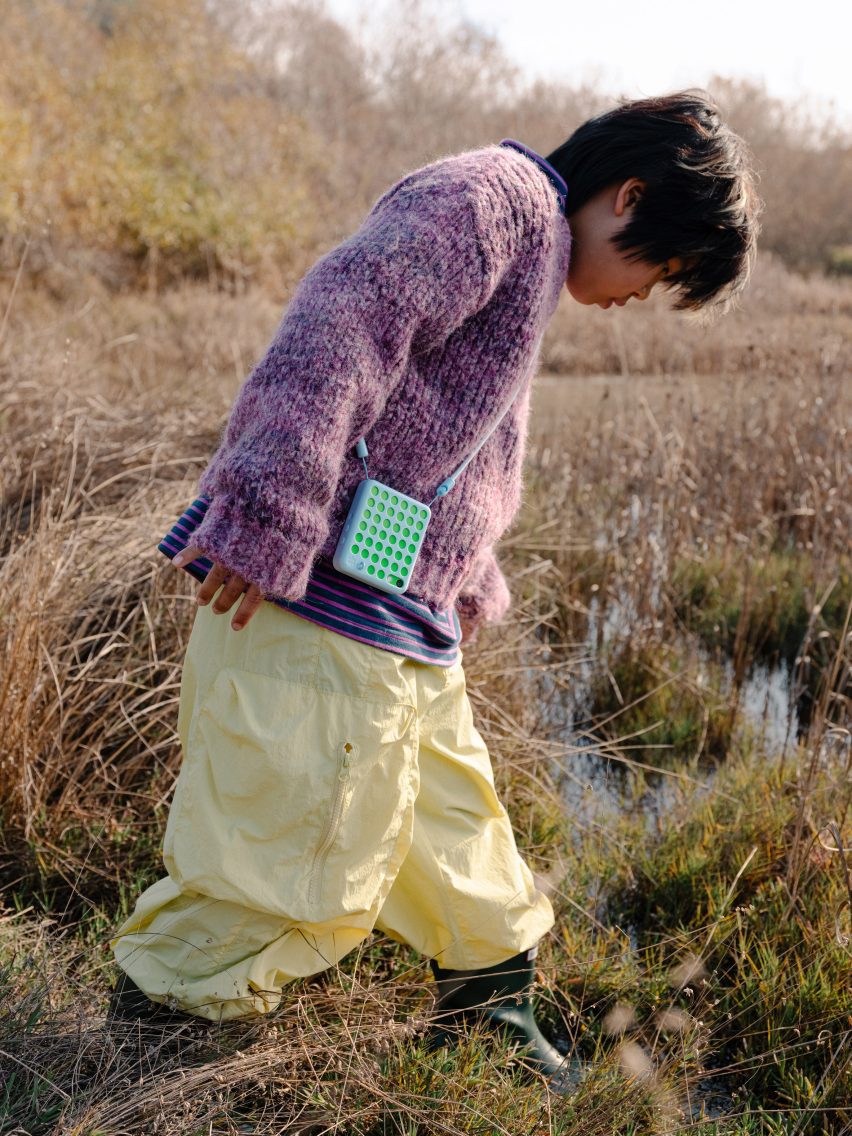
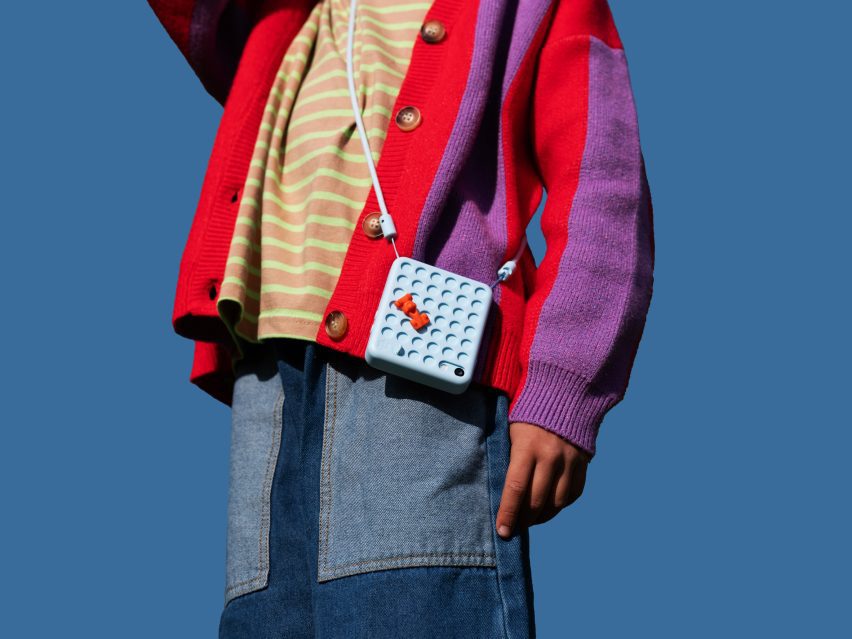
Body Shop co-founder Calvin Lien told Dezeen that the phone's form factor evolved to fit ideas of outdoor exploration, with a rugged case and a lanyard to hang around the neck "like a pair of binoculars you take outside to explore".
Terris cited Apple's flawed but visually impactful phone case for the iPhone 5C and Crocs Jibbitz as inspirations for Freckle, which can be accessorised with charms, while Lien named "the grounded tactility of Play-Doh, the modularity of Lego, and patches and pins from girls and boy scouts" as additional references.
Freckle is launching initially in the US and expects to begin shipping units from December 2026.