


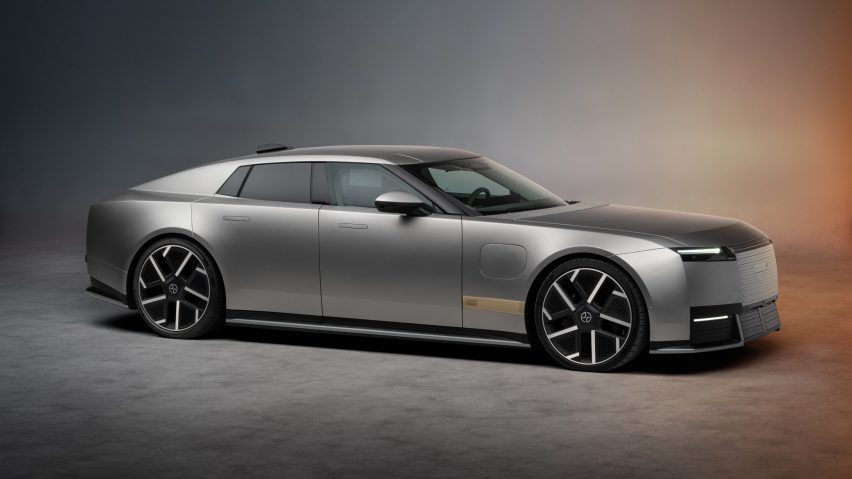
British car brand Jaguar has unveiled it electric Type 01, which has thin headlights, a long bonnet and rear-leaning stance to set it apart from "homogenous" EVs and mark a comeback for the brand.
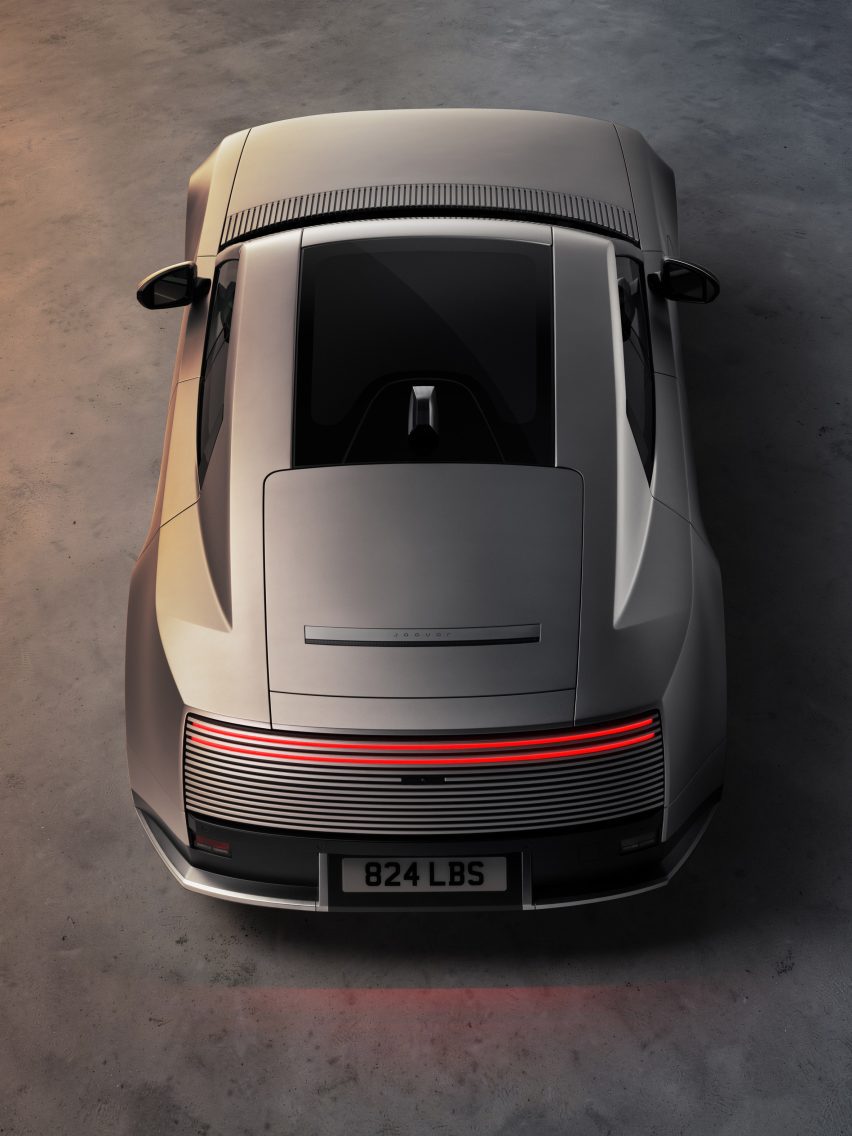
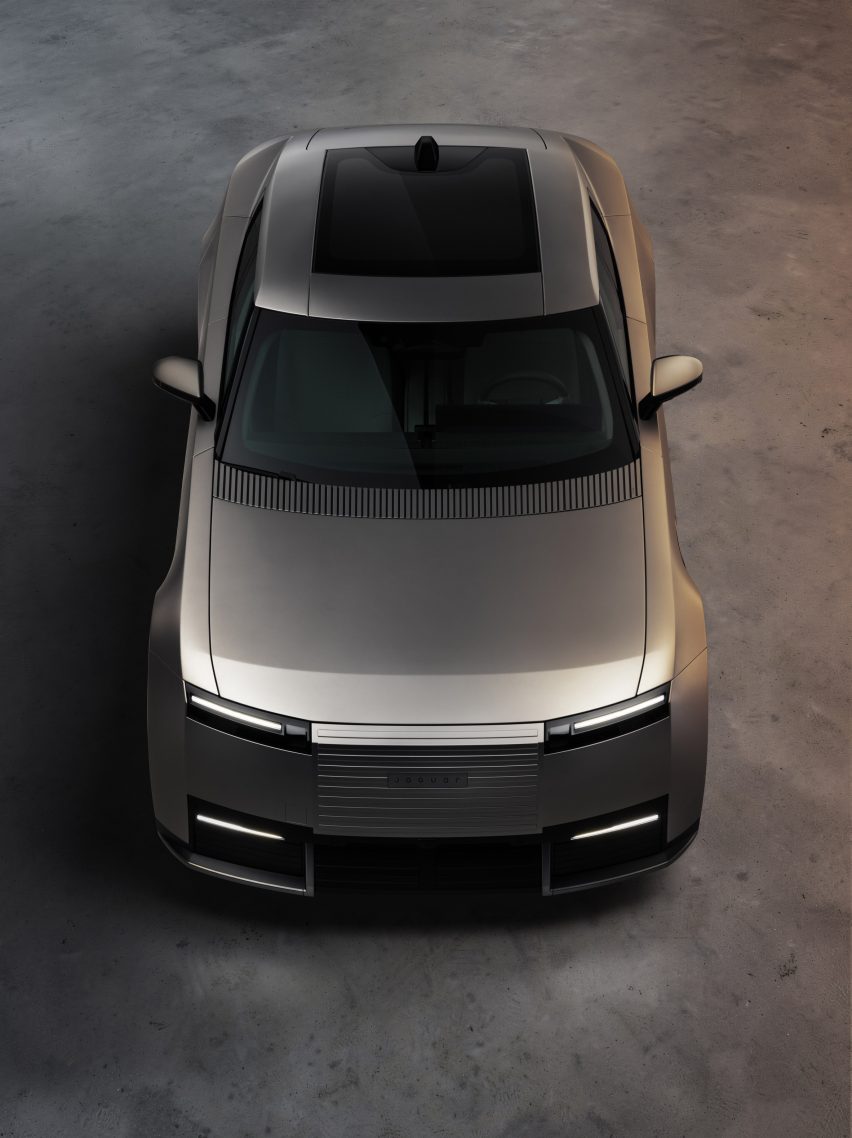
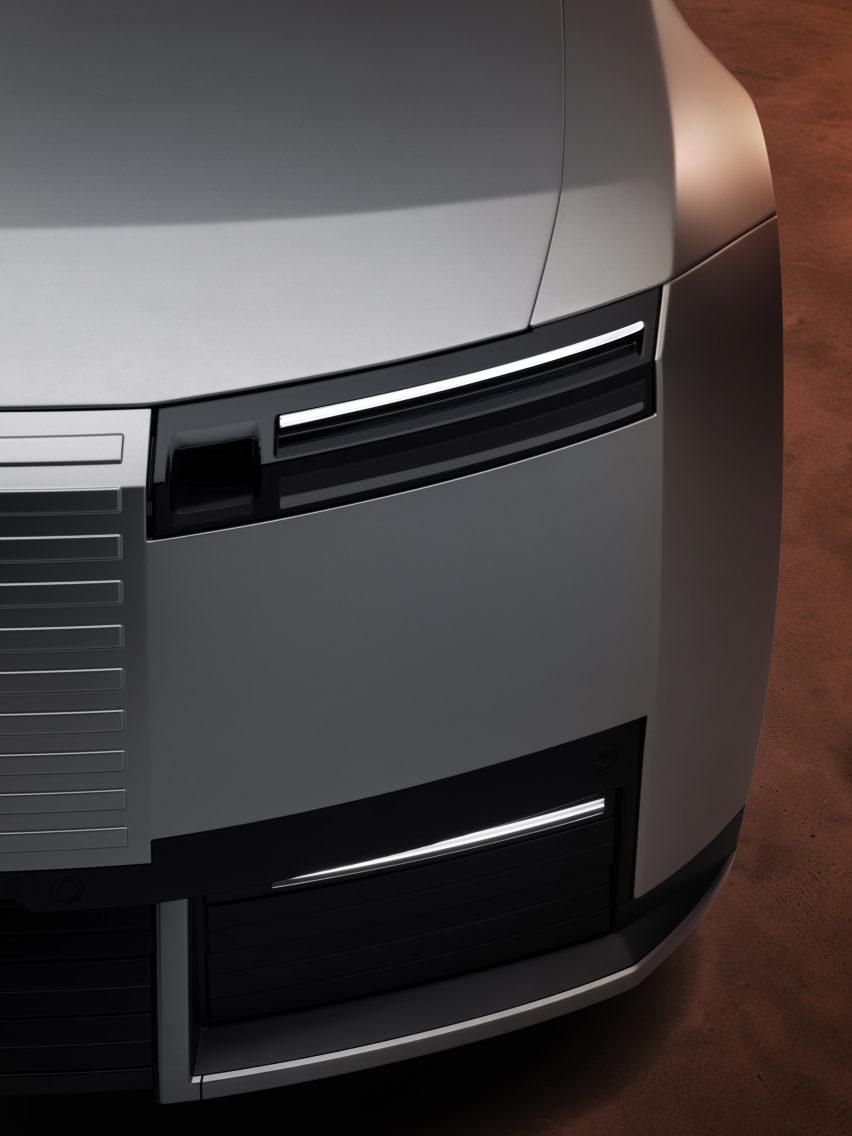
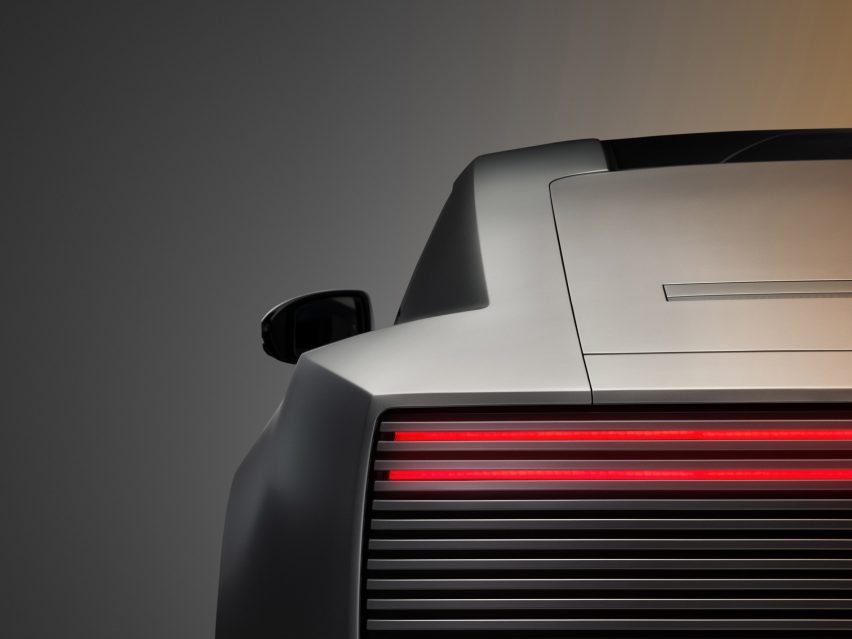
Revealed today at an exclusive launch event in New York, the Type 01 has a four-door aluminium body with a long bonnet and two sets of thin headlights on its grille. It lacks a rear window and has strong body lines that extend from the so-called Impossible Panel on its rear quarter.

As Jaguar's second fully electronic production vehicle, Type 01 both pays homage to and departs from the Jaguar legacy, inaugurating "a new era" for the manufacturer.
It is a production version of the much-discussed Type 00 concept car, which drew much attention in 2024.
"Jaguar's back," Jaguar managing director Rawdon Glover told Dezeen at the launch event.
Glover said that the vehicle was designed to be a "Jaguar first", with the electric aspect secondary. According to Glover, this approach pushed the car to be distinct from other electric vehicles on the market.

"It's Jaguar first, and it's just enabled by its EV powertrain," Glover said.
"I think the classic EV fell into quite a homogeneous type of design. Having a design and an aesthetic that really connects with people at an emotional level – that's a different sort of thing."

The Type 01 makes this distinct with the Jaguar Electric Architecture (JEA), a shorthand for the combined systems and form of the new look.
Its main distinction from other EVs is its low height. The Type 01 is only 1.4 metres high, placing it firmly in GT territory.
It is also relatively long, especially in its bonnet, with a total length of 5.2 metres and has a rear-leaning stance that evokes heritage Jaguar models.
It has a deep rear overhang and a shallower front overhang, with frameless doors that close directly against the body and no rear window.
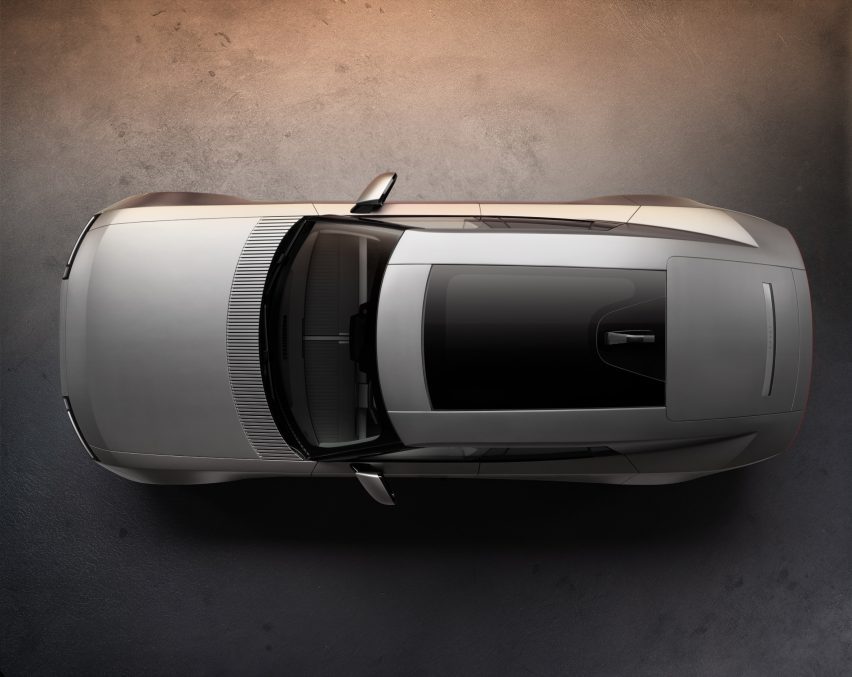
The shoulder and cant rails stem from its unique rear-quarter panel with five surfaces intersecting above the rear wheel.
Jaguar called this the "Impossible Panel" because, according to the design team, computer programmes said that cold pressing the aluminium in that configuration was not possible.
According to Jaguar exterior design lead Alexey Andreev, the four-fold headlights are a distinguishing part of this new approach, while its proportions and stance connect it with the legacy.
He said the lamps, hemmed in by the darker tones of the surrounding panels, were made to be recognisable from a distance while appearing clean and modern up close.
"The new face of Jaguar is instantly recognisable even when approaching from a distance," said Andreev.

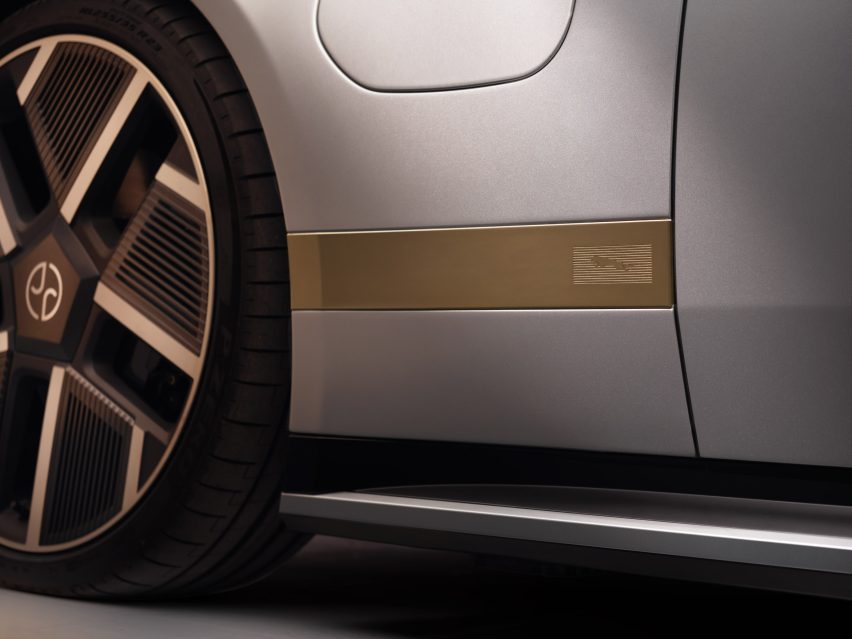
Type 01 has 23-inch wheels with a distinctive pinwheel-like pattern marking the "patent-pending lightweight wheel inserts" that were engineered for airflow.
Though the brand departs from the classic Jaguar form, the company kept the large luxury gap – the distance between the centre of the front axle and the front door. Jaguar said that this marked the car apart from other EVs.
This gap measures 898 millimetres or 17 per cent of the vehicle and is marked by an anodised brass-effect finishing strip called the Fender Ingot.
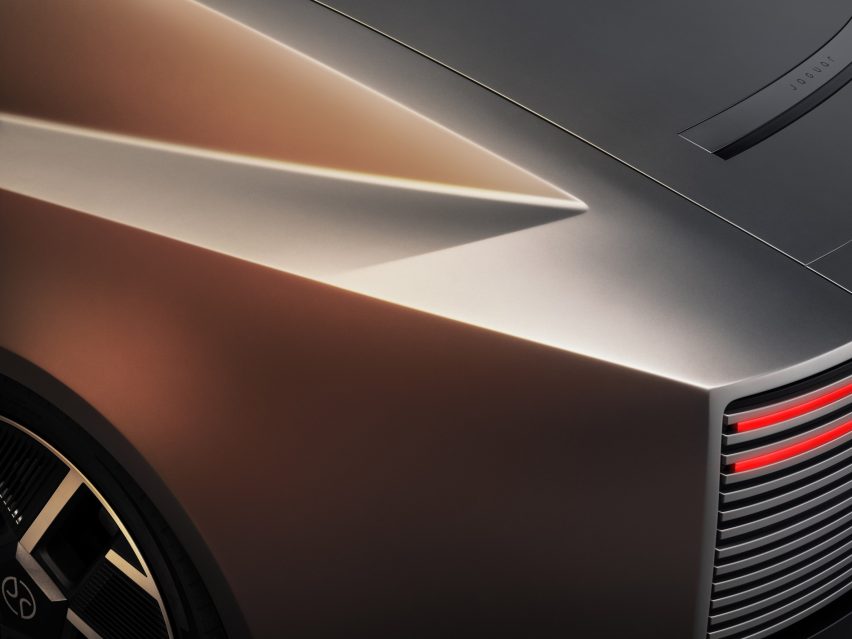
Andreev said the team utilised the branding system while staying away from "superfluous ornaments". Jaguar's classic leaper logo is laser-etched on the finisher, while the strikethrough detail appears on the bonnet and rear.
The brand's monogram, redesigned in 2024, was placed in the centre of the wheel, while the new wordmark features on the grille and on the trunk.
Behind the rear door is the Impossible Panel. This rear quarter panel was pressed in six ways, allowing the glass seals to be hidden. The curve of the Impossible Panel continues underneath the bottom of the windows on both doors, flattening out into the hood.
Foregoing the full glass roof seen on many electric vehicles, the Type 01's panoramic glass roof is hemmed in by cant rails that continue the dramatic curve of the rear quarter panels.
The distinctive rear panelling and cant rails play into the performance, and the brand said that the air flowing past the body actually generates accelerative push on the rear. A deployable fender extends from the back.
The car has 1,000 metric horsepower (PS) of power, allowing the driver to reach 62 miles per hour in 3.2 seconds, and a 118 kilowatt-hour (kWh) battery, making it the most powerful Jaguar in production.
An Environmental Protection Agency (EPA) range of 400 miles and a Worldwide Harmonised Light Vehicle Test Procedure (WLTP) range of up to 450 miles.

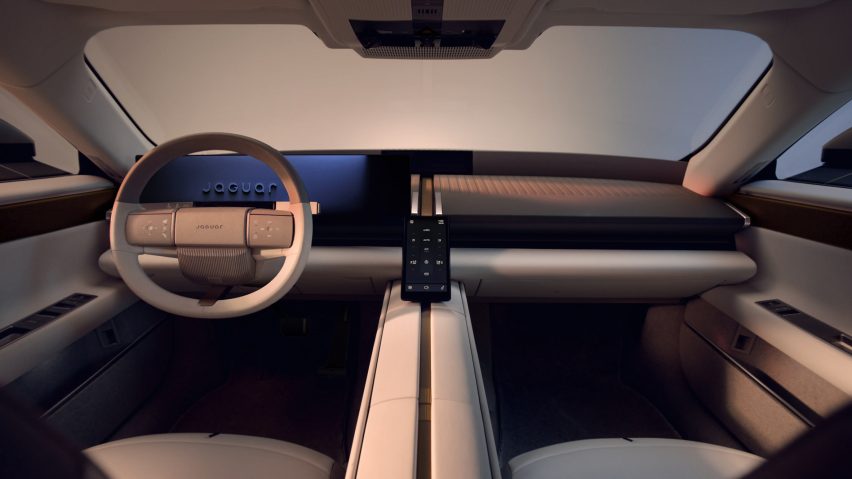
The length and width of the vehicle allowed for spacious interiors.
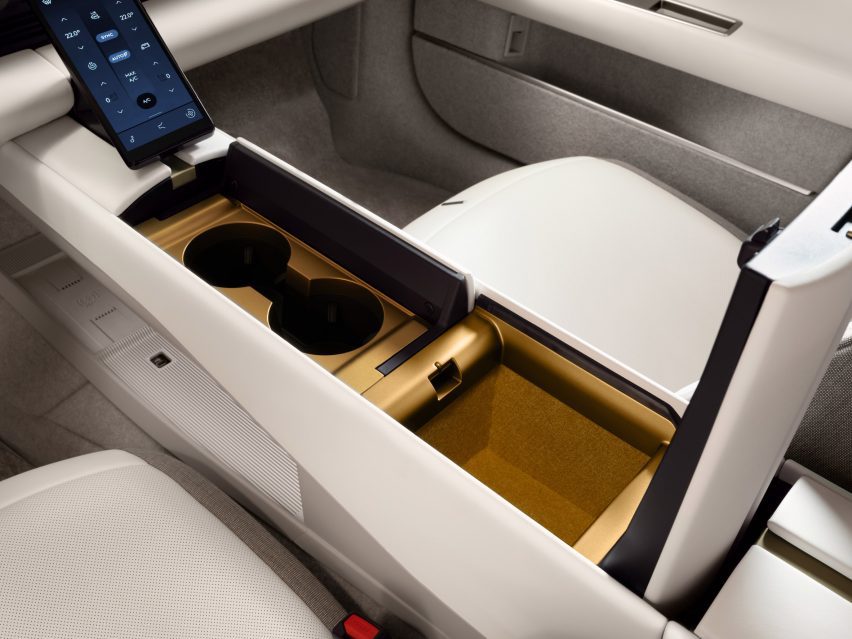
It has a single rail that runs down the middle of the cabin, separating the passenger and driver's-side seats in the front and rear.
A screen sits behind the wheel, acting as a dash, with a smaller screen for environmental controls above the centre.
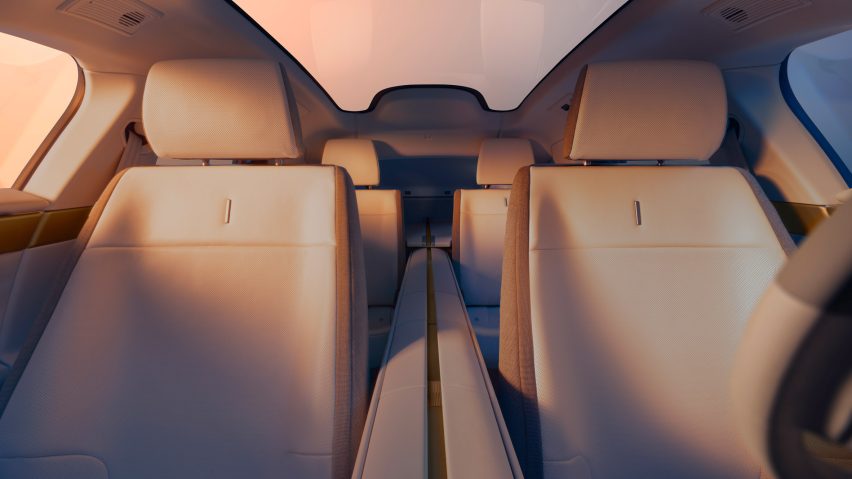
Another screen sits above the dash at the window and replaces the traditional rear-view mirror, with a sound bar extending out from either side.
The upholstery and seating were meant to be furniture-like, and the production vehicle has textiles by Danish brand Kvadrat as well as brass detailing.
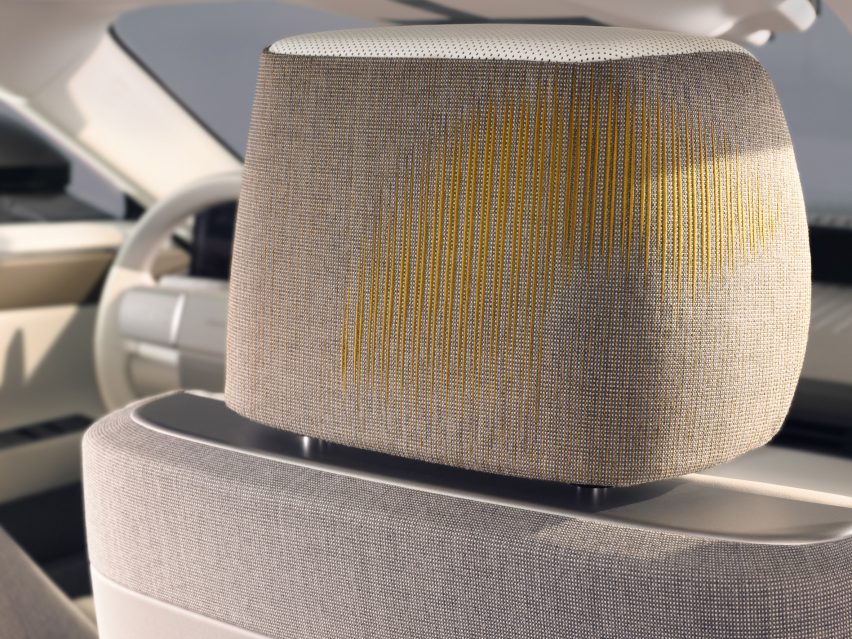
Jaguar chief materiality designer Mary Crisp noted the lightweight luxury nature of the textiles, adding that Kvadrat is on "the top of their game".
"I wanted to add that warmth you get in your home," said Crisp, noting the multi-toned nature of the wool blends.
On show at the New York event was a silver vehicle with satin finishes.
The release follows a slate of other luxury electric vehicles, including Ferrari's first electric vehicle and Bentley's, both released in the past year.
The photography is courtesy of Jaguar Land Rover.