"We want to be a global furniture brand, but not in the Hay or Muuto or Vitra area of expensiveness" says Omhu CEO
Since being founded by two friends just four years ago, Omhu has sold more than 40,000 sofas. In this exclusive interview, CEO Simon Salomonsson explains how the Danish company is disrupting the furniture industry.
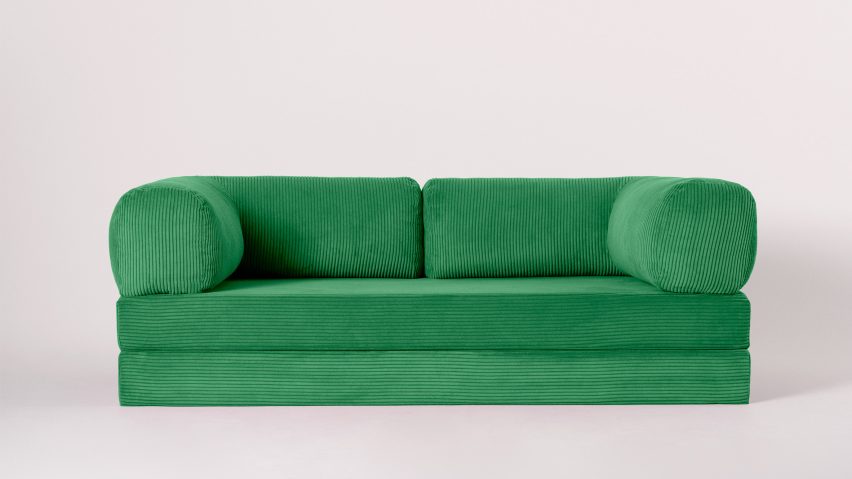
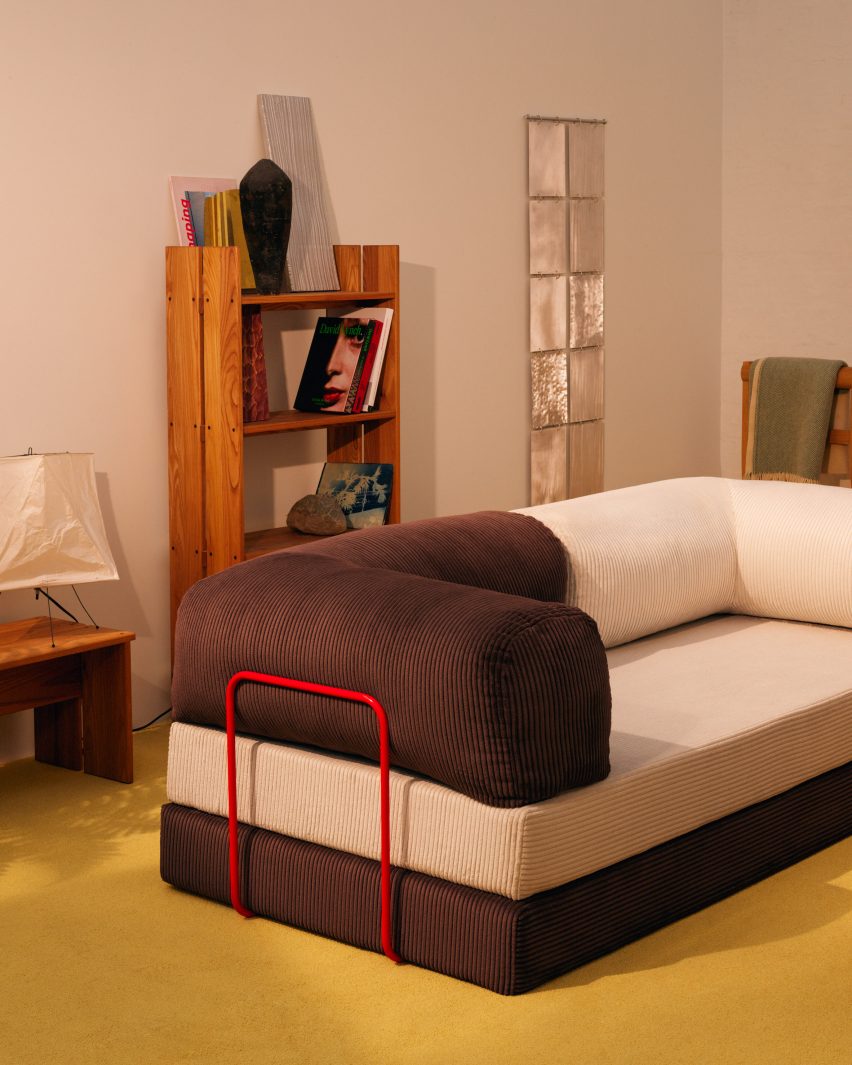
If you're an Instagram or TikTok user, you've probably seen it before: a modular corduroy sofa with fat, L-shaped back cushions and an external chrome frame that allows for easy transformation into a bed or conversation pit.
Sometimes referred to as "the viral sofa", the Teddy has achieved a level of cut-through that few, if any, furniture designs of recent years can match.
And yet, it was not created by a furniture designer or an established furniture company, but by two childhood friends with an Instagram-based vintage furniture business.
Having had some joy selling second-hand, mid-century pieces during the pandemic, graphic designer Jonas Larsen and creative marketer Frederik Frøsig decided to develop a product of their own.
Taking inspiration from their own stock, in 2022 they manufactured a batch of Teddies, sold them, and built from there.
"I could see this was really taking off"
By summer 2024, with the Teddy and the company they established to sell it, Omhu, gaining significant traction, Larsen and Frøsig contacted Salomonsson.
The three had met studying in Peru in 2009, after which Salomonsson had gone on to success as a digital marketing entrepreneur.
"It wasn't really on my bingo card for 2024 that I should be a board member of a sleeping-couch company," Salomonsson told Dezeen. "But I could see this was really taking off."
"A lot of the different angles they had to the furniture industry was super interesting, super disruptive. And I figured if I could professionalise that and build an operation around it together with them, then we could make something really big out of it."
Salomonsson joined Omhu as CEO two years ago, becoming its fifth employee. There are now nearly 60, while Larsen and Frøsig are no longer actively involved.

Omhu now ships to 26 different countries, has 80 showrooms and is working on setting up a factory in the US to add to its existing production facility in Poland.
The company keeps quiet about how much money it has made, though Salomonsson confirms it has been profitable and self-funded from day one.
It's the kind of commercial success that young furniture brands dream of, and in testament to the Teddy's instant-classic status, the internet is littered with knock-off copycat versions.
How has all this been achieved in just a few years?
"When people ask me what is the kind of secret of the success, I tend to say the multifunctional part of it; the design, which is playful, warm, you can customise it," said Salomonsson.
"And then the affordability. It depends on the region, but I would say mid-pricing, like a little bit more expensive than IKEA, but not where you see Hay and Muuto."
"Omhu is hellbent on being at that price point"
This affordability, according to Salomonsson, is a result of Omhu doing things differently to other furniture brands.
While most focus heavily on business-to-business sales, including selling to retailers, from the beginning Omhu has concentrated solely on selling directly to consumers from its own website.
"For us to charge 1,500, 1,600 euros for a sofa, if we had to go through a retail store it will be a lot more expensive because there's a middleman taking a cut," said Salomonsson. "So I think that's what has really enabled us to keep that price point."
"Omhu is hellbent on being at that price point going forward," he added.
"We cannot go down on IKEA level, but I think there is a sweet spot where we want to be like a global furniture brand, but not be in the Hay or Muuto or Vitra area of expensiveness and keep a lower margin, lower price compared to the market, and be affordable, where you get quality for what you are paying."
To get the word out about its product, Omhu has focused almost entirely on social-media marketing, sending Teddy sofas to influencers and paying for Instagram ads.
Early on in the brand's operations, a video of the Teddy by Danish influencer Astrid Olsen blew up over a single weekend in 2023, and led to a surge in orders across Europe and from the US.
It doesn't hurt that the sofa's straightforward adaptability lends itself perfectly to a quick social media reel – with clips of people converting it from a couch to a conversation pit to a bed filling potential buyers' feeds.
Again, Salomonsson says, this approach represents a divergence from the policies of most established furniture brands, which carefully manage their product imagery.
"We just put it out to cool influencers and see what they can do with it, and don't try to control too much, and I think that has been a big part of our success," he said.
"It's always been hard in the furniture industry to sell sofas online. For many of our customers, it is the biggest purchase they'll make that year."
"They need to trust us, they need to trust the sofa. So the more we can show the different angles of how it can be used, how the colours look, how it fades over time, how a customer views it, the more trust we can build."
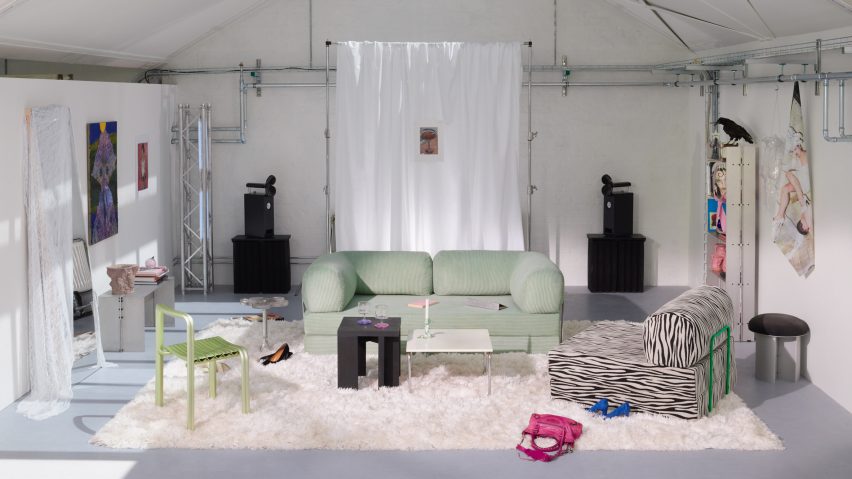
The same philosophy has been applied to establishing spaces where potential customers can see the sofa in real life – for instance, through the Friends of Omhu initiative, where trendy stores and cafes can be sent a Teddy for free.
Omhu has invested in having lots of showrooms but the spaces tend to be basic – providing a space to test out the product though without the feel of a flagship store.
"That's also different from what you normally see from furniture people, where they're very much around brand experience," said Salomonsson.
"We want to be eye-level with our customers and not be, like, too aspirational in our look either. We want them to be able to relate to us."
"We have a lot on our plate"
Despite being native to Copenhagen, Omhu has been conspicuous by its absence at the Danish capital's vast annual design festival, 3 Days of Design.
"It takes a lot of time and costs a lot of money to be part of 3 Days of Design," said Salomonsson. "And we have a lot on our plate."
"At some point we're gonna be at one of these events – if it's Milan or 3 Days of Design or New York, we have not decided yet. But it will be different things we are doing, because we are different."
For now, Omhu is preoccupied with its ambition of becoming, in Salomonsson's words, a "big global furniture design company".
As well as the US factory and trying to open up more markets in Asia, the company is actively working on expanding its product range beyond the Teddy and variants thereof.
Working with both in-house and external designers and also seeking to license existing designs, it is aiming to make new releases within the next year.
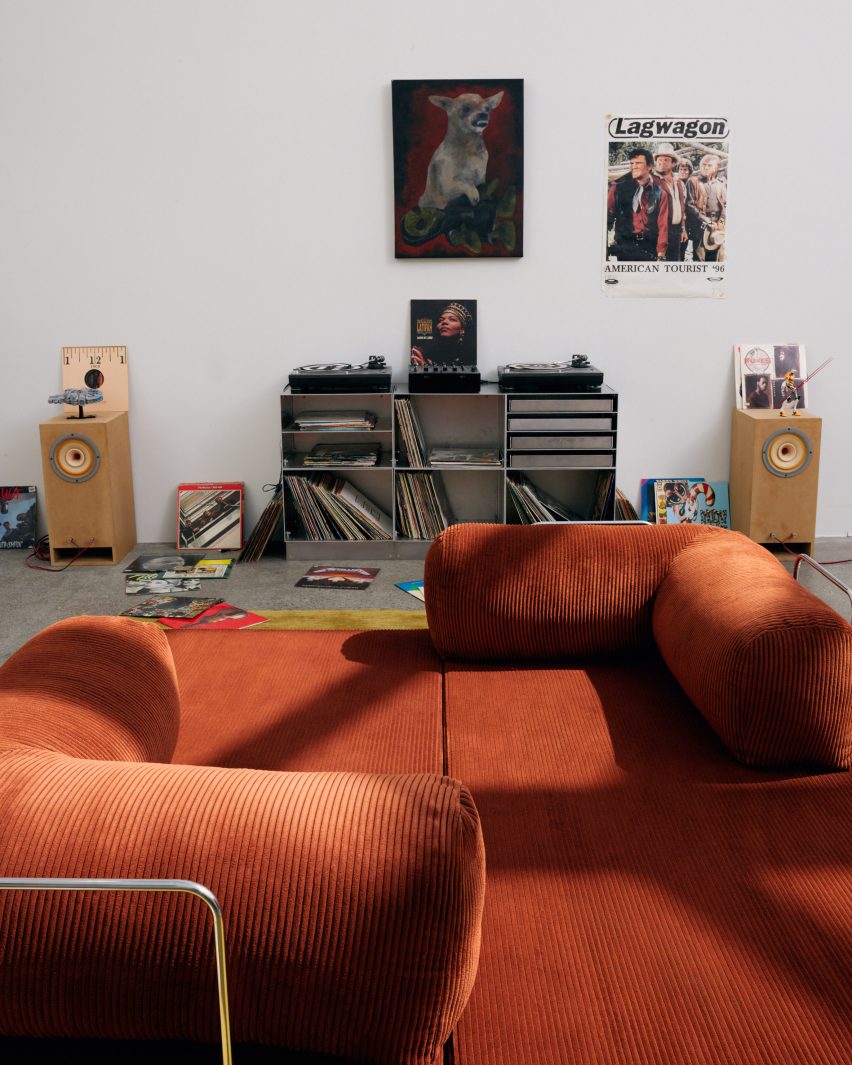
The new product categories will be partly based on what people are searching for on the Omhu website, while the company plans to continue to prioritise multi-functional, modular designs.
"It's hard to say what is Omhu design, right, because we just have the Teddy," said Salomonsson. "But I think when you see it, you'll see the playfulness, the multi-functionality, that is liveable, is warm, and it'll be at a fair price, it won't be like art pieces."
Not that the Teddy is perfect, as Omhu itself acknowledges. Reviewers online often complain that the chrome bars that serve as the sofa's frame move around, and so need to be pushed back into place regularly.
"The gliding bars has been a real headache for us that we're trying to solve, and we're still working on improving the product in that sense," said Salomonsson.
Rubber grips that slide over the bars are now provided as standard with every purchase.
Sustainability is also an issue. The absence of an internal frame – what has sometimes been described as a "boneless" design – helps to keep the Teddy's price-tag down, but it also means the product uses a lot of polyurethane foam.
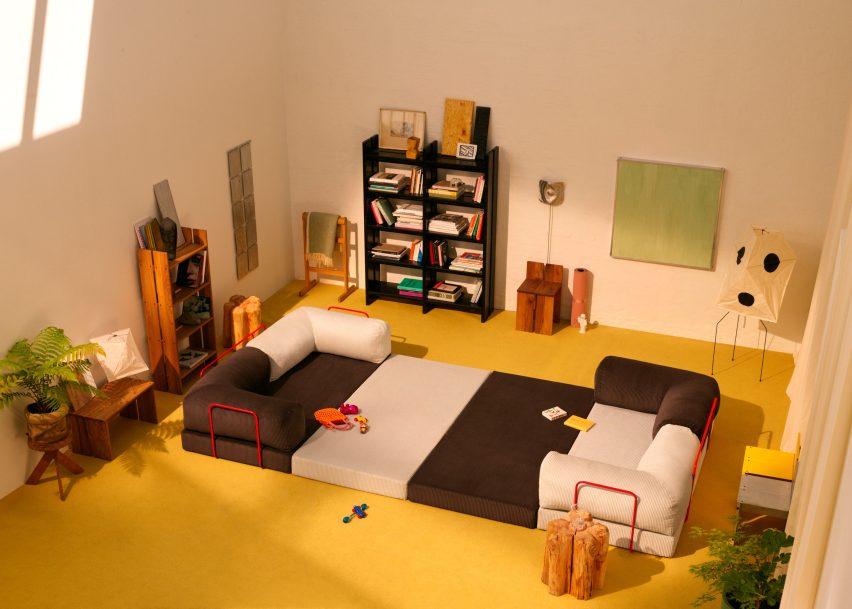
"It's a sensitive question, but I would like to be straight here," said Salomonsson. "Our product – Teddy – it's foam. That'll never be the most sustainable thing in the world."
"We can't hide from that, but what we have done is we have an interchangeable product where we change the covers, it evolves with you, it's multifunctional, it's really high quality what we make; it lasts very long."
For now the Teddy is also made-to-order, though as Omhu's product range expands, the company will transition to holding stock in warehouses.
Looking ahead, Salomonsson is convinced Omhu can become a household name through its unconventional approach – a furniture company better-suited to current times.
"We're a bold company, we do things differently, we have another point of view on marketing, on culture," he said.
"I really believe there's a huge opportunity for Omhu here, and I'm really determined to go at it, and that's also why we want to come out with new stuff."
The photography is courtesy of Omhu.
Dezeen In Depth
If you enjoy reading Dezeen's interviews, opinions and features, subscribe to Dezeen In Depth. Sent on the last Friday of each month, this newsletter provides a single place to read about the design and architecture stories behind the headlines.