


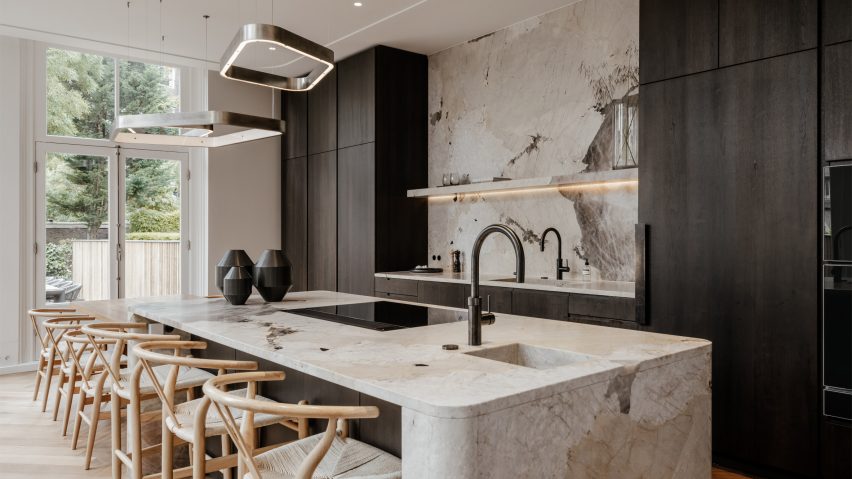
Promotion: designer Ruud van Oosterhout of RVO Design chose Italian stone brand Antolini's natural stone to bring the interiors of an 18th-century canal house "back to life".
As part of the renovation project, Oosterhout used Antolini's stone surfaces as an "architectural tool" to restore the home's identity by enhancing the building's interiors, proportions, and how light interacts throughout each room.

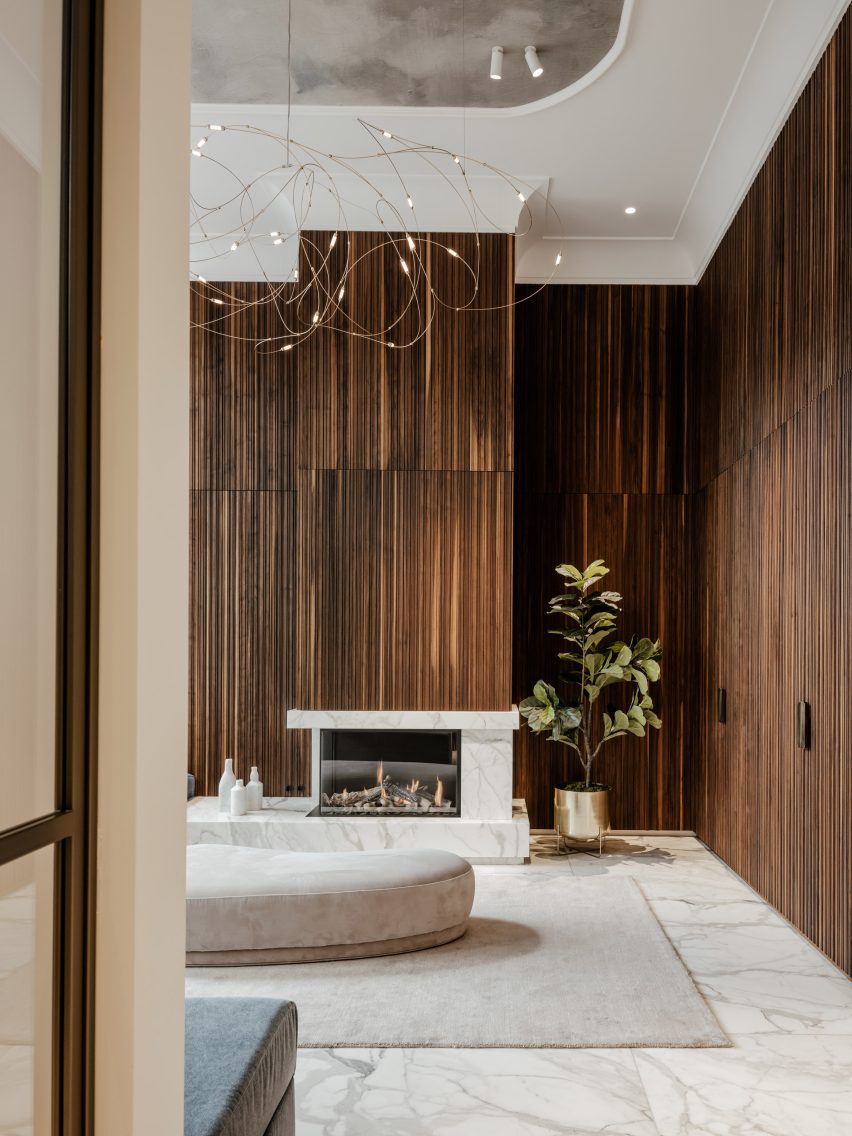
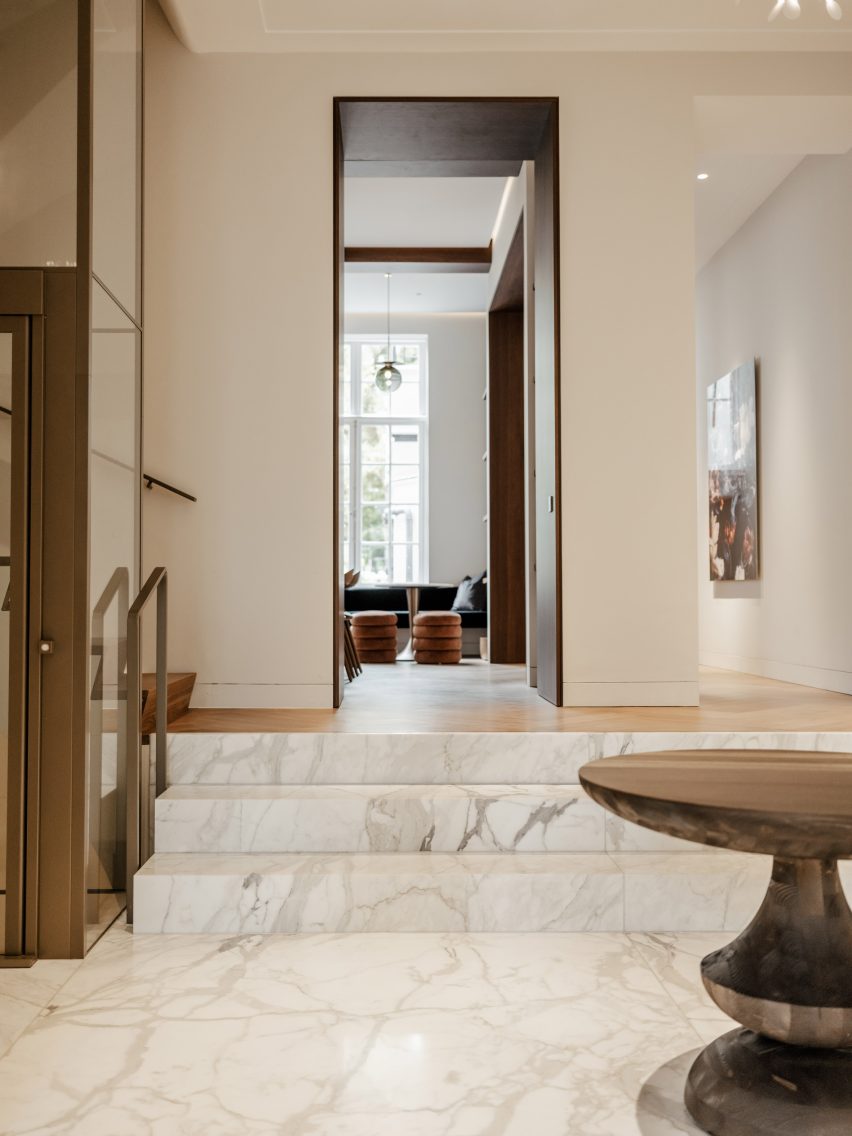
Throughout the entrance and living room, Antolini's Calacatta "Wow" flooring from its Natural Stone Collection was chosen to unite the rooms in a continuous surface.
In the living room, the white marble-veined flooring was paired with a vertical walnut panelling covering the walls and built-in cabinets, creating what Oosterhout describes as a "graphic rhythm".
Here, Calacatta "Wow" also complements the marble-framed fireplace and ceiling, which features a recessed area with a cloud-like effect.
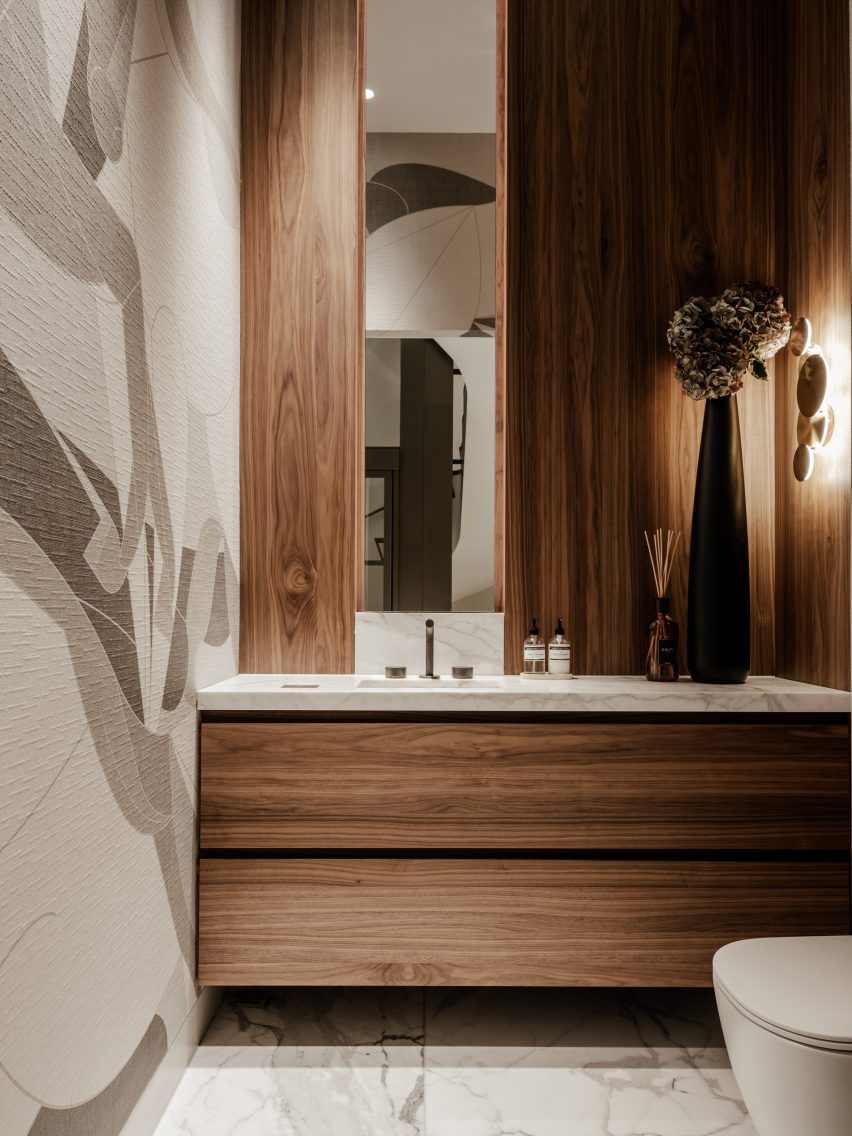
Oosterhout also used the flooring in the guest bathroom to complement the horse-patterned wallpaper.
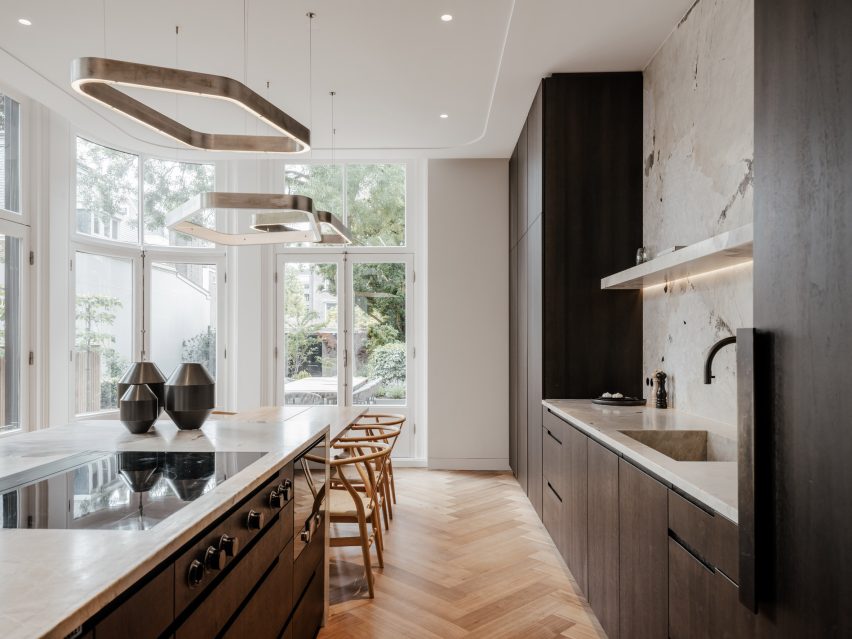
In the kitchen, Oosterhout used Patagonia Original Tourmaline – a natural quartz also from the Natural Stone Collection – for the kitchen's island, worktop and the wall cladding.
According to Antolini, the stone's chromatic variations emerge throughout the day as natural light changes, giving the kitchen a sculptural quality.

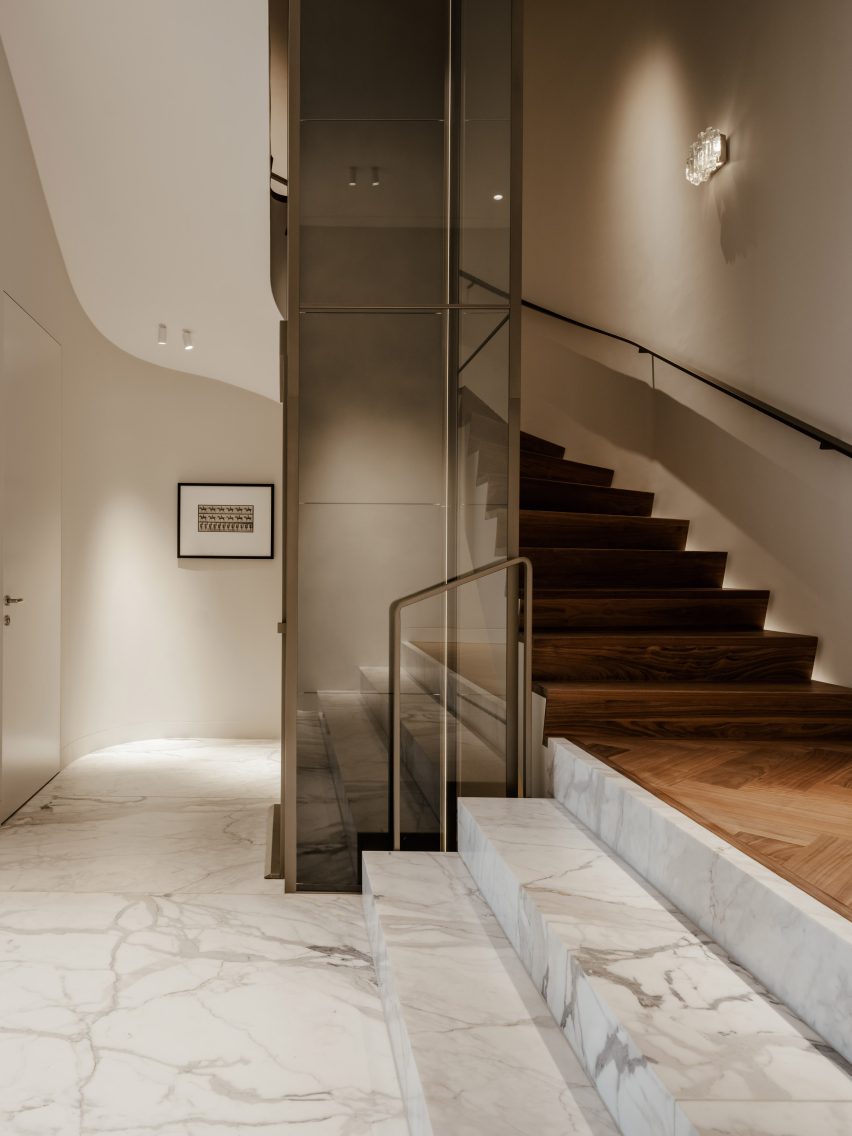
The central part of the restoration was incorporating the staircase-elevator system, where a walnut-clad staircase wraps around the glass lift shaft.
Oosterhout also used Antolini's Calacatta "Wow" as flooring on the L-shaped lift platform, uniting the upper rooms with the flooring below.
"This choice enhances visual permeability and luminous continuity between the levels, transforming a technical element into an architectural device that structures the central void," said Antolini.
"Curves, rounded corners, and the absence of sharp edges are a common thread throughout the project, helping to create a soft and continuous perception of space."
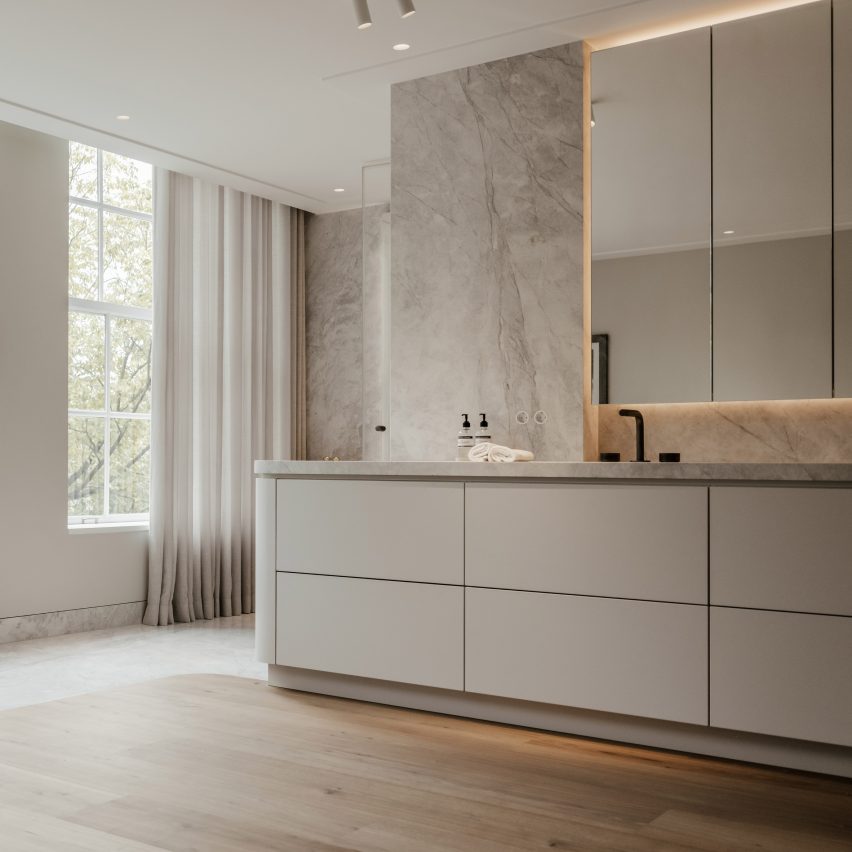
The master suite, with a generously sized bathroom, features Dolomite del Sud "Select", a dolomite from Antolini's Exclusive Collection, used on the floor and as cladding for the main walls, vanity units, and steam shower with integrated seat.
Antolini explained that Oosterhout's choice of Dolomite del Sud "Select" stemmed from directly observing the material in Italy.
"I go to Italy at least four to six times a year," said Ruud van Oosterhout. "I had seen this block before, and I was struck by its strongly architectural character."
"Dolomite del Sud 'Select' has a diffuse and uniform pattern, making it particularly suitable for use on a large scale, which is the scale I love to work with," he added.
Throughout the project, the material's supply and processing were handled by Marble and Granite Service and Ligtvoet Natuursteen, who worked alongside Oosterhout to ensure precision in execution and consistency of materials.

Antolini was founded in Verona, Italy, by Luigi Antolini in 1956. For over 70 years, it has established itself as a leading name in natural stone.
Innovation, craftsmanship, and entrepreneurial vision are at the heart of the company, and its catalogue features over 1,300 varieties of natural stone, including 90 exclusive products. The company has a presence in over 182 countries.
To learn more about Antolini, visit its website.
Partnership content
This article was written for Antolini as part of a partnership. Find out more about our partnership content here.