Robot ordered to write lines as punishment for crime it hasn’t committed yet
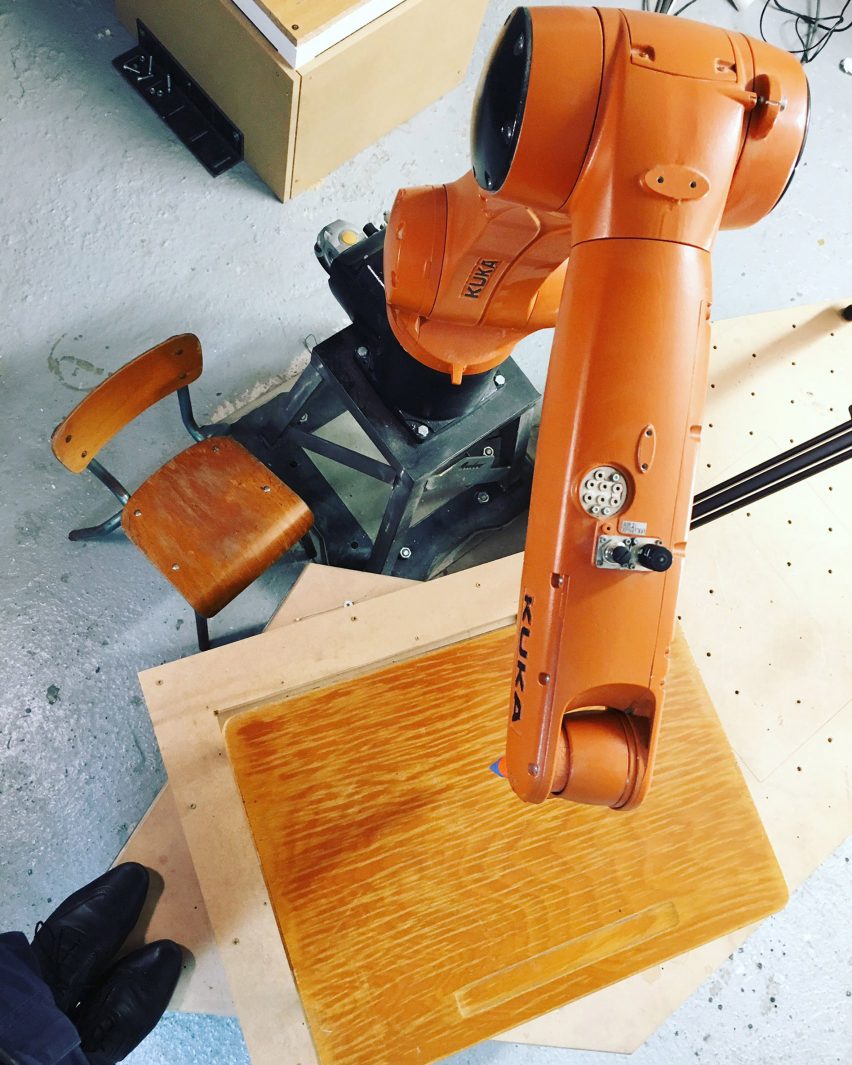
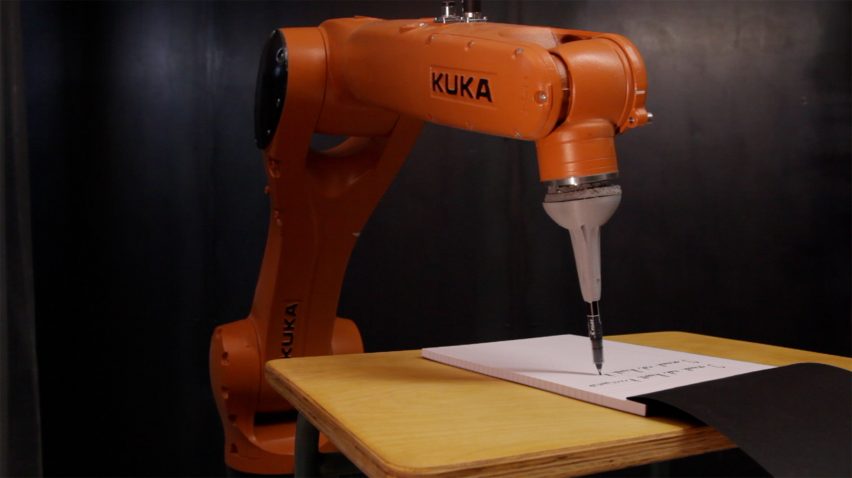
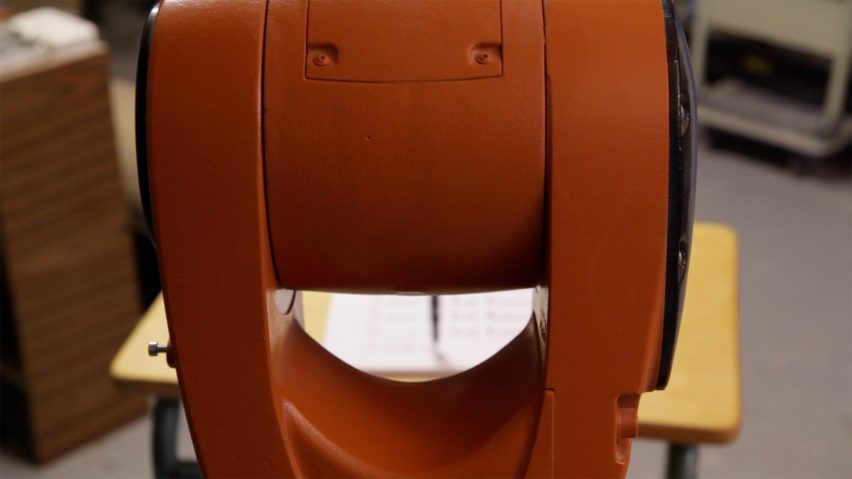
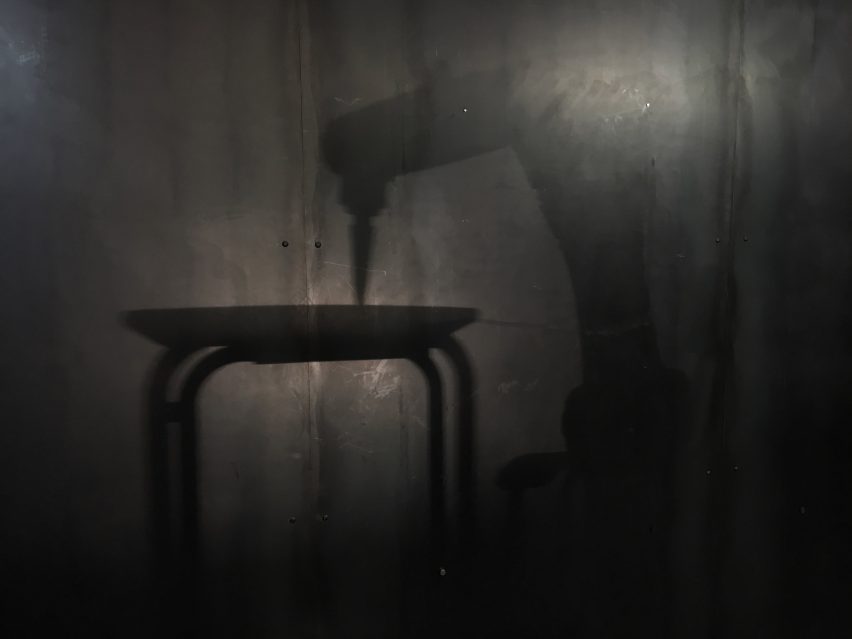
A robotic arm writes repeated promises not to hurt humans in artist Filipe Vilas-Boas and architect Paul Coudamy‘s installation The Punishment.
The piece – which is being shown at digital festival Futur en Seine in Paris from 8 to 10 June – was designed to raise awareness of the looming threat of automation, and address people’s “fear and fascination” with robots.
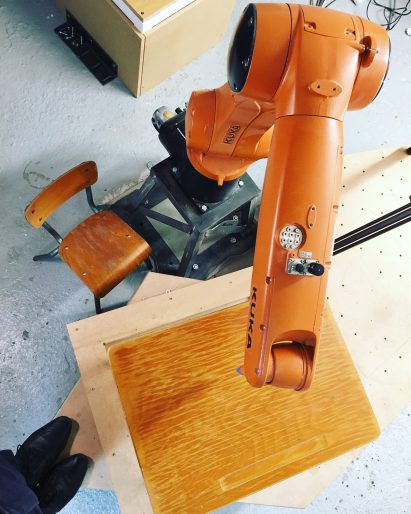
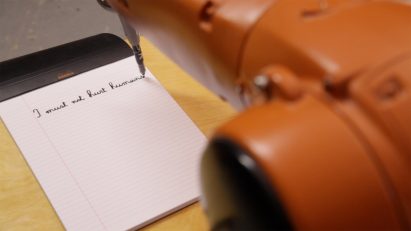
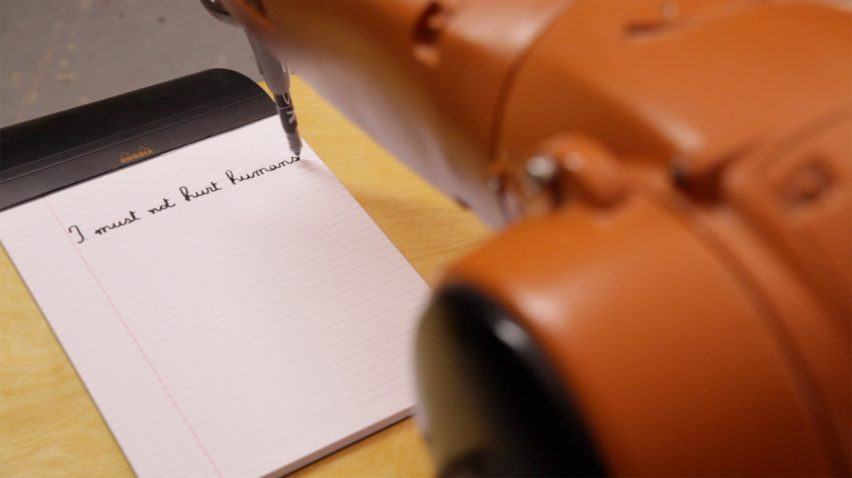
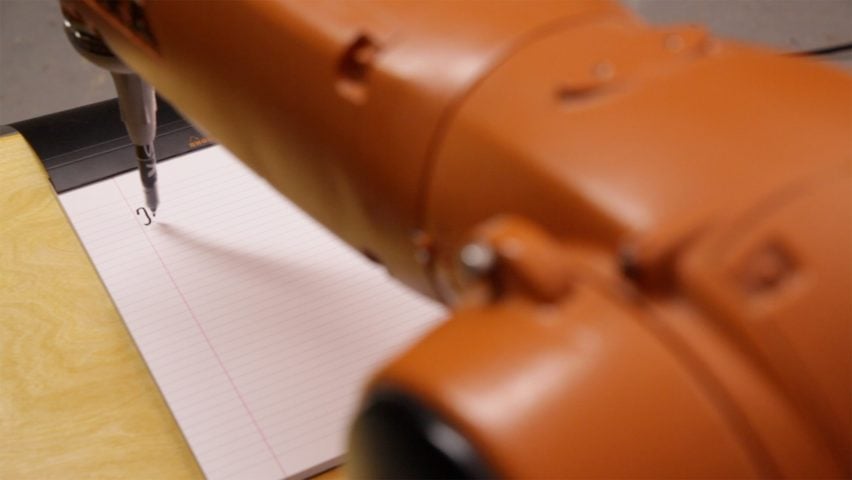
Sat at a typical wooden school desk, the orange arm continually writes the same phrase – “I must not hunt humans” – in a notebook placed in front of it. Vilas-Boas considers it “a preventive punishment for its possible future disobedience”.
The artist chose the phrase as a reference to science fiction author Isaac Asimov’s Three Laws of Robotics, devised in 1942 and used as a plot point in a number of his stories. They call for a robot to refrain from injuring any human being, to protect them from harm and to obey their orders.
“Technologies are merging at high speed, notably robotics and artificial intelligence,” Vilas-Boas told Dezeen. “Following that logic we can easily imagine more and more robots with the ability to perceive, understand and communicate with us. It’s clearly a dystopian anthropomorphisation here.”
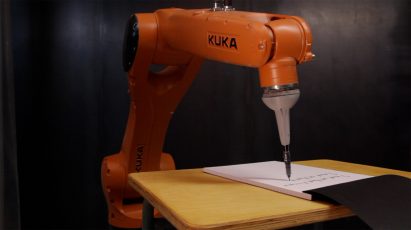
The artist collaborated with Coudamy – who had been using the industrial arm to explore digital fabrication and ways of incorporating robotics into architecture – to create a set of commands for the machine.
Using visual programming and 3D-modelling software, the pair designed text that was vectorised and created in three dimensions, so the robot could mimic a typical human style of handwriting. The pair also chose a cursive typeface, to give the machine a more childlike persona.
“Robotics and AI can play a huge role in the future,” added Vilas-Boas. “And it could be a very positive one, freeing humans from a maximum amount of work and creating more value fairly redistributed across society.”
“But this scenario implies a new social contract and probably a massive social battle in the near future. If it doesn’t happen, then we will certainly observe the development of the precarious fringe of our societies.”
The artist currently lives in Paris, and also works as an interactive designer. His artworks often incorporate technology, using it to invite some kind of interaction from the viewer, and posing questions about the future role of machines in society.
Coudamy runs his own firm in Paris, specialising in interiors projects – including converting a former butchers shop into a private residence – and installations.
In a recent opinion piece for Dezeen, designer Madeline Gannon echoed Vilas-Boas’s comments, arguing now is the time to rethink how humans and robots can coexist, as automation places millions of jobs at risk.
Read more
Recommended stories
Home designed by humanoid robot goes on display in Denmark
“I’m dreading a future where all work is done by AI” says commenter
Copyright exemption plans for AI are “nothing less than vandalism” say UK architects and designers
“AI will never replace a Frank Lloyd Wright or a Mies van der Rohe” says commenter
Five robots putting the tech in Carlo Ratti’s architecture biennale
Designers have “signed away all of our ideas” to Instagram says Tom Dixon
“If AI can do most of what we think an architect does, maybe we have defined the profession too narrowly”