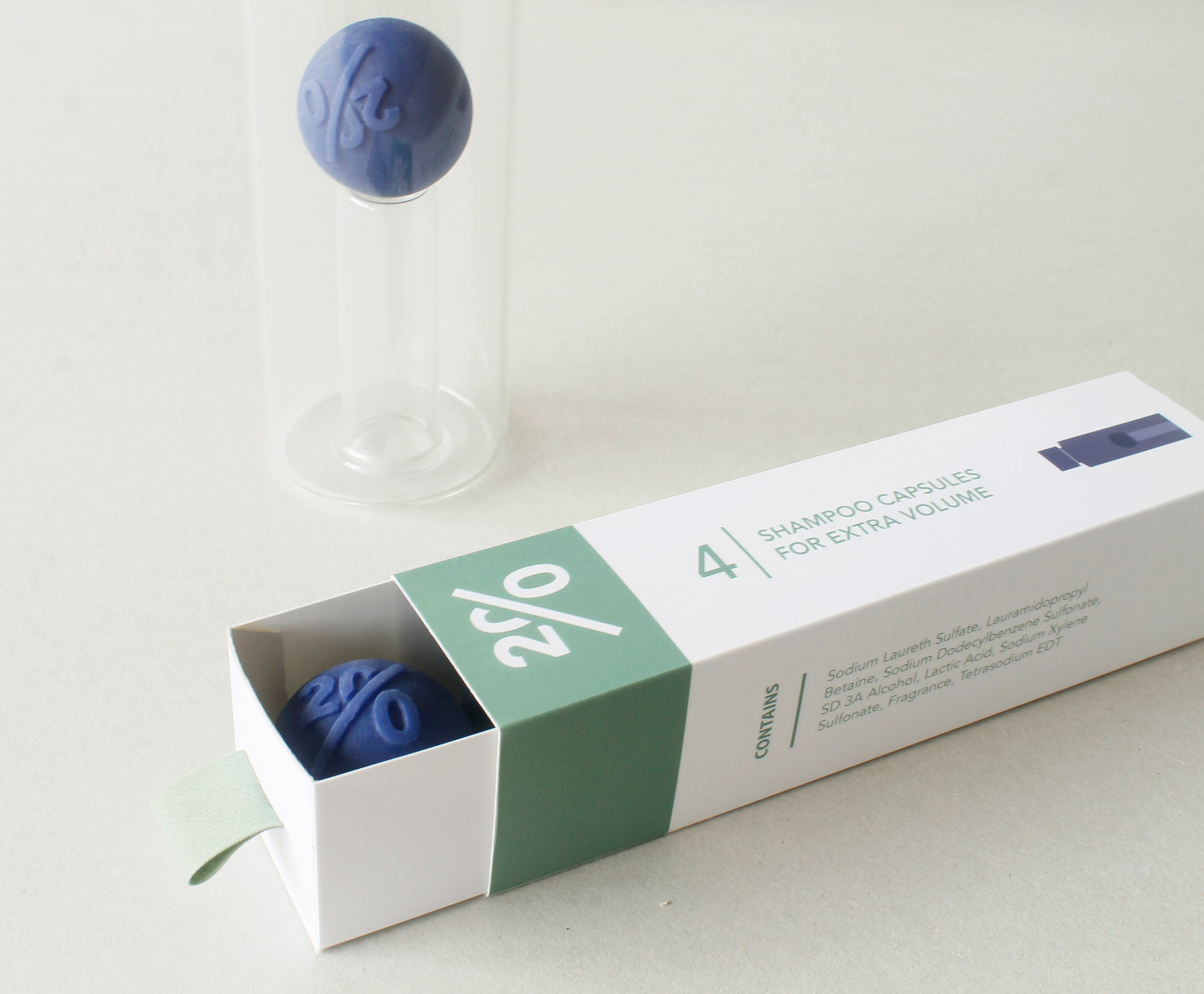
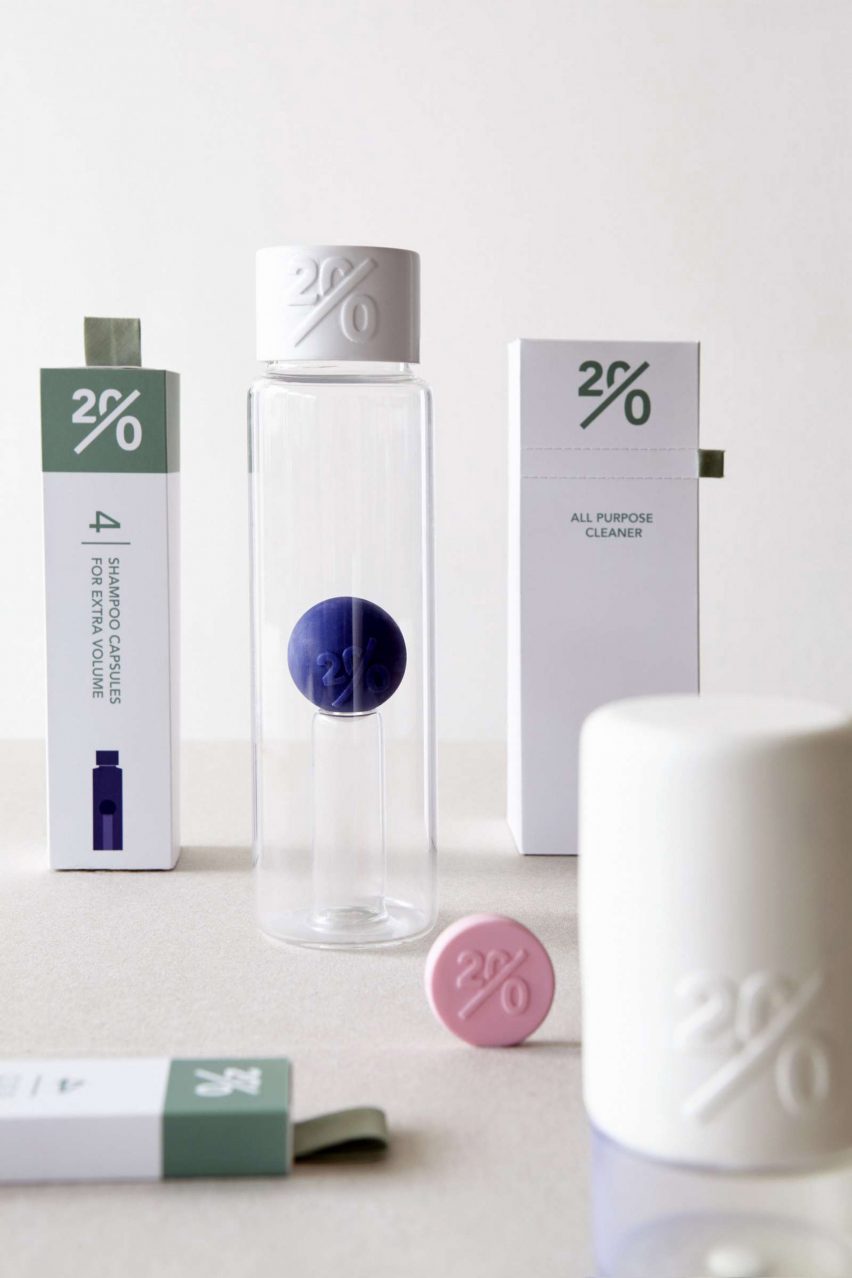
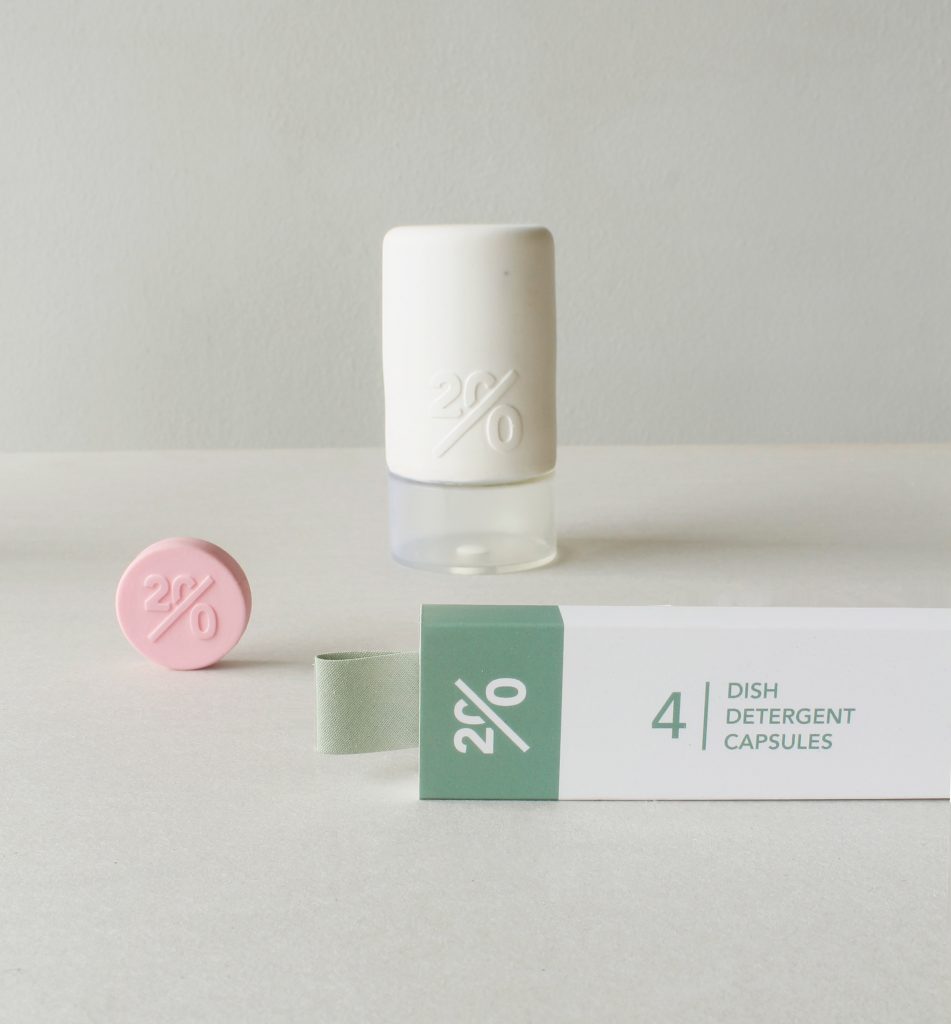
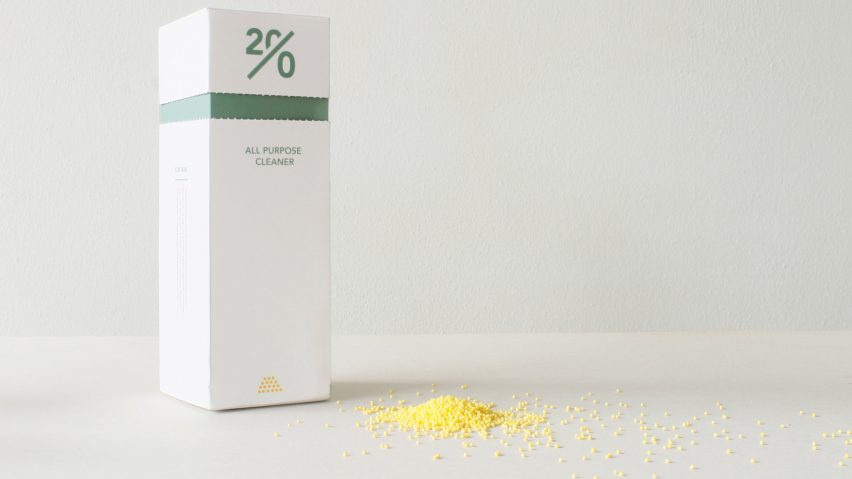
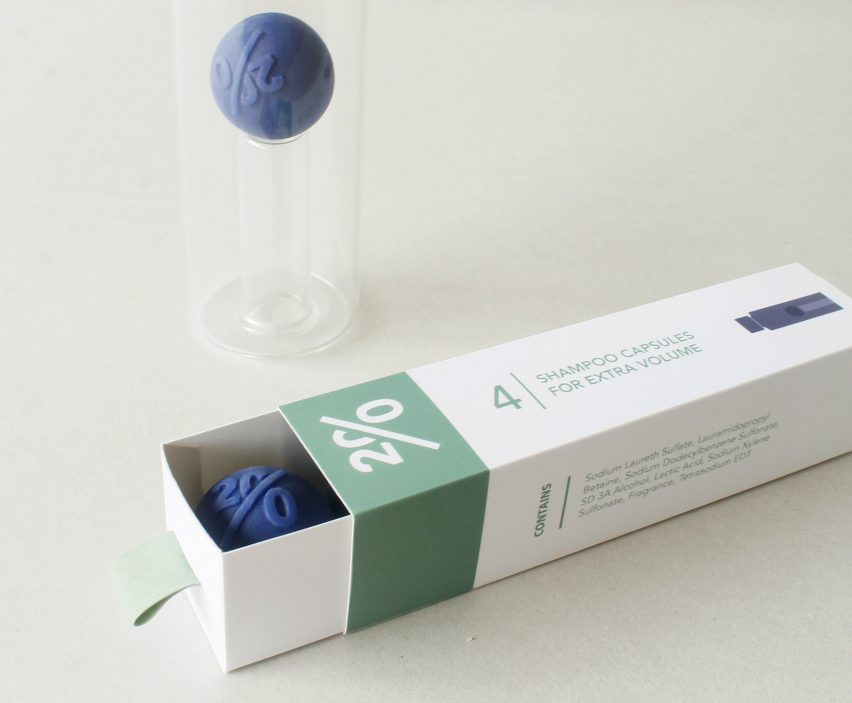
Aiming to create a sustainable alternative to standard cleaning products, Design Academy Eindhoven graduate Mirjam de Bruijn has condensed detergent, dish soap and shampoo into solid forms that are activated by water.
De Bruijn, who is presenting her 20 project at this year’s Dutch Design Week, came up with the idea after looking at the ingredients on regular detergent bottles.
“I found that water is the main ingredient of detergent, it’s 80 to 90 per cent water – so you’re paying for water, and companies are essentially transporting water all over the globe,” she told Dezeen.
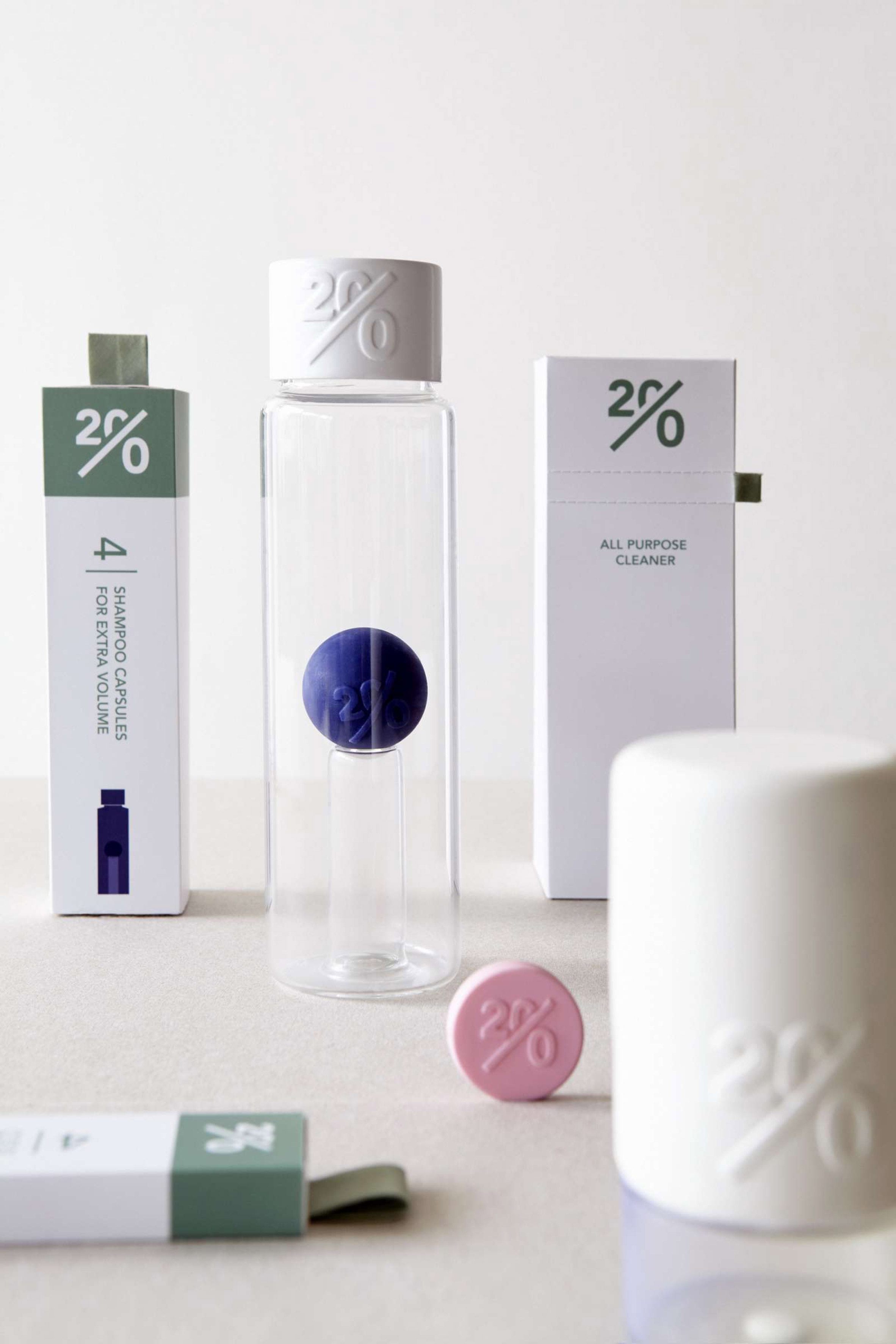
The project proposes that the remaining 20 per cent of non-water ingredients be concentrated and sold as either a powder, a bar, or a liquid capsule.
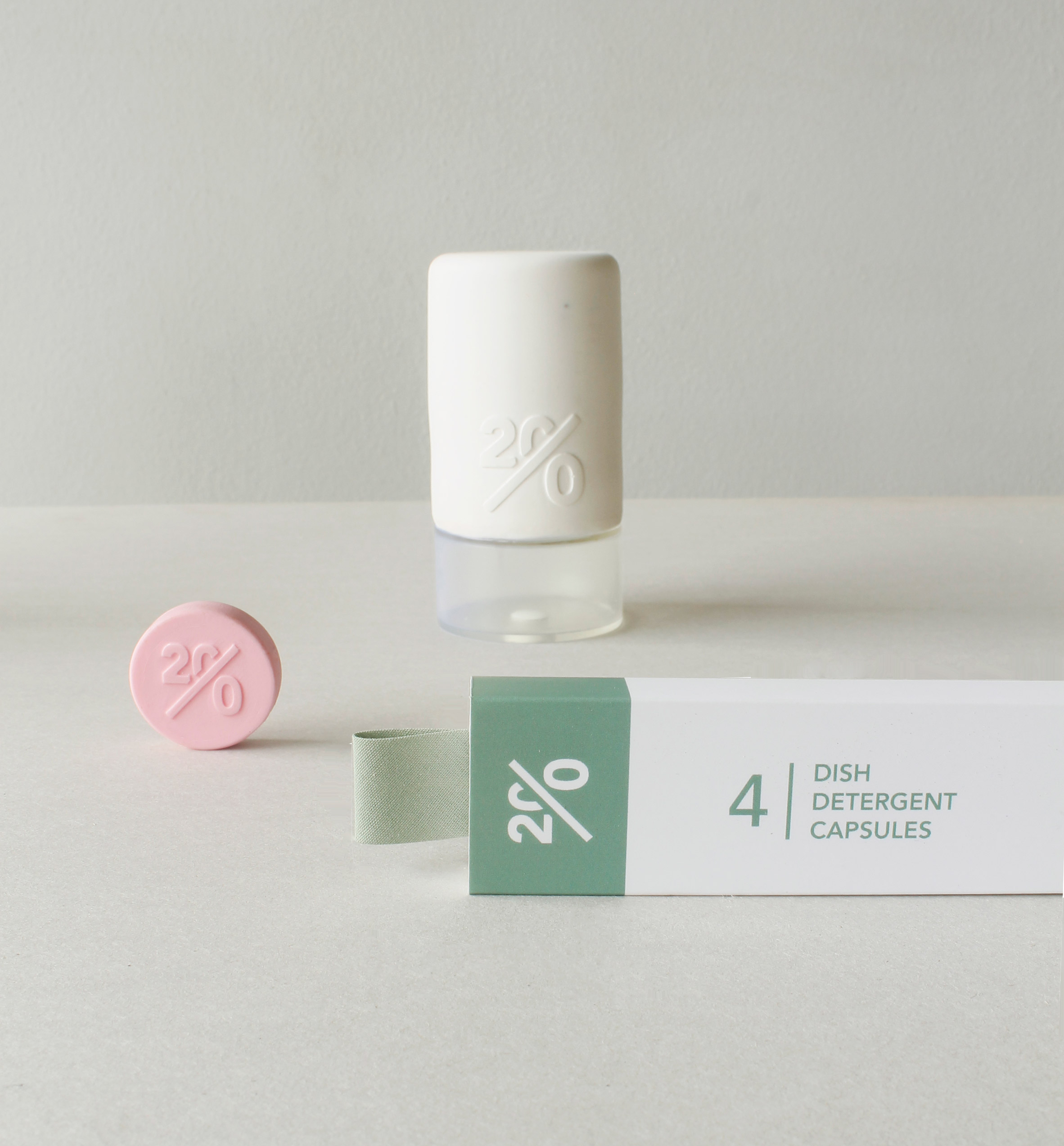
When mixed with water at home, the products can be stored in a reusable plastic bottle, which comes in various shapes depending on the substance they would hold.
“For the bottles, I made the dish detergent much smaller as people have dishwashers these days and are washing-up less,” she said. “The shampoo bottle needed a pedestal, because if it sank to the bottom it wouldn’t mix as well. ”
“It would save a lot of CO2 emissions because we’re not transporting water anymore and we don’t have all the waste leftover from the packaging,” she added.
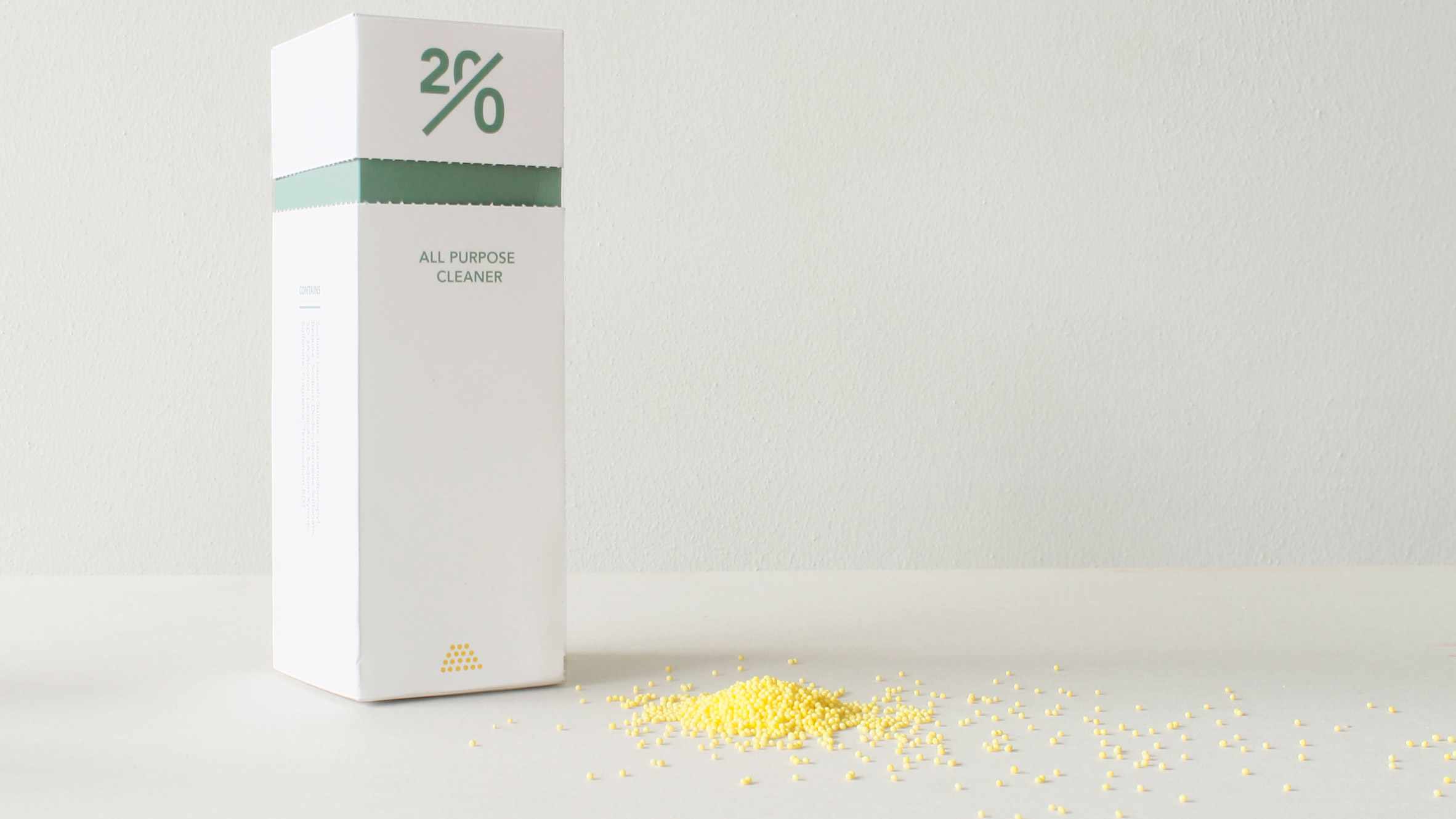
For the branding, De Bruijn wanted to make 20 more aesthetically appealing than other “dusty-looking” eco-friendly products, in the hope that this will raise consumer awareness and integrate such environmental solutions into our daily lives.
“I didn’t want the branding to be ‘eco’, with that dusty look,” she said. “I wanted to make it appeal to the early adopters, and I felt a minimal style would attract them. ”
De Bruijn’s project is currently on display at Design Academy Eindhoven‘s graduate show as part of the annual Dutch Design Week event, taking place from 21 until 29 October 2017.
Twenty is exhibited alongside the designer’s other project, Asana – a series of medical, posture stimulating tools for offices, disguised as ornamental objects.
Dezeen has also been considering the ways in which design could aid global issues, like climate change or pollution, in a series of talks held at Dutch Design Week – which are available to watch via our Good Design for a Bad World page.
Read more
Recommended stories
Young Berlin designers do more with less at Find Attached exhibition
Customers exchange urine for soap at Nieuwe Instituut pop-up shop
Mirjam de Bruijn create tools to help desk workers improve their posture
Design Academy Eindhoven students reinvent the bathroom for a resource-scarce future
Yves Béhar designs first Laufen sink to be made in electric kiln
Ten products that make for design-forward bathrooms and kitchens
Nieuwe Instituut’s New Store 2.0 turns free haircuts into textiles in Milan