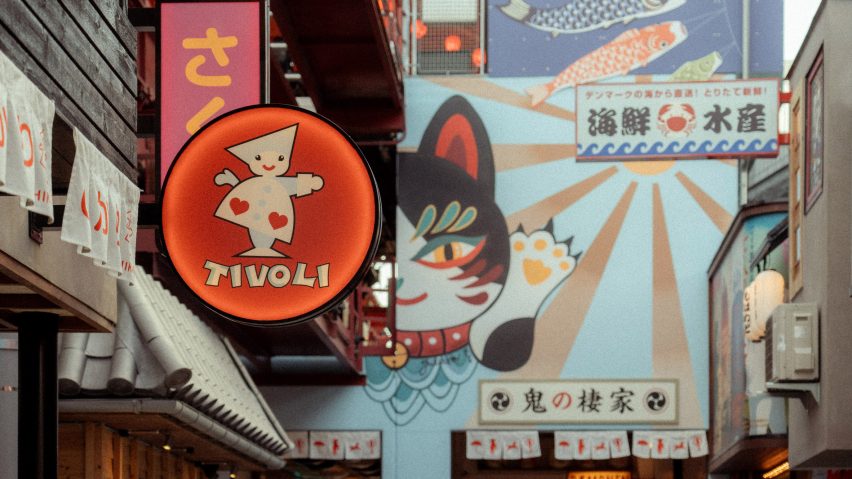
Tivoli creates theme park Japanese neighbourhood in central Copenhagen
Danish amusement park Tivoli has unveiled Hikari, a new area informed by Japanese cities that features art by Takashi Murakami and was designed to be "genuinely respectful of its origin".
The 2,000-square-metre Hikari, which is located in a part of Tivoli that already had a Japanese garden and pagoda, is the latest area at the historic theme park to draw on other parts of the world.
"Tivoli has always looked to the world for inspiration," Tivoli Gardens CEO Susanne Mørch Koch told Dezeen.
"You see it in the Chinese-inspired Pantomime Theatre, the Moorish-inspired Nimb and throughout the Gardens."
"Bringing the world to Copenhagen and interpreting it through Tivoli's own imagination has been part of our DNA for more than 180 years," she continued.
"Japan felt like a natural next chapter. Hikari now lives alongside two existing Japanese-inspired elements in Tivoli: The Pagoda and the gardens around the lake."
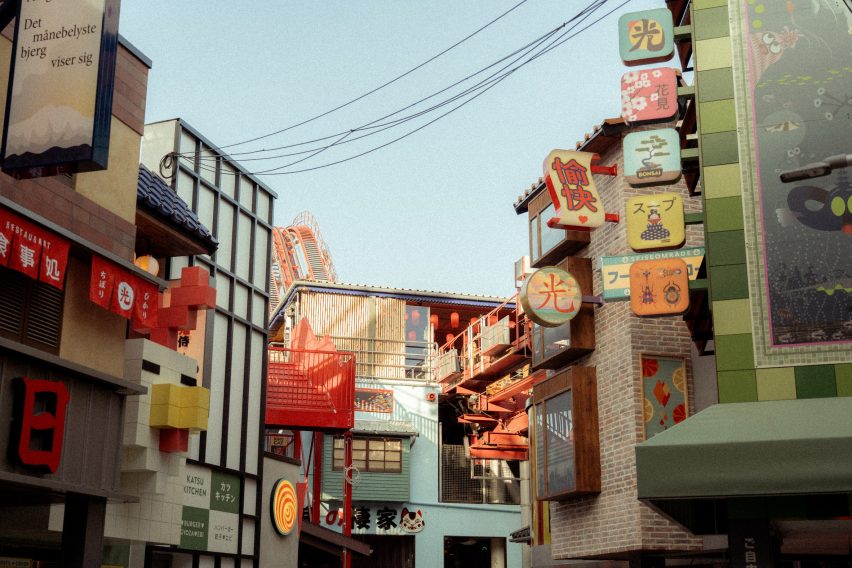
The area, which Tivoli says was designed as a "respectful and authentic interpretation of a Japanese district rather than a direct replication", draws on Tokyo, as well as Kyoto and Osaka.
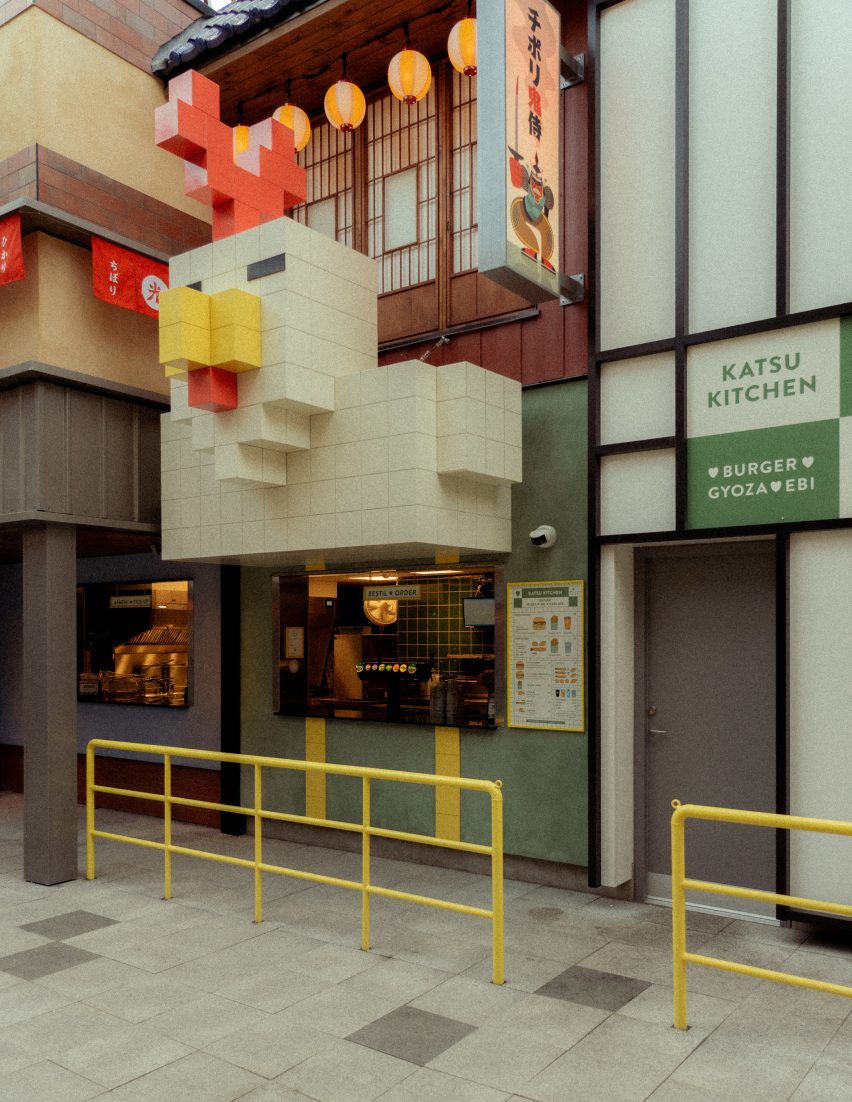
It features Japan-style buildings, shops and Japanese restaurants, as well as the Hotel Hikari fun house.
"It was important to us that the street reflected different periods of Japanese architecture," Tivoli design and development director Rasmus Altenborg told Dezeen.
"We wanted each building to have its own character, while still working together as a kind of patchwork of colours, materials and styles."
The Hikari area also has a new ride, the spinning Typhoon's Eye, which has an exterior that resembles shoji screens.
"When it came to the attractions, space was one of our biggest constraints, so we had to be creative," Altenborg continued.
"We knew we wanted a thrill ride to complement [the existing] The Demon; something exciting to ride, but also spectacular to watch from elsewhere in the Gardens."
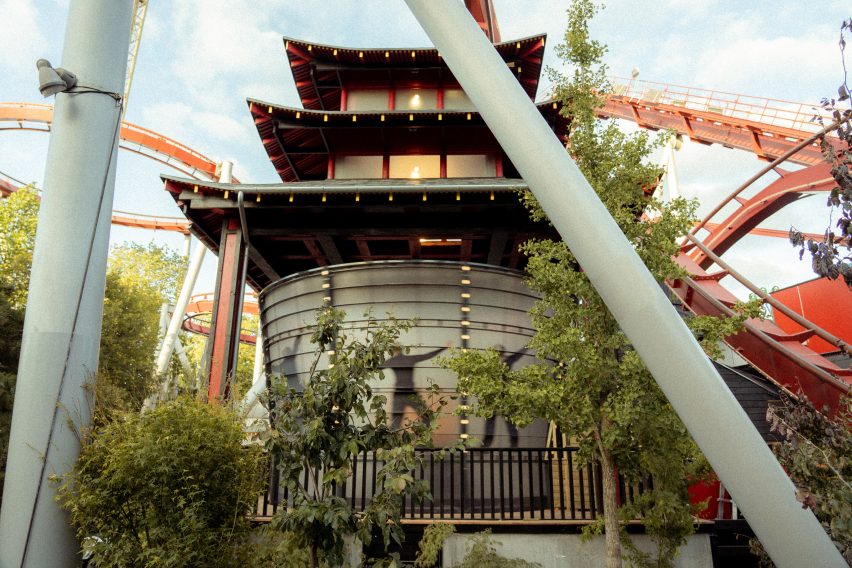
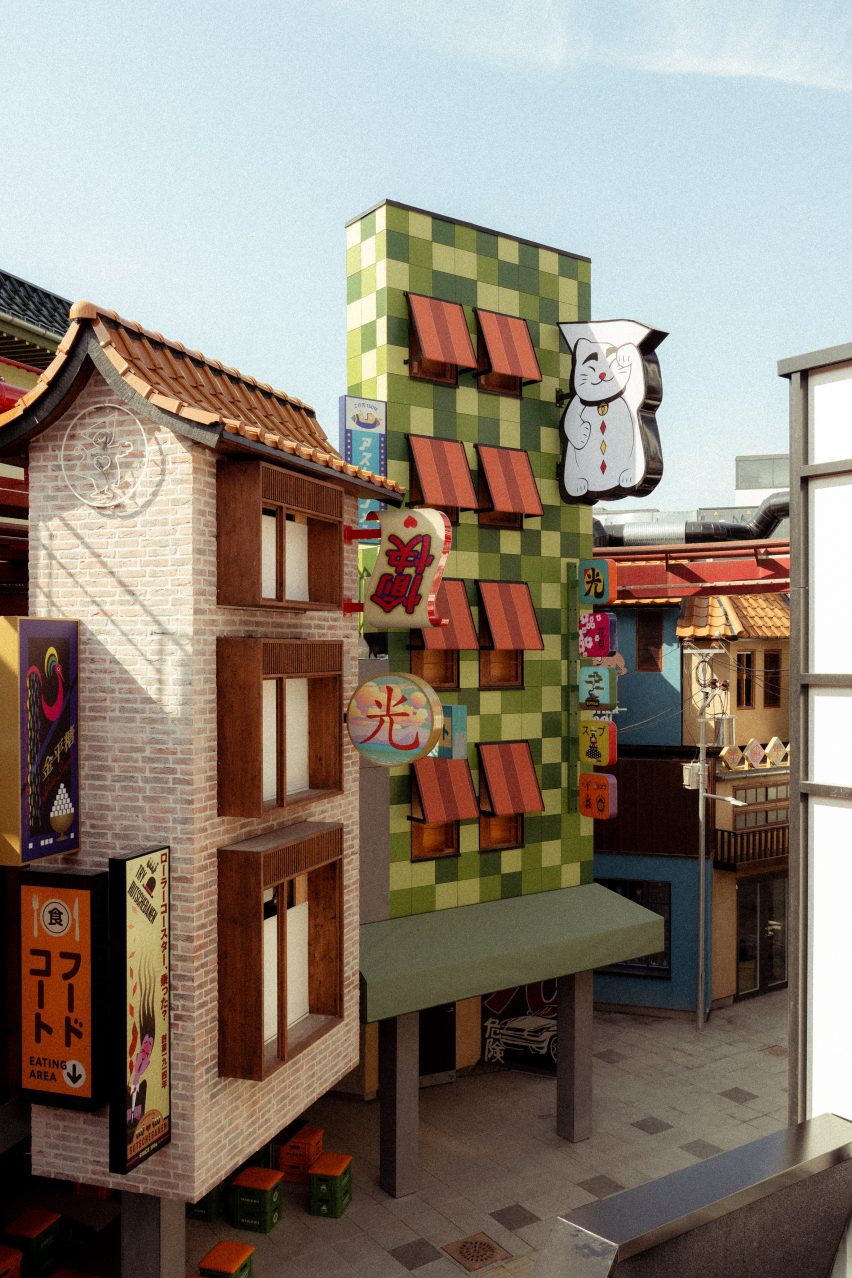
To create the buildings in Hikari, Tivoli sourced 60 tonnes of bricks from Japan, as well as 200 wooden windows and doors, sake barrels and kokeshi dolls.
The team worked on the design of the area with an advisory board that included Danish and Danish-Japanese experts, as well as a Japanese graphic designer who also contributed to the signage design.
Among the designs in Hikari – Japanese for light – are Japanese movie posters, depictions of cherry blossoms, kokeshi dolls, pagodas and cats.
The design team aimed to make the street feel "rich and alive", Altenborg said.
"The cat, for example, appears in several different forms throughout Hikari," he explained.
"Cats have a long presence in Japanese culture, and today the Maneki-neko cat is one of the most recognisable examples. The cat gradually became a character we grew quite fond of ourselves. We don't really have a cat anywhere else in Tivoli, so it felt like a fun character to make part of Hikari."
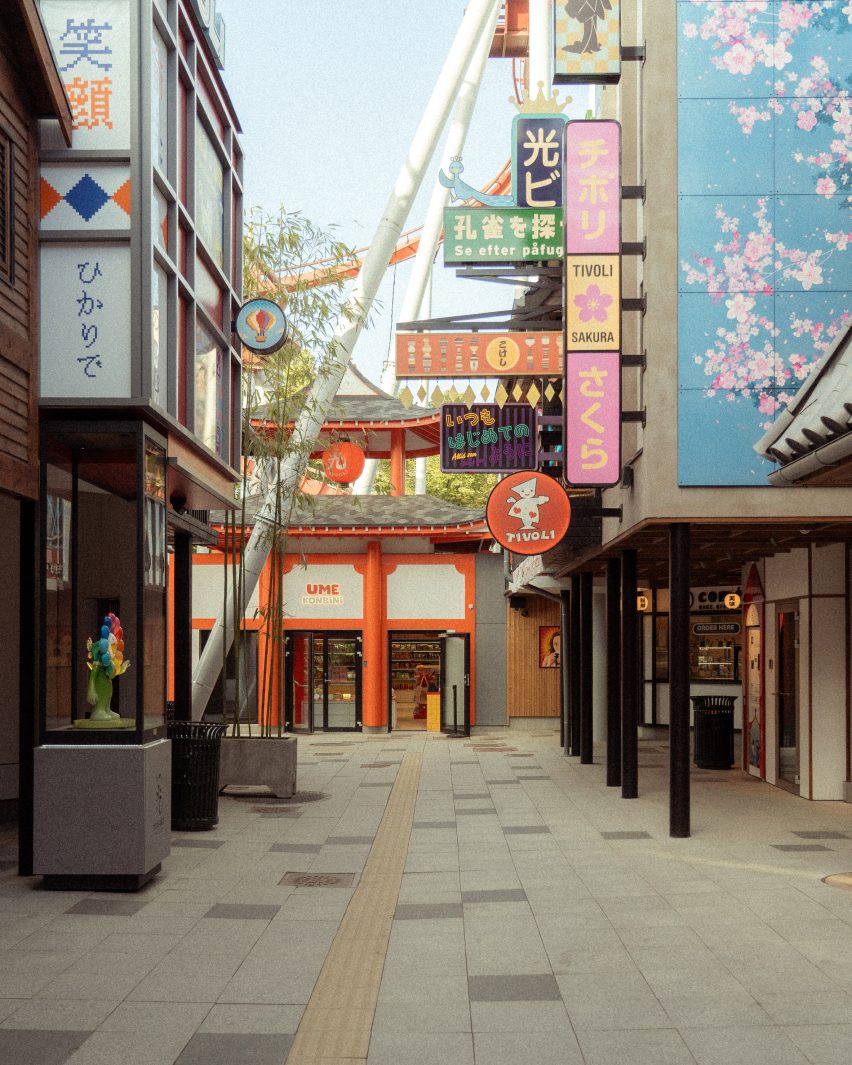
The area also has an artwork by Japanese artist Murakami, which depicts a flower and was partly chosen as Tivoli is known for its gardens.
"Takashi Murakami was a particularly interesting choice because his work bridges traditional Japanese visual culture, contemporary art and popular culture," Koch said.
"The smiling flower feels almost made for Tivoli," she continued. "We are, after all, known as an enchanting garden with unique flowers, so there is something very natural and playful about having Murakami's flower become part of our garden."
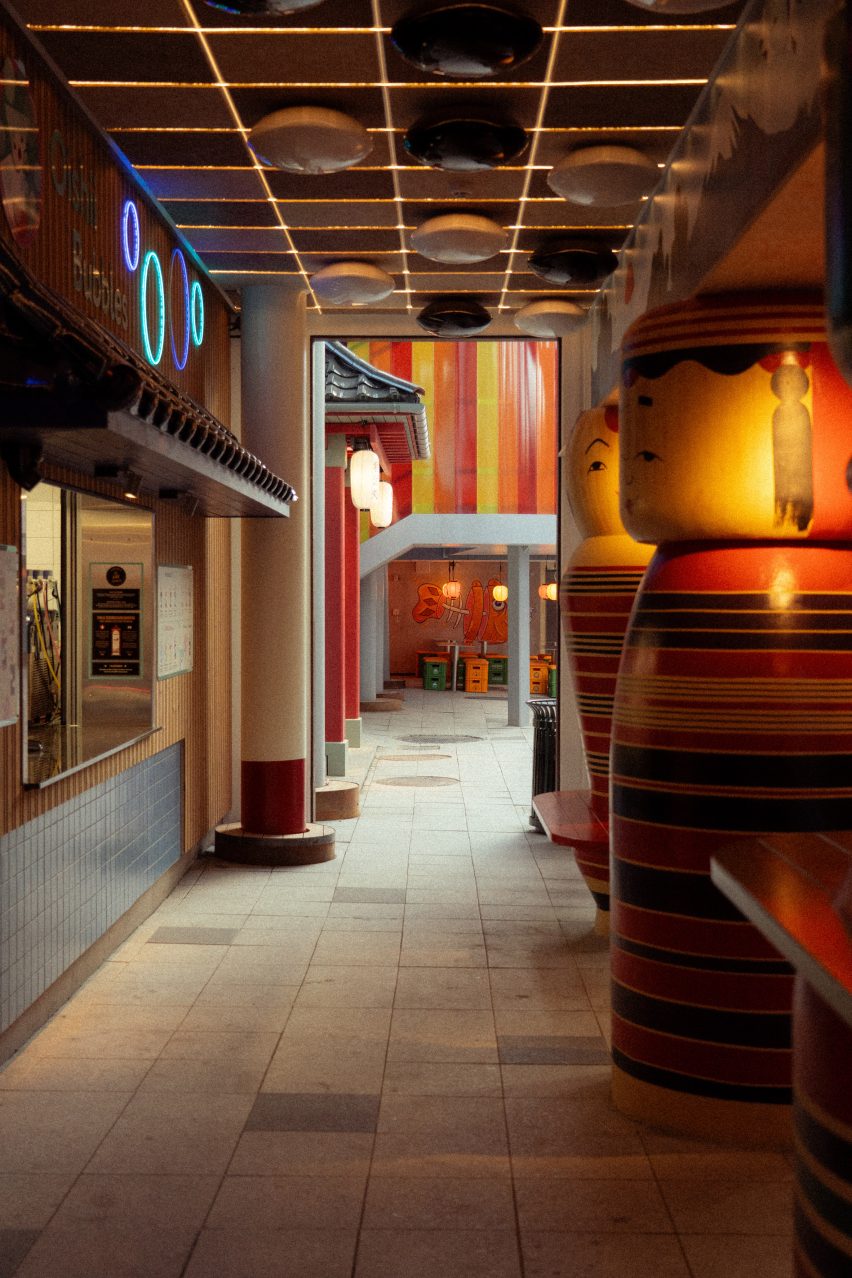
While amusement parks have a long tradition of depicting buildings from different cultures, creating an area that so fully relies on seemingly typical Japanese designs could be interpreted as exotifying the country.
According to Koch, the amusement park took this into consideration when creating Hikari.
"That distinction has been important to us," she said. "While Hikari is brought together with Tivoli's own architecture and historical tradition, we have spent years developing the area, travelled to Japan, involved Japanese consultants and partners and carefully selected everything from architectural references and artworks to materials and products."
"We did this to ensure the area would be Tivoli's interpretation of Japan but at the same time genuinely respectful of its origin," Koch continued.
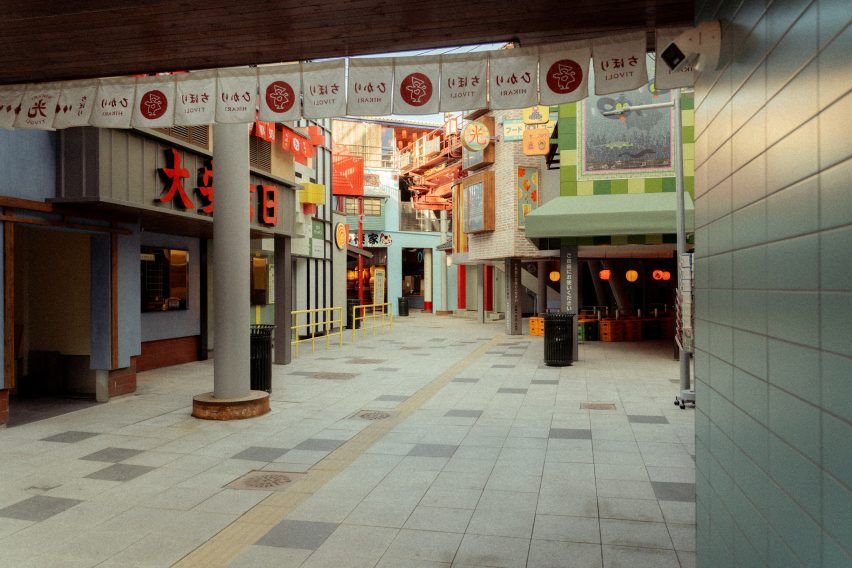
"Our ambition was never to build a miniature Japan or claim to represent Japanese culture in its entirety," she added. "Hikari is a Tivoli-interpretation inspired by Japan."
The project, which was five years in the making and opens at a time when there is extensive interest in Japan in Denmark, is Tivoli's most ambitious architectural investment for over 200 years.
The amusement park is betting on it continuing to attract people over decades to come.
"Japan is attracting growing international interest, but the qualities that inspired us: craftsmanship, aesthetics, attention to detail and the interplay between tradition and innovation, have had a much more enduring appeal for Tivoli," Koch concluded.
Previously at Tivoli, BIG released visuals of a pagoda-like hotel for the amusement park. In Seoul, MVRDV incorporated facades of nearby buildings onto the walls of an indoor theme park.
The photography is by Anne-Sophie Rosenvinge.