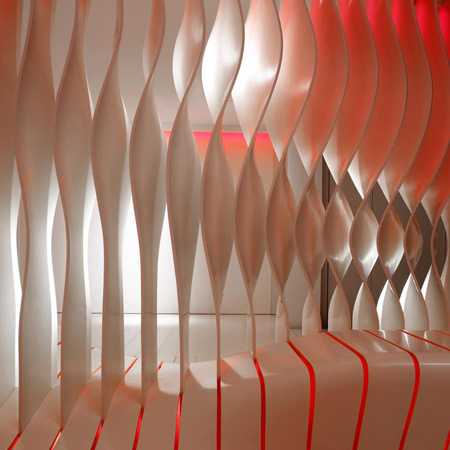
Cosentino supports architectural creativity with Ēclos mineral surface
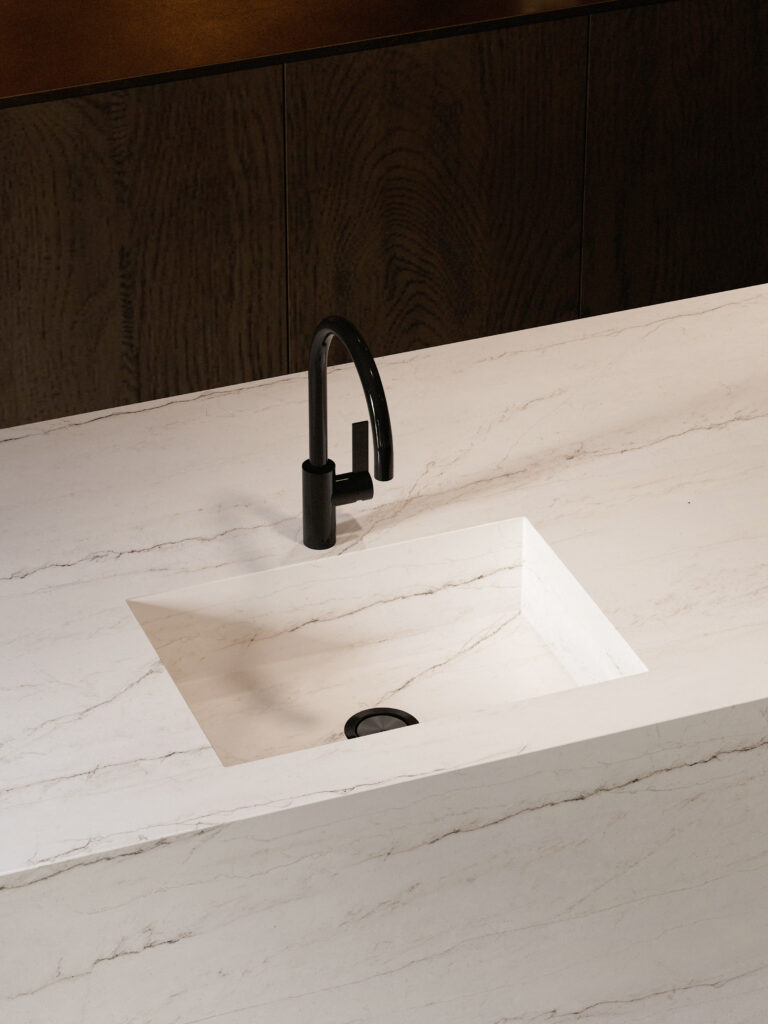
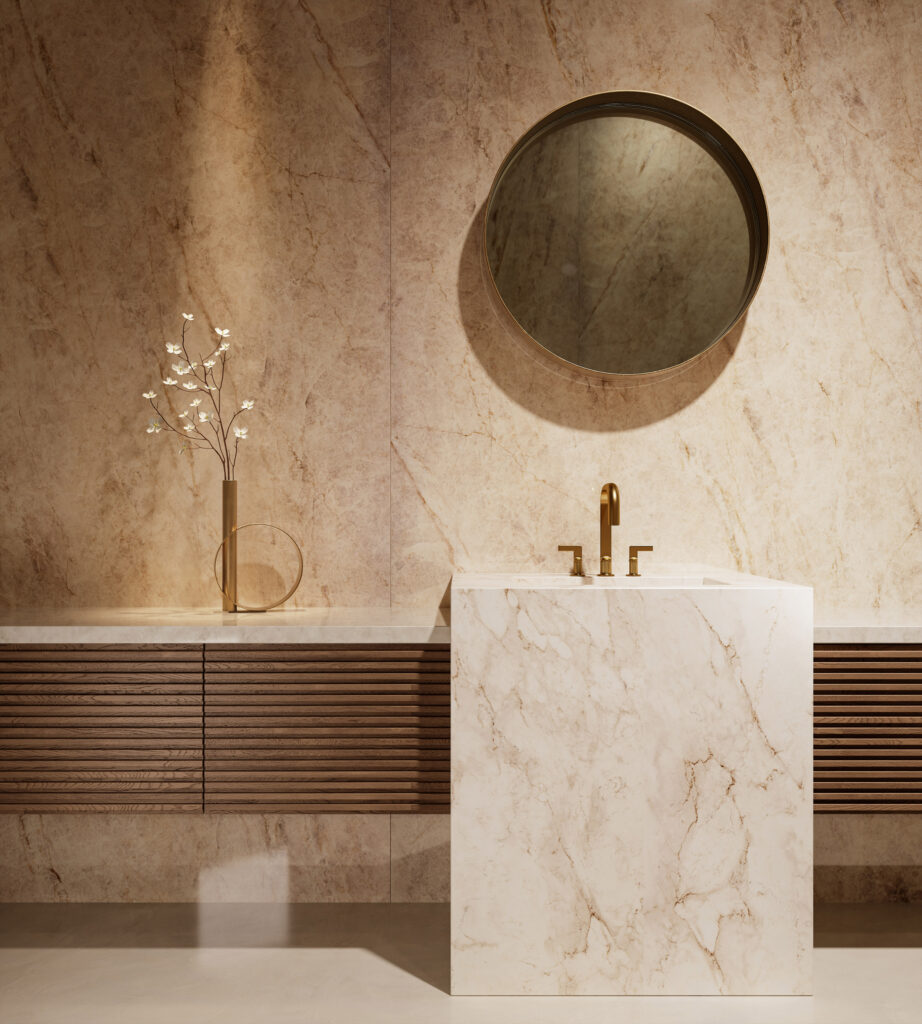
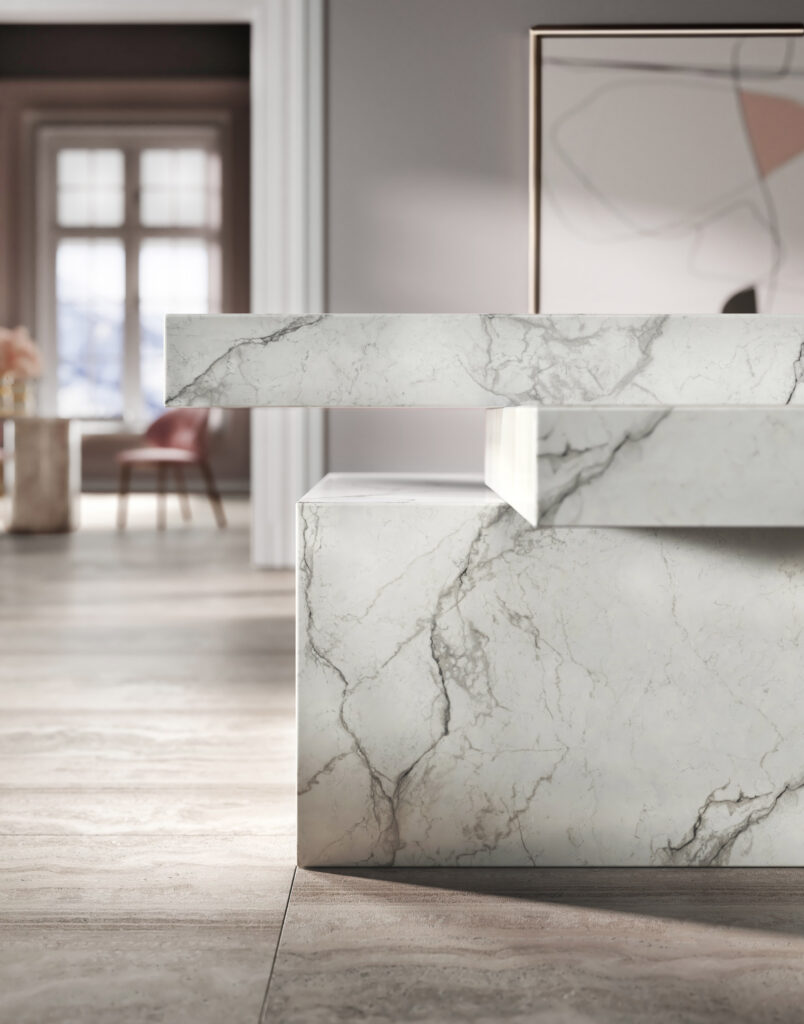
Cosentino aims to put the creative freedom of architects and designers front and centre with its Ēclos surface, designed for three-dimensional compositions with refined edges, corners and waterfall ends.
Ēclos is the Spanish brand’s latest mineral surface material, made with advanced methods to emulate the look of natural stone and be free of crystalline silica.
The surface is made with Cosentino’s proprietary Inlayr manufacturing process, which makes the rich and naturalistic veining run through the slab.
This gives Ēclos a premium look, Cosentino explained, and makes it a fitting constituent for the most sophisticated interiors.

According to Cosentino, it is in the junctions and details that a kitchen or room feels resolved and where its architectural character emerges.
“For architects and designers, the section deserves as much consideration as the elevation,” said the company. “The placement of a joint, the treatment of an edge and the relationship between adjoining surfaces shape how a material is perceived.”
“These details establish the architectural language of an element, whether the intention is to suggest a continuous volume or to make its assembly visible.”

Although surfaces are often selected based on their colour or pattern, Cosentino says that full-body design should be just as crucial a consideration, allowing exposed edges and transitions between levels or materials to contribute to building a coherent form.
“With Ēclos, the patterning is constructed within the slab rather than confined to its face,” continued the brand. “That makes the relationship between surface and depth an important part of the design conversation, particularly where edges remain visible.”
“The interest lies not just in the appearance of the material, but in how it can be cut, assembled and brought into a project with adjacent finishes.”

Its fabricators can advise how cutting, profiling, jointing and installation can help a designer’s vision come together.
The process can involve reviewing samples, fabrication drawings and, where appropriate, physical mock-ups.
“The position of a seam or the treatment of an exposed edge can subtly alter the proportions and perceived weight of an element,” said Cosentino.
“The aim is not necessarily to make every joint disappear, but to make each one deliberate.”

“Whether the intention is a continuous volume or a clearly expressed assembly, the junction deserves as much consideration as the surface itself,” the brand continued.
Ēclos launched earlier this year and joins an expanding portfolio of low-silica, high-recycled mineral surface worktops from Cosentino, including Silestone, Dekton and Sensa.
It is suitable for both residential and commercial environments and can be used on worktops, splashbacks, walls and other surfaces.

The first Ēclos collection – Eclectic Veins – incorporates 10 stone-like designs, ranging from ice-white styles to dramatic darks, all made with a minimum of 50 per cent recycled content.
The material is practical for everyday use, withstanding scratches and stains, and is easy to clean and maintain.
It is also resistant to temperatures of up to 220 degrees Celsius, including contact with hot cookware.
To learn more about Cosentino and Ēclos, visit the company’s website.
Read more







Recommended stories
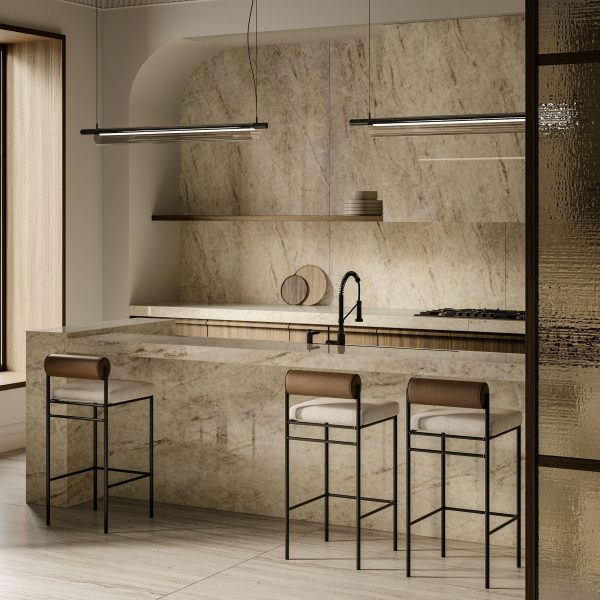
Cosentino introduces new generation of mineral surfaces with Éclos
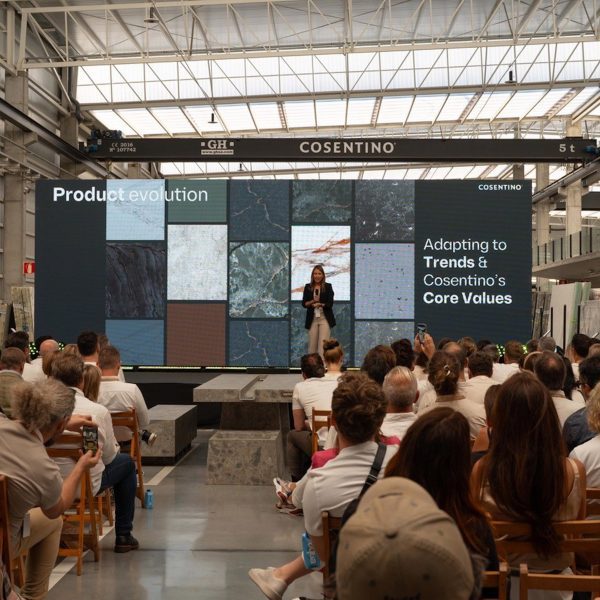
C-Next Designers Europe explores designs for a “meaningful future”
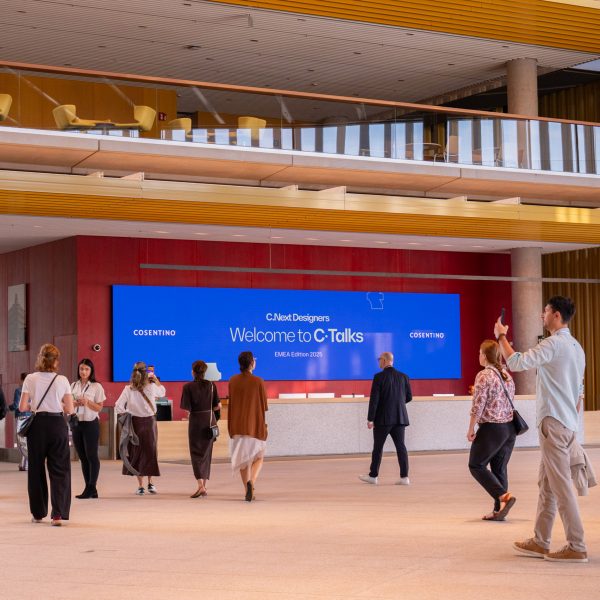
Cosentino hosts C Next Designers to explore interior design trends
C Next Designers EMEA brings together over 250 professionals for design conference in Almería
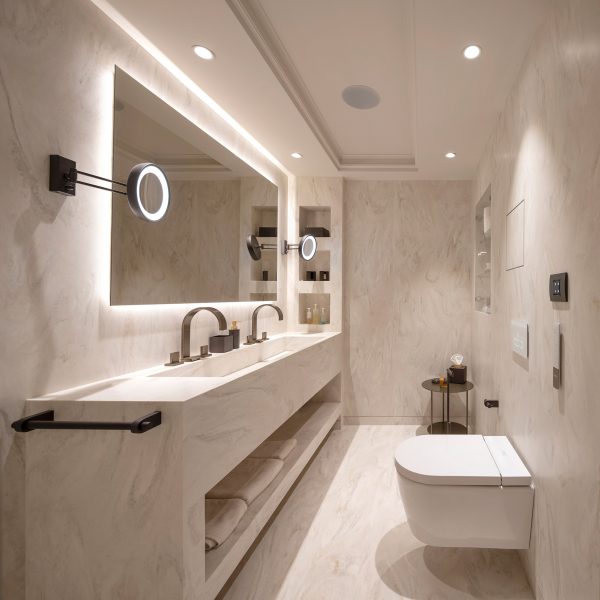
Corian Solid Surface used to create “seamless” elegance in Sofia bathroom
Corian Design aims to achieve “exceptional durability” in Berlin apartment complex
Cosentino designs beige-toned surface to bring a “touch of sophistication”