Not a Hotel Architects converts brutalist Tokyo warehouse into own office and headquarters

Photography by Not a Hotel
Japanese company Not a Hotel‘s in-house architecture team has turned a 1967 warehouse into a workspace divided by glass partitions and filled with design classics, including an entire Jean Prouvé house.
The former logistics warehouse has a brutalist design and spacious interior with seven-metre-tall ceilings.
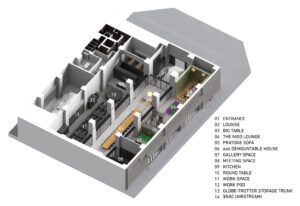
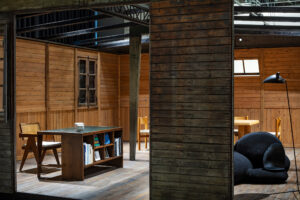
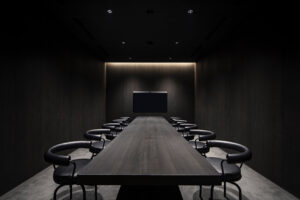
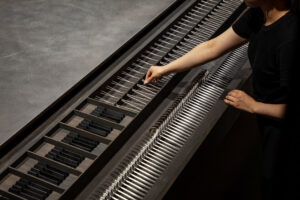
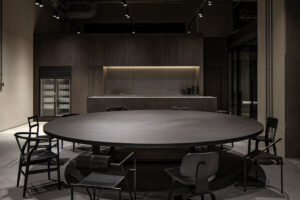
To create zones that could house different departments for the Not a Hotel (Nota) company, which is known for its striking hotel designs, the architects added three-metre-high glass partitions that divide the floor plan into three rows.
These were then divided into multiple smaller rooms that have different functions.
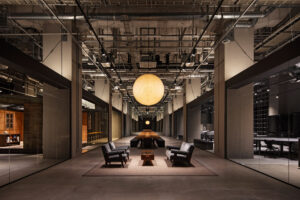
While creating the new interior, the in-house team, called Not a Hotel Architects, decided to keep the building’s existing structure and make it a defining feature of the design.
“The project embraced the raw, brutalist beauty of the existing structure – retaining its steel frame and exposed concrete surfaces,” Nota told Dezeen.
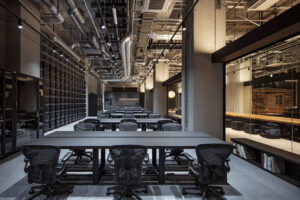
The building will function as the office and headquarters for Not a Hotel, as well as a location that could be used by the owners of its Nigo House – a hotel built into a cliff overlooking Tokyo Bay and designed by artist Nigo.
“We wanted the Nota office to not just be a place for our employees but two other things: a foundational base for the brand’s vision and identity, as well as a place to host the Nigo Lounge for owners of The Nigo House,” the company said.
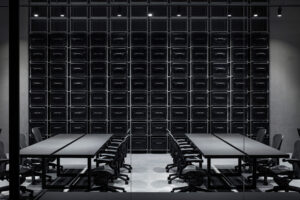
As a result, the office features a mix of both unusual Nigo designs and design classics, with the large spaces enabling the architects to play around with the interior.
“The high ceilings created a great canvas to experiment with interior design, including exhibiting a bit of Nigo’s rare goods collection in USM Haller boxes up to the ceiling as well as installing the Jean Prouvé demountable house,” Nota said.
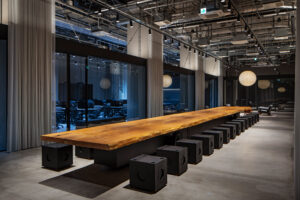
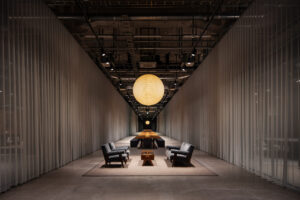
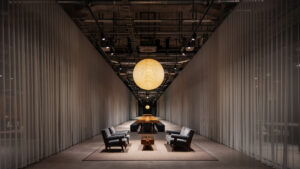
In the Harumi Lounge, a 15-metre-long table with a decorative wooden tabletop sits underneath the seven-metre-tall ceiling. Translucent curtains can be closed on both sides to create a calmer environment and shield it from the workplaces next door.
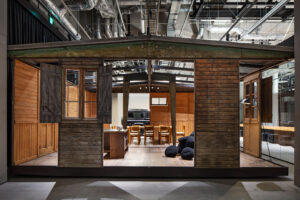
An original demountable house by architect Prouvé has its own room and can be used for work or meetings.
“Its inclusion serves as a daily reminder and educational tool for the architectural team regarding material longevity and functional beauty,” the company explained.
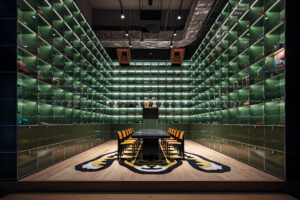
The Nigo Lounge, which is near the office entrance, features three walls clad with 352 USM Haller cabinets filled with design and art pieces.
Another room holds Nota’s library of physical architecture samples inside 96 custom Globe-Trotter trunks, which function as a materials library that is searchable via QR codes.
The design pieces on display in the headquarters were chosen as a callback to things that inspired the launch of the company, which has a strong design focus.
“Our founder Shinji Hamauzu was a vintage furniture collector, and he started Not a Hotel with the idea that he wanted to build properties that could be a place to exhibit masterpieces of design,” Nota said.
“So the main showpieces in the office are all things related to our brand and our creative community, as well as our inspirations: many pieces by the late designer Virgil Abloh, vintage furniture from Prouvé, Perriand, and Jeanneret.”
The project has been shortlisted in the large workplace interiors category of the 2026 Dezeen Awards.
Not a Hotel recently released designs for a giant Poké Ball guest room and is working with Nigo and Pharrell on a new district in Tokyo.
Photography by Not a Hotel
Read more
Recommended stories
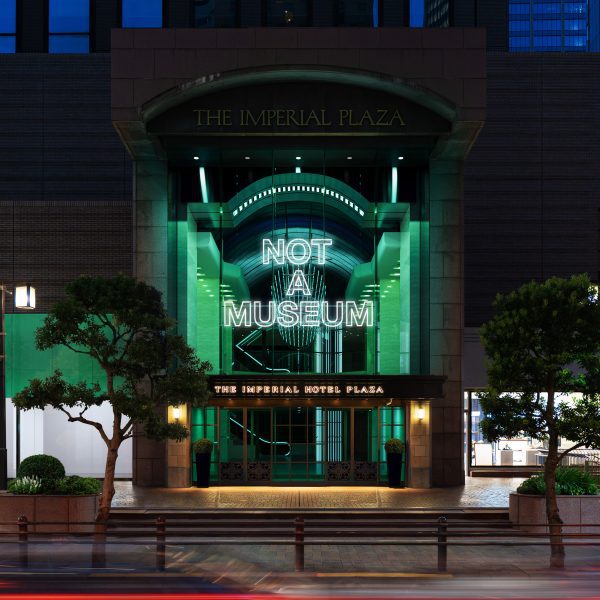
Not a Hotel to open Not a Museum at Imperial Hotel Plaza Tokyo ahead of demolition
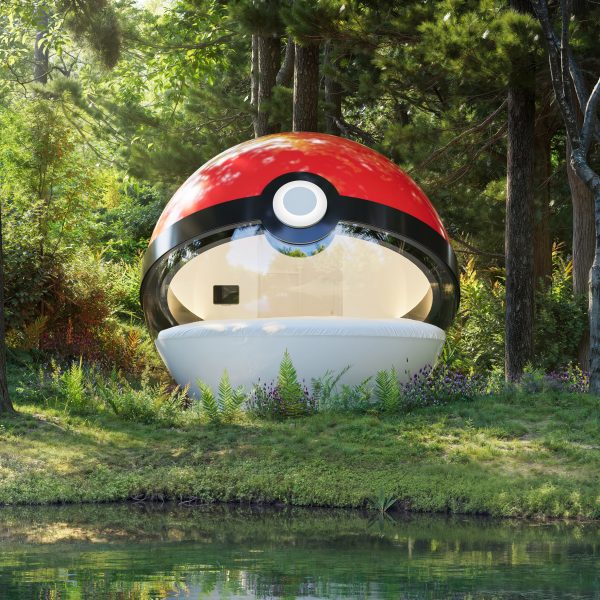
Not A Hotel reveals design for giant Poké Ball guest room in Japan
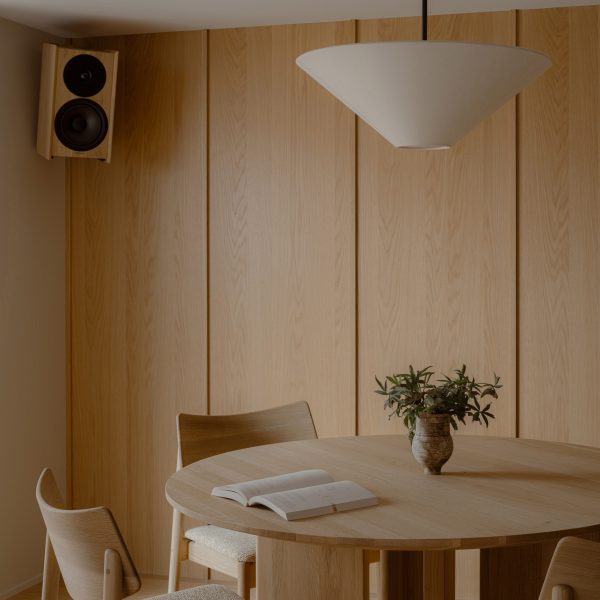
Eight-room Tokyo hotel designed to feel like staying “at the home of a tasteful friend”
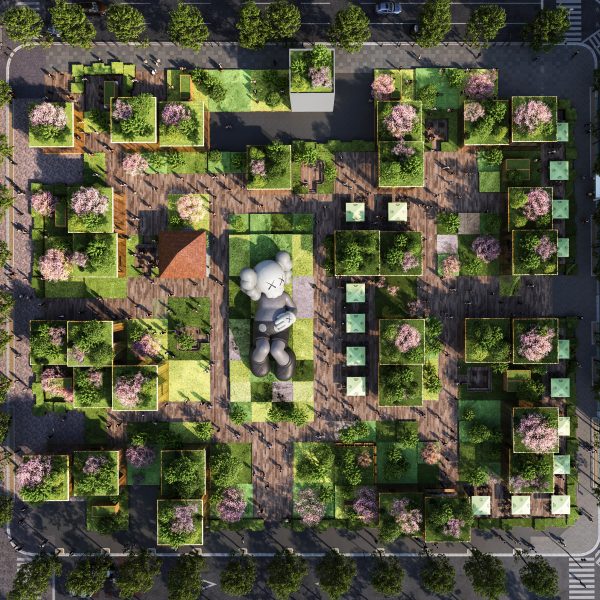
Pharrell and Nigo design “surprising and entertaining” district in Tokyo
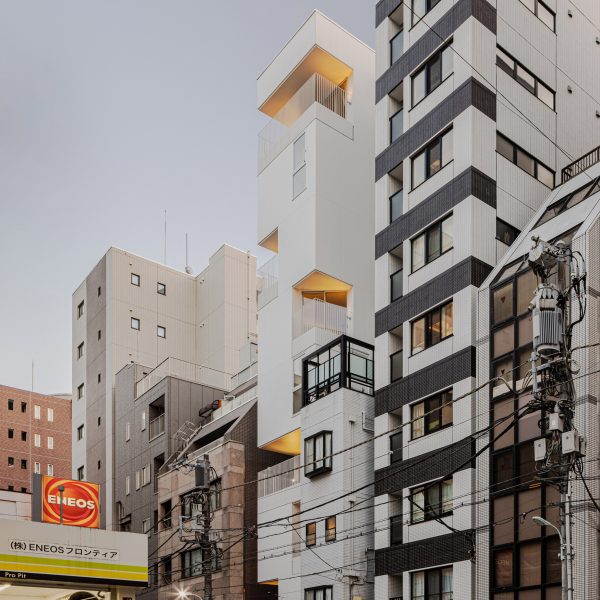
Kooo Architects creates narrow Tokyo hotel with cut-out balconies and terraces
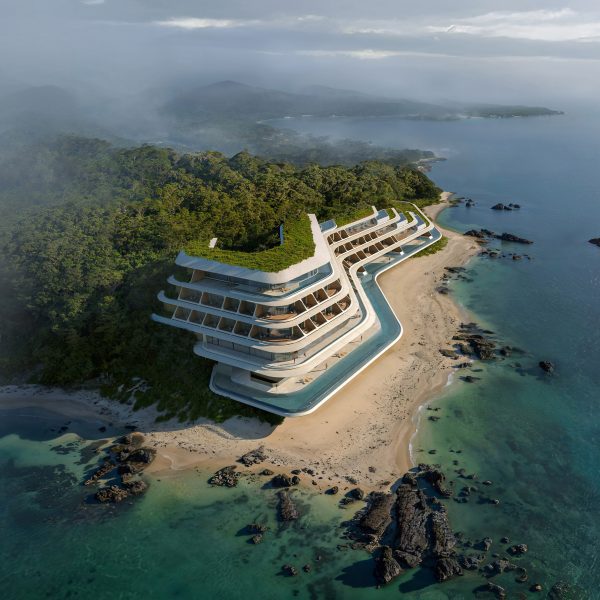
Zaha Hadid Architects designs hotel to wind around Okinawa beach
Kooo Architects designs rural hotel to blend with village in China