“Intensely physical patterns” cloak Gerhard Richter’s self-designed gallery in Doha

Photography by Iwan Baan
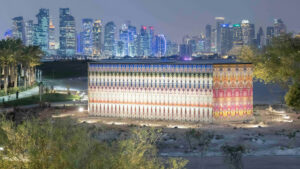
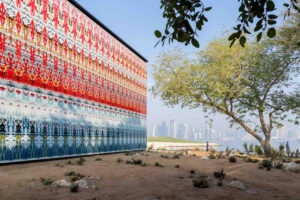
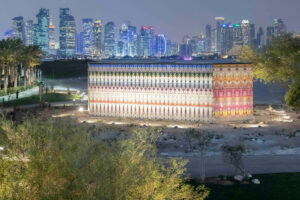
Kaleidoscopic patterns adorn the exterior of this pavilion in Doha, Qatar, designed by artist Gerhard Richter with US studio Selldorf Architects as an art gallery.
Simply called Doha Pavilion, the psychedelic structure was conceived a work of both art and architecture for MIA Park – a public space outside the Museum of Islamic Art by IM Pei.
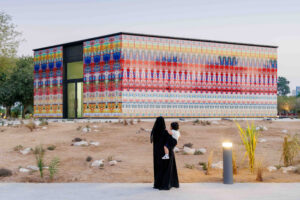
It serves as a permanent pavilion for the site and as a gallery for Richter’s own work.
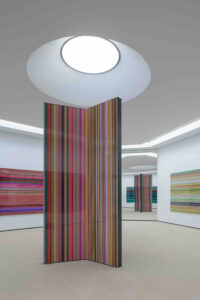
Richter designed the Doha Pavilion with Selldorf Architects as a reference to his Strip paintings – a series that involved digitally dividing his Abstract Painting artwork into vertical stripes, building on his earlier explorations of colour, pattern and repetition.
“My trip to Doha in 2013 came two years into developing my Strip paintings, and the city’s architecture and history sparked an idea for a pavilion that could unite the thematic threads of that body of work,” said Richter.
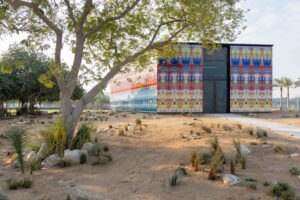
“The pavilion’s exterior features decorative tiles based on the patterns that first led me to the Strips,” he continued. “Doha is the right place and the only place for my pavilion.”
Doha Pavilion has a six-sided form, wrapped in psychedelic tiles displaying repeating, kaleidoscopic patterns that recall geometries seen in Islamic art, nodding to the project’s context.
Selldorf Architects founder Annabelle Selldorf said the design reflects a “profound culmination of many years of [Richter’s] research into abstraction”.
“I am grateful for the welcome that Gerhard Richter extended to me, and for the wonderful dialogue that ensued, as my studio made manifest the work that had existed in his mind,” she said.
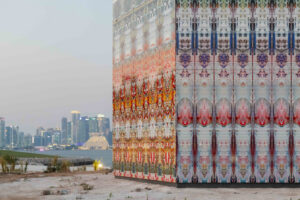
“This pavilion is the profound culmination of many years of his research into abstraction, with intensely physical patterns that invite you to immerse yourself in their endlessness,” she continued.
“The more I look at them, the more fascinating they become to me as an architectural space to experience.”
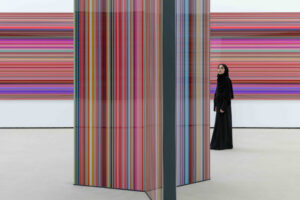
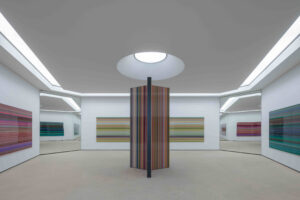
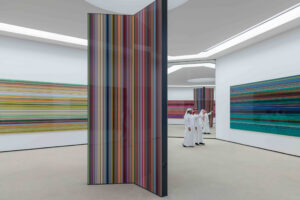
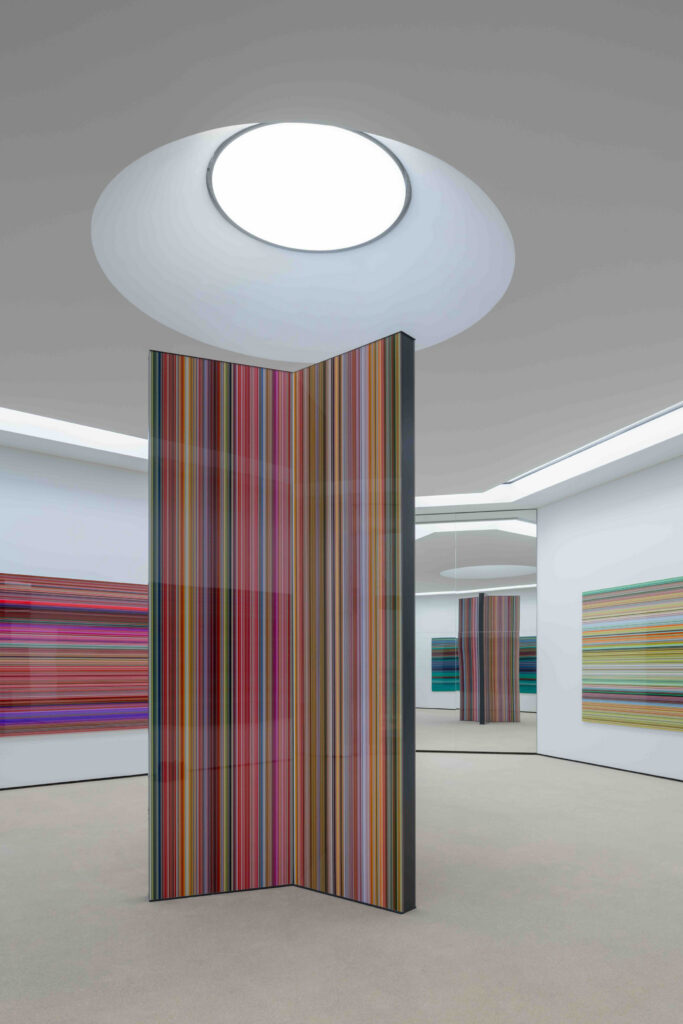
Inside, Richter’s paintings and sculptures are displayed throughout the hexagonal gallery space. This includes both archival and new works made especially for the pavilion.
Among the new works is the Strip Tower – a freestanding tripartite sculpture.
The opening of Doha Pavilion coincides with the inaugural edition of Rubaiya Qatar 2026, which is an international visual arts quadrennial.
Elsewhere, Selldorf Architects recently completed the controversial remodel of the National Gallery’s Sainsbury Wing. In an interview with Dezeen after the opening, founder Selldorf said that “what matters is I know why we did things”.
Photography by Iwan Baan
Read more
Recommended stories
Design Doha Biennial 2026 set to explore how traditional crafts can shape the future of design
Sculptural roof tops women’s mosque in Qatar by Diller Scofidio + Renfro
Geometric museum dedicated to Maqbool Fida Husain opens in Doha
Qatar Museums launches Design Doha biennial for MENA and international designers
Ten highlights from Design Doha exhibition Arab Design Now
Herzog & de Meuron unveils sculptural concrete museum on Qatari island
Design Doha Biennial postponed “in light of the evolving situation in the region”