ARCH 2102: Harmonic Rhythms at University of North Carolina at Charlotte
A methodology based on Black musical traditions forms the basis for the University of North Carolina at Charlotte‘s ARCH 2102: Harmonic Rhythms course.
Course details
School: University of North Carolina at Charlotte
Course: ARCH 2102: Architecture Design Studio IV – “Harmonic Rhythms: Architecture, Culture, and Improvisation in San Juan”
Type: undergraduate
Location: Charlotte, North Carolina and San Juan, Puerto Rico
Course dates: Spring 2027 Semester (January to April)
Application deadline: 15 January 2027
Course overview
In an era dominated by standardised parametric modelling, ARCH 2102: Harmonic Rhythms challenges sophomore architecture students to reclaim technological and spatial agency.
Operating through a pedagogical framework known as the “JazzSpace” methodology, this studio investigates how Black musical traditions – specifically the structural improvisation and polyrhythms of jazz – can serve as a foundational code for future urban design and spatial justice.
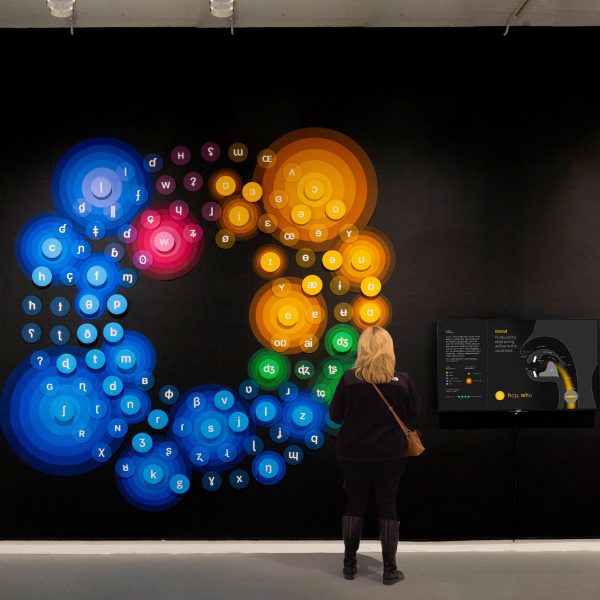
Replacing the static architectural master plan with a generative “visual score”, the studio tasks students with translating abstract musical syncopation into rigorous, climate-resilient architectural proposals.
Prompted by a highly successful 2026 deployment, the Spring 2027 semester will stress-test this methodology through an intercultural field study in San Juan, Puerto Rico.
Students will tackle site-specific climate and displacement challenges in the Caño Martín Peña community, utilizing Édouard Glissant’s concept of “opacity” to rethink sustainable design.
A concrete student result from this framework is the “chronometric cube” – a physical 3D assemblage where students translate the temporal structure and layers of a live jazz track into a static, rigorous spatial frame, proving that ecological resilience is inextricably linked to the maintenance of local cultural identity.
What will I learn during this course?
- generative AI and hybrid workflows: how to synthesise analogue drafting with AI tools (like Stable Diffusion and PromeAI) for “human-in-the-loop” architectural design
- the jazzSpace methodology: translating the structural improvisation and polyrhythms of jazz into a rigorous geometric lexicon and 3D spatial notations
- culturally responsive climate adaptation: designing resilient infrastructure that centres local cultural identity and opacity, moving beyond purely technocratic site analysis
- live auditory notation: sketching gestural sound shapes in real-time to translate live acoustic performance into spatial form
What are the requirements?
Students must participate in either the San Juan, Puerto Rico field study deployment or the rigorous “proxy immersion” framework for remote data synthesis and community engagement.
What facilities and resources are available?
Students utilise the David R. Ravin School of Architecture’s digital fabrication labs (including CNC routing for a large-scale, collaborative 8′ by 24′ site mega-model), generative AI software, and the College of Arts and Architecture auditorium spaces for live auditory performance mapping.
The studio also leverages on-the-ground research resources during the immersive field study in San Juan.
What career prospects can I expect upon graduating?
Graduates enter the profession equipped to lead as architectural designers, computational design specialists, and urban strategists.
By mastering both analog fundamental skills and advanced generative AI, graduates are uniquely positioned to tackle complex climate adaptation challenges while prioritizing community engagement and cultural preservation.
Who teaches this course?
Kyle Spence, assistant professor of Critical Design Futures and Computation and 2025 Gambrell Faculty Fellow.
Spence’s interdisciplinary practice, The BAKLab, explores the “place-moment” connection by bridging jazz improvisation, archaeoastronomy, and participatory community design.
His work has received international recognition – including a prize for the Mitchelville Heritage Trail – and focuses on democratising spatial agency through computational design.