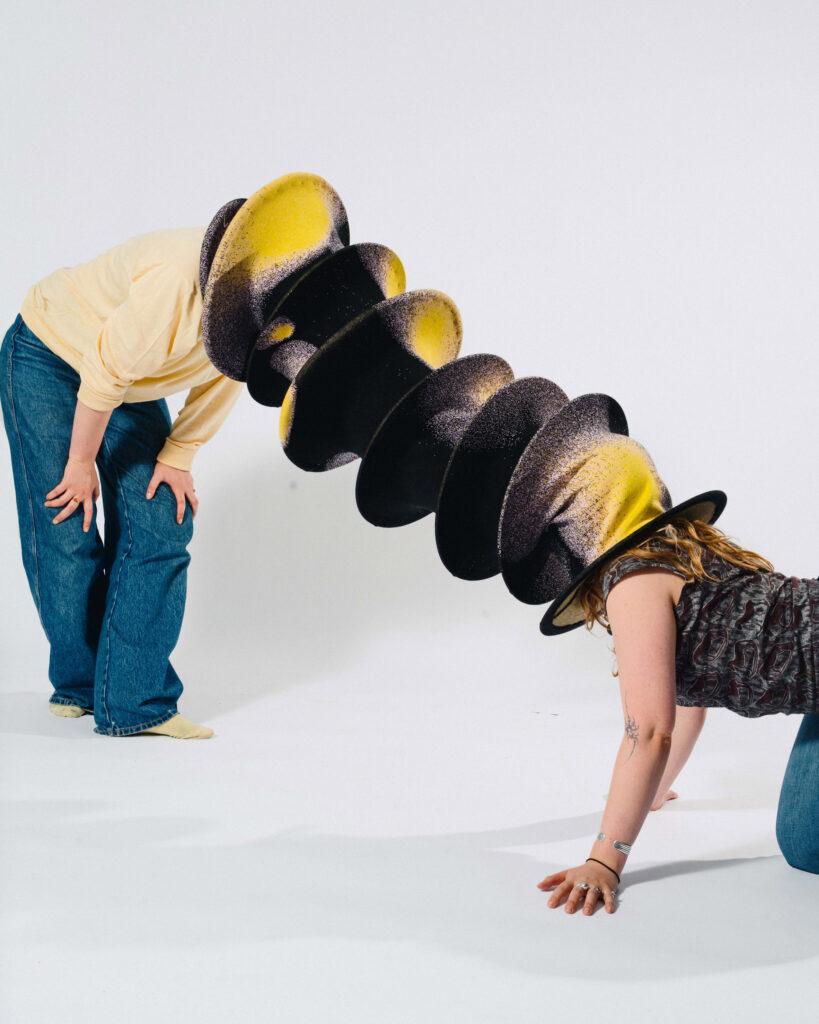
Knitted objects designed to connect spaces are among projects by University of Borås
Knitted textile objects designed to intervene in spaces and connect unexpected environments are among the projects by the University of Borås.
Also featured is sportswear crafted to be transformed into different garments and textiles made from 24 layers of weaving.
University of Borås
School: The Swedish School of Textiles
Courses: MFA Fashion Design, MFA Textile Design, MFA Textile Interaction Design, BFA Fashion Design and BFA Textile Design
Tutors: Stefanie Malmgren de Oliveira, Jan Tepe, Tonje Kristensen Johnstone, Marjan Kooroshnia, Erin Lewis and Tonje Kristensen-Johnstone
School statement:
“The Degree Project is the culmination of the student’s journey, where independent research, creative experimentation and critical reflection come together in a final body of work.
“Developed through studios, workshops and laboratories, each project translates a personal design programme or concept into material form, testing ideas through making, iteration and exploration.
“Grounded in an awareness of sustainability and the changing realities of the textile and fashion industries, the work challenges conventions, explores new possibilities and advances contemporary design practice.
“Together, the projects demonstrate both creative excellence and a commitment to shaping the future of textiles and fashion through critical and imaginative design.”
Ensemble of Iconic Fragments by Sally Bjerre Gaarde
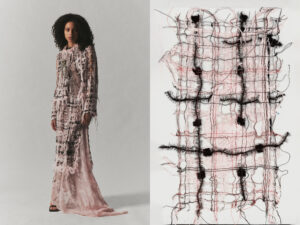
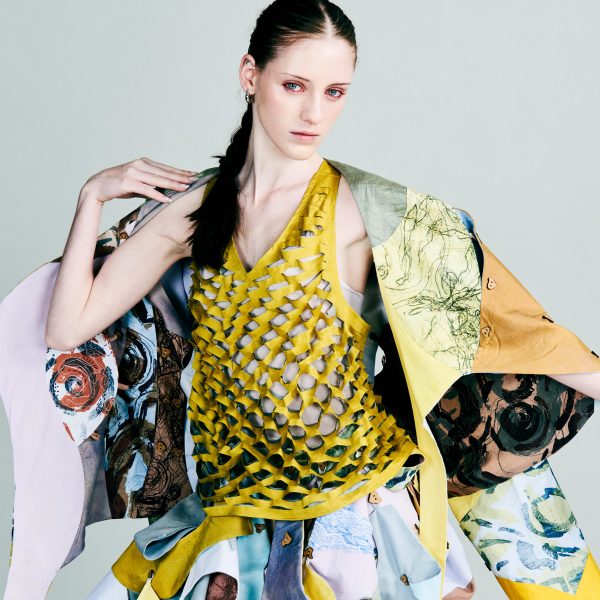
“Referencing is central to fashion practice, with iconic garments continuing to shape cultural understanding through their presence in archives, exhibitions and collective memory.
“This project approaches heritage as an evolving process rather than a fixed record, using materials and garments from the past to reflect on the present.
“By reworking canonised fashion pieces, the collection reactivates their cultural significance within a contemporary context. It explores how references can be used with both precision and intent, while positioning upcycling as more than a sustainability strategy.
“Through craft-based making, the work interrogates ideas of luxury, value and heritage, revealing how meaning can emerge through material and form.”
Student: Sally Bjerre Gaarde
Course: MFA Fashion Design
Tutor: Stefanie Malmgren de Oliveira
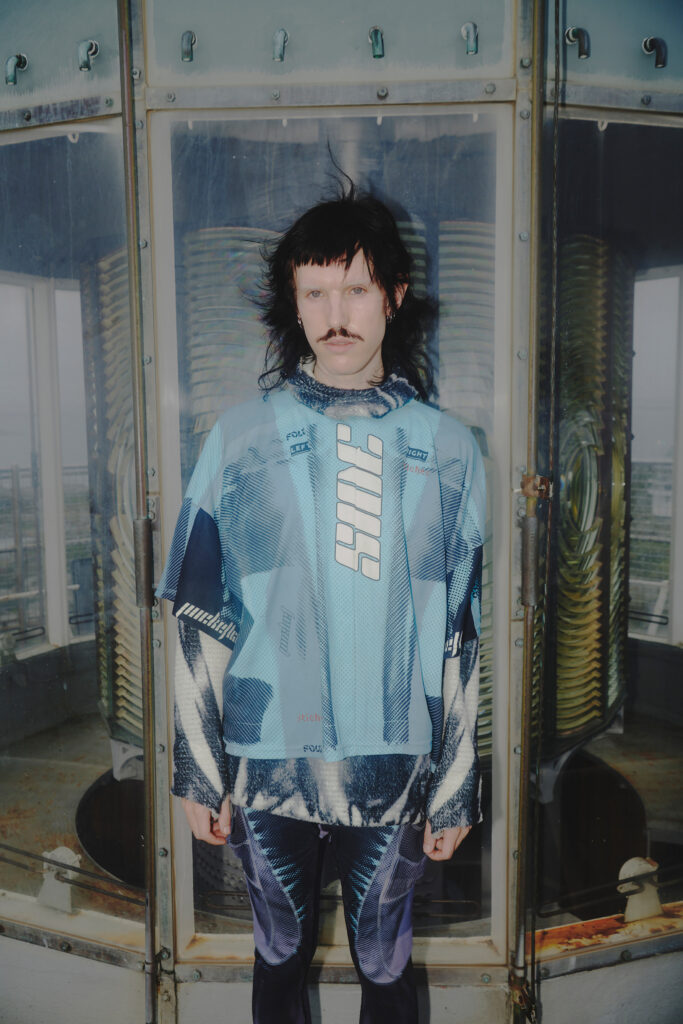
Made for the Long Run – A Construction and Print Design System for Performance Wear That is Made-to-be-Remade by Lara Stöbe
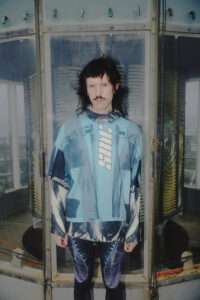
“While redesign is increasingly recognised as a promising pathway towards more sustainable fashion, the performance wear industry has been slow to adopt such approaches due to logistical and financial challenges, as well as concerns that functionality may be compromised.
“This project explores how a garment’s next life can be considered from the outset of the design process. Through strategies such as design for remake and design for alteration, future transformations are built into the original construction, extending the lifespan of materials while maintaining performance.
“Print is used as a communication tool, guiding the actions needed to transform one garment into another. The system is demonstrated through a trail running collection informed by the culture and demands of the sport.”
Student: Lara Stöbe
Course: MFA Fashion Design
Tutor: Jan Tepe
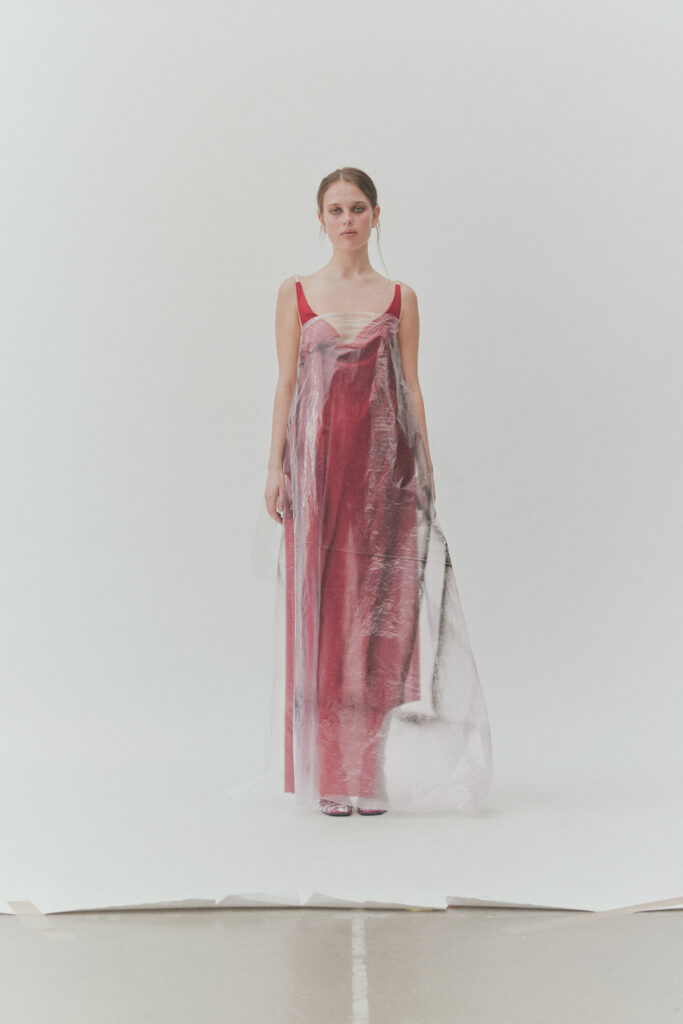
A Well Done Makeshift by Miłosz Jon
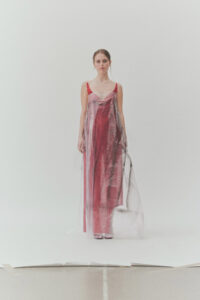
“Makeshift begins with simple acts of adaptation, such as folding a piece of paper to steady a rocking table, gestures that reveal unexpected relationships between problem-solving, resourcefulness and aesthetics.
“Often dismissed as temporary or improvised, makeshift exists outside conventional design discourse, despite embodying a deep sensitivity to material use and longevity.
“This project explores the potential of makeshift as a fashion design methodology, challenging established ideas of making, value and wear.
“Through processes of analysis, improvisation, repurposing and reference, a collection of eight wearable looks emerged. Together, they propose alternative approaches to fashion design, suggesting new possibilities for upcycling, mending and material transformation.”
Student: Miłosz Jon
Course: MFA Fashion Design
Tutor: Stefanie Malmgren de Oliveira
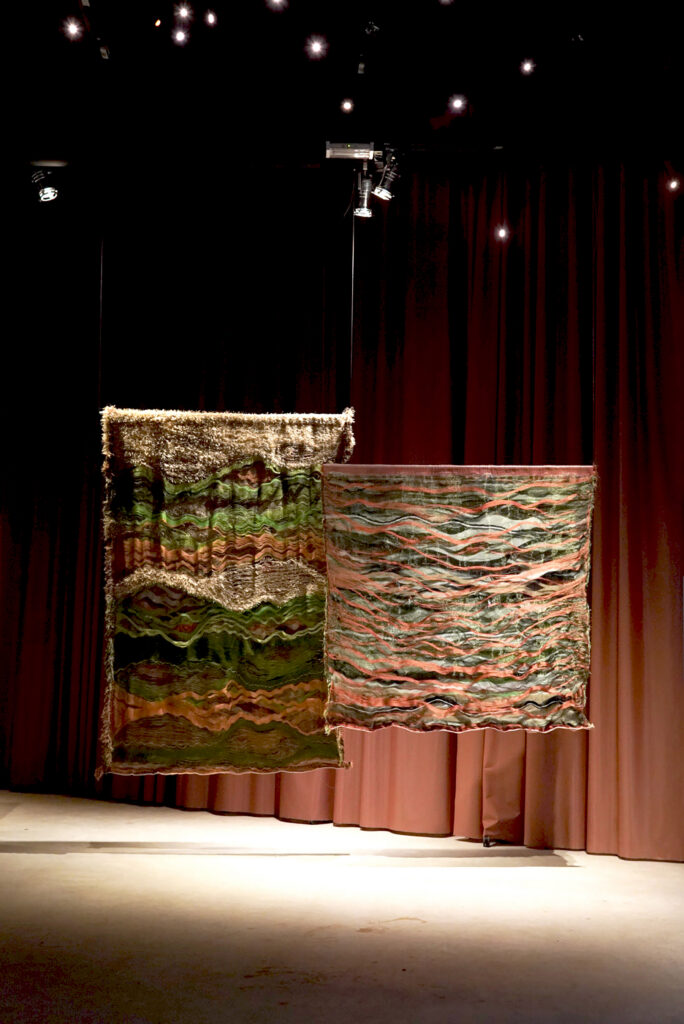
Continuous Flux by Pflox van Oppen
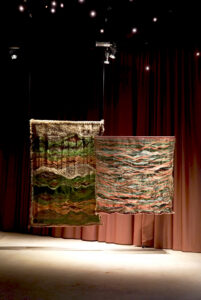
“Continuous Flux is a series of woven textiles shaped by conversations with seven women from the designer’s immediate surroundings.
“Their stories of resilience, healing, loss and independence are translated into colour, material and structure, beginning with a single question: what colour represents a defining moment in your life?
“Rather than illustrating personal narratives directly, the work allows them to surface through layered textile constructions, where colours appear, disappear and re-emerge over time.
“Woven on a jacquard loom using up to twenty-four layers, each piece is physically opened through tools connected to the women’s experiences. The resulting textiles remain in flux, reflecting lives that continue to evolve.”
Student: Pflox van Oppen
Course: MFA Textile Design
Tutor: Marjan Kooroshnia
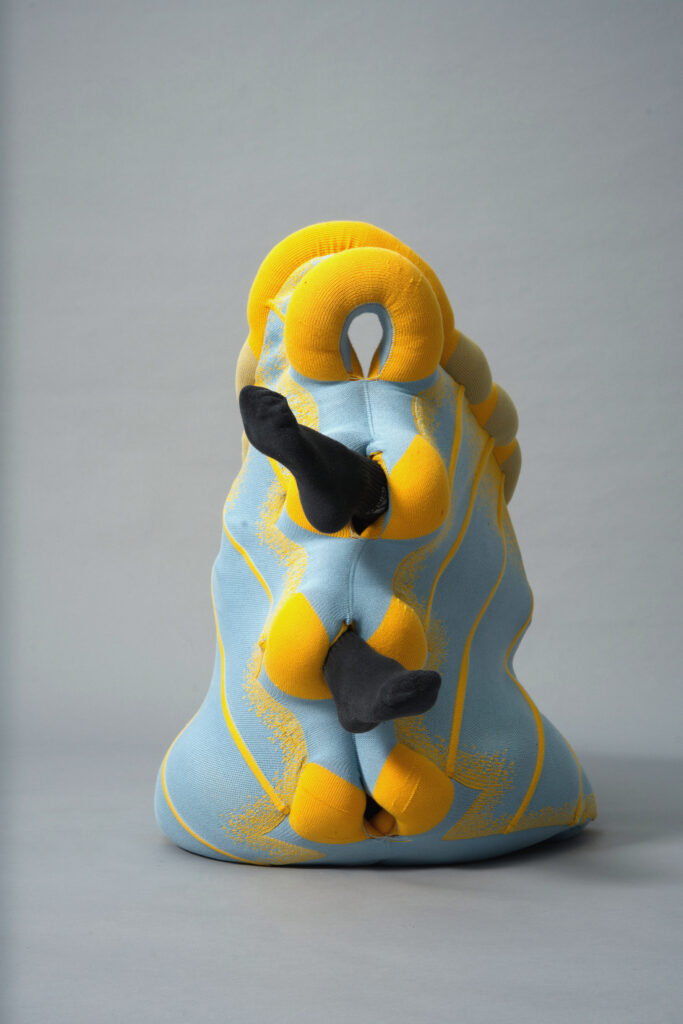
Amorphous Objects Open-Ended Textile Interaction Design for Play and Exploration by Luna Haverkorn
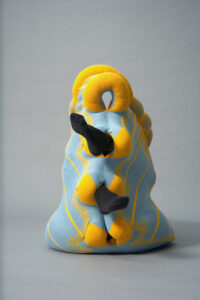
“What happens when an object no longer dictates how it should be used? In contrast to products designed for clarity, efficiency and predefined function, this project explores textiles as open-ended invitations to interaction.
“These transformable objects expand, fold, stretch and adapt around the body, encouraging users to sit, lean, lie down, balance or retreat within them.
“Positioned between furniture, textile and play, they challenge conventional ideas of use and functionality. Carefully considered interaction cues guide engagement without prescribing behaviour, creating space for improvisation and discovery.
“Rather than defining outcomes, the project proposes design as a catalyst for exploration, agency and alternative ways of inhabiting everyday objects.”
Student: Luna Haverkorn
Course: MFA Textile Interaction Design
Tutor: Erin Lewis
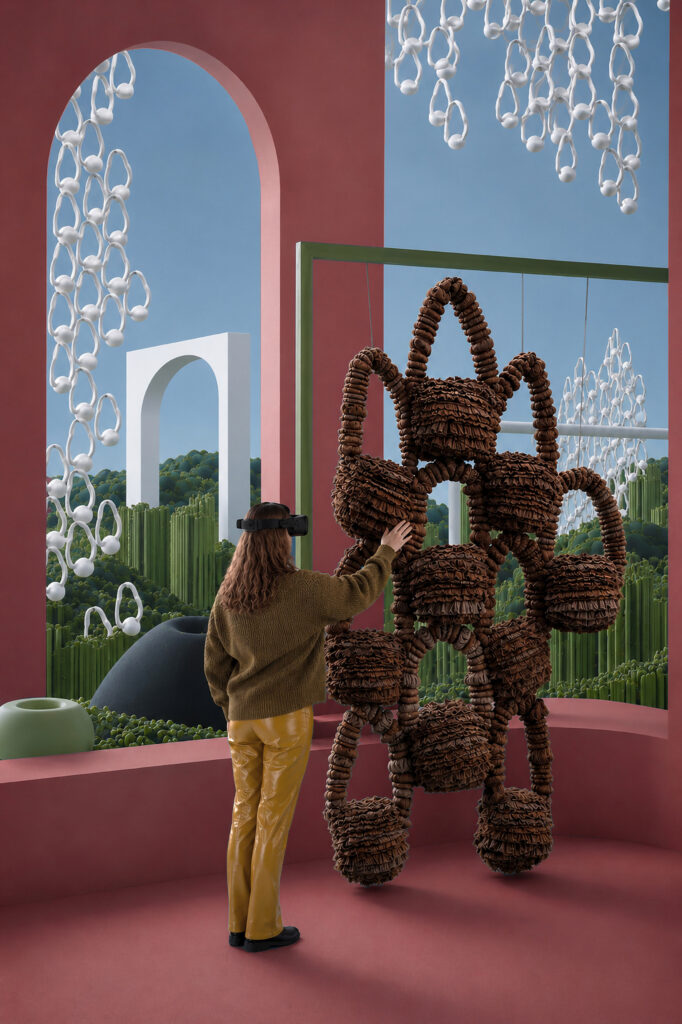
Hybrid Surfaces: Textile as a Portal by Léna Ordronneau
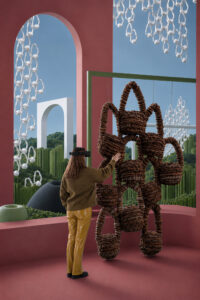
“As our experience of materials becomes increasingly mediated through screens, touch is often replaced by observation. Hybrid Surfaces: Textile as a Portal explores the role of textiles within a world that shifts between physical and digital realities.
“Combining jacquard weaving with virtual reality, augmented reality and AI-generated imagery, the project creates hybrid environments where tactile and digital experiences intersect.
“Virtual textures are translated into sculptural woven forms that retain depth, softness and material presence while extending into immersive digital spaces.
“Developed through an ongoing dialogue between technological and textile processes, the work invites viewers to slow down, move closer, and rediscover the sensory and emotional potential of touch.”
Student: Léna Ordronneau
Course: MFA Textile Design
Tutor: Erin Lewis
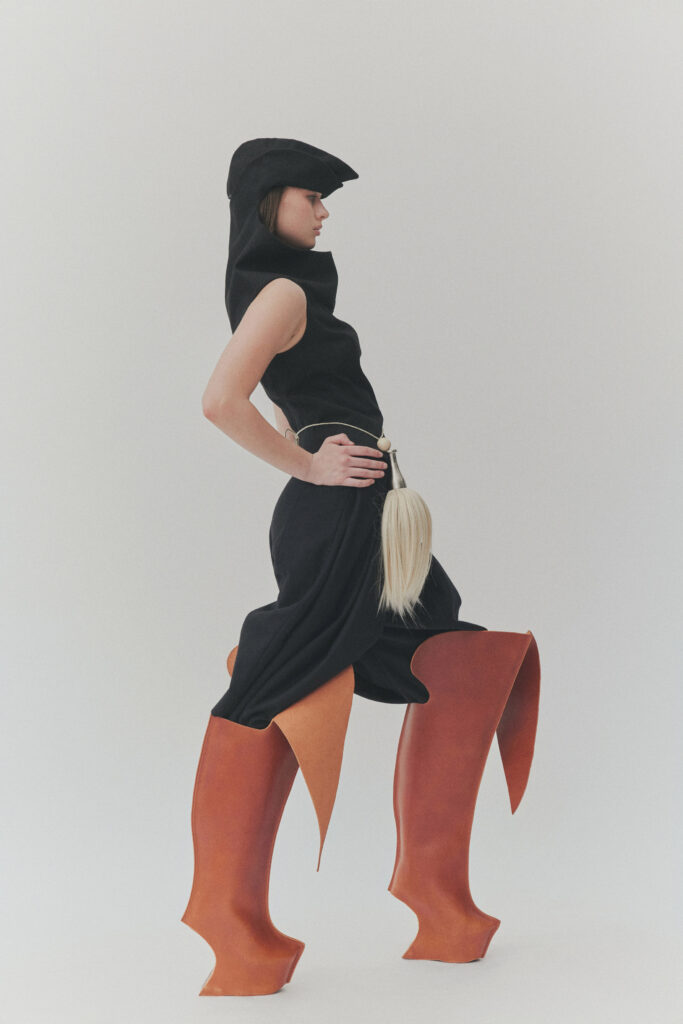
Re(uni)formed by Iris Phillips
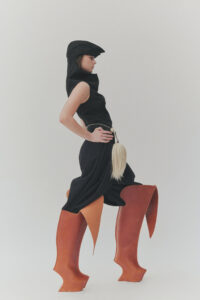
“Inspired by ceremonial military uniforms, the collection explores how clothing can change the way posture and the body are visually perceived.
“Through exaggerated silhouette and construction, the garments alter the body’s visual presence.
“Following historical design principles found in ceremonial military dress, such as verticality, bodily distortion and ornamentation, the project examines how garments can shape posture and influence how the body is visually read.”
Student: Iris Phillips
Course: BFA Fashion Design
Tutor: Jan Tepe
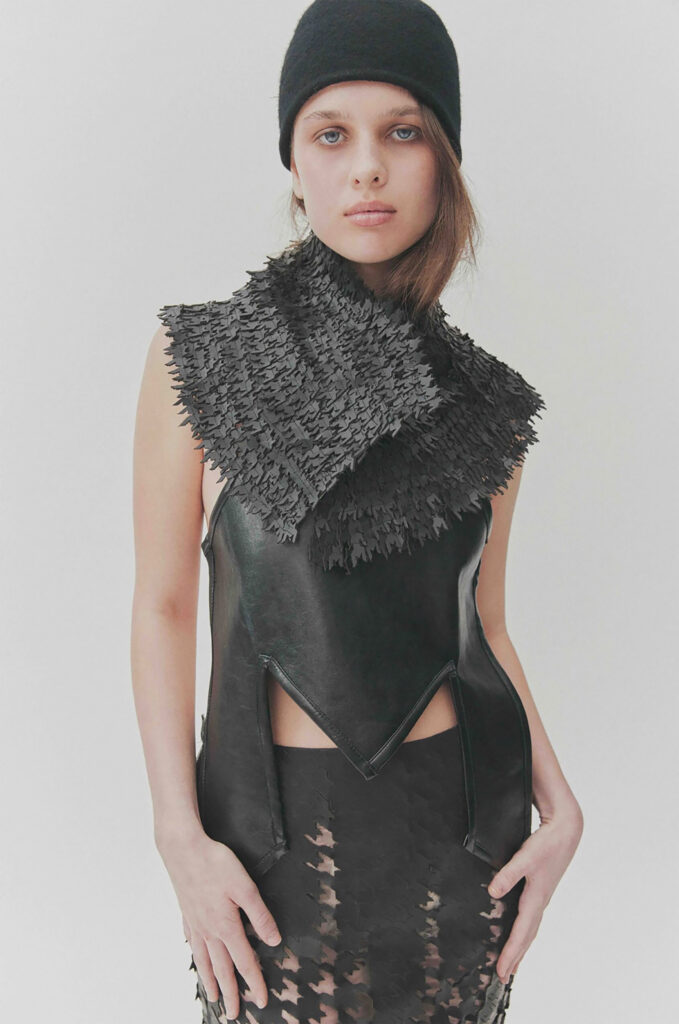
Caught Between Repeats by Signe Sjöström
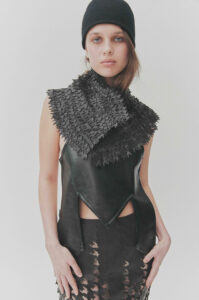
“Houndstooth is reworked through repetition, scale, placement and material – shifting between familiar pattern and new visual expressions.
“This project focuses on working with the classic houndstooth pattern and deepening the understanding of its visual possibilities. With a starting point in the traditional structure of the pattern, this project investigates how it can be further developed through various techniques.
“By using methods such as sublimation printing and laser cutting, variation is explored in both expression and form.”
Student: Signe Sjöström
Course: BFA Fashion Design
Tutor: Jan Tepe
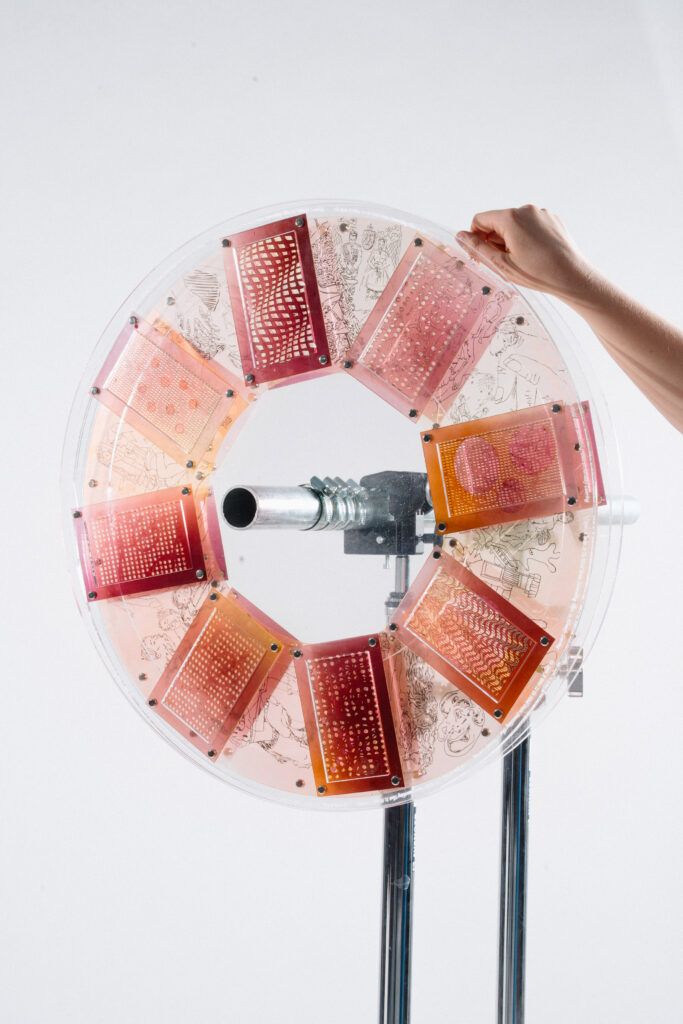
I’m a Show Pony, Not a Workhorse: On Bioplastics and the Value of Things Never Meant to Last by Rikke Marie Strange
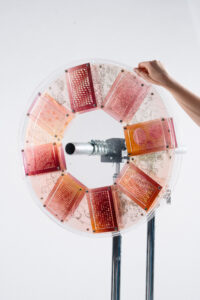
“Current discourses frame bioplastics as functional sustainable alternatives to traditional plastics – this project expands on that and proposes bioplastic as both a conceptual and aesthetic medium.
“Through hands-on experimentation, the material was cooked, pigment-coloured and cast into sheets. Its sleek, vibrant surfaces challenge the naturalistic aesthetics often associated with biobased materials.
“The material’s fragility, warping, shrinking and resistance to standardisation become conceptual strengths. Through print and abstraction, these qualities mirror human behaviour, nostalgia and memory, negotiating between control and dissolution.
“The resulting objects ask whether design can embrace temporary, unreliable materials – and whether impermanence can make an object precious.”
Student: Rikke Marie Strange
Course: BFA Textile Design
Tutor: Tonje Kristensen-Johnstone
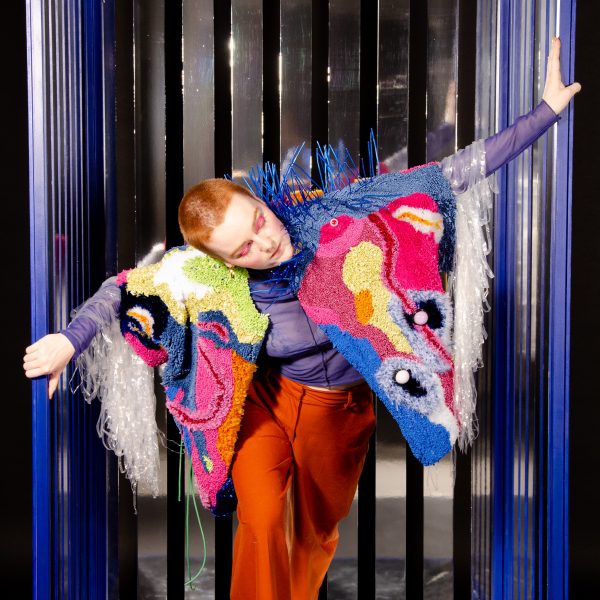
Parking Lots for People by Emma-Lou Halberg
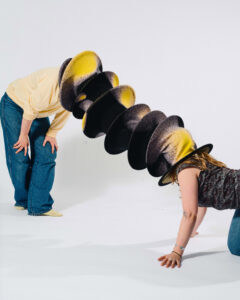
“This project explores knitted textile objects as spatial interventions in non-places—transit-oriented environments that offer little connection to their surroundings or human presence.
“Through observation, contextual research and experiments with knit structures, colour, form and scale, the project treats these environments’ lack of relational, historical and identity-forming qualities as opportunities for intervention.
“The resulting objects show how textile design can bring identity, curiosity and engagement to overlooked transitory spaces.”
Student: Emma-Lou Halberg
Course: BFA Textile Design
Tutor: Margareta Zetterblom