Tokujin Yoshioka installation at Design Miami
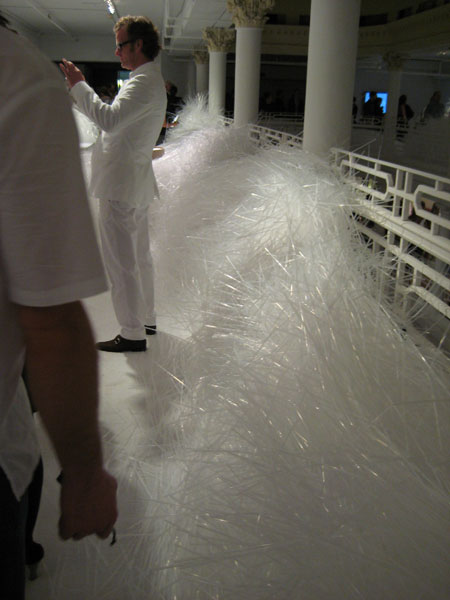
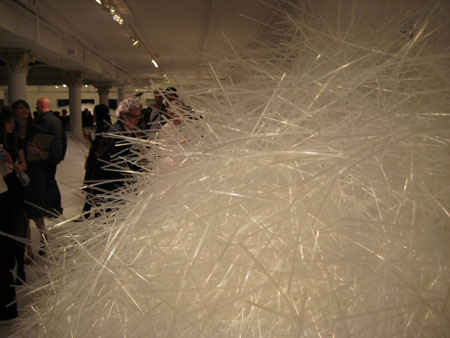
Design Miami opened last night, and Tokujin Yoshioka's installation on the top floor of the Moore Building in the Miami Design District is one of the highlights.
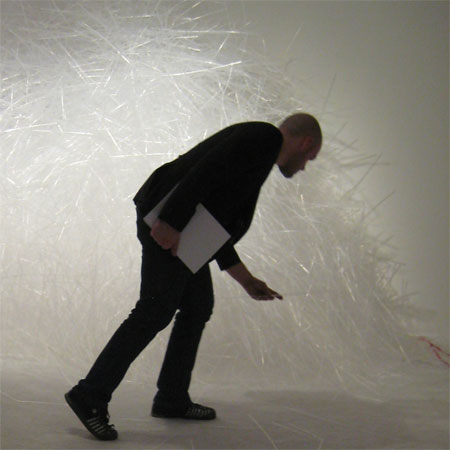
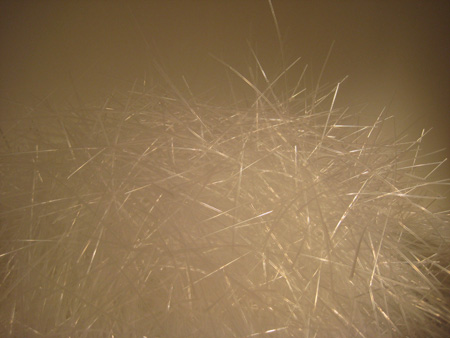
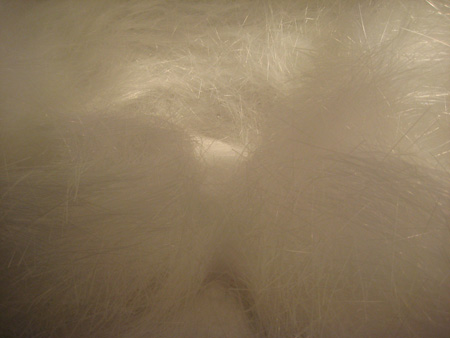
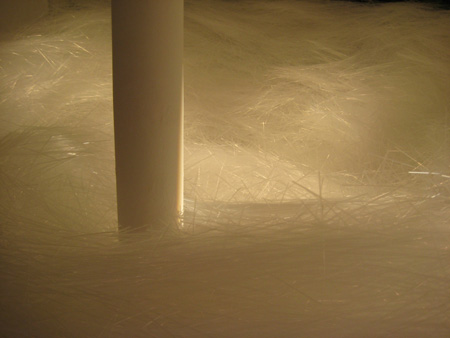
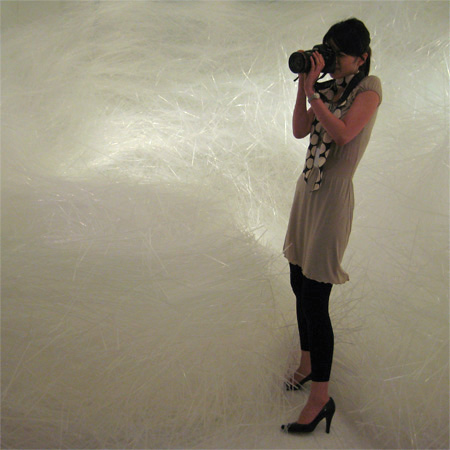
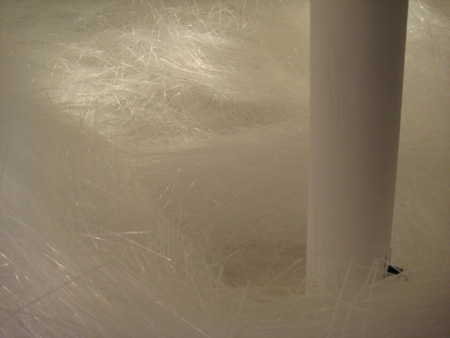
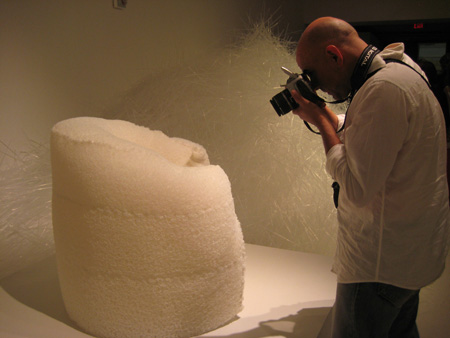
Here are some snaps we took at the opening of the installation, which is made of two million plastic drinking straws. Better photos coming soon hopefully.
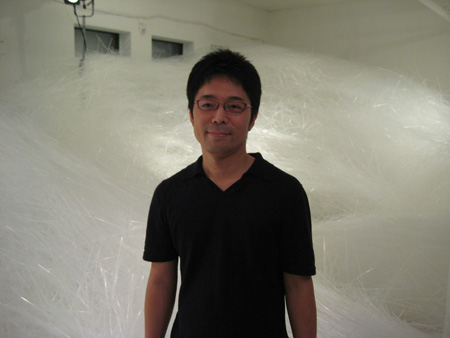
Yoshioka (above) is Design Miami's Designer of the Year this year. Below is the press release about the award from Design Miami, containing info about Yoshioka and the installation:
--
Tokujin Yoshioka Named Design Miami/ Designer of the Year 2007
A Retrospective Exhibition and New Work to be Showcased at Design Miami/
December 7-9, 2007
MIAMI, FL – Design Miami/ has named designer Tokujin Yoshioka its 2007 Designer of the Year. Born and based in Japan, Tokujin was selected for his exceptional ability to create boundary-extending design filled with emotion and grace. Tokujin has distinguished himself in the field by transforming everyday materials -- glass, plastics, fabrics, paper, even tissues -- into magical objects and spaces. At the same time, he has proven a master of technical innovation, finding new methods of production completely unique to his work.
“I am honored to be named the Design Miami/ 2007 Designer of the Year. Design evokes emotion, such as surprise and joy; it stirs the human heart and transcends language, ethnicity and national borders. I believe that emotion itself is what completes design,” says Tokujin Yoshioka.
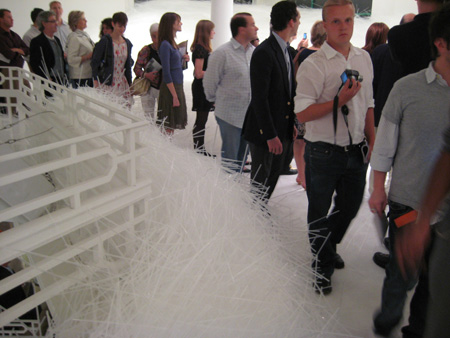
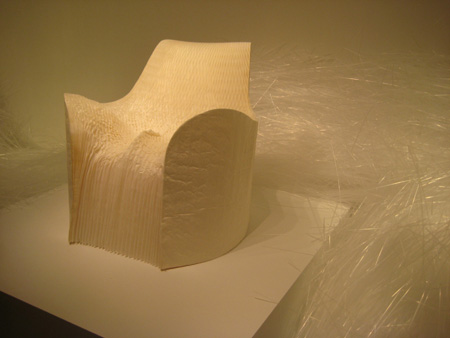
For Design Miami/ 2007, Tokujin will present new and existing work within an installation design that marries minimalism with indulgence, once again surprising us with a reinterpretation of mundane materials. The exhibition, which will run from December 7-9, 2007 in a dedicated space within the Design Miami/ fair (Moore Building, Miami Design District), will feature an array of pieces that represent Tokujin’s unique spirit and form of experimentation. On view will be the celebrated Honey-pop chair (2001) and the recent Pane chair (2006), as well as new furniture designs made of glass.
The Design Miami/ Designer of the Year Award annually recognizes a prominent designer, whose work demonstrates quality, originality, and influence, pushing the boundaries of art, architecture, and design. Zaha Hadid was Designer of the Year 2005 and Marc Newson was Designer of the Year 2006.
About Tokujin Yoshioka
Tokujin Yoshioka was born in Saga Prefecture, Japan in 1967 and has wanted to be a designer since the age of 6. After graduating from Kuwasawa Design School in Tokyo in 1986, he studied with Shiro Kuramata (1987-1988) and in 1988, began a working relationship with Issey Miyake that lasted for nearly two decades. Tokujin created window displays and accessory designs for Issey, as well as shop designs and an installation for the exhibition Issey Miyake Making Things that was on view in Paris, New York, and Tokyo. He sites this collaboration as the project that has given him the most satisfaction in his career. In 2000, he founded Tokujin Yoshioka Design. He has designed installations and promotional spaces for Hermes, Lexus, Apple, Peugeot, Toyota, Bang Olufsen, BMW, Audi, and Shiseido.
He has also worked with numerous companies to create unique products, such as lighting fixtures “Tear Drop” and “ToFU” for Yamagiwa; “Media Skin”—a mobile phone designed to meld with the user’s body like a second skin—for Au Design Project; “Tokyo-pop,” “Kiss Me Goodbye,” and “Boing” chairs for Italian furniture manufacturer driade.
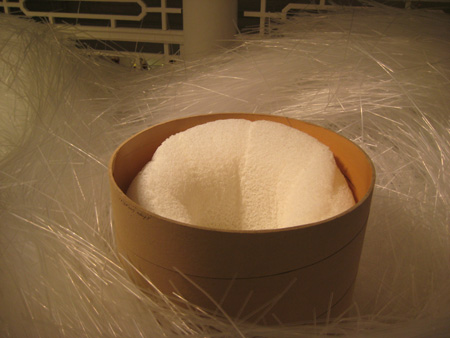
His most recent product is the “Kimono” chair, designed for Swiss manufacturer Vitra. In 2005, he was commissioned to create a chandelier, “Stardust,” by Swarovski. Tokujin is also constantly proposing new designs through experimental art pieces like “Honey-pop,” a chair made from honeycomb folded paper; “Pane,” a chair created by baking the fibrous structural body in a kiln.