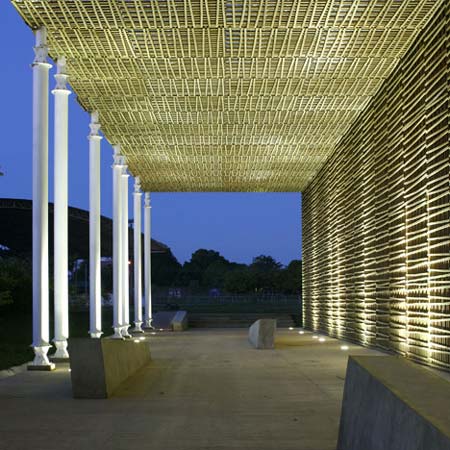
Four young architects from Javeriana University in Bogotá have completed Villanueva Public Library in Casanare, Colombia.
Miguel Torres, German Ramirez, Alejandro Piñol and Carlos Meza won a national competition to design the building.
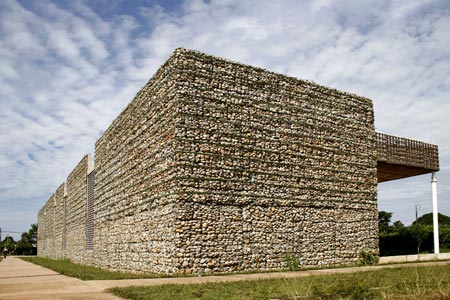
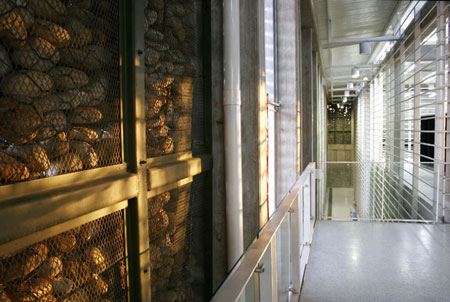
The building makes use of local materials including timber and stones from rivers to reduce transportation costs, and local people were trained to help construct it.
Here’s some info provided by Carlos Meza:
–
Villanueva Public Library, Casanare-Colombia
Villanueva’s public library is the result of a national contest summoned by the Colombian Architect’s Society where the winners Miguel Torres, German Ramirez, Alejandro Piñol and Carlos Meza, architects from the Javeriana University Bogota-Colombia, all below 27 years of age, won first prize in this contest, and designed 3000 square meters for reading rooms, an auditorium, a kid’s library, staff offices, the building’s functioning facilities and an open space for social interaction.
Background
Due to political circumstances and to the economy’s slow growth in this and hundreds of other towns across the Colombian territory, their inhabitants have suffered lack of cultural tools that allow them to reach, for instance, higher educational levels.
This situation has been confronted lately by the Ministry of Culture, local and district authorities in order to support this type of projects in the Colombian cities, including now less favored communities like Villanueva.
The strategies
With tight schedule and budget, a complex design effort was established, in which the requirements demanded by the program where met with creative and high quality solutions.
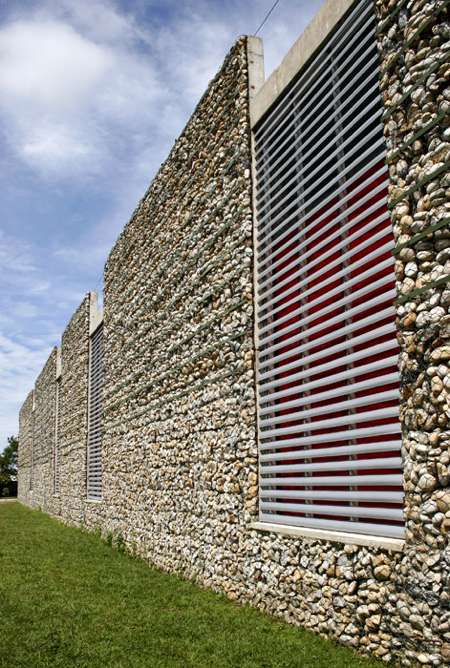
In order to obtain maximum efficiency from the design and its execution, a series of architectural strategies where traced, i.e. the use of local materials found in the surrounding areas like typical types of wood and river stones, thus avoiding material transport expenses.
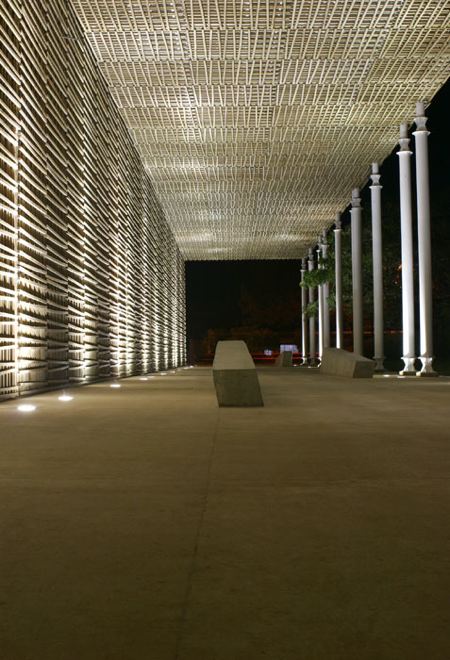
Just like these materials, qualified work force came in its majority from the same zone. Those who didn’t have the required technical skills for this construction where benefited from quick personnel capacitating workshops, executed with strict supervision.
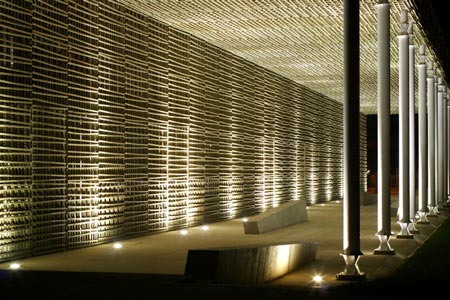
The architecture
The building’s tectonics were conceived in a very simple way. Here, the greatest efforts are focused on low technological development for the masses.
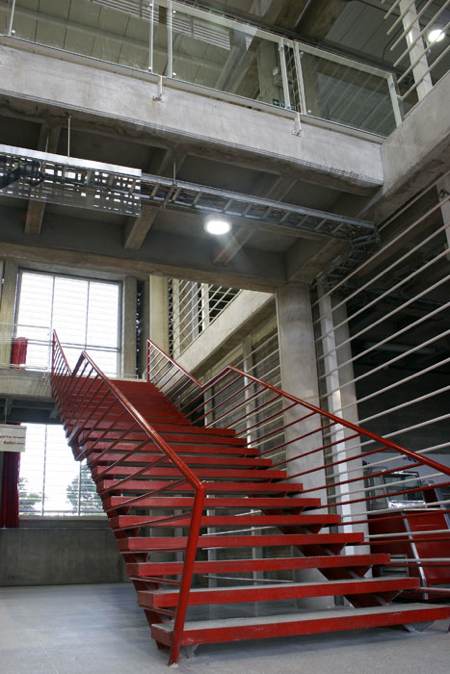
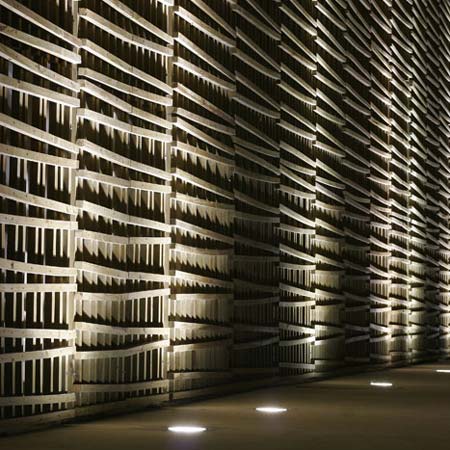
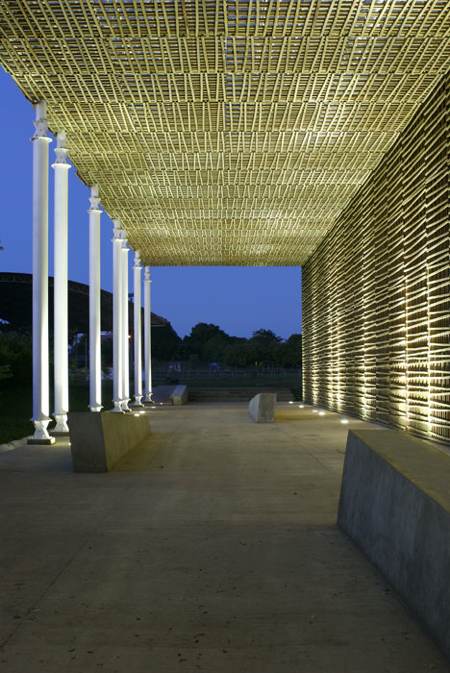
Although certain complexity of the shapes is sacrificed, it is also acquired in the design of the building’s skin creating a balanced contrast, full of texture and sober volumes.
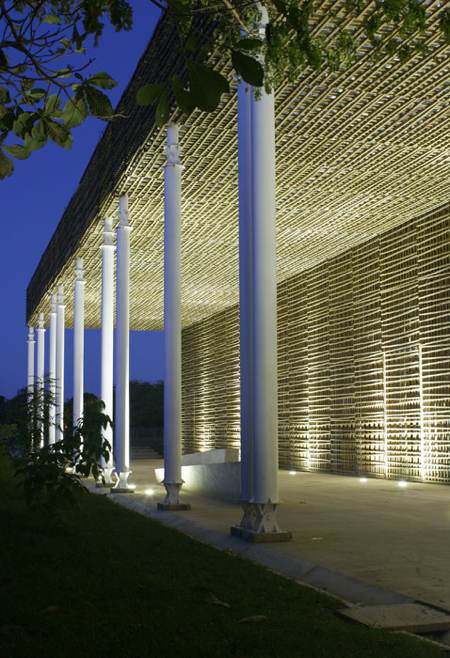
This project was recently completed and now functions as a catalyst for social activities of the Town of Villanueva. It is a good exercise that tries to enhance an urban project with social interests and public impact, promoting a special development that overcomes poverty and inequality in the Colombian cities via architectonic quality.
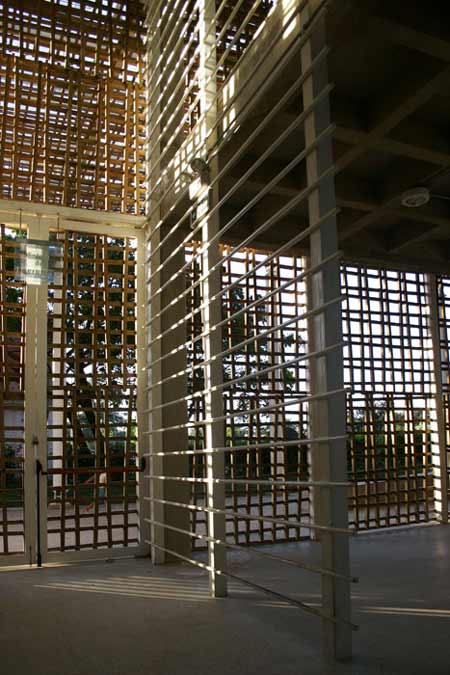
Here, design guarantees an increase in value and returns an investment in time with education.
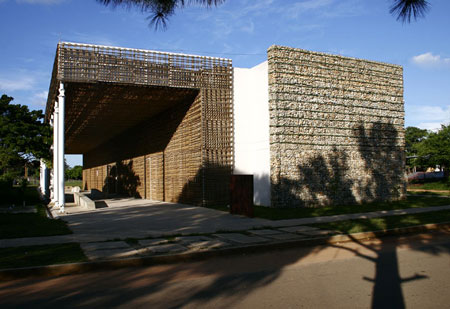
Photography by Nicolas Cabrera
–
Posted by Marcus Fairs


April 13th, 2008 at 4:03 pm
del putas carlos…en indezeen y que tales mejor dicho que haremos. Dando pela al lado de los duros.
April 13th, 2008 at 6:08 pm
Nice design.
Love the social aspect to it as well!
April 13th, 2008 at 11:02 pm
would like to see where the books are! i like this project.
April 14th, 2008 at 9:50 am
Makes me think of an old style prison block (no disrespect intended). Its a very dominant and extremely industrially inspired building - personally its seems a strange design idea for a public library/ facility.
I do however commend the use of local natural materials, the integration and thereby by up-skilling of local people in its construction, and specifically that students are given the opportunity of entering and ultimately winning a competition to design public projects. More of it please…
April 14th, 2008 at 10:32 am
herzog will not be pleased to see this
April 14th, 2008 at 2:36 pm
Good stuff! Congratulations!
It’s remarkable that colombian design is being published in design sites like these. I saw recently some of Mazzanti’s stuff in plataformaarqutectura and eikongraphia as well. It looks GOOD! And it makes me happy.
April 14th, 2008 at 5:18 pm
someone call dominus winery…i think their building has been stolen.
April 14th, 2008 at 9:06 pm
someone call josh and leandro and tell them that the gabion wall has been in use since the middle ages and that herzog and de meuron don’t have copyright on it.
April 15th, 2008 at 10:00 am
hello jed! i was called by someone regarding your comment on comments.
let me expound. Herzog will not be please to see this structure if he notices that these four “young” architects used gabions as a horizontal, overhead element. It just becomes too impractical and gimmicky if you suspend stones on air as roof.
im noticing the “method”, never the trademark. call josh if he has issues on copyrights.
April 15th, 2008 at 2:59 pm
felicitaciones por el proyecto !
l,
if you look close enough you will see they did not use the gabions for any overhead element. The canopy that covers the atrium space is made out of wood not gabion. lets not bother Herzog
April 16th, 2008 at 10:57 am
how about some plans?
what is this - Elle Decoration?
April 17th, 2008 at 2:21 pm
m,
if in my next project i use bloated titanium cladding in flat seam and you wont accuse me of being gehry… or if i use metal cladding in shards of glass pattern and you wont accuse me of being libeskind then lets leave herzog in this case.
tama ka at ang talas ng mata mo at nakita mong kahoy sya.
you have a sharp eye in noticing that it is wood lattice. i stand corrected.
April 19th, 2008 at 5:19 am
l
“It just becomes too impractical and gimmicky if you suspend stones on air as roof”. Just wondering where do you see that in the project ?
Sorry to ask but I do not have the sharp eye that Mariana has. Can you explain this.
April 21st, 2008 at 3:29 pm
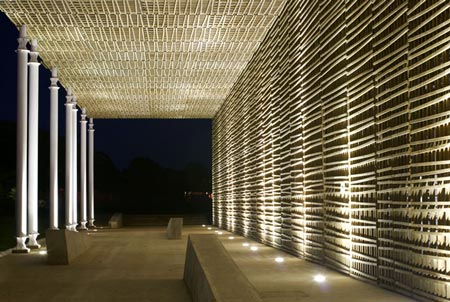
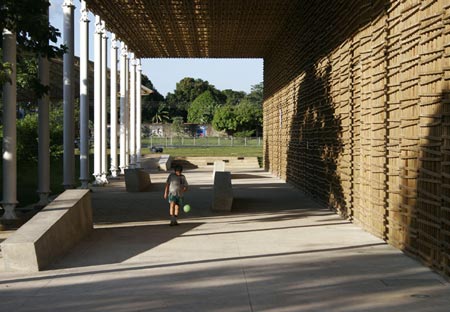
Really funny comments. It does resemble a lot to Herzog’s project on one side, but the introduction of the atrium with the metallic columns makes it different, it also gives the project an exterior inviting space with a magnificent and impressive scale that the winery doesn’t have.
However, this also makes me think about two projects rather than one, adding to this that the exterior space does not seem to integrate with the interior at all. I would also like to see plans and sections to have a deeper understanding of the project.
Nevertheless, it is a daring proposal and congratz to the young architects.
June 4th, 2008 at 12:03 am
Hello
I’m part of the group responsible for the work. If any of you is interested in plans I think I saw the other day on noticiasdearquitectura.info some of that. Curiously, we published it on one page and all of a sudden you can find it in almost 10 pages or so, but what I like the most is reading the comments. May be, some allutions to H&DM are immediate, and we don’t deny it, but, we are pushed by extremely different realities, and the Library is nothing else but the odd-particular answer to the local situation (urban location, materials available, local handcraft talent, tight budget, climatic restrictions or possibilities, etc). In short, thank you all for taking the time to see it and comment on it.
July 8th, 2008 at 10:02 pm
—I really like it—architecture build by the people—
great job!
October 2nd, 2008 at 4:05 am
sigh! why is everyone concerned about copyright?!!! everythign is copied if you think about it.. nothing is invented.. just used in different ways.. quit complaining and appreciate the structure for what it is and criticize if you have valid comments.
March 26th, 2009 at 10:06 pm
The building makes use of local materials including timber and stones from rivers to reduce transportation costs, and local people were trained to help construct it. ( the best thing in the project )
May 22nd, 2009 at 4:53 pm
felicitaciones, muy buen proyecto. De pronto las columnas necesiten molduras en las basas y capiteles.