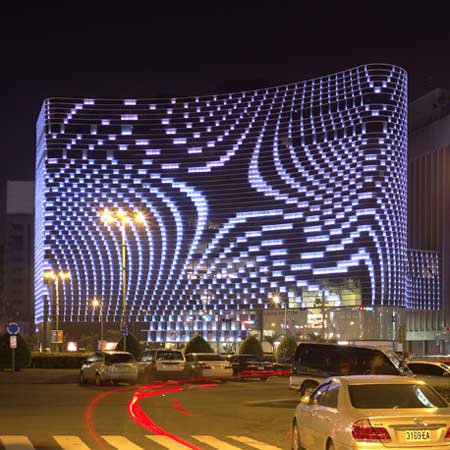
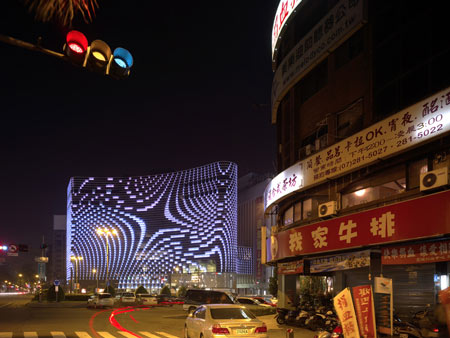
More from UNStudio: the Dutch architects have completed Star Place department store in Kaohsiung, Taiwan.
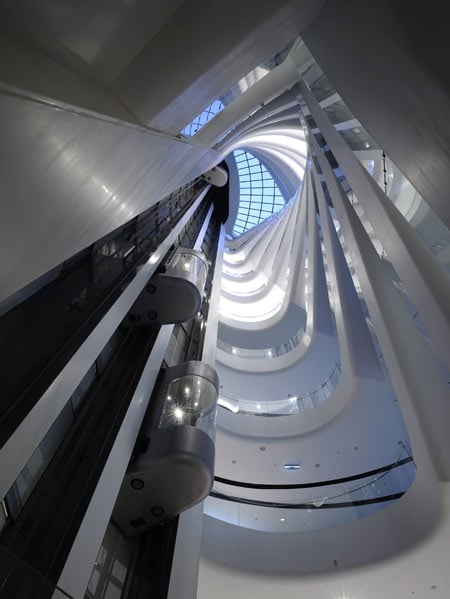
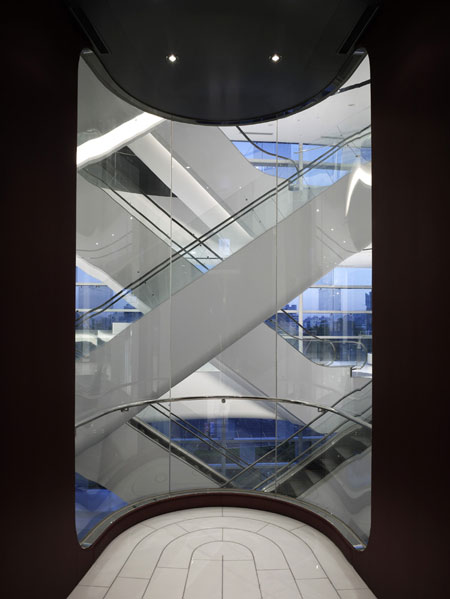
The structure centres around a 10-storey atrium, where each escalator spirals up to the next floor.
Called Ta Lee Plaza during development, the completed building has been renamed Star Place. More information about the project in our previous story.
Photographs by Christian Richters.
–
Posted by Rose Etherington


November 26th, 2008 at 2:20 am
I could read endless stories about UN Studio – keep ‘em coming! Their built works contain all the enjoyment put forth in the renderings. More than Zaha, UN Studio seems to be pushing forward a new working vocabulary in the world of architecture. Here’s hoping that all of their projects on the drawing boards become a reality.
November 26th, 2008 at 3:36 am
Wow, thats extravagant
November 26th, 2008 at 9:36 am
it really looks like in the renderings before!!!!!!!!!
great work ben!
November 26th, 2008 at 10:33 am
I really like the interior…well done!But the Facade looks kind of cheap…
November 26th, 2008 at 10:50 am
These guys are like the elegant version of Hadid. I love it. More.
November 26th, 2008 at 11:41 am
What does it look like during the daytime?
November 26th, 2008 at 12:05 pm
why should a building looks like a rendering?
November 26th, 2008 at 12:17 pm
Ben Van Berkle has consistantly displayed his wonderful design philosopy, he so readily showed off in his first publication with the architecture journal EL Croquis no 72[1] 1995, and this is no exception.
Just another serious cognitive notch in his glamourous belt of very credible achievments.
silicon m
November 26th, 2008 at 1:44 pm
Beautiful through inside and out. Wicked concept put to life.. Love the spiralling inside and great use of technology on the face..Lovely building in all..
November 26th, 2008 at 3:06 pm
why should a building looks like a rendering?
99 % of the buildings do not reach the quality of the renderings in the competitions!!!!!! UN Studio did it!!!!
November 26th, 2008 at 8:10 pm
what a question!!
November 27th, 2008 at 12:44 am
have to say UN Studio is getting better recently with elegant proposals, but for this specific project, can anybody explain a little more of what exactly is the “wicked design” and “pushing a new architectural working vocabulary” that is so “radically” different from contemporary commercial architecture design with a fancy (LED) facade?
November 28th, 2008 at 1:30 am
what is it with all the 70’s-looking curves, down to the shape of the elevator? and the LED’s.. which forms a star sign on the facade of the ‘Star Place’. it’s just too much.
tacky, that’s what it is.
ben should look back to the good ol’ days; mobius house and erasmus bridge – they were really something.
November 28th, 2008 at 1:27 pm
would be a nice casino, but not a really nice facade design for a department store
November 29th, 2008 at 4:58 pm
The lighting is a very east asian tradition in many respects, what may be considered ‘tacky’ by your conservative western sensibilities, is actually an interesting, animated and appropriate feature.
Oh, and this is contemporary commercial architecture, its just a little better sculpted than most because they have put in the time and effort to envisage and detail it. There aren’t too many commercial architects managing to incorporate a parametric twist in their built work.
December 27th, 2008 at 6:10 am
i have seen the building, i think they did a good job, the facade is pretty nice at both day and night.
July 31st, 2009 at 2:37 pm
Thanks everybody for the comments and compliments to the design team of this project. UNStudio designed the facade together with me and my team in Amsterdam. I can respond to these comments that the building looks like the renderings indeed; it does have that sleek, sophisticated if not hyper real feel that Ben van Berkel sometimes calls “made in heaven”.
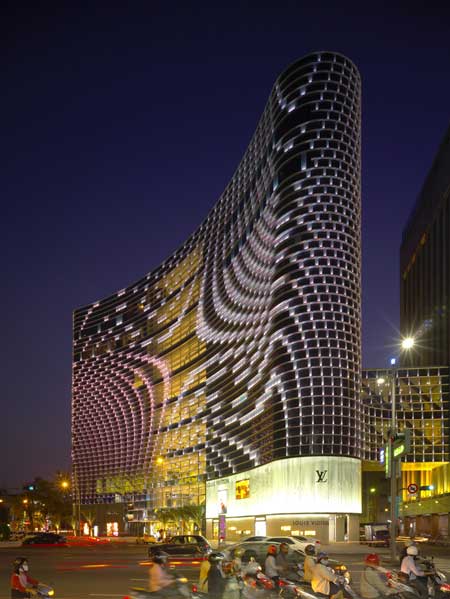
The purpose of the facade was (as I see it) to create a visual landmark that succesfully competes with the typical Asian light signage without a “just going brighter” approach. The subdued visual language is powerful because of its simplicity. The material of the facade is light, among other things, and the glass panels emit light themselves; they are not backlit or frontlit, but self-illuminated. This is certainly something that adds to the magic of this building design, especially since the facade remains transparent and therefore you can see through from within the building.
“Tacky” is a word that appears in some comments, and I do agree with Rango that cultural differences drive our appreciation. The design team felt that because of its location and geometry, the Star Place facade is a great opportunity to use light in a seductive way; not a bad starting point for a department store. That is the element in the facade design that refers to the Asian tradition of light signs; the interpretation of it is contemporary and future minded.
Finally it should be mentioned that besides a great architect and design team it takes a visionary client who has the guts to hire an exotic team to re-do his landmark building at a hi-visibility site. Including the client in the design process is instrumental in projects like this I believe.
Rogier van der Heide
Arup Lighting
August 6th, 2009 at 11:23 pm
Referring back to the comments about renderings vs the real build, it also happens the ability to model, structure and render better, better pre-visualization play a big part. Usually the momentum of killer ideas are tempered by bringing them to life, not so much anymore.
Maybe ‘edgy’ architecture and industrial design are at a point of flux, the totally fluid digital design tools blending with the static forms of the finished piece. The LED facade (some are calling tacky) is it the non-static form of the design coming through?