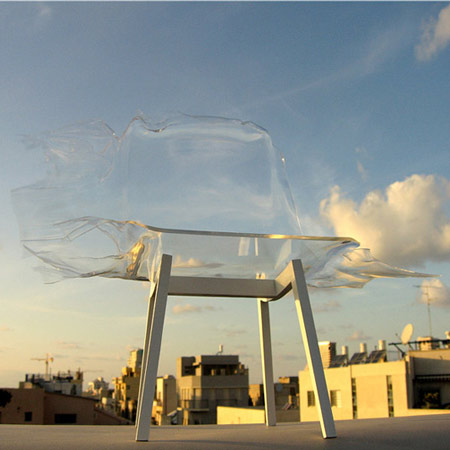
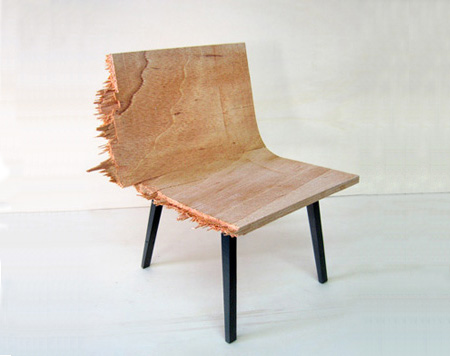
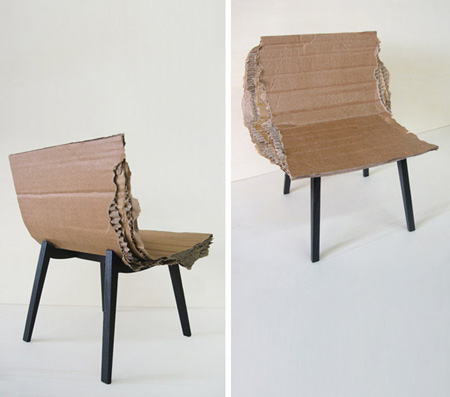
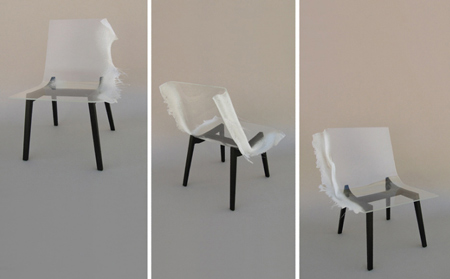
Israeli designer Itay Ohaly has proposed a series of chairs called Fracture, made of benches of various materials which are torn or smashed into individual chairs.
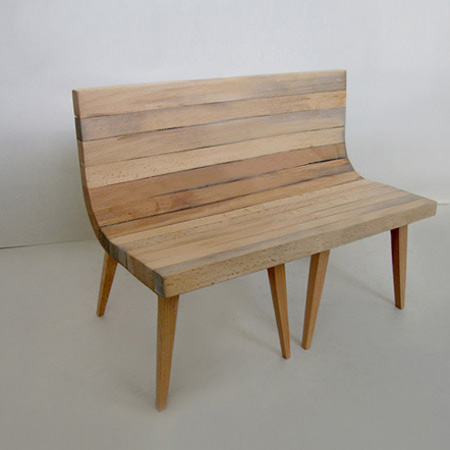
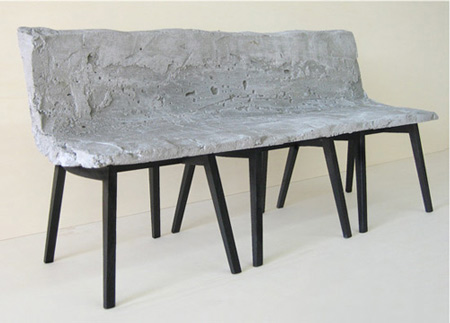
Ohaly used acrylic, beech, plywood, concrete and cardboard to create the collection.
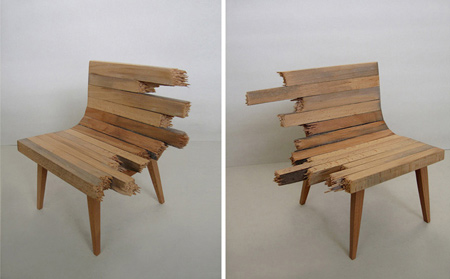
The project explored how the nature of each material affected the appearance of the fracture.
Here is some more information from Ohaly:
--
Fractures are a part of life and nature. Fractures have different forms that derive from the material structure and the type and strength
of energy that is activated upon it.
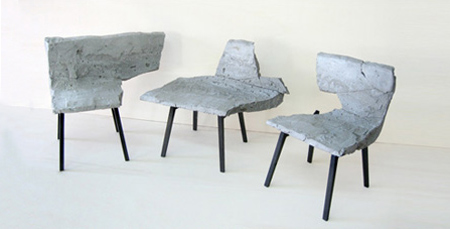
During the years, with the development of industrial processes, we "tamed" the material and took it away from its natural form. Our eyes are accustomed to see flattened, polished and bright materials, as well as our sense of touch that examines the feel and quality of the surface.
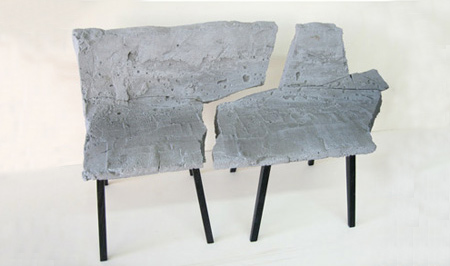
This project is an exploration of the material characteristics of the fracture. It presents the wild and unique aesthetics of each material and its interaction with intense energy.
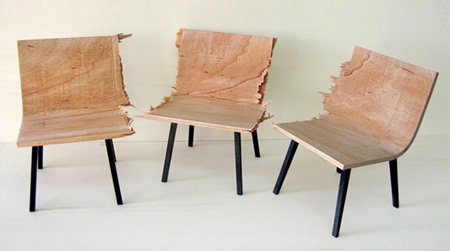
The “full” object is the starting point of each creation while the fracture brings it to its final shape.
More Dezeen stories about Itay Ohaly:
.


shure, why not?
Dude,
Nice work, makes me think, makes me laugh, but are they comfortable?
I’m in!
It’s neat but definitely not very practical. Imagine bumping into those wooden chairs in the middle of the night…
Beautifull. Really beautifull. This proces is interesting. One could have wished that the legs would be equially as inportent as the seat.
Nice job.
love it!
a great way to show the nature of the materials!
let the material create the form instead of getting
our brains around jet an other “new” form……
the right concrete one has a very fine shape!
ps. i wonder how the wooden one is broken so nicely,
looks like scale models?
turds are a part of life and nature. turds have different forms that derive from the material structure and the type and strength
of energy that is activated upon it.
could be a starting point for design as well..
and the scale model of it would be created just as cuicly ast these scale models (in case you didn’t notice)
maybe even more intersting..anyone of you designers up for a challenge;-)
lets see pictures!!
My question to the designer and many of these people alike (balancing on the line between art and design..as some say):
whats does this “concept” add to the idea of a chair (a thing to sit on)
why not a painting, sculpture whatever …why a chair..?
just because you were schooled as a designer?
my comment from the design point of view..this looks a bit unpractical
from the art point of view..it is not very original..
if you want to explore furniture in a conceptual way, why not with a concept that actually has something to do wit the way furniture is made or used…makes it a lot less artsy fartsy and way more interesting to the world of design
ah well.
cheers
definitely, scale models
um… as others have said… um sure, i guess. why the f%&# not? looks good to me
these scale models got me fooled at first glance!
quite nice although the fractures would look diferent at 1:1 scale.
@B:
well roared, lion.
artsy fartsy shizzle.
it’s much more difficult to design good chairs under restrictions of mass production.
cheers,
C
Matthew Kroeker, 2005
http://www.matthewkroeker.com/splinter.htm
Yeah good call Fred, the broken wood slat version is a complete rip-off of Matthew Kroeker’s bench. Too similar to be a coincidence. I mean… come on!!!
one thing you have to admire about this designer is that he is convexly great at simple contextualization as it relates to material and form derived from pre existing ideation – nice splitter bench!
Kinda makes the policy “you break it you pay it” fall completely obsolete :D
the acrylic ones are to DIE for!
@splinter bench naysayers.
If you’re going to do something that’s done before make sure you do it better
Think this is a much more successful realization of this concept.
broken ,burn , imperfect,destroy….is design ill ?
@John
This is not a more successful realization of a concept; it is a small scale copy model, that you couldn’t even sit on. The original bench is actually manufactured and marketed, has been designed for manufacture, troubleshooted in production etc. It is as if someone made one of those a small scale plastic models of a train (or car, or plane, whatever you wish), take a picture of it, and call it your design because you painted it a different color that what is suggested on the box. If you’re going to get inspired (copy) an idea, at least make the effort of making it better, real, full-scale, troubleshooted, put it in production, test it against the market, and then, and only then we’ll call it a more successful realization of a concept.
So come on, now. This isn’t about naysaying, it is about a quest for actual design.
Definitely not pieces of arts…
dangerous and conceptual…. love the ring series.
breaking news?
great design.