Spanish architect Alberto Campo Baeza has concealed an office block with walls made entirely of glass behind a sandstone enclosure in the Spanish city of Zamora (+ slideshow).
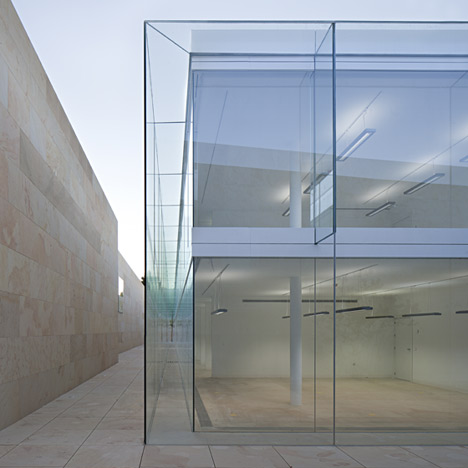
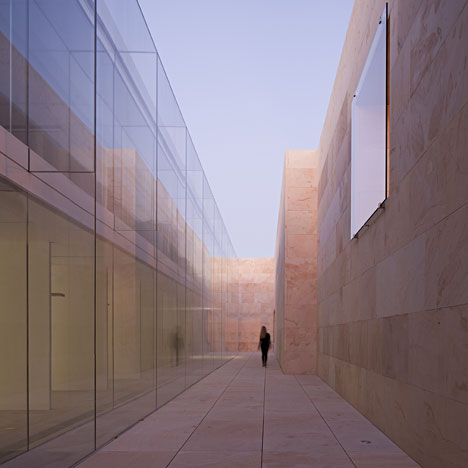
The architect matched the stone of the site's perimeter walls exactly to the exterior of the neighbouring Romanesque cathedral, which is located in the west of the historic walled city.
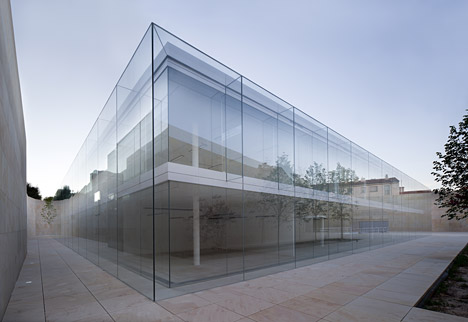
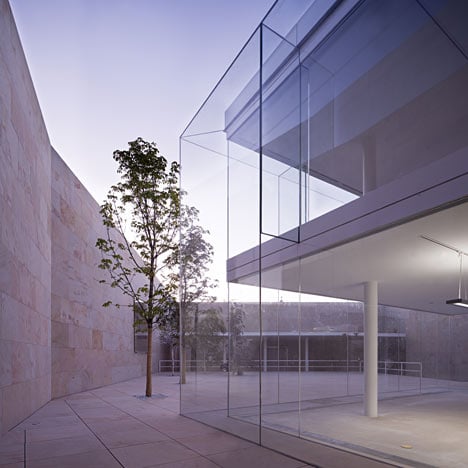
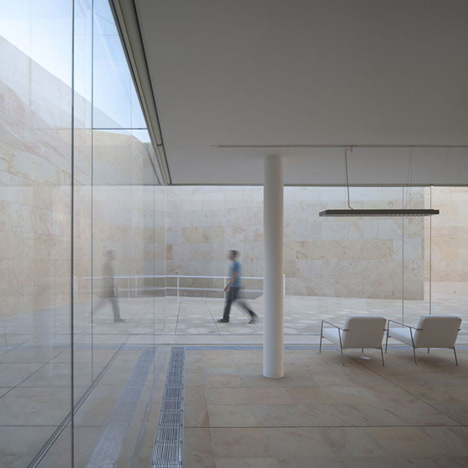
Behind the screen walls, two irregularly shaped courtyards are positioned either side of the glass building that houses the advisory board for the autonomous region of Castilla y León.
The sheets of glass that make up the exterior of the two-storey building are joined by little more than structural silicone. "It's as if the walls are entirely made of air," said Campo Baeza.
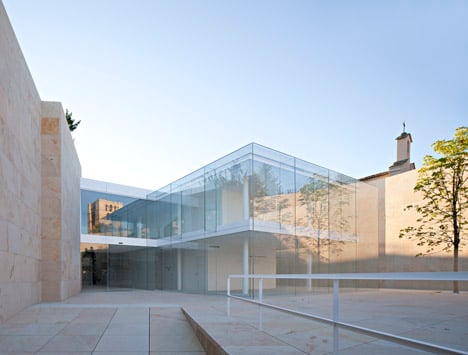
Glass fins separate the outer glass skin from an inner glass wall in front of the floor plates, creating a void that mimics the proportions of a solid wall.
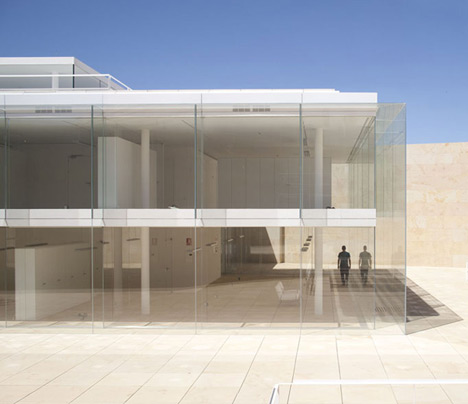
This cavity is ventilated to keep the building cool during the summer, preventing a greenhouse effect.
The project was completed in collaboration with architects Pablo Fernández Lorenzo, Pablo Redondo Díez, Alfonso González Gaisán and Francisco Blanco Velasco.
Other impressive buildings we've featured from Spain include an extension to a historic town hall and a civic and cultural centre inside a former prison.
See more architecture in Spain »
Photography is by Javier Callejas Sevilla.
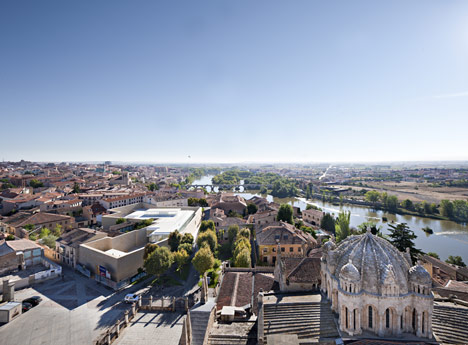
Above: aerial view of Zamora
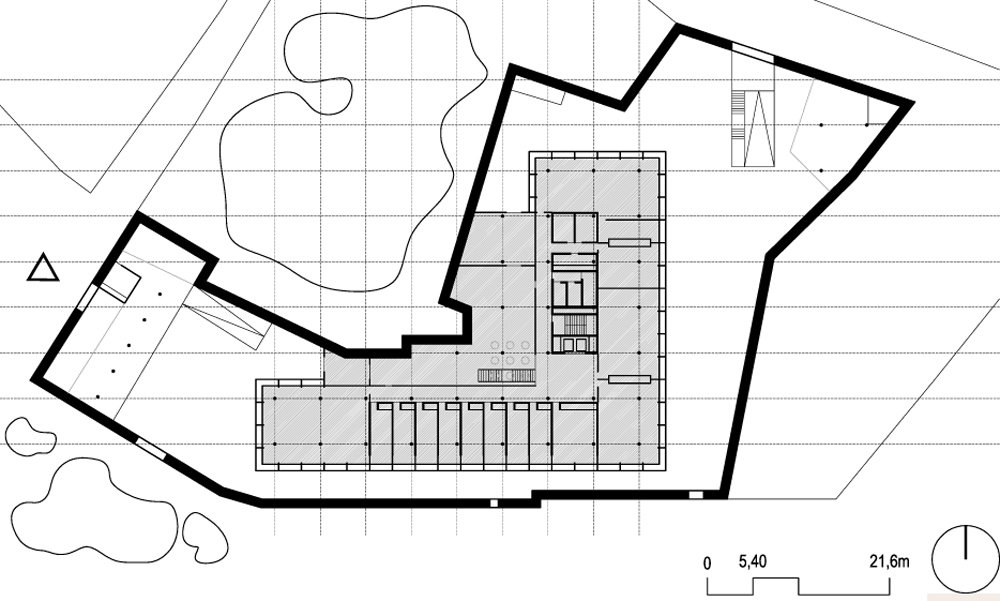
Ground floor plan - click above for larger image
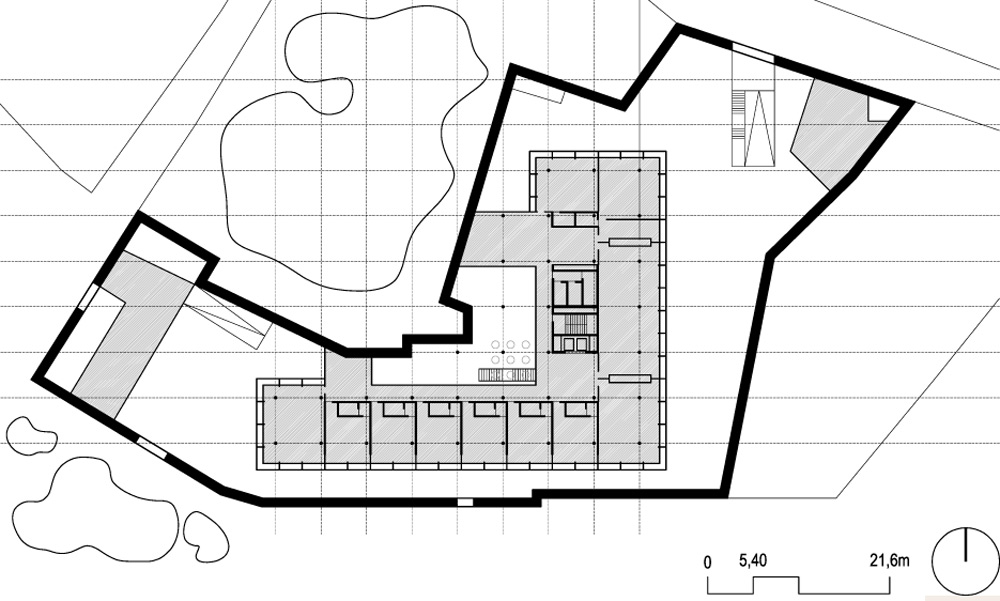
First floor plan - click above for larger image
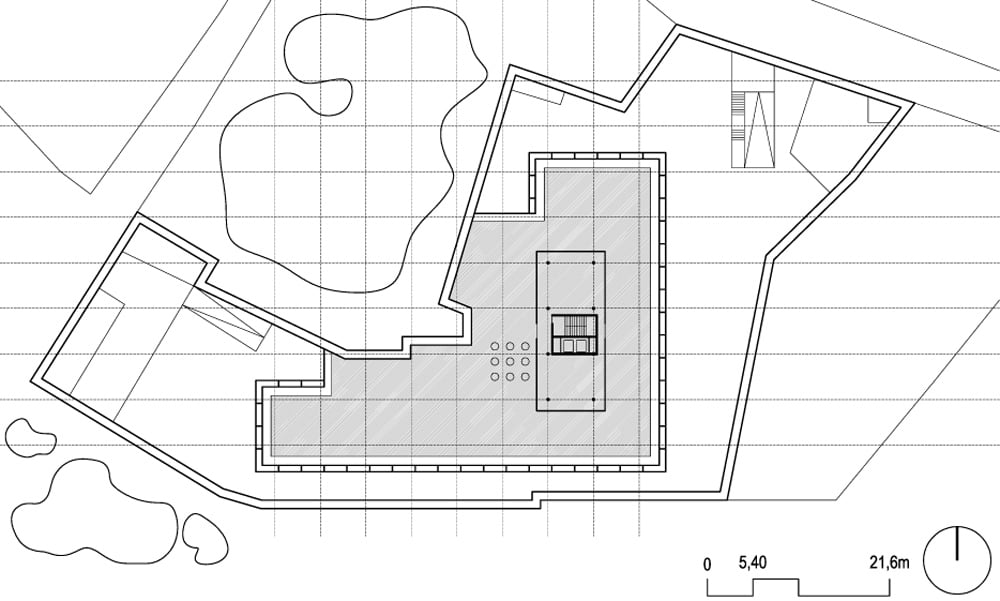
Second floor plan - click above for larger image
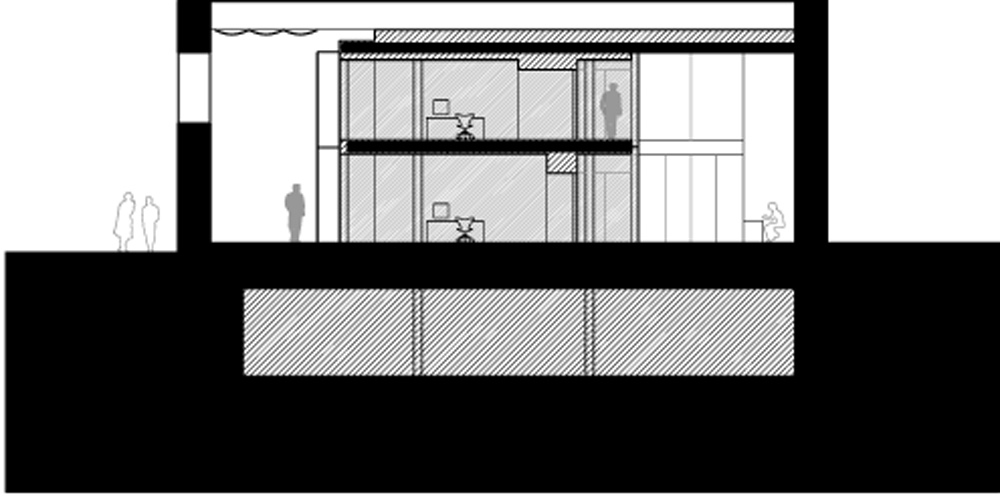
Section - click above for larger image
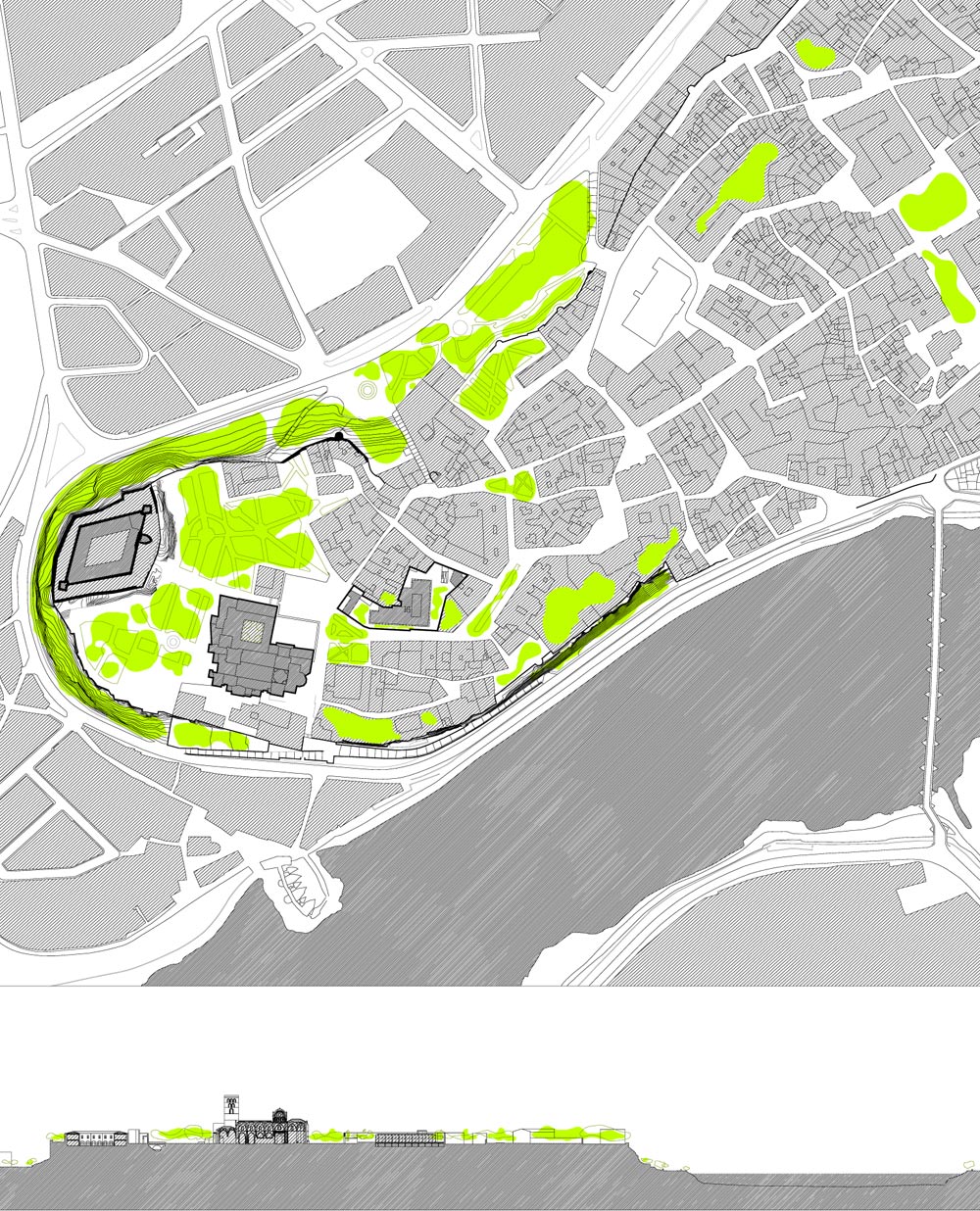
Site plan and site elevation - click above for larger image


I love the volume, lines, materials and finish details. Great!
I love his work, but why the wall?
Great views – if you like sandstone.
Simplicity vs. sustainability.
I really liked this clear design, but can an architect think of an unsustainable building such this one, when all Europe is facing the crisis, energetic also? Yes, he can.
Has anyone got any idea what glazing systems were used here?
Apple Store
I can tell Zamora is really cold during the winter. Is a glass wall the best choice? Is it sustainable? How do they heat the building?
And that is how it is done!
This is a real beauty.
Irony of transparency and privacy. This is one piece of great architecture.
Even though the building seems to be well detailed and implemented, its bottom line is one which is bleak, grey and sad (glass jails anyone?) At least add a bit of green or a garden to make it more humane…
It may not be the most sustainable piece of architecture, but the way the glass reflects it’s surroundings is beautiful, like seeing a mirage.
Except it’s not a mirage. It will use actual precious energy to heat and cool. It’s like a pretty throwback to the1970s. Beauty can’t excuse everything. It might as well have ivory door handles and tiger skin rugs scattered around.
Campo Baeza is a sublime designer who could easily turn that talent to responding to how we (have to) live today. After all it was his generation that created most of the situation we face in the first place.
It’s a double skin facade. Does anyone know who manufactured the glazing system, or does it look good because it’s single glazed at both layers?
Agree with Frank – any planting would help here, some trees between the wall and the glass maybe. Without those it just seems like an endless walk round between two surfaces! Striking maybe, but not particularly attractive.
Glass without being bonded to aluminium or PVC frames is completely recyclable. The wall presumably reflects and maintains a suitable microclimate around the buildings, reducing solar gain. The double skinned glass cavity is ventilated? Double-skinned facades are always going to be more expensive, but who knows how much cost is shaved off the life of the building when taken into consideration?
There’s no evidence this is not a sustainable building, save for the embodied energy in producing the glass perhaps. Creating sustainable buildings also has to take into account human emotional well-being, which is clearly considered here.
Masterpiece!
Shut up with the sustainability. Spain’s building code doesn’t allow any uninsulated buildings to go up, housing or otherwise, so there must be something about the double skin or the glass itself.
In fact this is probably more sustainable than it is good architecture… how many times has Campo Baeza recycled the same building?
Ethereal and beautiful. How do buildings like this survive earthquake?
They don’t… but Spain is known for throwing money.
Agreeing with the fact that there has been unbelievable waste of money in suntuous architecture in Spain for many years, but it’s a completely different thing to accuse them of not following safety regulations. Could you point out some examples of buildings built during the last 30 years, especially public architecture, that collapsed during an earthquake?
What an intelligent thought!
What would happen if the wall came down? The building feels uncomfortable in its surroundings. Embarrassed by its shameless contemporary nature in such a historic context. But should it be? Could it not exist without the wall? The wall is beautiful and creates wonderful spaces between it and what is enclosed, but that is not its purpose and that is unsettling.
This is a beautifully executed piece of intelligent architecture, gloriously sitting within its context. My congratulations to the team that created this jewel.
I hope the purity of this project is not eventually spoiled with a poor selection for the office furniture program.
Nice if you construct a 20 ft stone wall to act as the main structural load bearing system to protect the glass. There is no way that system would work if it was not sheltered and exposed to the wind!
No cabe duda que es una bellísima obra arquitectónica y que aparenta haber tenido una excelente ejecución, dejando unos buenos acabados, pero ésto es suficiente, para ser un buen proyecto?
No pretendo hacer una crítica ya que carezco de información para ello, pero si me gustaría realizar algunos comentarios, luego de haber visto y leído la reseña del proyecto.
Tanto cristal, con que fin, para ver un muro? Es que sus futuros usuarios y el pueblo y sus habitantes, no son dignos de admirarse o disfrutar visualmente uno del otro? El uso de tanto cristal, responde a algo estético o funcional? Y finalmente, Qué le ofrece este nuevo edificio en el casco antiguo de Zamora, al pueblo y su entorno?
Es un edificio increíblemente fotogénico, pero no parece en vez de un edificio de oficinas, una cárcel futurista?
Beautiful building but surely the enormous wall cuts down on the amount of natural daylight reaching the inner core?