Eli and Edythe Broad Art Museum by Zaha Hadid Architects
A museum of contemporary art designed by Zaha Hadid for Michigan State University opened to the public this weekend (+ slideshow).
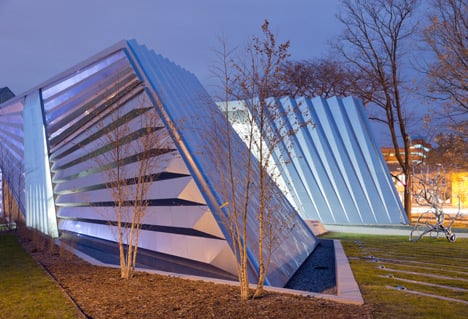
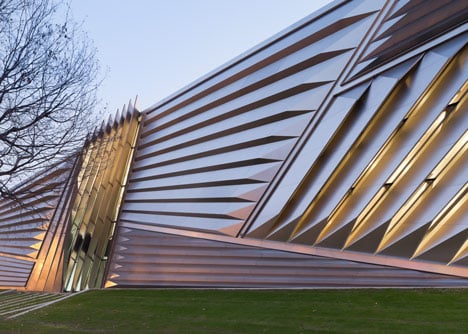
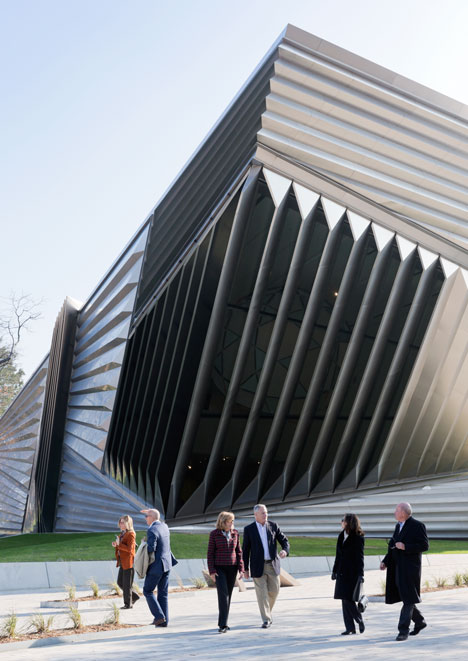
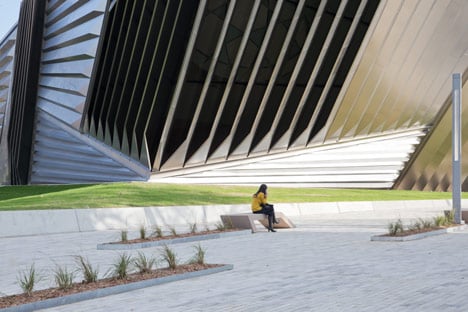
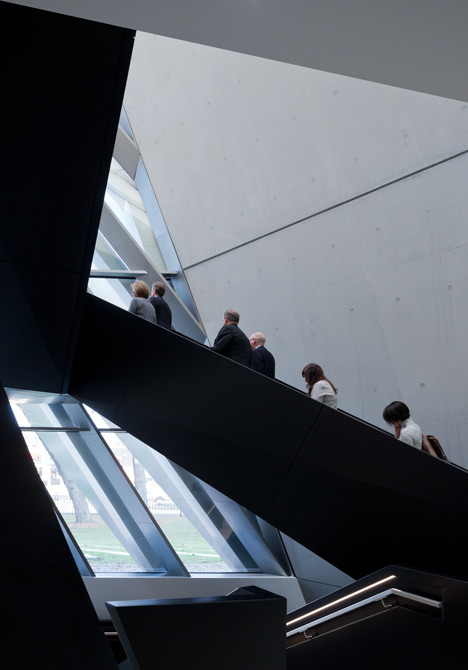
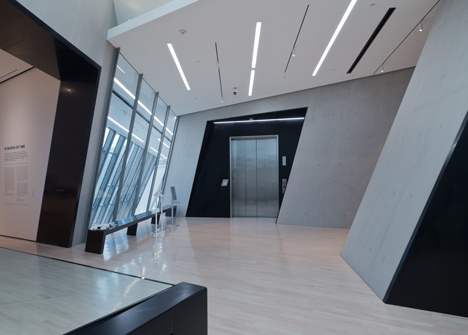
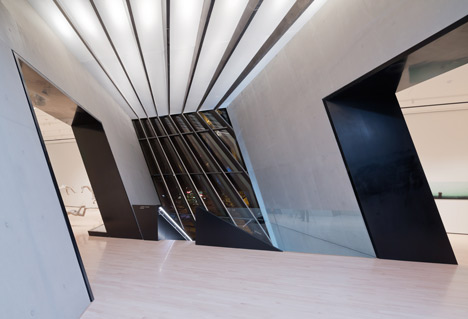
As shown in photographs revealed last month, Zaha Hadid designed the Eli and Edythe Broad Art Museum with a pleated facade of stainless steel and glass that contrasts with the surrounding red brickwork of the university’s Collegiate Gothic north campus.
The building is named after philanthropists Eli and Edythe Broad, who have spent four decades amassing two prominent collections of contemporary and postwar artworks.
Exhibitions will be dedicated to modern art, photography, new media and works on paper.
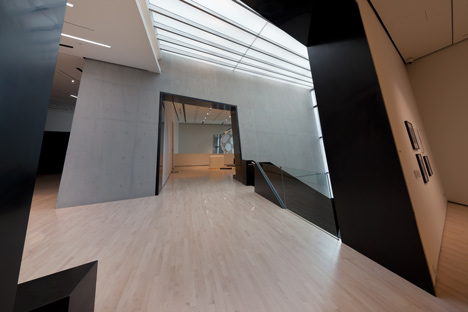
Double-height galleries are included within the museum's 1600 square metres of exhibition space, which is split between three storeys that include two floors above ground and one basement level.
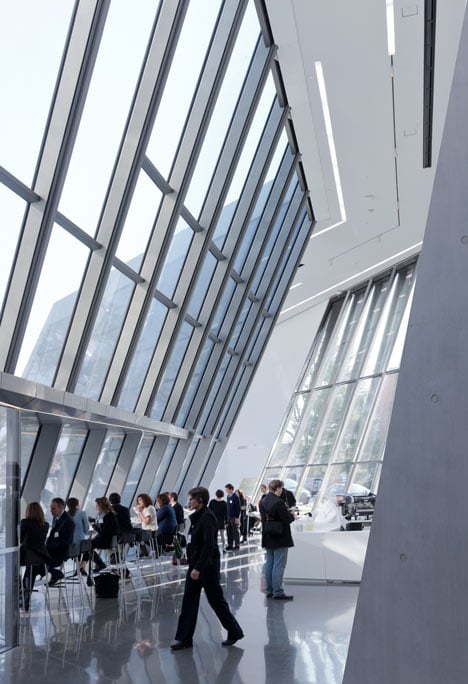
The plan of the building was generated by the directions of surrounding pathways and sight-lines, and the architects hope this will help the building to integrate with its surroundings. "Cultural engagement is paramount," said Zaha Hadid. "The design of the Broad invites dialogue with the university, the community of East Lansing and beyond."
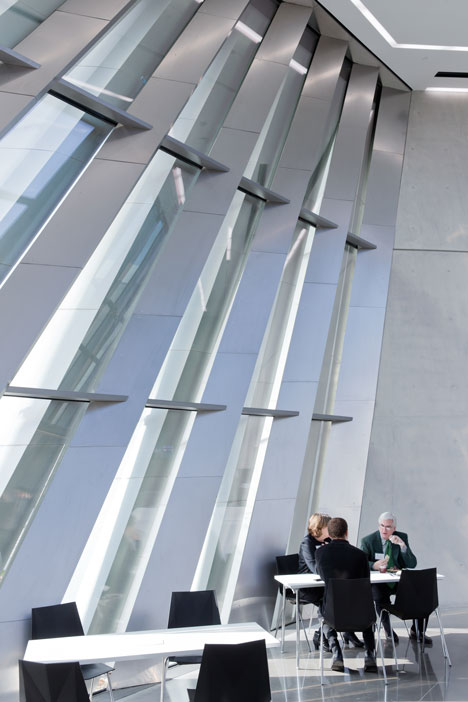
Hadid won a competition in 2008 to design the museum, which also contains an exhibition space, an education wing, study centre, cafe, shop and outdoor sculpture garden.

The museum's inaugural exhibitions include Global Groove 1973/2012, an exploration of current trends in video art, and In Search of Time, which investigates the relationship of time and memory in art.
See the competition-winning designs for the building in our earlier story, or see the first photographs of the building revealed last month.
See more stories about Zaha Hadid Architects, including the recently completed Galaxy Soho, a 330,000-square-metre retail, office and entertainment complex in Beijing.
Photography is by Iwan Baan.
Here's a project description from Zaha Hadid Architects:
The Eli and Edythe Broad Art Museum, located at the northern edge of the Michigan State University campus, is influenced by a set of movement paths that traverse and border the site.
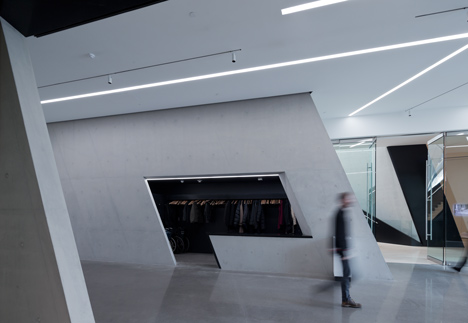
The vitality of street life on the northern side of Grand River Avenue and the historic heart of the university campus at the south side generate a network of paths and visual connections; some are part of the existing footpath layout, others create shortcuts between the city and the campus side of Grand River Avenue.
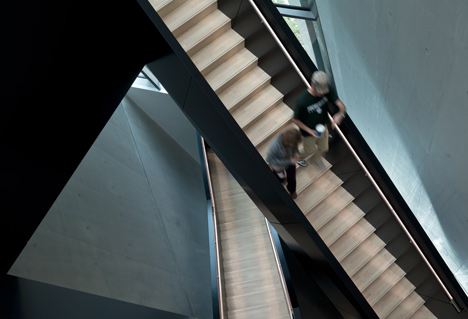
The circulation travelling in an east-west-direction on Grand River Avenue, along the main road of East Lansing and also on the main approach street to the campus produce an additional layer of connections that are applied to this highly frequented interface between city and campus.
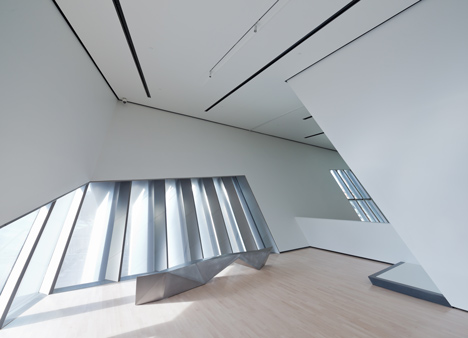
Generating two dimensional planes from these lines of circulation and visual connections, the formal composition of the museum is achieved by folding these planes in three-dimensional space to define an interior landscape which brings together and negotiates the different pathways on which people move through and around the site.
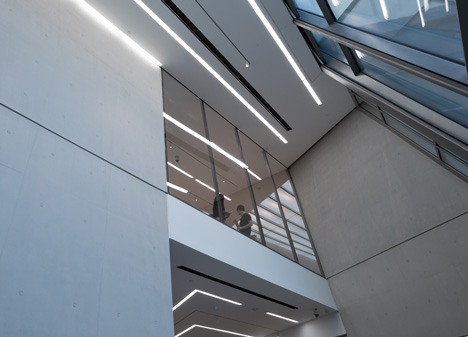
This dialogue of interconnecting geometries describes a series of spaces that offer a variety of adjacencies; allowing many different interpretations when designing exhibitions.
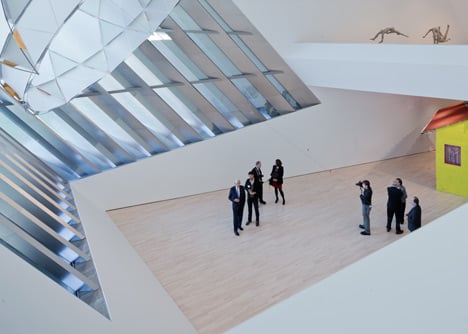
Through this complexity, curators can interpret different leads and connections, different perspectives and relationships.
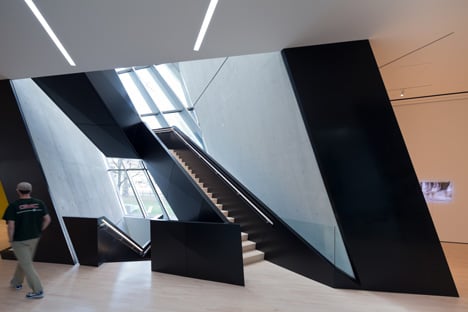
These detailed investigations and research into the landscape, topography and circulation of the site, enable us to ascertain and understand these critical lines of connection.
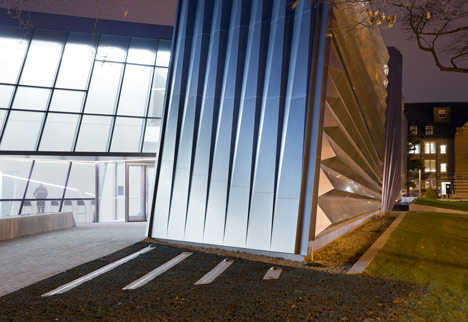
By using these lines to inform the design, the museum is truly embedded within its unique context of Michigan State University, maintaining the strongest relationship with its surroundings.
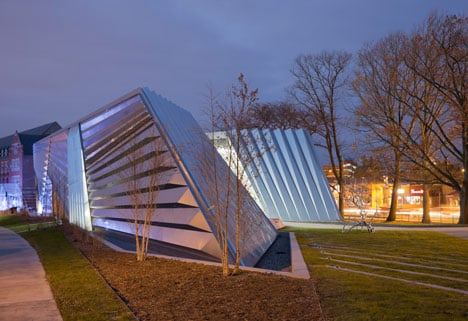
The Broad Art Museum presents as a sharp, directed body, comprising directional pleats which reflect the topographic and circulatory characteristics of its surrounding landscape.
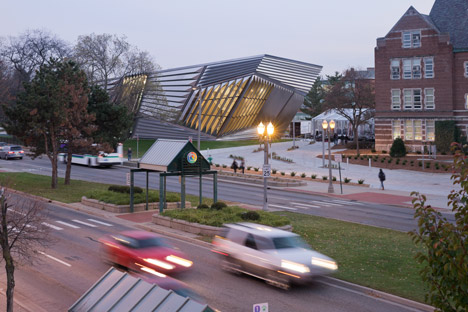
Its outer skin echoes these different directions and orientations – giving the building an ever-changing appearance that arouses curiosity yet never quite reveals its content. This open character underlines the museum’s function as a cultural hub for the community.
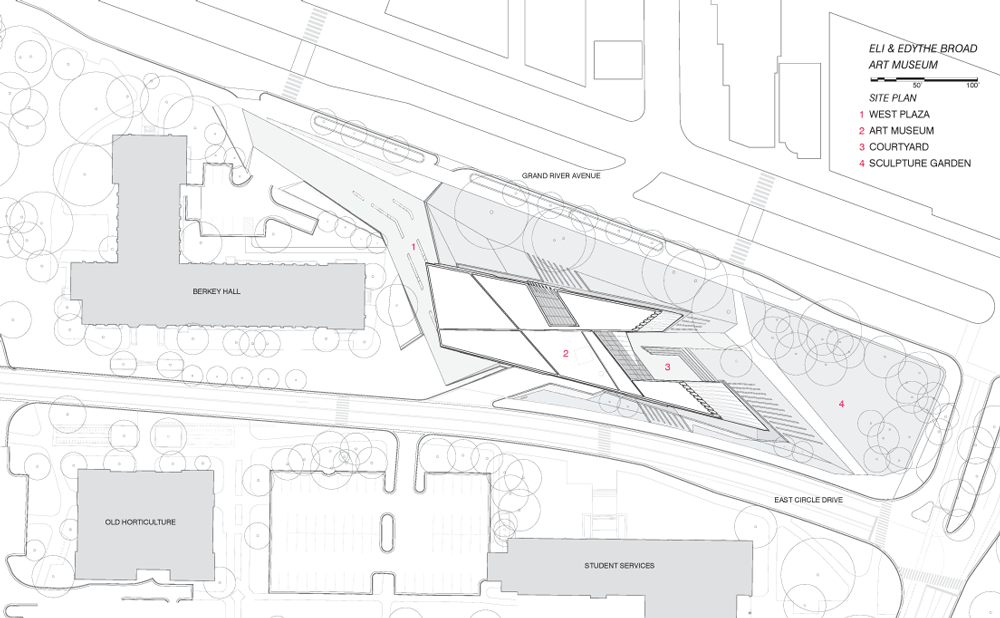
Above: site plan - click above for larger image
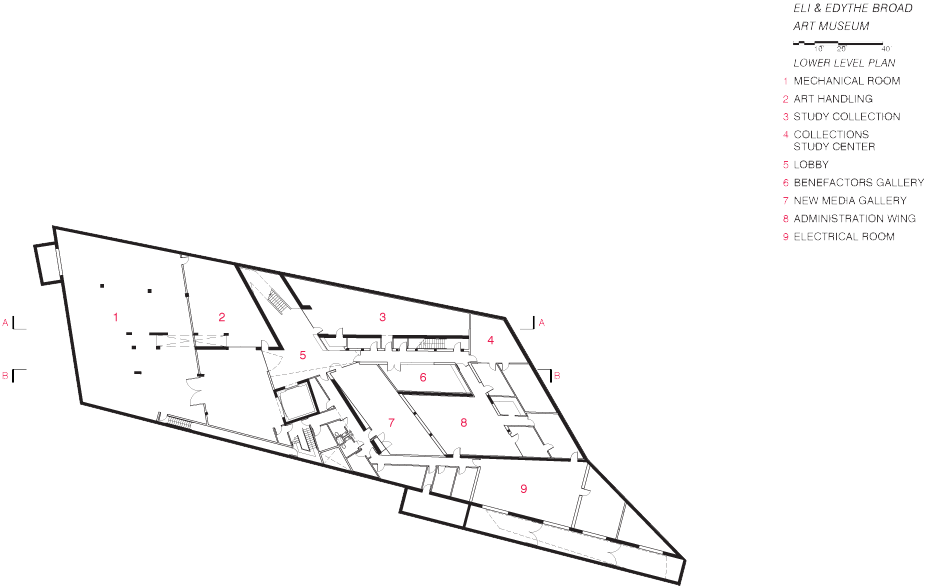
Above: basement plan - click above for larger image
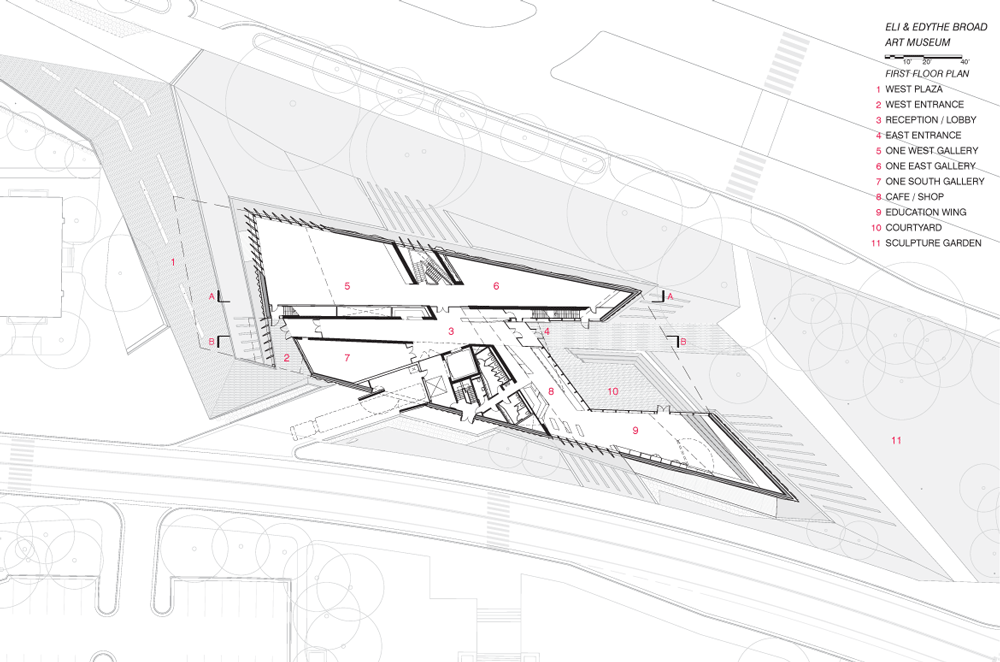
Above: ground floor plan - click above for larger image
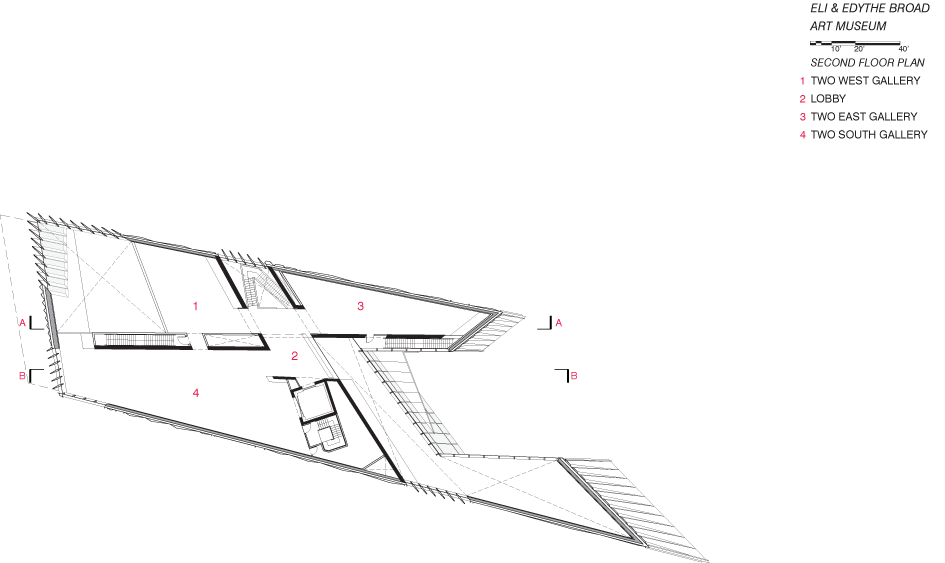
Above: first floor plan - click above for larger image
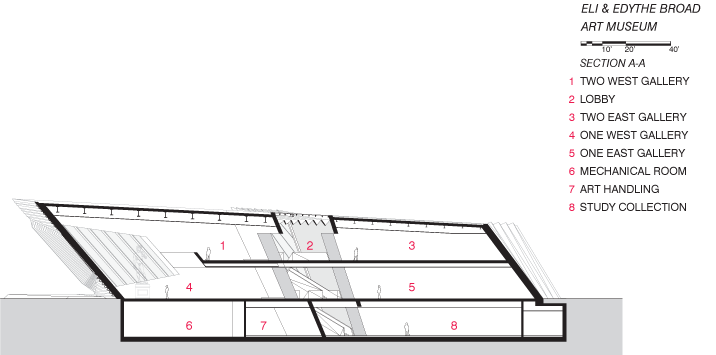
Above: section A-A - click above for larger image
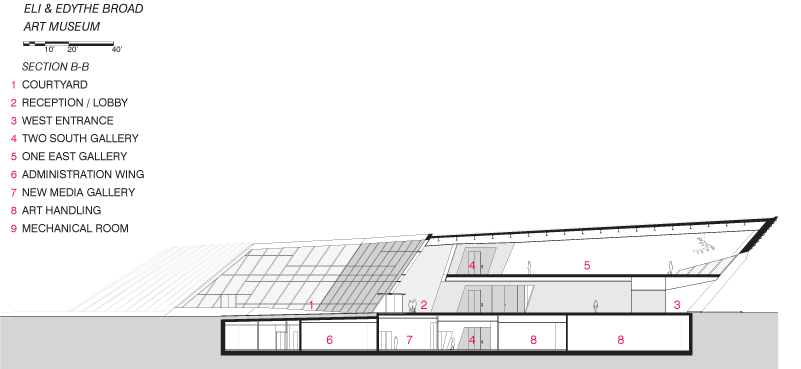
Above: section B-B - click above for larger image