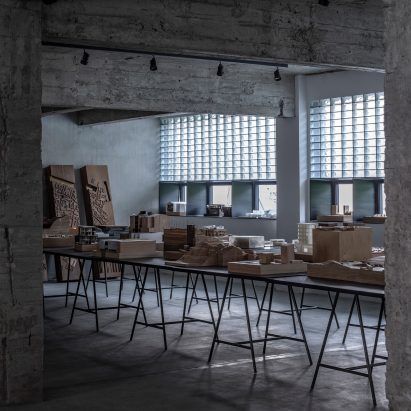
Neri&Hu installs continuous clothing rail through Comme Moi flagship store

Chinese studio Neri&Hu has designed the interior of fashion brand Comme Moi’s first flagship store, installing custom-made metal rails and cage-like cabinets (+ slideshow).
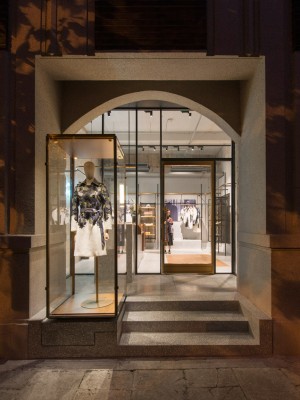
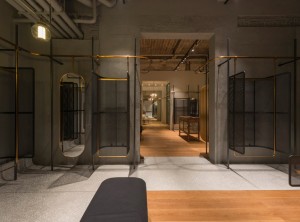
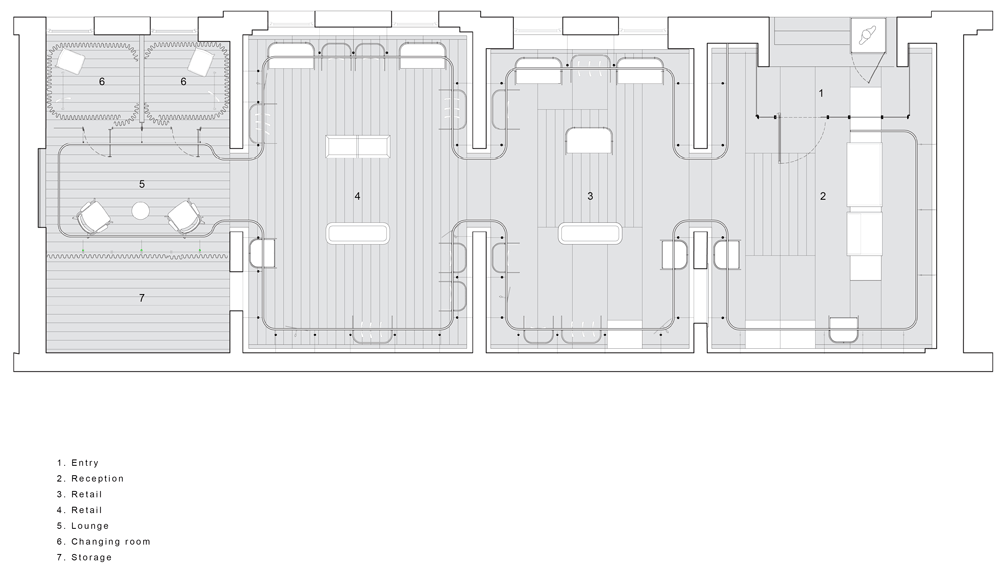
Located in Shanghai‘s Donghu Hotel, an Art Deco building completed in 1925, the store is laid out as a series of four sequential chambers, linked through continuous design elements.
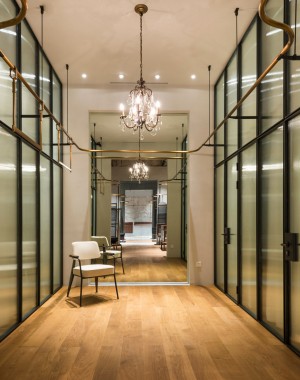
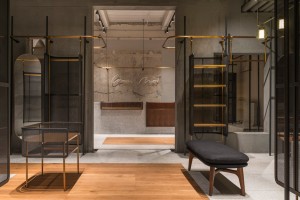
“The retail space is integrated with a continuous rail that threads through the individual rooms while forming the armature for custom designed hanging cabinets,” said the architects.
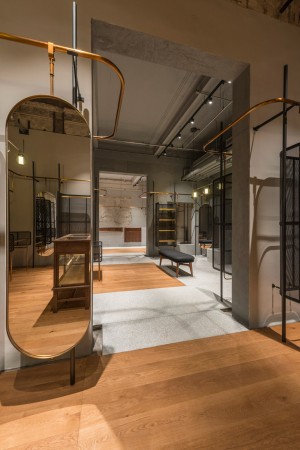
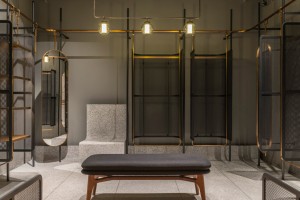
A grey-coloured terrazzo floor was also installed to unify the store’s four sections, and occasionally extrudes upwards to form seating areas and a reception counter.
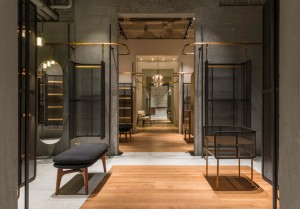
Since its completion in the early 20th century, the building has undergone multiple renovations and changes in use – something the architects wished to highlight.
Mirrors and metal-mesh cabinets hanging from gold-coloured railings were added to contrast with the existing architectural materials.
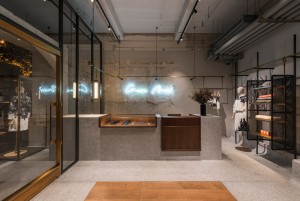
Custom-made display tables in the centre of the store are made from the same material as the storage cupboards, with wooden shelves.
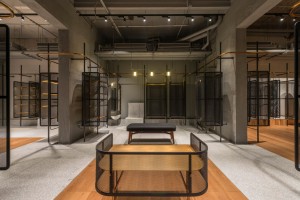
“These showcase cabinets stand out within the historic architectural surroundings to present the fashion pieces in a striking new light,” said the studio.
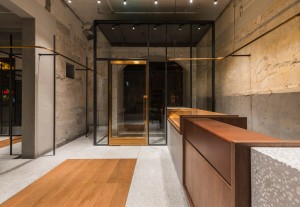
Fitting rooms are hidden away behind white linen curtains and scalloped-glass doors, and open out onto a runway-like corridor with a glass wall.
The terrazzo flooring continues outside the store, where the architects have added a glass display case to house a mannequin.
Earlier this year, Neri&Hu added bamboo-lined booths and green glass lampshades to a Shanghai bar and installed its vision for the home of the future at the imm Cologne trade fair.
The Chinese studio, founded by architects Lyndon Neri and Rossana Hu, also designed a wooden cabinet with seven objects to represent the seven deadly sins that was shown during Milan design week 2015.
Photography is by Dirk Weiblen.
Read more
Recommended stories
Neri&Hu divides Shanghai fashion boutique with fabrics and marble screens
Zara flagship store in Shanghai reflects “the future of physical retail”
Neri&Hu highlights simplicity and functionality at Shanghai art gallery
Neri&Hu clads Piaget’s Hong Kong boutique in ceramic tiles and bronze
Neri&Hu converts textile factory into headquarters for Chinese pastry brand
Neri&Hu designs bao restaurant to evoke Shanghai’s street life
Neri&Hu bases Shanghai burger restaurant on 1950s diners