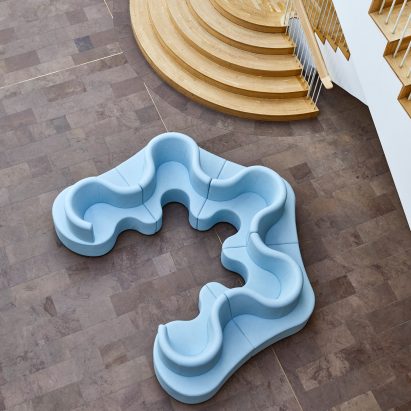
Umé Studio pads Zabuton Sofa with cushions used on Japanese tatami floors

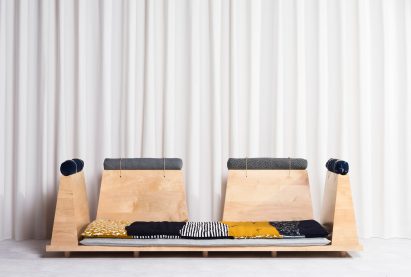
California practice Umé Studio has created a modular sofa with bolsters, wooden units and traditional Japanese zabuton cushions that are often used on tatami floors.
Umé Studio created the Zabuton Sofa to provide a different use for the cushions that are traditionally placed on tatami, which are woven-straw mats placed on raised floors in Japan. For centuries, the cotton-filled cushions have been used to make resting on the floor more comfortable.
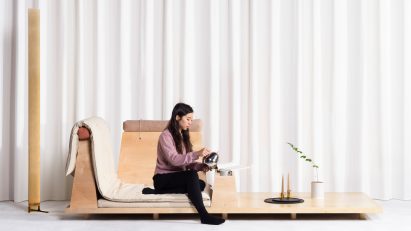
“Our Zabuton Sofa is a take on re-introducing traditional Japanese living into a modern piece of furniture,” the studio said.
“With the raised floors being popularised in the 17th century, Japanese society as a whole adopted tatami living as the driving design principle of housing design, Zabuton were used to bring comfort to the seating of the nobility.”
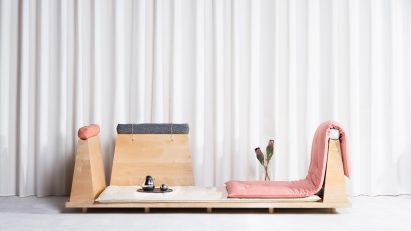
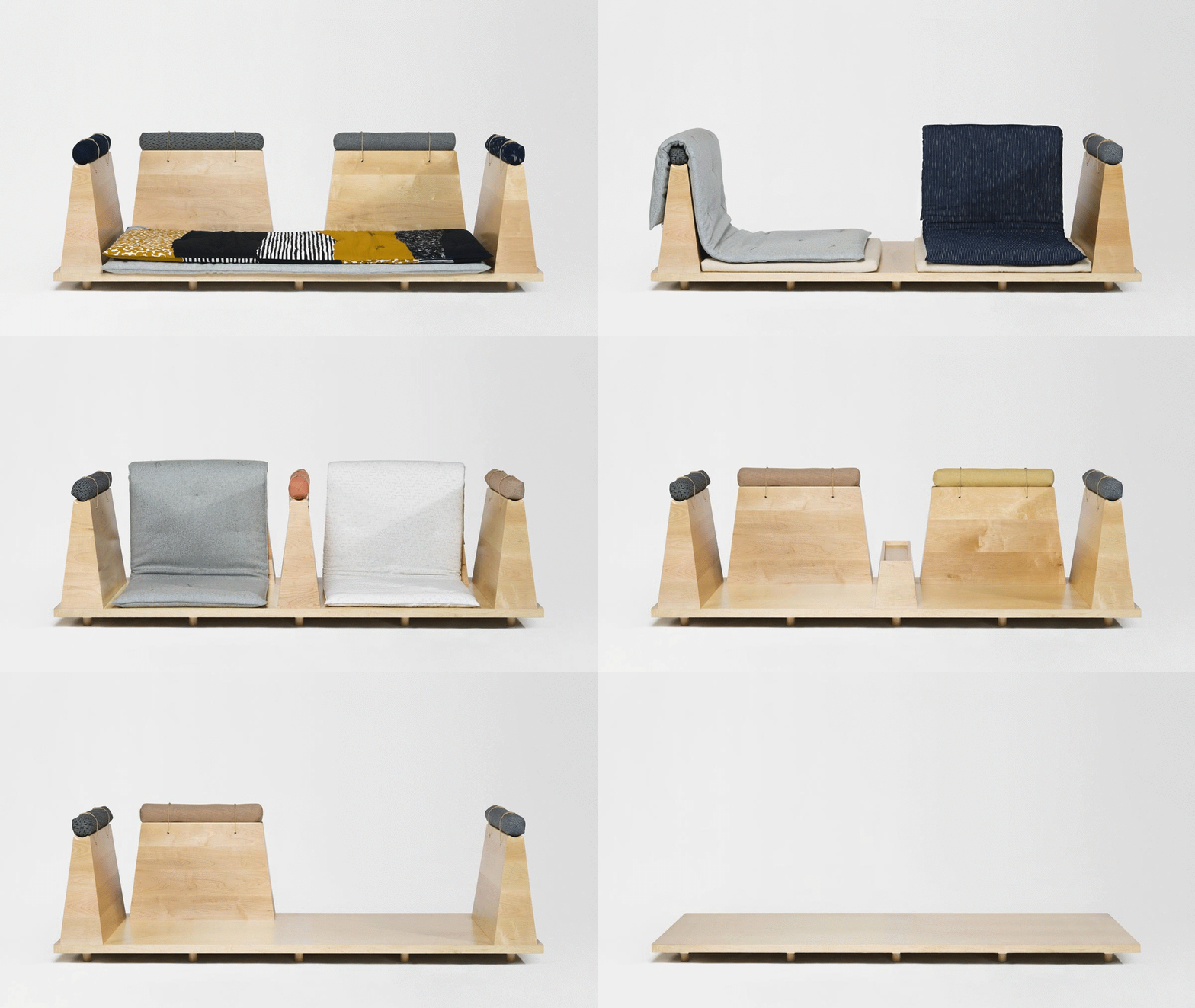
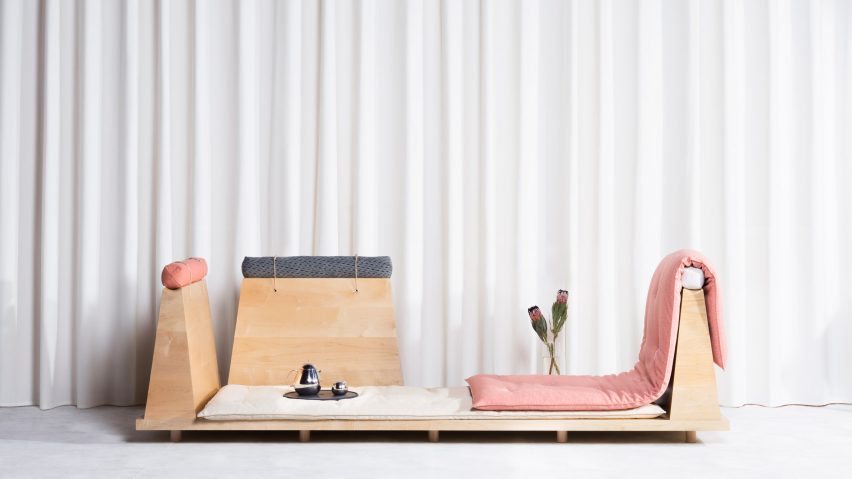
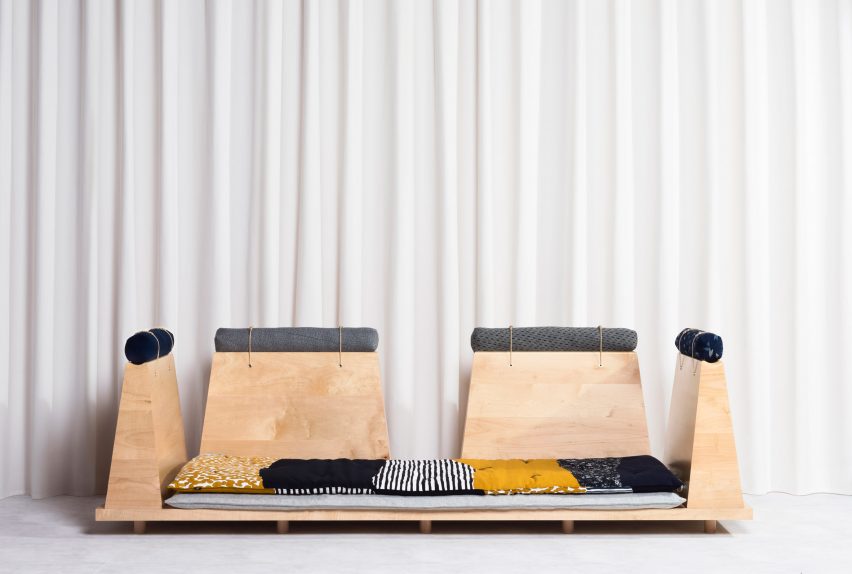
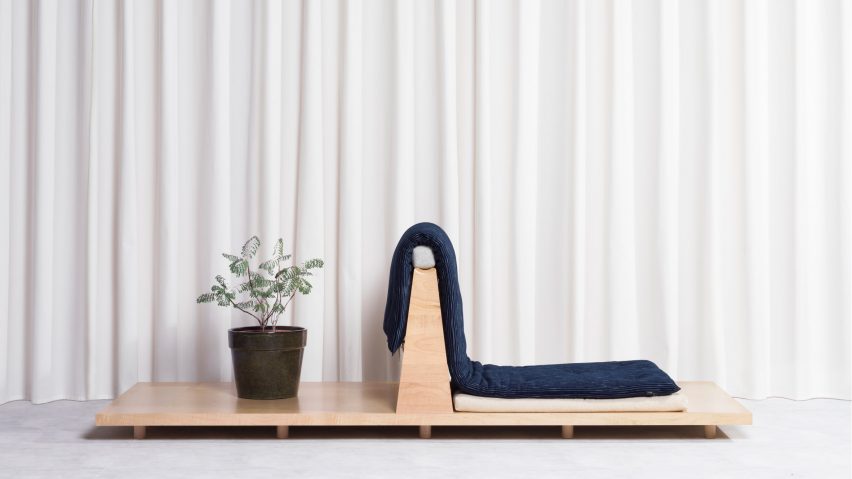
The cushions are used to pad out the wooden furniture piece, which comprises a low, maple wood plinth that has grooves for modular, triangular-shaped dividers.
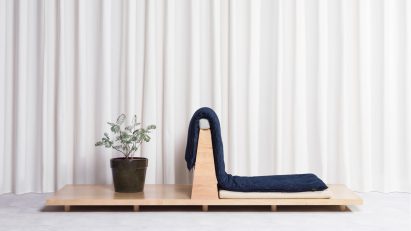
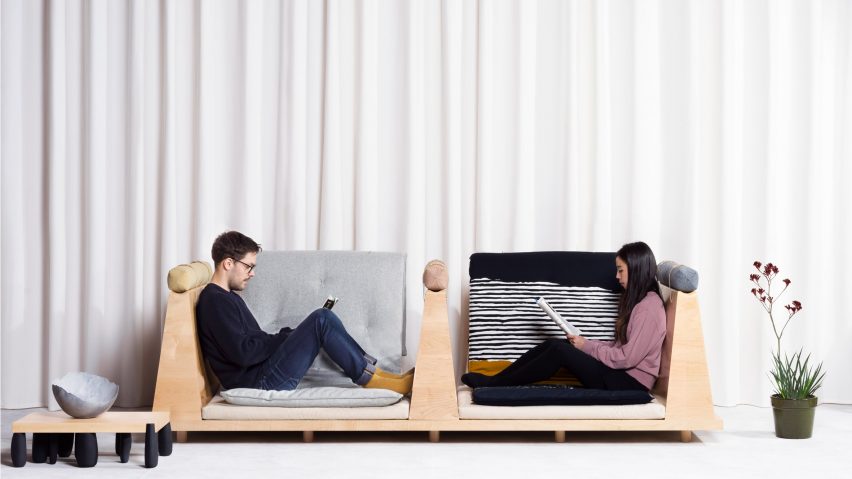
The units form backrests and armrests that can be placed in a variety of arrangements, such as a bed-like platform or a couch with two seats.
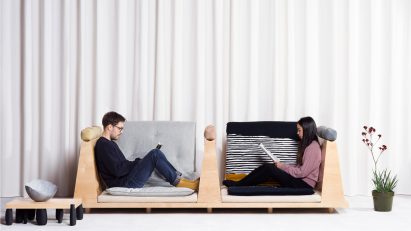
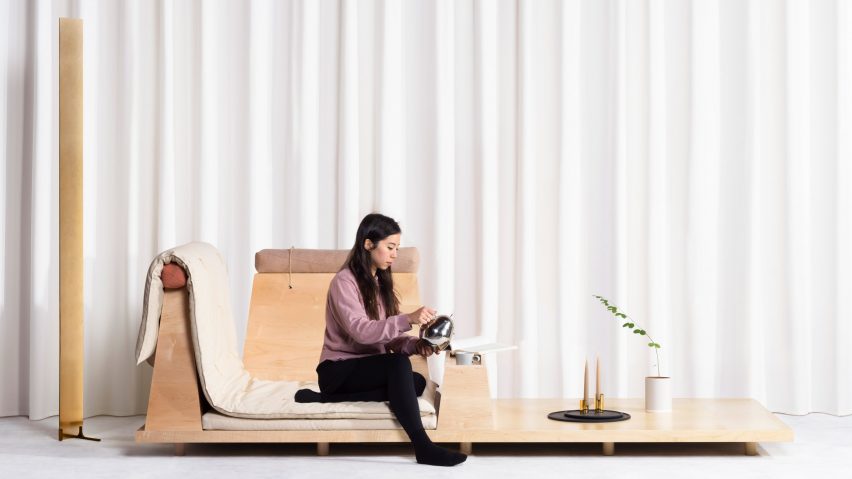
A wood partition can also be placed in the middle of the plinth and comes in two sizes, either as a full-height backrest or a low table-like unit with a flat top for cups.
One rectangular cushion can be placed on the base, while others can be wrapped over the modular volumes, or layered for more comfort. In addition to the rectangular cushions, rounded bolsters are also used.
Umé Studio worked with Kyoto-based futon maker Takaokaya to make the Zabuton cushions for the design. The wood frame, with its plinth and partitions, is made in Oakland and coated in a water-based clear matte polyurethane.
The sofa measures 108.5 inches (275.5 centimetres) long, 43 inches (109 centimetres) wide and 33 inches (84 centimetres) tall.
Umé Studio is based in Oakland, California and led by Victor Lefebvre and Mei-Lan Tan, who both worked as architects at Herzog & de Meuron before founding the practice.
In addition to this piece, the studio has also created a white curtain using thread spun from Japanese washi paper with pockets that can be decorated with flowers.
Read more
Recommended stories
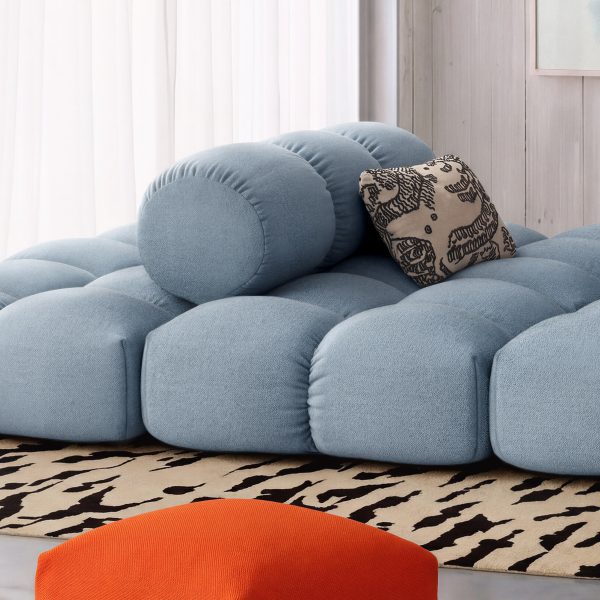
Sander seating island encourages reclining from all angles
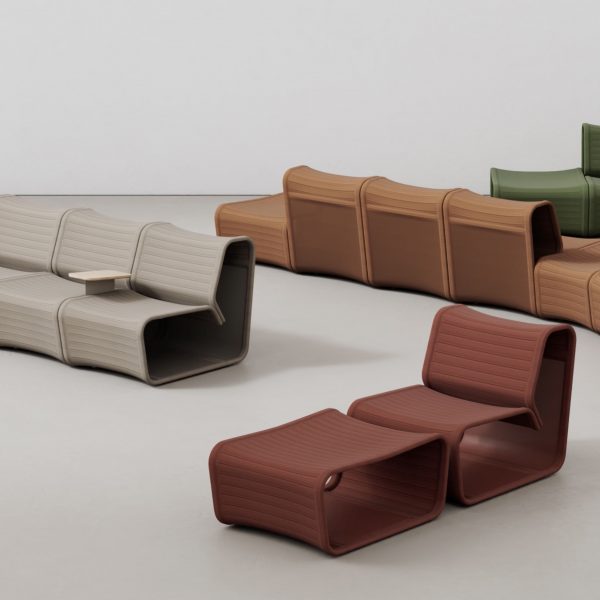
Isomi creates 3D-knitted sofa with air as the only cushioning material
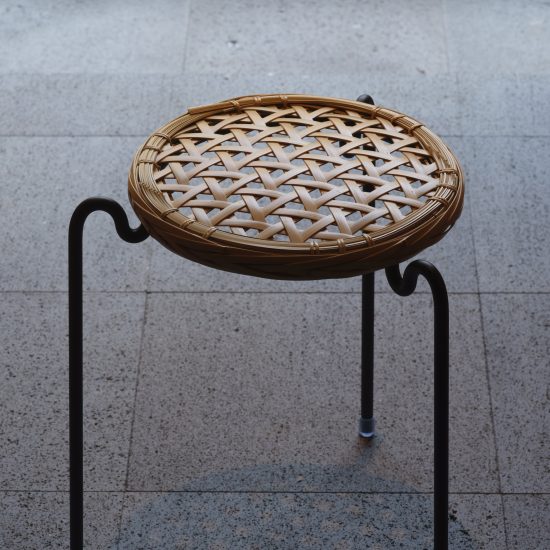
Vegahouse designs stool with removable seat made of woven bamboo
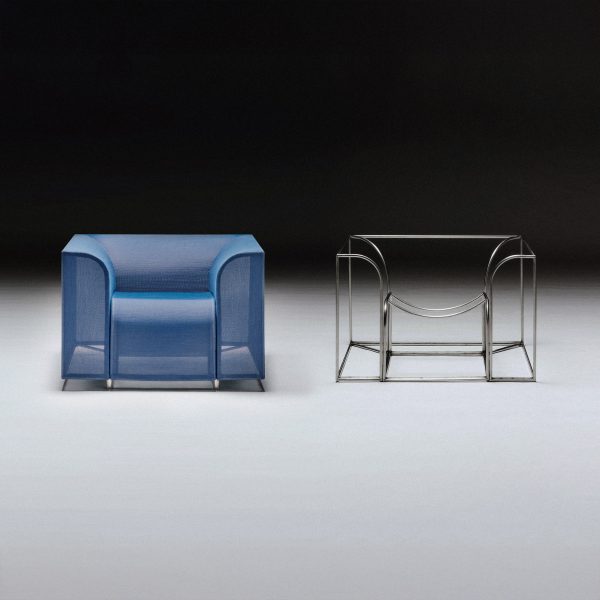
Shrinx lounge chair by +Halle among six new products on Dezeen Showroom
Nebulone sofa by Miniforms among seven new products on Dezeen Showroom
Rattan backrest curves around Hiroomi Tahara’s Wrap sofa
Kawara Armchair by Koyori among new products on Dezeen Showroom